Progressive Retinal Atrophy in Golden Retrievers
It’s truly heartbreaking to watch your beloved Golden Retriever, once so full of life and boundless energy, start to struggle with something as fundamental as their vision. The confusion, the hesitation, the quiet bumping into familiar objects – it’s a terrifying prospect for any dog owner. Progressive Retinal Atrophy (PRA) is a cruel condition that slowly robs our Goldens of their sight, leaving both them and us feeling disoriented and helpless. This comprehensive guide is here to shed light on what PRA is, how to spot its insidious progression, the crucial steps for diagnosis, and most importantly, how we can support our furry family members through this challenging journey.
Understanding Progressive Retinal Atrophy in Golden Retrievers
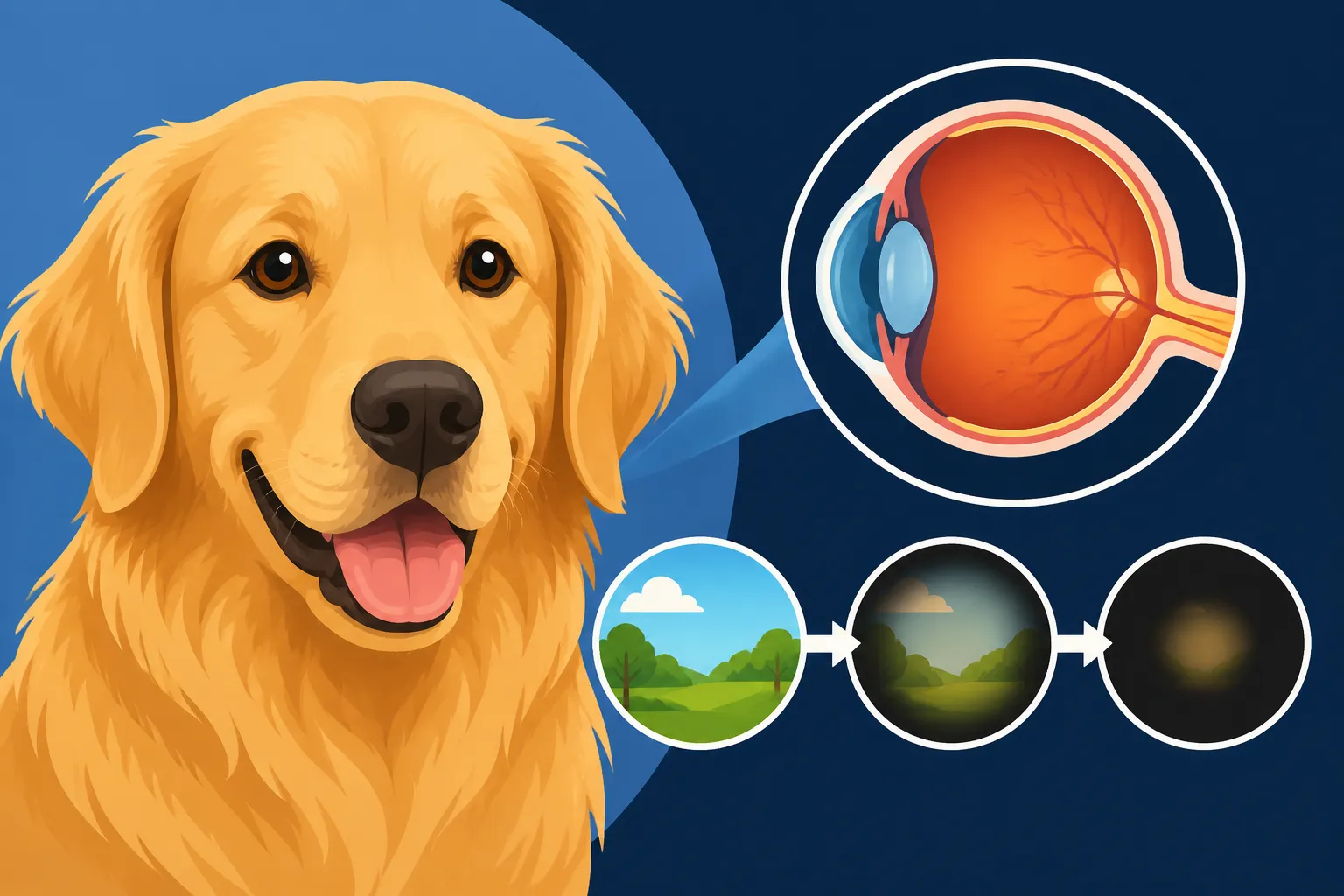
Progressive Retinal Atrophy, often simply called PRA, isn't just one disease but rather a group of inherited degenerative eye conditions that affect the photoreceptor cells in a dog's retina. Imagine the retina as the film in a camera; it's responsible for capturing light and sending those images to the brain. In dogs with PRA, these essential cells—rods, which detect light and shape in low light, and cones, which detect color and detail in bright light—gradually deteriorate, leading to progressive vision loss and eventually, blindness. It's a condition that slowly, but surely, dims the world for our Goldens.
What is PRA and How Does It Affect Vision?
At its core, PRA is a breakdown of the cells that allow our Goldens to see. The retina, located at the back of the eye, contains millions of photoreceptor cells. Rods are the workhorses for night vision and motion detection, while cones handle detail and color vision in brighter environments. In most forms of PRA affecting Golden Retrievers, the rods are affected first, leading to a noticeable decline in night vision. This means your dog might start fumbling in dimly lit rooms or become much more cautious outdoors after dusk.
As the disease progresses, the cone cells also begin to degenerate, eventually impacting day vision. The pace of this degeneration can vary greatly between individual dogs, even those with the same genetic mutation. Some Goldens might experience a slow, gradual decline over several years, while others might lose their sight more rapidly. The insidious nature of PRA lies in its progression; it's not a sudden event but a slow fade, often making it hard for owners to pinpoint exactly when the changes began. The dog's world becomes blurrier, darker, and harder to navigate, impacting their confidence and overall well-being.
The Genetic Basis of PRA in Golden Retrievers
The heartbreaking truth about PRA in Golden Retrievers is that it’s an inherited condition, passed down through generations. Most forms of PRA, including those commonly found in Goldens, are inherited in an autosomal recessive manner. This means a dog must inherit two copies of the defective gene – one from each parent – to develop the disease. A dog inheriting only one copy is considered a "carrier" and will not develop the disease themselves, but can pass the gene on to their offspring.
For Golden Retrievers specifically, several gene mutations have been identified that cause different forms of PRA. Two well-known variants are often referred to as GR-PRA1 and GR-PRA2. There's also a common variant called prcd-PRA, or Progressive Rod-Cone Degeneration, which affects many breeds, including Goldens. Breeders can now use DNA tests to identify if their dogs are clear, carriers, or affected by these specific gene mutations. Understanding these genetic underpinnings is crucial for both responsible breeding practices and for owners whose dogs have been diagnosed, as it sheds light on the "why" behind the condition. This knowledge empowers us to make informed decisions and work towards eradicating these conditions from the breed.
Recognizing the Signs and Symptoms of PRA
Spotting the early signs of PRA can be tricky because dogs are incredibly adaptable, and they often compensate for their diminishing vision by relying more on their other senses, like smell and hearing. However, as the disease progresses, certain behavioral and physical changes become more apparent. It's important to be vigilant and observant, especially as your Golden approaches middle age. Remember, these changes often unfold slowly, which can make them easy to dismiss at first.
Early Indicators and Night Blindness
The earliest and most common sign of PRA is typically night blindness, or nyctalopia. This occurs because the rod photoreceptors, which are responsible for vision in low light, are usually the first to degenerate. You might notice your Golden becoming more hesitant or clumsy in dimly lit environments, like at dusk, in a dark hallway, or in a room where the lights are low. They might bump into furniture they usually navigate with ease, or they might be reluctant to go outside into the yard after the sun has set.
Another tell-tale sign of diminishing night vision is dilated pupils, especially in low light conditions. The pupils will dilate more than usual in an attempt to let in more light, even if that light can't be processed effectively by the damaged retina. You might also observe a heightened "eye shine" or tapetal reflection when light hits their eyes in the dark, appearing brighter or more intense than before. This is due to the thinning of the retina, allowing more light to reflect off the tapetum lucidum behind it. If you suspect these changes, it's worth getting a professional opinion. To learn more about subtle clues, you might want to read our article on Early Signs of Retinal Atrophy in Goldens.
Progression to Day Blindness and Behavioral Changes
As PRA advances, the cone photoreceptors, responsible for day vision, also begin to degenerate. This leads to a gradual loss of vision even in normal daylight conditions. Your Golden, once so confident and outgoing, might start showing increased anxiety, especially in unfamiliar surroundings or when their routine is disrupted. They might become clingier, needing to be closer to you for reassurance, or seem disoriented even in their own home.
You might notice a reluctance to jump onto the couch or climb stairs, not because of joint pain (though that's always a possibility for Goldens, as discussed in Golden Retriever Hip and Elbow Dysplasia Explained), but because they can't accurately gauge the height or distance. Their once-enthusiastic greetings might become more subdued, as they can't clearly see who is approaching. Their pupils might remain dilated even in normal lighting, giving their eyes a glassy or wide-eyed appearance. These behavioral shifts are often a direct response to their increasing visual impairment and the stress it causes.
Differentiating PRA from Other Eye Conditions
It's absolutely vital to understand that not all vision loss in Golden Retrievers is due to PRA. There are other common eye conditions that can mimic some of PRA's symptoms, and only a veterinary ophthalmologist can provide an accurate diagnosis. For instance, cataracts, which are a clouding of the eye's lens, can also cause progressive vision loss. However, cataracts are often visibly apparent as a cloudy film over the pupil, whereas in the early stages of PRA, the eye itself often looks perfectly normal to the untrained eye.
Glaucoma, another serious condition, involves increased pressure within the eye, leading to pain and often rapid vision loss. Goldens, like many breeds, can also be prone to other eye issues such as Golden Retriever Eye Disease and Pigmentary Uveitis. The symptoms of glaucoma, such as a red, painful, or swollen eye, are quite distinct from the gradual, painless progression of PRA. Therefore, while being observant of your Golden's behavior and vision changes is crucial, self-diagnosis is not an option. A proper veterinary examination is the only way to determine the true cause of vision impairment.
Diagnosing PRA and Genetic Testing
Receiving a diagnosis of PRA can be overwhelming, but understanding the diagnostic process is the first step toward managing the condition effectively. Veterinary ophthalmologists have specialized tools and tests to accurately identify PRA, and thankfully, genetic testing offers a proactive way to identify risks long before symptoms appear.
Ophthalmic Examination and ERG Testing
When you bring your Golden Retriever to a veterinarian with concerns about their vision, a general practitioner might perform an initial eye exam. However, for suspected PRA, referral to a board-certified veterinary ophthalmologist is highly recommended. These specialists have advanced training and equipment to examine the intricate structures of the eye. They will typically perform a thorough ophthalmic examination, which includes direct and indirect ophthalmoscopy. This involves shining a light into the eye to directly visualize the retina and check for any abnormalities, such as the characteristic thinning and changes in the blood vessels that occur with PRA.
While an ophthalmologist might notice early signs of retinal degeneration, the definitive diagnostic test for PRA is an Electroretinography (ERG). This procedure measures the electrical responses of the retina's photoreceptor cells to flashes of light. It's a non-invasive test, typically performed under light sedation, where electrodes are placed on the cornea and around the eye. A healthy retina will produce a normal electrical waveform, while a retina affected by PRA will show reduced or absent waveforms, indicating the degeneration of the photoreceptor cells. An ERG can detect PRA even before clinical signs of vision loss are apparent, making it an invaluable diagnostic tool.
DNA Tests for Golden Retriever PRA Variants
One of the most powerful tools in combating PRA in Golden Retrievers is DNA testing. As we discussed, several specific gene mutations are responsible for different forms of PRA in the breed. Companies like OptiGen and Embark offer genetic tests that can identify whether a Golden Retriever is "clear" (meaning they don't carry the gene), a "carrier" (one copy of the gene, won't develop PRA but can pass it on), or "affected" (two copies of the gene, will likely develop PRA).
These tests are simple, usually requiring just a cheek swab or blood sample, and they can be performed at any age, even on young puppies. For breeders, these tests are indispensable for ensuring responsible breeding practices and preventing the accidental breeding of two carriers, which would result in affected puppies. For owners of pet Goldens, knowing your dog's PRA status can help you anticipate potential vision issues and plan accordingly. If you're curious about other screenings, our article on Golden Retriever Genetic Tests Worth Running delves deeper into important genetic health panels.
When to Test Your Golden Retriever
There are several scenarios where DNA testing for PRA is highly advisable. If you are considering breeding your Golden Retriever, genetic testing for all known PRA variants in the breed is non-negotiable. This information is critical for making informed breeding decisions to avoid producing affected puppies. Reputable breeders will always provide clear documentation of their breeding dogs' PRA test results (among other Health Clearances a Golden Retriever Breeder Must Show).
For pet owners, if you've adopted a Golden Retriever whose parentage is unknown, or if your dog is already showing very subtle signs of night blindness or other vision changes, a DNA test can help confirm a suspected PRA diagnosis and differentiate it from other conditions. Even if your Golden is perfectly healthy, some owners choose to test simply for peace of mind and to understand their dog's genetic predispositions. Early knowledge can help you prepare and adapt your home environment preemptively, making the transition easier for your dog if PRA does develop later in life.
Managing Life with a PRA-Affected Golden Retriever
Discovering your Golden Retriever has PRA can feel devastating, but it's important to remember that they can still lead a full and happy life with your help and adaptations. They rely on us more than ever to be their eyes and their advocates. The key is to create a safe, predictable, and supportive environment that minimizes their frustrations and maximizes their joy.
Adapting Your Home Environment
The most immediate and impactful step you can take is to make your home a safe haven for your visually impaired Golden. This means maintaining a consistent layout of furniture and belongings. Avoid moving things around unnecessarily. If you must rearrange, gently guide your dog through the new layout several times, using verbal cues and positive reinforcement. Consider using tactile markers, like rugs or textured mats, to signal different areas or hazards, such as the top or bottom of stairs.
For stairs, ramps are often a fantastic solution, not just for visually impaired dogs but also to protect their joints, especially if they are prone to issues like those discussed in Golden Retriever Weight and Joint Damage. Baby gates can be invaluable for blocking off dangerous areas, like stairs, or keeping your dog confined to a safe space when you can't actively supervise them. Outdoors, ensure your yard is securely fenced and free of obstacles they might trip over. You can even use distinct scents (like vanilla essence or essential oils on a cotton ball, placed safely) to mark important spots like their food bowl, water dish, or favorite resting spot. Creating predictability is paramount for their sense of security. If you're caring for an older Golden, many of these tips also apply, as covered in Caring for a Senior Golden Retriever.
Communication and Enrichment Strategies
With diminishing sight, your Golden will increasingly rely on their other senses, especially hearing and smell. This means refining your communication style becomes essential. Use clear, consistent verbal cues for everything: "step up," "step down," "wait," "danger," "this way." Your voice will become their guiding light. Speak to them often, letting them know where you are in the house. When approaching them, do so gently and speak their name to avoid startling them. Always allow them to sniff your hand before petting them.
Mental enrichment is more important than ever. While they may not be able to chase a ball across a field, scent games become incredibly engaging. Hide treats around the house and encourage them to "find it." Puzzle toys that dispense treats when manipulated can keep their minds sharp and engaged. Kongs stuffed with peanut butter or frozen yogurt are excellent. Consistent routines for feeding, walks, and playtime will also significantly reduce their anxiety, as they thrive on predictability. Don't underestimate the power of a good sniff walk in a familiar, safe area – their nose can tell them so much about their world.
Emotional Support for Your Golden and Yourself
Living with a dog who is losing their sight is an emotional journey for everyone involved. Your Golden will likely experience periods of confusion, frustration, and anxiety, and they'll look to you for comfort and reassurance. Patience and empathy are key. Allow them extra time to navigate, and offer gentle guidance rather than pulling or pushing them. Reassure them with your voice and touch. Many Goldens become even more affectionate and clingy as their vision fades, relying on physical contact to feel safe.
It's also crucial to acknowledge and manage your own feelings. Witnessing your beloved companion struggle can be incredibly painful. Don't hesitate to seek support from fellow dog owners, online communities, or even a professional counselor if you're finding it overwhelming. The bond you share with your Golden will deepen through this challenge, and your dedication will provide them with the best possible quality of life. Remember, your love and presence are the most powerful tools in their journey.
Breeding Responsibly and Preventing PRA
The prevalence of PRA in Golden Retrievers underscores the critical importance of responsible breeding practices. As an inherited condition, PRA can be significantly reduced, and potentially eradicated, from the breed through careful selection and genetic screening. Every responsible breeder plays a vital role in the future health of the Golden Retriever line.
The Importance of Health Clearances
For any Golden Retriever being considered for breeding, comprehensive health clearances are not just a recommendation; they are an ethical imperative. This includes, but is not limited to, OFA certifications for hips and elbows, cardiac clearances by a veterinary cardiologist, and, crucially, eye clearances performed annually by a board-certified veterinary ophthalmologist. Furthermore, all breeding stock absolutely must undergo DNA testing for known PRA variants specific to Golden Retrievers, such as GR-PRA1, GR-PRA2, and prcd-PRA.
The goal is to ensure that no affected puppies are born. This means avoiding breeding two carriers together. Ideally, breeders should only breed "clear" dogs to "clear" dogs. If a carrier must be bred (to preserve desirable traits, for instance, and maintain genetic diversity), they should only be bred to a clear dog, ensuring all offspring will be, at worst, carriers themselves, but none will be affected. Those offspring can then be tested before any future breeding. Our detailed guide on Health Clearances a Golden Retriever Breeder Must Show provides a thorough checklist for prospective puppy buyers.
Selecting a Reputable Breeder
For anyone looking to bring a Golden Retriever puppy into their home, the choice of breeder is perhaps the most significant decision you'll make regarding your puppy's long-term health. A reputable breeder will be transparent about the health of their breeding dogs and their lineage. They won't just tell you their dogs are "healthy"; they will proactively provide documentation of all health clearances, including the specific DNA test results for PRA, hip, elbow, and cardiac evaluations.
They should be knowledgeable about the genetic conditions affecting Goldens and eager to discuss how they are working to mitigate those risks in their lines. Ask to see the parents' pedigrees and health certifications. They should be registered with organizations like the Golden Retriever Club of America (GRCA), which sets high standards for ethical breeding. Beware of breeders who cannot provide these documents, offer puppies at suspiciously low prices, or allow you to take a puppy home without any questions about your living situation. A breeder who focuses purely on "English Cream" or "rare" colors without emphasizing health is a red flag. For more detailed advice, refer to our article on Finding a Reputable Golden Retriever Breeder.
The Impact on the Golden Retriever Gene Pool
The widespread use of genetic testing for PRA has a profound impact on the Golden Retriever gene pool. By selectively breeding only clear or carrier-to-clear dogs, the incidence of PRA can be drastically reduced over generations. However, this isn't without its challenges. Over-reliance on a very small number of "clear" dogs can inadvertently narrow the gene pool, potentially leading to an increase in other genetic problems.
Responsible breeders, therefore, must balance the desire to eliminate PRA with the need to maintain genetic diversity within the breed. This means sometimes breeding a carrier to a clear dog, then testing the offspring and only breeding the clear puppies from that litter. Organizations like the GRCA and the Morris Animal Foundation, through initiatives like the What the Golden Retriever Lifetime Study Has Found, are continuously working to understand and address health challenges across the breed, including PRA, striving for a future where our beloved Goldens can live longer, healthier lives free from preventable genetic diseases.
Prognosis and Long-Term Care for Golden Retrievers with PRA
Receiving a PRA diagnosis for your Golden Retriever is undoubtedly tough news. While there's no cure, understanding the likely progression and focusing on long-term management can help you provide the best possible quality of life for your furry companion. It's about adapting and cherishing every moment.
Understanding the Disease Course
The most important thing to know about Progressive Retinal Atrophy is that it is a progressive and irreversible condition. There is currently no known cure or treatment that can halt or reverse the degeneration of the photoreceptor cells. However, the rate at which vision loss occurs can vary significantly from one Golden to another. Some dogs may experience a very slow decline over many years, allowing ample time for adaptation, while for others, the progression might be more rapid, leading to total blindness within a shorter period.
While PRA itself is not painful, the loss of vision can lead to secondary issues such as anxiety, stress, and disorientation. Our focus as owners shifts from treating the disease to providing an enriching environment and dedicated care that supports their well-being. It's about helping them navigate their world confidently and ensuring their other senses are stimulated, allowing them to continue enjoying life to the fullest. Even though they may lose their sight, their capacity for joy, love, and connection remains undiminished.
Nutritional Support and Supplements
While no specific diet or supplement has been scientifically proven to prevent or reverse PRA, a well-balanced, high-quality diet rich in antioxidants can certainly support overall eye health and general well-being. Antioxidants, like vitamins C and E, lutein, zeaxanthin, and omega-3 fatty acids (DHA and EPA), are thought to help protect cells from oxidative damage, which is a factor in many degenerative conditions.
Many owners choose to incorporate supplements containing these nutrients into their Golden's diet. Fish oil, for instance, is a popular choice for its omega-3 benefits. However, it's crucial to consult with your veterinarian or a veterinary nutritionist before adding any supplements to your dog's regimen, as improper dosages can sometimes cause more harm than good. They can help you determine appropriate supplements and dosages that might offer some supportive benefits, ensuring they don't interfere with any other medications or conditions your Golden might have.
Veterinary Check-ups and Monitoring
Even without a cure, regular veterinary check-ups remain incredibly important for a Golden Retriever with PRA. These visits allow your vet to monitor your dog's overall health, address any secondary issues that might arise due to their vision loss (such as increased anxiety or changes in activity levels), and screen for other age-related conditions that Goldens are prone to. For instance, reduced activity due to blindness could contribute to weight gain, which exacerbates joint problems. Routine physical exams, blood work, and discussions about their behavior and adjustment are all part of comprehensive care.
Moreover, it's wise to consider pet insurance, even after a diagnosis of a genetic condition. While most pet insurance plans like Healthy Paws won't cover pre-existing conditions, they can still be invaluable for covering the costs of other illnesses, accidents, or unrelated health issues that may arise in the future. For example, if your Golden develops an ear infection (which Goldens are prone to), or a new condition like cancer (sadly common in the breed, as detailed in Cancer in Golden Retrievers and Why the Breed Is Hit Hardest), having insurance can provide financial peace of mind for those expenses. Regular check-ups, as recommended in Why Goldens Need Vet Visits Twice a Year, ensure that any new health concerns are caught early, regardless of their vision status.
| Feature | Progressive Retinal Atrophy (PRA) | Cataracts | Glaucoma |
|---|---|---|---|
| Primary Cause | Genetic degeneration of retinal photoreceptor cells | Clouding of the eye's lens | Increased pressure within the eye |
| Onset | Typically genetic, often 3-8 years, can be earlier/later | Can be genetic, age-related, or secondary to disease | Can be primary (genetic) or secondary to injury/disease |
| Appearance of Eye | Often appears normal externally in early stages; dilated pupils, increased eye shine | Milky or cloudy appearance within the pupil | Redness, swelling, dilated pupil, cloudy cornea (hazy blue) |
| Vision Loss | Progressive, starting with night blindness, then day blindness | Progressive, blurry vision, then total blindness | Rapid, painful vision loss, often irreversible |
| Pain | No direct pain from PRA itself | Usually not painful unless advanced and causes inflammation | Very painful, can lead to permanent damage |
| Treatment | No cure; management involves environmental adaptation & support | Surgical removal of lens (phacoemulsification) | Emergency treatment to lower eye pressure (medication, surgery) |
| Genetic Basis in Goldens | Yes, specific gene mutations (GR-PRA1, GR-PRA2, prcd-PRA) | Can be hereditary; also diabetes-related | Can be hereditary in some breeds |
Disclaimer
The information provided in this article is for general informational purposes only and is not intended as a substitute for professional veterinary advice, diagnosis, or treatment. Always seek the advice of your veterinarian or other qualified animal health provider with any questions you may have regarding a medical condition or the health and welfare of your pet. Never disregard professional veterinary advice or delay in seeking it because of something you have read in this article.