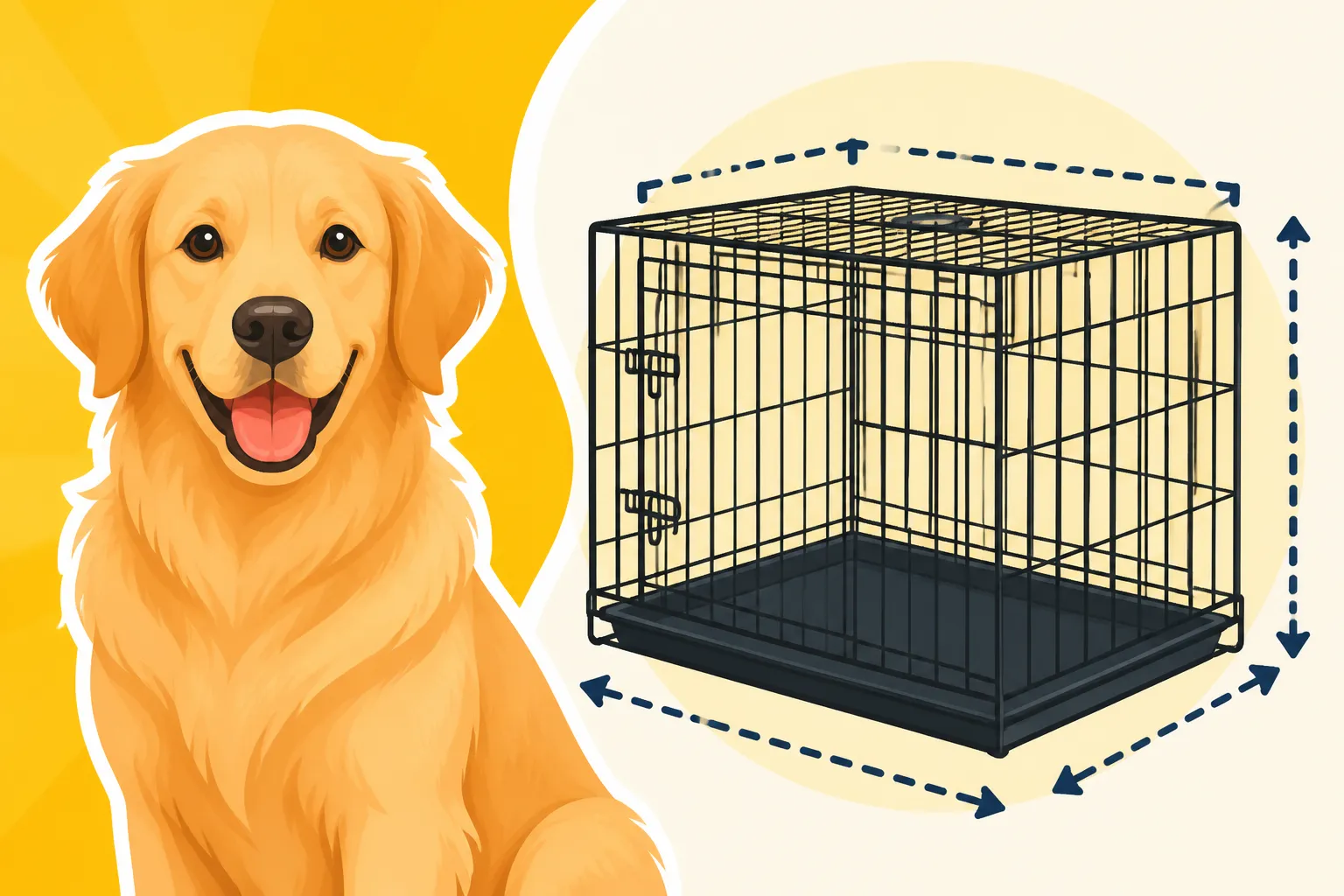
What Size Crate a Golden Retriever Needs
Choosing the right crate size for your beloved Golden Retriever can feel like navigating a maze. You want them to be safe and comfortable, but you also know that the wrong size can lead to accidents, anxiety, or even physical discomfort. It’s a common frustration for Golden owners, whether you’re bringing home a tiny, fluffy puppy or an adult rescue. This guide will walk you through everything you need to know, ensuring your Golden’s crate is a sanctuary, not a source of stress.
The Crucial Role of Proper Crate Sizing for Your Golden Retriever
It's easy to think of a crate as just a cage, but for a Golden Retriever, it’s meant to be their personal den, a safe haven where they can relax and feel secure. The size of this den makes all the difference in how your dog perceives and utilizes it. Getting it right from the start can set your Golden up for success with training and provide them with a crucial sense of security throughout their lives.
More Than Just a Bed: The Purpose of a Crate
A properly sized crate serves multiple vital functions beyond just being a place for your Golden to sleep. For puppies, it's an indispensable tool for House Training a Golden Retriever. Dogs naturally don't want to soil their sleeping area, so a crate that's just big enough encourages them to hold their bladder until they can be let outside. This instinct is powerful, and if the crate is too large, a puppy might simply relieve themselves in one corner and then sleep comfortably in another, completely undermining your potty training efforts.
Beyond house training, a crate provides a sense of security and a quiet space. Goldens are social creatures, but like all dogs, they benefit from having their own defined territory. It's a place where they can retreat when they feel overwhelmed, when guests are over, or when they just need some alone time. Think of it as their bedroom – a personal space that’s just for them, away from the hustle and bustle of the household. It can also be invaluable for managing things like Golden Retriever Puppy Sleep and Night Crying by giving them a secure place to settle.
Health and Behavioral Implications of Incorrect Crate Sizes
The dimensions of your Golden’s crate aren't just about convenience; they have significant impacts on their physical and mental well-being. A crate that is too small can lead to serious physical issues. Imagine trying to live in a space where you can’t fully stand up, stretch out, or turn around comfortably. For a growing puppy or an adult Golden, being crammed into a tiny crate can cause joint stiffness, muscle aches, and even contribute to the worsening of conditions like Golden Retriever Hip and Elbow Dysplasia Explained if they can't shift their weight properly or lie in natural positions. It's not just uncomfortable; it's detrimental to their development and long-term health.
On the other hand, a crate that is too large, especially for a puppy, can hinder training and create behavioral problems. As mentioned, a puppy with too much space will often designate a "bathroom corner," which completely defeats the purpose of house training. This can lead to prolonged potty training struggles and frustrate both you and your puppy. For adult Goldens, a crate that's excessively large might not offer the same sense of den-like security. It can feel less like a cozy retreat and more like an empty room, potentially leading to increased anxiety or restlessness, rather than the calm solitude a well-fitted crate provides. The goal is a snug fit, not restrictive, but definitely not cavernous.
Sizing a Crate for Your Growing Golden Retriever Puppy
Bringing home a Golden Retriever puppy is an exciting time, but their rapid growth means that their crate needs will evolve quickly. It's crucial to select a crate that accommodates their current size while also planning for their future growth. Investing wisely now can save you headaches and expense later.
The "Just Enough Room" Rule for Puppies
When your Golden Retriever is a tiny puppy, the "just enough room" rule is paramount for effective house training. This means the crate should be large enough for your puppy to comfortably stand up, turn around, and lie down in a natural position, but not so large that they can wander to a far corner to relieve themselves and then retreat to a clean spot. This limited space leverages their natural instinct to keep their den clean, significantly aiding in the potty training process.
For example, an 8-week-old Golden Retriever puppy might initially fit snugly in a 30-inch or 36-inch crate. However, they'll outgrow this size incredibly fast. The key isn't to buy multiple crates as they grow, but rather to use a strategic tool: a divider.
Adjustable Crates and Dividers: A Smart Investment
This is where crates with adjustable dividers become an absolute lifesaver for Golden Retriever owners. Instead of purchasing a small puppy crate, then a medium one, and finally a large adult one, you can buy one appropriately sized large crate (typically 42-inch or 48-inch) from the start, and use a divider to reduce the interior space. As your puppy grows, you simply move the divider back, gradually expanding their living area until they need the full space.
Many popular pet supply retailers, like Chewy, offer a wide selection of wire crates that come equipped with these adjustable dividers. This approach not only saves you money in the long run by avoiding multiple crate purchases, but it also provides consistency for your puppy, as they always have the same familiar den, just with more stretching room. It’s a pragmatic solution that acknowledges the reality of a rapidly growing Golden.
Tracking Puppy Growth for Crate Upgrades
Golden Retriever puppies grow at an astonishing rate. What fits perfectly at 8 weeks will be a tight squeeze by 16 weeks, and potentially too small by 6 months. It's a journey that can sometimes surprise even experienced owners! Regular monitoring of your puppy's size is essential to ensure their crate remains appropriate. You’ll want to observe them standing, turning, and lying down in the crate. If their head is touching the top when they stand, or they can't stretch out fully without touching both ends, it's time to move that divider.
Keeping an eye on their weight gain and height is also helpful. You can refer to resources like Golden Retriever Puppy Feeding Amounts and Schedule which often include typical growth charts. As they approach milestones like When a Golden Retriever's Growth Plates Close, usually around 12-18 months, their growth will slow, but they'll still be filling out and gaining muscle mass. Don't be afraid to adjust the divider incrementally. A few inches can make a big difference in comfort for a growing pup.
Selecting the Ideal Crate Size for an Adult Golden Retriever
Once your Golden Retriever reaches maturity, their growth plates have closed, and they’ve filled out, you’ll be looking for a permanent crate solution. This is a crate that will serve them for many years, so getting the dimensions just right for their adult size is key for their ongoing comfort and security.
Standard Dimensions for a Fully Grown Golden
For most adult Golden Retrievers, a 42-inch or 48-inch wire crate is the typical recommendation. These sizes generally provide ample space for a fully grown Golden to stand up, turn around easily, and stretch out comfortably on their side without touching the ends or sides. While both sexes are substantial, male Golden Retrievers tend to be larger and heavier than females, typically weighing between 65-75 pounds and standing 23-24 inches tall at the shoulder, whereas females are usually 55-65 pounds and 21.5-22.5 inches. This difference might lead some owners of particularly large males to lean towards the 48-inch option, especially if their dog loves to fully sprawl out. You can review average breed sizes in our guide on Golden Retriever Size and Adult Proportions to help gauge your dog's likely adult dimensions.
It's important to remember these are general guidelines. Every dog is an individual, and some Goldens might be smaller or larger than the breed standard. The key is to ensure the crate meets the "comfortably stand, turn, and lie down" criteria for your specific dog.
Considering Your Golden's Unique Build and Habits
While the standard sizes are a great starting point, you should always consider your Golden Retriever's unique physical characteristics and preferences. Is your Golden a more compact, American show-line type, or do they come from a field line that might be lankier and more athletic? Some Goldens simply prefer to stretch out completely when they sleep, while others might curl up in a tight ball. If your Golden is a true stretcher, opting for a slightly larger crate within the recommended range (e.g., a 48-inch instead of a 42-inch) might be appreciated.
Also, think about how they interact with their crate. Do they enjoy a large, fluffy bed inside? Account for the space that bedding will take up. If you plan to feed them meals inside their crate, like healthy options from Ollie, or provide them with long-lasting chew toys from Chewy, ensure there's enough room for them to eat and engage with their enrichment items comfortably without feeling cramped. The crate should be a pleasant, functional space for them.
Measuring Your Golden Retriever Accurately
To take the guesswork out of adult crate sizing, it's best to measure your Golden Retriever directly. This is a straightforward process:
- Measure Height: Have your Golden stand tall on all fours. Measure from the top of their head (or the tip of their ears if they stand up straight) down to the floor. Add 2-4 inches to this measurement to ensure they can comfortably stand without their head touching the top of the crate.
- Measure Length: Have your Golden stand, then measure from the tip of their nose to the base of their tail (where it meets their body). Do not include the tail in this measurement. Add 4-6 inches to this length. This extra space ensures they can turn around easily and lie down stretched out without feeling squished.
Once you have these two crucial measurements, compare them to the interior dimensions of the crates you're considering. Remember, manufacturer-listed dimensions are often external, so double-check the internal measurements if possible to get the most accurate fit.
Choosing the Right Crate Type and Material
Beyond size, the type of crate you choose also plays a big role in your Golden Retriever's comfort, your convenience, and how it fits into your home and lifestyle. Each material and design has its own set of pros and cons that are worth considering.
Wire Crates: Versatile and Popular
Wire crates are perhaps the most common choice for Golden Retriever owners, and for good reason. Their open design provides excellent ventilation, which is crucial for a double-coated breed like a Golden, helping them stay cool. The visibility allows your Golden to see what's going on around them, which can be reassuring for some dogs, reducing feelings of isolation. Most wire crates come with adjustable dividers, making them ideal for growing puppies, as we discussed. They are also relatively easy to clean, and many fold flat for storage or travel.
However, wire crates can feel less "den-like" for some dogs, and they might be noisy if your Golden moves around a lot or rattles the bars. If your Golden is prone to anxiety or needs a darker, more secluded space, you might need to cover a wire crate with a blanket or a purpose-made crate cover to create a cozier atmosphere. You'll often find these available in a wide range of sizes and styles at pet retailers like Chewy.
Plastic Crates: Cozy and Travel-Friendly
Plastic crates, often called "airline-approved" or "kennel-style" crates, offer a more enclosed, den-like environment. This can be particularly appealing to Goldens who prefer a sense of security and privacy, as the solid sides reduce visual stimuli. They tend to be quieter than wire crates and can offer more warmth in cooler environments. Their robust construction makes them excellent for car travel, offering good protection in the event of a sudden stop.
The downsides include less ventilation compared to wire crates, which might be a concern in warmer climates or for Goldens who get hot easily. They are generally harder to clean thoroughly due to their solid walls and can be quite bulky, not typically folding down for storage. Dividers are usually not an option with plastic crates, meaning you'd need to buy multiple sizes as your Golden grows, which can impact your overall Golden Retriever Lifetime Cost From Puppy to Senior.
Furniture-Style Crates: Blending In
For owners who prefer their dog's crate to integrate seamlessly into their home decor, furniture-style crates are an attractive option. These crates are often designed to look like end tables, credenzas, or other pieces of furniture, made from wood or other attractive materials. They offer the den-like feel of a plastic crate but with a much more aesthetically pleasing appearance.
The primary drawbacks are cost and portability. Furniture crates are significantly more expensive than wire or plastic options. They are also much heavier and generally not designed to be moved or folded, making them unsuitable for travel. Because they are fixed structures, they don't usually come with adjustable dividers, so you'd need to purchase a separate, smaller crate for puppy stages or wait until your Golden is fully grown.
Soft-Sided Crates: Lightweight and Portable
Soft-sided crates are made from fabric over a lightweight frame, making them incredibly portable and easy to set up and take down. They are ideal for quick trips, visits to friends, or for use at dog shows or events where a temporary, easily transportable den is needed. They offer good ventilation through mesh windows and can be quite comfortable with the right bedding.
However, soft-sided crates are not suitable for all Goldens. They offer no protection against chewing and are easily destroyed by a determined puppy or an anxious adult. They also aren't as robust for safety during travel as plastic or wire crates. They are best reserved for Goldens who are already reliably crate-trained, calm, and not prone to destructive chewing. For a strong, active Golden, especially in their younger years, a soft-sided crate is often not durable enough.
Maximizing Comfort and Security Within the Crate
A crate is more than just a box; it's a personal space that should be inviting and comfortable for your Golden Retriever. Once you have the right size and type, the next step is to make it a place your Golden loves to be.
Essential Crate Accessories
To truly make the crate a comfortable den, you’ll want to outfit it with a few key accessories. Foremost is comfortable bedding. A durable, washable bed or mat is crucial. Goldens appreciate soft places to rest, but ensure the bedding is tough enough to withstand some chewing, especially during puppyhood. Brands like Kong make heavy-duty beds, or you can find many options on Chewy that are designed for active chewers. If your puppy is still in the destructive phase, an old towel or a thin, washable mat might be a better, more economical choice until they mature. For insights into durable options, check out our guide on Chew Toys That Survive a Golden Retriever.
Consider a crate-specific water bowl that attaches to the bars to prevent spills, especially for longer crating periods. Finally, always include appropriate chew toys or puzzle toys. These not only provide mental stimulation but can also help alleviate boredom or mild anxiety. A stuffed Kong or a favorite Nylabone can make the crate experience much more positive.
Location, Location, Location
Where you place your Golden Retriever’s crate in your home can significantly impact their comfort and sense of security. Generally, the best spot is in a central area where the family spends a lot of time, such as the living room or a busy den, but not directly in the path of heavy foot traffic. Goldens thrive on being part of the family, and placing their crate too far away in an isolated room can contribute to feelings of loneliness or lead to Golden Retriever Separation Anxiety Signs.
For puppies, placing the crate in your bedroom at night for the first few weeks can provide immense comfort, as they can hear and smell you, reducing night crying. Once they are older and more confident, the crate can be moved to a more permanent location. Avoid placing the crate near direct sunlight, drafts, or loud appliances, as these can make the space uncomfortable or stressful.
Making the Crate a Happy Place
The most important "accessory" for any crate is positive association. Your Golden Retriever should view their crate as a safe, positive space, not a punishment. Never use the crate as a place to discipline your dog. Instead, incorporate it into positive routines. Feed meals inside the crate, offering special treats only when they go into their crate, and give them their favorite, long-lasting chew toys there.
Start with short periods of crating and gradually increase the duration. Always offer praise and a treat when they enter the crate willingly. Play crate games, like tossing a toy inside and saying "crate" to encourage them to go in. By consistently creating positive experiences, your Golden will learn to love their crate as their own personal retreat, a place where they can feel safe, relax, and enjoy some quiet time. This positive foundation is crucial for successful Crate Training a Golden Retriever Puppy and ensuring a happy, well-adjusted adult dog.
Golden Retriever Crate Size Guide
This table provides a general guideline for crate sizes for Golden Retrievers at different life stages. Remember that individual dogs may vary, so always measure your specific Golden to ensure the best fit.
| Golden Retriever Life Stage | Typical Weight Range | Recommended Crate Length (inches) | Key Considerations |
|---|---|---|---|
| 8-16 Weeks Puppy | 15-30 lbs | 30-36 (with divider) | "Just enough room" for house training; use a divider. |
| 4-6 Months Puppy | 30-50 lbs | 36-42 (with divider) | Adjust divider as they grow rapidly. |
| 7-12 Months Adolescent | 50-70 lbs | 42-48 (with divider/full space) | Filling out; may need full 42" or 48" space. |
| Adult (1+ Year) | 55-75 lbs | 42-48 | Ample room to stand, turn, and stretch; depends on individual size. |
Disclaimer: As a friendly lifestyle blogger, I aim to provide helpful and engaging content. However, this article is for informational purposes only and is not a substitute for professional veterinary advice. Always consult with a qualified veterinarian or professional dog trainer for specific concerns regarding your Golden Retriever's health, behavior, or individual needs. They can provide personalized recommendations based on your dog's unique situation.