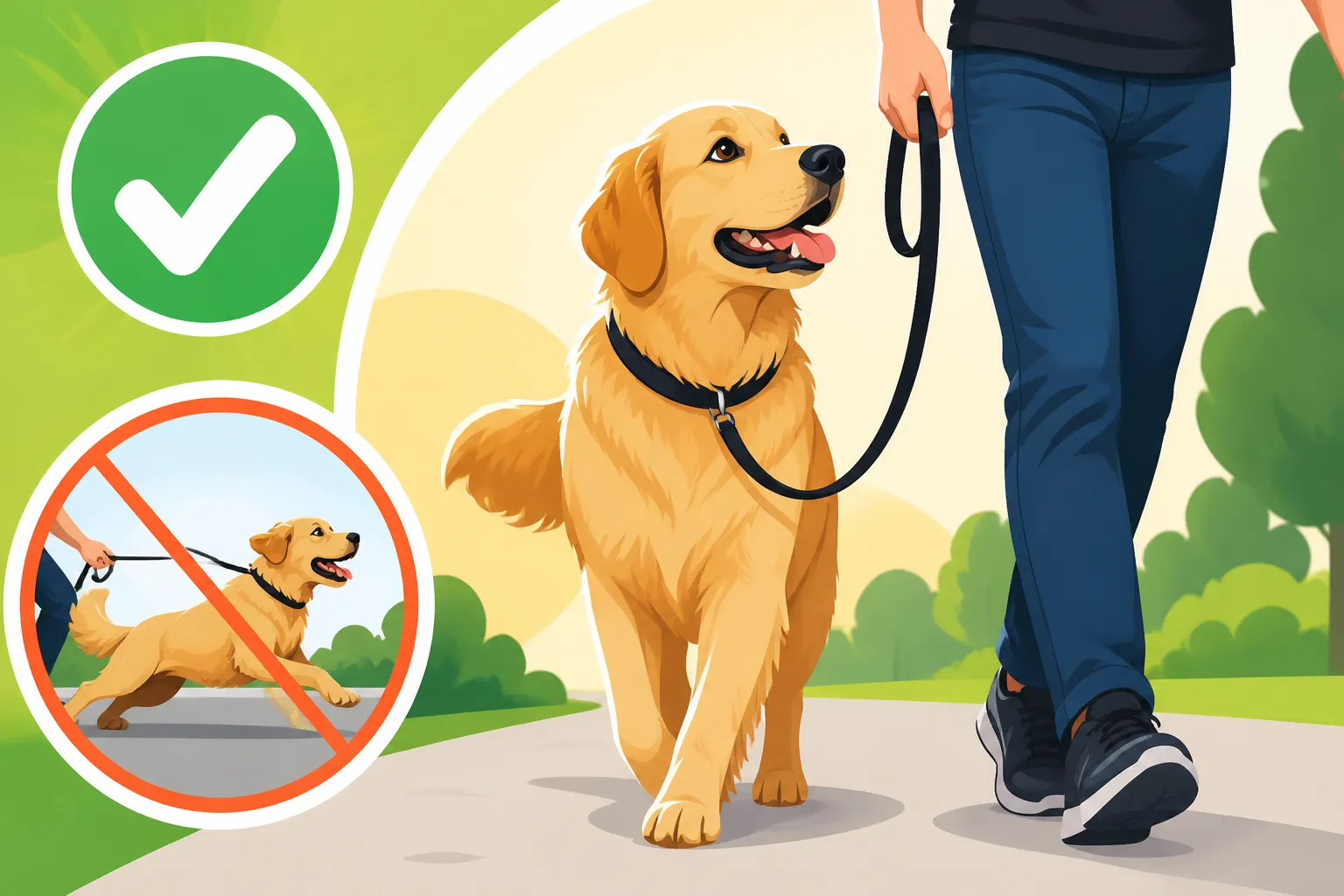
Leash Manners for a Strong Golden Retriever
Oh, the daily tug-of-war! If you're a Golden Retriever parent, you know the frustration of having your arm nearly pulled out of its socket by an enthusiastic, yet utterly untrained, dog on a walk. It's supposed to be a peaceful stroll, a bonding experience, but instead, it often turns into a test of strength and endurance. This comprehensive guide is here to transform those stressful walks into the joyful, controlled adventures you both deserve by teaching you proven strategies for achieving impeccable leash manners with your strong, spirited Golden.
Understanding Why Golden Retrievers Pull on Leash
Let's be honest, it feels personal when your Golden pulls like a freight train. You've walked them a million times, you've tried different collars, and yet, the moment you step outside, it's a full-on sprint. But your Golden isn't trying to make your life difficult; they're simply responding to their instincts and environment. Understanding why they pull is the first step toward teaching them not to.
The Golden Retriever's Natural Instincts
Golden Retrievers were literally bred to retrieve. This means they're eager, driven, and often have a strong desire to get to whatever piques their interest – whether it's a squirrel, a leaf blowing in the wind, or that tantalizing smell just a few feet ahead. Their natural exuberance and powerful build mean that when they want to go, they go. They're also highly intelligent and love to explore with their noses, which can lead them to pull relentlessly to follow a scent trail.
Think about it from their perspective: the world is a symphony of smells and sights, and they want to experience it all, often at top speed. It's not malicious, it's just pure, unadulterated Golden joy and instinct. They haven't learned that a walk is a structured activity with a human partner; they see it as an opportunity to lead the charge. This inherent drive, combined with their robust physique, means that a Golden Retriever can easily overpower an unprepared handler.
Moreover, Goldens are naturally social creatures, and they often want to greet every person and dog they see. This friendly nature, while endearing, can translate into frantic pulling and lunging towards new friends. They don't understand the concept of personal space or polite introductions on a leash, they just want to say hello! This powerful urge to connect, coupled with their physical strength, reinforces the pulling behavior if not properly guided.
Lack of Early Leash Training
Many Golden Retriever puppies start their lives without proper leash training from the very beginning. Owners often assume the puppy will naturally "get it" or that a simple collar will magically teach them to walk politely. However, leash manners are not innate; they are taught. A puppy who learns that pulling gets them closer to what they want, even if it's just a few feet, is essentially being rewarded for that behavior.
Imagine a scenario: you put a leash on your tiny Golden puppy, they pull, you follow. In their mind, pulling works! They got to sniff that interesting patch of grass or greet that person. This seemingly harmless early pulling can quickly escalate as they grow stronger and more confident. By the time they're a rambunctious adolescent Golden, often around 6-18 months old – a period sometimes referred to as the "teenage regression" where training can feel like it goes backward – that ingrained habit of pulling is incredibly difficult to break. It's much harder to un-teach a behavior than to teach the correct one from the start.
Without consistent guidance, a Golden Retriever will default to their instincts, which typically involve moving forward with gusto. They learn to ignore the pressure on their neck or chest because the reward (getting to the destination or object of interest) outweighs the mild discomfort. This is why early, positive reinforcement-based training is so crucial. If your Golden is past the puppy stage, don't worry – it's never too late to start, but it will require more dedication to undo those established patterns.
Excitement and Overstimulation
Golden Retrievers are renowned for their enthusiastic and joyous nature. While this makes them wonderful companions, it can also contribute significantly to pulling on the leash. For many Goldens, stepping outside is an incredibly exciting event. The smells, sounds, and sights of the world are overwhelmingly stimulating, triggering a rush of adrenaline and an intense desire to explore everything immediately.
Picture this: your Golden has been inside for hours, maybe even all day while you were at work. The moment that leash clicks, they anticipate adventure! The fresh air, the scent of other dogs, the rustle of leaves – it's all a sensory overload. This excitement often manifests as frantic pulling, lunging, and an inability to focus on you. They are simply too stimulated to remember their manners or even notice the gentle tug on the leash. It's like trying to have a calm conversation with a toddler in a candy store; their brain is just not in a state to absorb new information or respond to cues.
This overstimulation can be especially challenging in busy environments like a park with other dogs, children playing, or even just a particularly interesting lamppost. Their desire to investigate or greet often overrides any prior training. Recognizing that much of their pulling stems from sheer, uncontained joy and excitement, rather than defiance, helps us approach the training with more empathy and strategic planning. We need to teach them how to manage that excitement and channel it into calm, attentive behavior.
Essential Gear for Leash Training Success
Before you even start talking about "heel" or "loose leash," you need to ensure you have the right tools. Trying to teach a strong Golden Retriever polite leash manners with the wrong equipment is like trying to build a house with a spoon – frustrating and ultimately ineffective. The right gear can make a world of difference in your comfort, your Golden's safety, and the effectiveness of your training.
The Right Collar or Harness
Choosing the correct equipment is paramount for both your Golden's comfort and your control. A standard flat buckle collar, while suitable for tags and identification, often provides little control over a determined Golden Retriever, especially if they are a strong puller. It can put uncomfortable pressure on their throat and neck, potentially causing damage or discomfort without actually stopping the pulling.
Many Golden owners find great success with a front-clip harness. Unlike back-clip harnesses that often encourage pulling (think of how sled dogs pull from their back!), a front-clip harness redirects your dog's momentum. When your Golden pulls, the leash attachment point on their chest turns them gently to the side, making it uncomfortable for them to continue forging ahead. Brands available on Amazon and at pet stores offer various designs, such as the Freedom No-Pull Harness or the Easy Walk Harness, which are popular choices for their effectiveness. These harnesses distribute pressure more evenly across their chest and shoulders, away from their delicate throat.
While some trainers advocate for head halters (like a Halti or Gentle Leader), which give you more control over your dog's head direction, they require careful introduction as some Goldens initially resist them. Always avoid choke chains, prong collars, or other aversive tools that rely on pain or discomfort. Not only can these cause physical harm, but they can also damage your relationship with your dog and make them fearful or reactive. Focus on tools that facilitate positive reinforcement and gentle guidance. To learn more about different options, check out our article on Golden Retriever Pulling and Front-Clip Harnesses.
Leash Selection and Length
Just as important as the harness or collar is the leash itself. For training purposes, a sturdy, standard-length leash (typically 4 to 6 feet) made of durable nylon or leather is ideal. These materials offer a good grip and stand up to the wear and tear of daily walks and training sessions. Avoid retractable leashes during training, especially with a Golden Retriever. Retractable leashes teach your dog that pulling extends their reach, which is the exact opposite of what you want to achieve for loose leash walking. They also offer poor control and can be dangerous, as the leash can suddenly snap taught, potentially injuring you or your dog.
A 6-foot leash provides enough slack for your Golden to walk comfortably beside you without being reined in too tightly, but it's not so long that you lose control in busy environments. For starting out in a quiet yard, a slightly longer, lighter leash (like an 8 or 10-foot cotton lead) might be useful for teaching the concept of staying close without constant tension, but once you're out and about, stick to the standard length. The key is a leash that feels comfortable in your hand and allows you to give clear, consistent signals to your dog.
Additionally, consider the clip on the leash. A strong, secure metal clip that's easy to attach and detach, but won't accidentally come undone, is crucial. Goldens are strong, and a flimsy clip won't hold up to their enthusiasm. A good quality leash is an investment in your training success and your Golden's safety.
High-Value Treats and Training Pouches
Positive reinforcement is the cornerstone of effective leash training for Golden Retrievers. This means rewarding desired behaviors, and for a food-motivated breed like a Golden, high-value treats are your best friend. These aren't just any old kibble; these are delicious, tiny, soft treats that your Golden absolutely loves and will work for. Think small pieces of cooked chicken, cheese, hot dogs, or commercially prepared soft training treats.
The "high-value" aspect is critical because it needs to be enticing enough to capture and hold your Golden's attention even amidst exciting distractions. If they prefer to pull towards that squirrel than get your treat, your treat isn't high-value enough! Cut them into pea-sized pieces so you can give them frequently without overfeeding. You'll be rewarding good behavior constantly in the beginning, so having a plentiful supply is a must.
To keep these treats readily accessible, a training pouch that clips to your waist is indispensable. Fumbling in your pockets for treats interrupts the flow of training and reduces the immediacy of the reward. A training pouch allows you to quickly grab a treat the moment your Golden does something right, reinforcing the behavior instantly. Some pouches even have separate compartments for keys or poop bags, making them highly practical for walks. BAXTER & Bella, for example, often emphasize the importance of having these tools ready for their positive reinforcement training methods, ensuring you're always prepared to reward good choices on the go.
Foundational Principles of Loose Leash Walking
Teaching a Golden Retriever to walk politely on a leash isn't about brute force; it's about communication, consistency, and making the right choices more rewarding than the wrong ones. These foundational principles will set you up for success, no matter where you are in your training journey.
Positive Reinforcement and Lure Training
At the heart of successful Golden Retriever training is positive reinforcement. This means rewarding your dog for performing the desired action – in this case, walking with a loose leash. Instead of punishing pulling, we actively praise and treat when the leash is slack. This teaches your Golden what to do, rather than just what not to do. Goldens thrive on praise and connection with their owners, and using positive reinforcement strengthens that bond while fostering a love for learning.
Lure training is a fantastic way to start. With your Golden on a short leash, hold a high-value treat near their nose. Lure them into position beside you, taking a few steps. As long as they follow the lure and the leash remains loose, mark the behavior with a verbal cue like "yes!" or a clicker, and then immediately give them the treat. Gradually, you can fade the lure, using the hand motion as a visual cue before eventually transitioning to just your verbal command and a relaxed walking pace. The key is to keep the training sessions short, fun, and positive, ending on a high note.
Remember, the goal isn't just to stop pulling; it's to teach your Golden that walking calmly by your side brings rewards. This positive association makes them eager to offer the desired behavior. If you find your Golden struggling to focus, try using even higher-value treats or practicing in a quieter environment. This approach builds confidence and a desire to work with you, rather than against you, on walks.
The "Stop-Start" Method
One of the most effective, yet simple, methods for teaching loose leash walking is the "stop-start" method, sometimes called "be a tree." The premise is straightforward: the moment your Golden Retriever puts tension on the leash, you immediately stop walking. Don't pull back, don't yank, just become a statue. Stand still and wait. The instant the leash slackens – even for a second, because they've stopped pulling or looked back at you – you immediately praise them and start walking again.
This method teaches your Golden that pulling stops their progress, while a loose leash starts it. It's a clear, consistent consequence that they can easily understand. They quickly learn that the only way to get to where they want to go is by keeping the leash loose. In the beginning, you might find yourself stopping every few steps, especially with an enthusiastic young Golden. This is normal and to be expected. Patience is key here.
The brilliance of this method is its clarity. There's no confusion, no mixed signals. Pull equals stop, slack equals go. Over time, your Golden will start to preemptively loosen the leash to keep moving forward. This is where you really start to see progress. Combine this with positive reinforcement (treating for a consistently loose leash) and you've got a powerful training combination. It might feel slow at first, but the consistency pays off enormously in the long run.
Consistency and Patience Are Key
Training a Golden Retriever, especially for something as ingrained as pulling, requires immense consistency and patience. There will be days when your Golden seems to "forget" everything they've learned, particularly during their adolescent phase. This is normal. Every family member who walks the dog must be on the same page, using the same commands, the same techniques, and the same expectations. Inconsistency can confuse your Golden and undo weeks of progress.
Think of it like learning a new language. If you're taught one word one way by one person, and a different way by another, you'll struggle to become fluent. The same applies to your Golden. Make sure everyone understands the chosen method, whether it's the stop-start technique or luring, and uses the designated high-value treats consistently. Short, frequent training sessions (5-10 minutes) are often more effective than one long, exhausting session.
Patience is perhaps the most challenging aspect. It's easy to get frustrated when your strong Golden pulls you off balance or ignores your cues. But remember, they aren't doing it to spite you. Take a deep breath, remind yourself of the long-term goal, and stick to your training plan. Celebrate the small victories – a few steps with a loose leash, a moment of eye contact in a distracting environment. Over time, these small wins build into reliable, enjoyable walks. To further support a positive approach, consider consulting resources like the BAXTER & Bella online puppy school, which emphasizes consistent, force-free methods that foster a strong bond.
Step-by-Step Loose Leash Walking Training
Now that you understand the principles and have your gear, let's break down the practical steps to teaching your Golden Retriever to walk beautifully on a leash. This isn't a race; it's a gradual process, building skills one step at a time.
Starting Indoors or in Low-Distraction Areas
The very first step to success is to begin training in an environment where your Golden Retriever can actually focus on you. This means starting indoors, in your living room, or in a very quiet, fenced backyard. The goal here is to introduce the concept of the leash and walking politely without the overwhelming distractions of the outside world.
Put on your Golden's harness and leash. Let them wear it for a few minutes so they get accustomed to the feeling. Then, with your high-value treats ready in your pouch, take a few steps. The moment the leash is loose, say "yes!" or click, and reward with a treat right at your side. If they pull, simply stop. Wait for the leash to slacken, then reward and resume walking. Practice walking in a straight line, turning, and stopping. Keep these initial sessions very short – just 2-5 minutes – ending before your Golden gets bored or frustrated. The more success they have in a low-distraction setting, the stronger the foundation you build. This is a critical stage that is often overlooked, but it lays the groundwork for all future outdoor walks.
At this stage, your primary focus is helping your Golden understand the connection between a loose leash and forward movement, and between being by your side and receiving delicious rewards. Don't worry about perfection; just aim for understanding. Repeat these sessions several times a day if possible. Think of it as teaching the alphabet before asking them to write a novel. Once they consistently offer a loose leash in your home, you can gradually move to slightly more distracting environments.
Gradually Introducing Distractions
Once your Golden has a solid understanding of loose leash walking indoors, it's time to slowly introduce more challenging environments. This is where many owners get ahead of themselves, taking their dog from the quiet living room directly to a bustling park. Instead, think of a gradient:
- Quiet Yard: Practice in your fenced yard. There are more smells and sounds than indoors, but it's still a familiar space.
- Quiet Street/Sidewalk: Try a quiet street in your neighborhood, perhaps during off-peak hours. Focus on walking just a short distance, 10-20 feet, with success.
- Increasingly Busy Areas: As your Golden improves, gradually move to slightly busier sidewalks, local parks (maybe at less busy times), or walking paths.
During these transitions, remember to lower your expectations initially. Your Golden might pull more in a new environment. That's okay. Go back to basics: stop the moment they pull, wait for the slack, reward the loose leash, and then continue. Keep sessions short and positive. If a particular distraction (like another dog or a person) causes intense pulling, simply change direction or increase the distance until your Golden can re-focus. The goal is to set them up for success, not to overwhelm them. Always bring plenty of those high-value treats from your Amazon order!
Handling Pulling Moments Proactively
Despite your best efforts, your Golden Retriever will pull. It's inevitable, especially as you introduce new stimuli. The key is how you react to these moments. Instead of getting frustrated or yelling, which can confuse or scare your dog, you need to be proactive and consistent with your chosen method.
If your Golden starts to pull, immediately implement the "stop-start" method. Stop dead in your tracks. Don't move forward until that leash is slack. It might take a few seconds, or even a minute, but wait them out. The moment there's slack, mark it, reward it, and continue walking. Be vigilant; the instant you feel tension, you stop. This proactive approach prevents the pulling from becoming a sustained habit during the walk. It teaches them that pulling literally gets them nowhere.
Another proactive strategy is to constantly reward your Golden for being in the correct position (loose leash, by your side) before they even have a chance to pull. Every few steps, if the leash is loose and they're walking nicely, give a quick "yes!" and a treat. This creates a powerful positive association with walking politely and keeps their focus on you. If you anticipate a major distraction (like another dog approaching), proactively ask for a "watch me" cue, reward heavily for attention, and maintain a loose leash. Sometimes, simply changing direction before they have a chance to pull towards a distraction can also be very effective.
Advanced Leash Manners and Troubleshooting
Once your Golden Retriever understands the basics of loose leash walking, you can build upon that foundation and address more specific challenges. This is where you refine their skills and tackle those trickier situations that can still make walks a headache.
Teaching "Heel" and Advanced Cues
Loose leash walking means your Golden isn't pulling, but they can still wander a bit, sniff around, and generally be a few feet from your side. For more precise control, especially in crowded areas or when you want your dog to be truly attentive, you'll want to teach a "heel" command. Heel means your Golden walks directly by your side, typically with their shoulder aligned with your leg, and maintains that position until released.
Start in a quiet environment, just like with initial loose leash training. With your Golden at your side, hold a treat near their nose. Take a step or two, keeping the treat by your leg, luring them into the heel position. Say "heel" as you move. After a few steps, stop, mark the behavior ("yes!" or click), and reward generously. Gradually increase the number of steps you take before rewarding. Practice turns, changes in speed, and eventually, weaving through mild distractions. The key is to make "heel" a highly rewarding position to be in. To dive deeper into precise obedience, check out our guide on Teaching a Golden Retriever to Heel.
Advanced cues can also include "leave it" (for ignoring tempting objects on the ground), "wait" (for pausing at curbs or doorways), and "go say hello" (for controlled greetings, if you choose to allow them). These cues provide you with a comprehensive toolkit for navigating the world with your Golden, offering clear communication and reinforcing your leadership as the one making decisions on the walk.
Managing Leash Reactivity
Leash reactivity is a common and incredibly frustrating issue where a Golden Retriever might bark, lunge, or growl at other dogs, people, or objects while on a leash. This isn't aggression in most cases; it's often a manifestation of fear, frustration, or overstimulation. It can make walks unbearable and embarrassing.
The most effective way to manage leash reactivity is through desensitization and counter-conditioning. This involves gradually exposing your Golden to the trigger (e.g., another dog) at a distance where they are aware but not reacting. This "threshold" distance is crucial. The moment your Golden notices the trigger, but before they react, you start treating them with high-value rewards. The goal is to change their emotional response from negative (fear, frustration) to positive (yay, treats! the other dog means good things!).
If your Golden starts to react, you're too close. Increase the distance immediately. The principle is to keep them under their threshold, where they can still learn. Practice parallel walking with a calm "helper" dog at a distance, or find a park where you can observe dogs from afar. Consistency is vital, and these sessions should be positive and short. In severe cases, or if you're struggling, seeking guidance from a certified professional dog trainer specializing in reactivity is highly recommended. For more insights on this challenging behavior, read our article on Golden Retriever Leash Reactivity Toward Dogs.
What to Do When Your Golden Regresses
Just when you think you've got it mastered, your Golden Retriever might suddenly seem to forget everything they've learned and start pulling again. This "regression" is a common phase, especially during adolescence (roughly 6 months to 2 years of age), but can happen at any time due to new environments, changes in routine, or simply a burst of hormones. Don't despair; it doesn't mean your training has failed.
The first step is to stay calm and not get frustrated. Reacting emotionally can make the situation worse. Next, identify the potential cause. Is there a new distraction? Has your routine changed? Are you being less consistent? Often, regression is a sign that you need to go back to basics. Revisit the low-distraction environments and the "stop-start" method. Use those super high-value treats again and reinforce every single loose-leash step.
Sometimes, a regression is simply a phase, and with consistent re-training, your Golden will get back on track. Other times, it might signal that you pushed them too fast into more distracting environments. Slow down, build confidence in simpler settings, and then gradually reintroduce challenges. Remember that Golden Retrievers, especially during adolescence, have a lot of energy and an exploratory spirit. More exercise and mental stimulation can sometimes help channel that energy more productively. For deeper understanding of this phase, consider exploring resources on the Golden Retriever Teenage Regression.
Beyond the Leash: Reinforcing Good Habits
Leash manners aren't just about what happens on the walk; they're deeply connected to your Golden Retriever's overall well-being, training, and relationship with you. Reinforcing good habits extends far beyond the leash itself, creating a more balanced and attentive companion.
Importance of Daily Exercise and Mental Stimulation
A tired Golden Retriever is a well-behaved Golden Retriever. These dogs were bred for activity and have a high energy level. If they're not getting adequate physical exercise and mental stimulation, that pent-up energy will manifest in less desirable ways, often including pulling on the leash. A Golden who is bored or hasn't had a chance to burn off steam will find every outdoor scent and sight incredibly exciting, making calm walking much harder.
Aim for at least one to two hours of active exercise daily. This could include brisk walks (once leash manners are established!), runs, swimming (many Goldens love the water!), or vigorous games of fetch in a secure area. Beyond physical exertion, mental stimulation is equally crucial. Puzzle toys, scent work games, trick training, or even just regular short training sessions can engage their intelligent minds and reduce boredom. A Golden Retriever who has had their needs met is much more likely to be calm and attentive on a structured walk. Explore our article on Daily Walk Length for a Golden Retriever and Exercise a Golden Retriever Needs Each Day for more specific guidance.
Consider incorporating interactive toys that make your Golden think, or hiding treats around the house for them to sniff out. This kind of "work" can be just as tiring as physical exercise and helps them focus. A well-exercised and mentally engaged Golden is not only happier but also a much better student on the leash.
Socialization for Calm Outdoor Experiences
Proper socialization from a young age is incredibly important for a Golden Retriever to develop into a well-adjusted adult who can handle various outdoor situations calmly. This means exposing them to a wide variety of sights, sounds, people, and other friendly dogs in a positive and controlled manner during their critical socialization windows. A well-socialized Golden is less likely to be fearful or overly excited by new stimuli on a walk, reducing the urge to pull or react.
If you have a puppy, focus on positive experiences with new things. Take them to different places (once fully vaccinated), let them observe from a distance, and reward them for calm curiosity. Enroll them in puppy classes where they can safely interact with other puppies. For adult Goldens who may have missed out on early socialization or who exhibit fear/over-excitement, it's never too late, but it requires a more structured approach. This often involves very gradual exposure, always keeping them under their reactivity threshold, and pairing new experiences with high-value treats.
A Golden who is comfortable and confident in different environments is less likely to be overwhelmed and therefore more likely to maintain good leash manners. Proper socialization helps them understand that the world isn't a scary or over-stimulating place, allowing them to focus more on you, their handler. For a detailed roadmap, read our comprehensive guide on Golden Retriever Puppy Socialization Windows.
Maintaining Consistency Throughout Your Golden's Life
Achieving loose leash walking isn't a "one and done" training exercise; it's an ongoing commitment to consistency throughout your Golden Retriever's entire life. Just like humans, dogs can forget things if they're not reinforced, or they might test boundaries. What works at one age or in one environment might need slight adjustments as they mature or encounter new challenges.
This means continuing to use your chosen training methods (like the stop-start method) every single time you walk your dog. It means regularly refreshing their memory on cues like "heel" and "leave it." It also means ensuring that everyone who walks your Golden – family members, dog walkers, pet sitters – understands and applies the same rules. Inconsistency, even occasionally, can quickly undermine weeks or months of diligent training.
As your Golden ages, their energy levels might change, and you might need to adjust their exercise routine. However, the expectation for polite leash manners should remain constant. Continuous reinforcement, even if it's just a verbal "good job!" for a loose leash, helps cement these behaviors for life. Remember, your Golden is always learning, and maintaining a consistent approach ensures they remain a joy to walk, whether they're a rambunctious youngster or a distinguished senior.
Common Mistakes to Avoid in Leash Training
Even with the best intentions, it's easy to fall into common pitfalls that can hinder your Golden Retriever's leash training progress. Being aware of these mistakes can help you sidestep frustration and ensure a smoother journey toward enjoyable walks.
Using Aversive Tools and Methods
One of the biggest mistakes dog owners make, especially when faced with a strong pulling Golden Retriever, is resorting to aversive tools or methods. This includes choke chains, prong collars, shock collars, or leash corrections that involve yanking or punishing the dog. While these tools might temporarily stop pulling due to discomfort or pain, they come with significant downsides.
Firstly, they can cause physical injury to your Golden's neck, throat, or spine. Secondly, and perhaps more importantly, they damage the trust and bond you share with your dog. Training should be a cooperative effort, not a battle. Aversive methods can lead to fear, anxiety, and even aggression in dogs, as they associate the pain or discomfort with the presence of other dogs, people, or even just the act of walking itself. This can exacerbate existing issues like leash reactivity or create new behavioral problems.
Instead of teaching your Golden what to do, these methods only teach them what not to do out of fear. This doesn't foster a love for walking or a desire to work with you. Stick to positive reinforcement techniques and humane equipment like front-clip harnesses or head halters (introduced carefully), which guide rather than punish. Consider enrolling in classes or working with a certified professional dog trainer who uses positive, force-free methods, such as those often advocated by platforms like BAXTER & Bella.
Inconsistent Training and Expectations
Inconsistency is the silent killer of good leash manners. If you sometimes allow your Golden Retriever to pull to get to the park, but other times you enforce loose leash walking, you're sending mixed signals. Your Golden doesn't understand "sometimes." They learn that if they pull enough or at the right time, it works. This makes training incredibly confusing and frustrating for both of you.
Every person who walks your Golden must adhere to the same rules, use the same cues, and apply the same methods. If one family member lets them drag them down the street, while another tries to train, the Golden will quickly figure out who they can "get away with it" with. This means sitting down as a family and agreeing on a consistent approach.
Similarly, setting unrealistic expectations can lead to frustration. Don't expect your Golden to go from pulling marathoner to perfect heel in a week. Progress is gradual, and there will be ups and downs. Celebrate small successes, and don't get discouraged by setbacks. A consistent training routine, even if it's just a few minutes a day, will yield far better long-term results than sporadic, intense sessions followed by periods of laxity. Remember that a young Golden's attention span is limited; review our guide on Golden Retriever Training Sessions That Are Too Long to optimize your approach.
Getting Frustrated and Giving Up
It's natural to feel frustrated when your strong, exuberant Golden Retriever is pulling hard, barking at everything, or ignoring your cues. We've all been there! But giving in to that frustration – by yelling, yanking, or simply giving up and letting them pull – is counterproductive. Your Golden will pick up on your stress, and it can make them more anxious or less willing to engage in training.
If you find yourself getting frustrated, take a break. End the training session on a positive note (even if it's just a single step of loose leash walking followed by a huge reward), and try again later or the next day. Sometimes, stepping away and returning with a fresh perspective is all you need. Remember why you started this: to have enjoyable, stress-free walks with your beloved companion.
Leash training is a journey, not a destination. It requires patience, persistence, and a belief in your Golden Retriever's ability to learn. They are intelligent, eager-to-please dogs, and with the right guidance, they absolutely can learn impeccable leash manners. Don't throw in the towel. If you're truly stuck, don't hesitate to seek help from a professional positive reinforcement trainer who can offer personalized guidance and encouragement. Investing in their expertise can save you a lot of headache and help you achieve your walking goals. You might also find valuable insights in our article, Choosing a Positive Reinforcement Trainer for a Golden.
| Harness/Collar Type | Pros for Golden Retrievers | Cons for Golden Retrievers | Best for |
|---|---|---|---|
| Flat Buckle Collar | Good for ID tags, widely available | Little control over pulling, can cause throat strain, reinforces pulling if not used with training | ID, very mild pullers, general walking once trained |
| Front-Clip Harness | Redirects pulling force, good control, doesn't put pressure on neck, comfortable for dog | Can sometimes tangle legs (less common with proper fit), some dogs dislike initial feel | Moderate to strong pullers, training loose leash walking |
| Back-Clip Harness | Comfortable, good for small/older dogs, easy to put on | Can encourage pulling (like a sled dog harness), less control over strong pullers | Dogs already trained to walk politely, gentle strolls |
| Head Halter (e.g., Gentle Leader) | Excellent control over the head, redirects focus, gentle | Some dogs resist initially (requires positive introduction), looks like a muzzle | Strong pullers, reactive dogs, precise control for training |
Disclaimer
This article is for general informational purposes only and does not constitute professional advice. Laws, prices and regulations vary by location and change over time. Consult a qualified professional for guidance on your specific situation.