Golden Retriever Pulling and Front-Clip Harnesses
There’s almost nothing more frustrating for a Golden Retriever owner than taking your beautiful, enthusiastic dog for a walk only to feel like your arm is being yanked out of its socket. The joy of a peaceful stroll can quickly turn into a grueling battle of wills against a strong, excited Golden who pulls relentlessly. This comprehensive guide will walk you through why your Golden pulls, how front-clip harnesses work as a valuable tool, and how to combine them with effective training for truly enjoyable walks.
Why Your Golden Retriever Feels the Need to Pull
It’s easy to get exasperated when your Golden pulls on the leash, especially when you feel like you’ve tried everything. But understanding why they pull can help you approach the problem with more patience and a better strategy. It’s not about spite or disobedience; it’s often deeply rooted in instinct and how they’ve learned to navigate the world.
Instinctual Behaviors That Drive Pulling
Golden Retrievers are dogs of action, bred for retrieving, with a strong desire to explore and engage with their environment. When you step outside, their senses are immediately overwhelmed with exciting new smells, sights, and sounds. That squirrel darting across the lawn, the scent of another dog around the corner, or the distant sound of children playing – all of these can trigger a powerful urge to investigate. This intense curiosity, combined with their natural exuberance, means they often want to get to whatever piques their interest right now.
Think about it from your Golden's perspective: a walk is an adventure! Every blade of grass holds a story, every distant sound a potential friend or foe, and every person a chance for a head scratch. Their world is much richer in sensory input than ours, and their instinct is to rush towards these stimuli. This isn't naughtiness; it's simply a strong, natural drive that needs gentle guidance and redirection. They're not trying to be difficult; they're trying to be dogs.
How a Lack of Leash Manners Training Reinforces Pulling
Unfortunately, many of us, without realizing it, inadvertently teach our Goldens that pulling works. When your Golden strains against the leash and you keep moving forward, even slowly, they learn that pulling gets them closer to their desired destination or object. It becomes a self-reinforcing behavior. They pull, you move, they get what they want (or closer to it), and the cycle continues.
Imagine a puppy who is barely strong enough to pull, but you tug them along anyway because you need to get home. As they grow bigger and stronger, that habit of pulling against pressure has been established, even if it wasn't intentional. They never learned that walking politely with a loose leash is the way to get forward motion. Without consistent, positive training that teaches them otherwise, their natural instinct to pull will only become stronger, making walks less enjoyable for both of you. This is why consistent training, ideally starting from puppyhood, is so crucial for developing good Leash Manners for a Strong Golden Retriever.
The Mechanics of Canine Pulling: Understanding the Opposition Reflex
Have you ever wondered why, no matter how much you pull back, your Golden seems to pull even harder? It's not just their sheer strength; there's a biological reason behind it that makes traditional collars and leashes particularly challenging for strong, enthusiastic dogs.
The Opposition Reflex: How Dogs Naturally Pull Against Pressure
Dogs possess what’s known as an "opposition reflex" or "tugging reflex." This is an innate response where they naturally brace and push against pressure. It's why two dogs playing tug-of-war can hold on so fiercely, or why a sled dog can pull so effectively into its harness. When you pull back on the leash attached to a collar or even a standard back-clip harness, your Golden feels that pressure and their instinct is often to lean into it and pull in the opposite direction. It's a primal, physical reaction, not a deliberate act of defiance.
This reflex means that the harder you pull, the harder your Golden might pull back. It becomes a constant struggle, with neither of you truly winning. You're both working against each other, creating tension and frustration instead of cooperation. Understanding this reflex is key to realizing that many traditional methods of leash correction, like sharp tugs, can actually exacerbate the problem rather than solve it, because you're feeding directly into their natural inclination to pull.
The Problem with Traditional Collars and Your Golden's Throat
While flat collars are great for identification tags and quick backyard trips, they can be problematic for consistent leash walking, especially with a strong-pulling Golden Retriever. When your Golden pulls on a flat collar, all that pressure is concentrated on their throat, impacting their trachea, esophagus, and even the delicate structures around their neck. You might hear them coughing, gagging, or seeing them strain their neck. Over time, this can lead to real health issues, like tracheal collapse or damage to the thyroid gland, not to mention the discomfort it causes them during every walk.
Even a slip collar or choke chain, while designed to "correct" pulling, works by applying pressure and constriction to the throat, often causing pain or fear, and still engaging that opposition reflex. While some trainers advocate for them, many positive reinforcement trainers find them counterproductive and potentially harmful, both physically and psychologically. Our Goldens are too precious for tools that risk their long-term health or create negative associations with something as simple as a walk. We want walks to be fun, not a painful experience.
What Exactly Is a Front-Clip Harness?
So, if traditional collars can be problematic and the opposition reflex is real, what’s a better solution? Enter the front-clip harness, a tool that many Golden Retriever owners swear by for transforming their walking experience.
How They Redirect Pulling with a Simple Clip
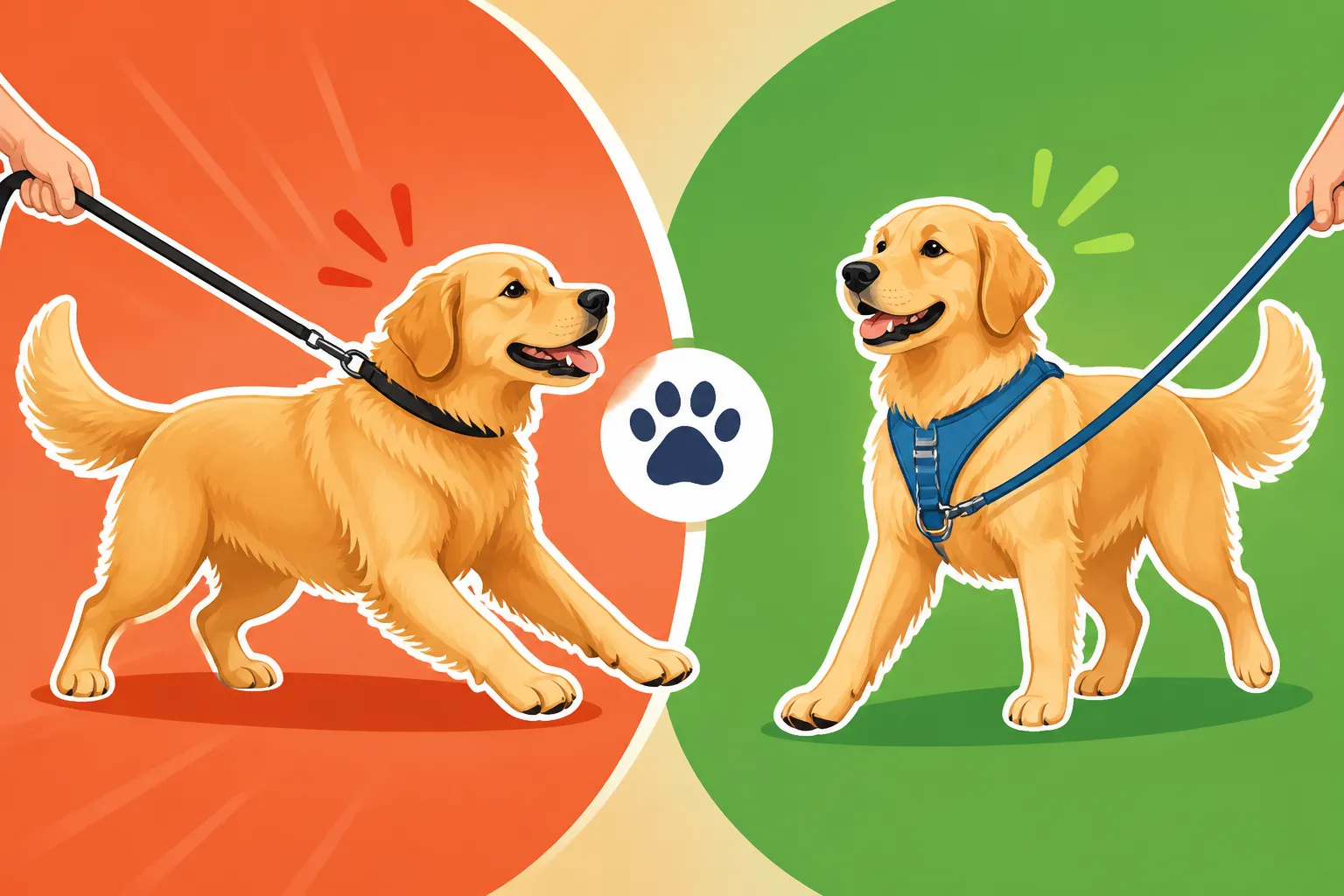
A front-clip harness, sometimes called a "no-pull harness," is designed with a leash attachment ring located on the dog's chest, rather than on their back. The genius of this design lies in its physics. When your Golden starts to pull forward, the leash, attached to the front ring, pulls them gently to the side. Instead of being able to lean into the pressure and pull straight ahead, they are turned around, often facing you or moving off to the side. This redirection makes it physically awkward for them to continue pulling with full force in their desired direction.
This isn't about pain or discomfort; it's about leverage. It works with their opposition reflex by redirecting it. Instead of them pulling against you, they end up turning themselves, which naturally disengages the strong forward momentum. Many owners report an immediate, noticeable difference in their dog's pulling behavior, often on the very first walk. It takes the power out of their pull and makes it easier for you to guide them. You can find a wide variety of these harnesses on platforms like Amazon, offering different styles and materials to suit your Golden's needs.
Common Designs and Features of Front-Clip Harnesses
Front-clip harnesses come in various styles, but they all share the fundamental design of a front attachment point. Most consist of straps that go around your dog's chest, behind their front legs, and over their back. They are typically made from durable, yet comfortable, materials like nylon webbing, often with padded sections around the chest and under the armpits to prevent chafing.
Some popular designs include:
- Y-front harnesses: These have a Y-shape over the chest, which allows for a full range of shoulder movement and often distributes pressure more evenly.
- Strap harnesses: More basic designs with adjustable straps that criss-cross over the chest.
- Dual-clip harnesses: Some harnesses offer both a front and a back clip. The front clip is for no-pull control, while the back clip can be used for casual walks once loose-leash skills are established, or for attaching a safety lead.
When choosing one, look for features like multiple adjustment points for a custom fit, reflective stitching for nighttime visibility, and strong, reliable buckles. The goal is always comfort and security for your Golden, ensuring the harness doesn't rub or restrict their movement in any way.
Pros and Cons of Using a Front-Clip Harness
While front-clip harnesses can be a game-changer for many Golden Retriever owners struggling with pulling, it's important to understand that they are a tool, not a magic bullet. Like any training aid, they come with their own set of advantages and potential drawbacks.
Advantages for Owners and Dogs: Immediate Relief and Safer Walks
The most significant advantage of a front-clip harness is the immediate relief it provides from pulling. Owners often report that walks become much more manageable almost instantly. Instead of fighting against a strong, determined Golden, you gain a level of control that allows for more relaxed and enjoyable outings. This reduction in pulling also means less strain on your arm and shoulder, and less risk of injury from being yanked off your feet.
For your Golden, a front-clip harness offers a safer alternative to collars that put pressure on their delicate neck and throat. With the pressure distributed across their chest and shoulders, there's no risk of tracheal damage, choking, or neck strain, which is especially important for breeds prone to certain health issues. It transforms the walking experience from a potential source of discomfort into a more pleasant activity, fostering a better relationship between you and your dog during walks. It also allows you to focus on Loose Leash Walking With a Golden Retriever techniques, rather than just surviving the walk.
Potential Drawbacks and Misconceptions
Despite their benefits, front-clip harnesses aren't without potential downsides. One common complaint is chafing, particularly under the armpits or around the chest, if the harness isn't fitted correctly or made from unsuitable material. Always check for redness or irritation after walks, especially when first introducing the harness. Another misconception is that these harnesses train the dog not to pull; they don't. They manage pulling. Your Golden still needs to learn loose-leash walking skills. If you rely solely on the harness without incorporating positive reinforcement training, your dog might still pull if you switch back to a different collar or harness in the future.
Some Goldens might also find the sensation of the front strap a bit unusual at first, leading to some pawing or trying to "shrug off" the harness. This usually passes with positive association and desensitization, but it's something to be aware of. Lastly, while they offer excellent control, they can sometimes get tangled with longer leashes, or if your Golden tries to spin around quickly. For puppies, a Crate Training a Golden Retriever Puppy approach can sometimes help them get used to wearing equipment, as they might wear a light collar in their crate.
Here's a quick comparison of common leash walking tools:
| Tool Type | Primary Function | Pros | Cons | Best Use Case |
|---|---|---|---|---|
| Flat Collar | Identification, leash attachment | Simple, inexpensive, good for ID tags | No pull control, can cause tracheal damage if dog pulls strongly | ID, light leash guidance, well-trained dogs |
| Back-Clip Harness | Leash attachment (clip on back) | Distributes pressure evenly across body, good for dogs with neck issues | Can encourage pulling (opposition reflex), less control over strong pullers | Dogs that don't pull, small dogs, car safety |
| Front-Clip Harness | Reduces pulling by redirecting momentum | Immediate reduction in pulling, safer for dog's neck, good control | Can chafe if ill-fitting, doesn't teach loose leash walking on its own | Managing strong pullers, training loose leash walking |
| Head Halter (Halti/Gentle Leader) | Guides head, therefore guiding body | Excellent control, very effective for strong pullers, no neck strain | Some dogs dislike it, can be mistaken for a muzzle, requires careful introduction | Very strong pullers, reactive dogs, advanced training |
Using a Front-Clip Harness Effectively with Your Golden
Simply putting a front-clip harness on your Golden isn't the whole story. To get the most out of it and truly improve your walks, you need to ensure it fits correctly, combine it with positive reinforcement training, and help your dog feel comfortable wearing it.
Achieving the Right Fit: Preventing Escape or Discomfort
A poorly fitted harness is ineffective at best and harmful at worst. If it's too loose, your clever Golden might be able to back out of it, especially if they're spooked or trying to avoid something. If it's too tight, it can cause chafing, restrict movement, or even impede their breathing. The general rule of thumb for fitting a harness is the "two-finger rule": you should be able to comfortably slip two fingers under any strap.
Pay close attention to the straps around the chest and under the armpits. These are common areas for rubbing, especially on Goldens with their thick fur. Adjust the straps so they are snug but not tight, ensuring the harness doesn't shift excessively when your dog moves. The chest piece should sit low enough that it doesn't restrict shoulder movement, but high enough not to interfere with their natural gait. Regularly check the fit as your Golden grows or if their weight fluctuates.
Integrating with Leash Training Techniques for Loose Leash Walking
A front-clip harness is a fantastic management tool, but it's not a training tool on its own. It helps you gain control, but the real magic happens when you pair it with consistent positive reinforcement training for loose leash walking. Think of the harness as the crutch that allows you to start learning to walk properly. While wearing the harness, practice rewarding your Golden whenever the leash is loose. Stop walking the moment the leash goes taut, and only resume when there's slack.
Use high-value Best Treats for Training a Golden Retriever to reward them for staying by your side and looking at you. Short, frequent training sessions are often more effective than long, drawn-out ones, especially for a young Golden. Remember that Golden Retriever Training Sessions That Are Too Long can lead to boredom and frustration for your dog. Tools like a clicker can also be incredibly useful for marking the exact moment they achieve a loose leash. Over time, your Golden will associate a loose leash with forward movement and rewards, teaching them the desired behavior. The online puppy school BAXTER & Bella offers comprehensive guidance on these exact training techniques, which can be invaluable for new and experienced owners alike.
Desensitization and Positive Association: Making it a Good Experience
Some Goldens, especially puppies or those new to harnesses, might be hesitant to wear a front-clip harness. It's a new sensation, and it covers more of their body than a simple collar. To make it a positive experience, introduce the harness gradually and always pair it with good things. Start by letting them sniff the harness, then reward them. Place it on their back for a few seconds, then remove it and reward them. Slowly increase the duration, offering treats and praise the whole time.
When you first put the harness on, keep it on for short periods, perhaps during meal times or while playing their favorite game indoors. This helps them associate the harness with fun and positive experiences. Don't immediately go for a long walk. A few short, successful trips outside, even just to the mailbox, can build their confidence. If they scratch at it or seem uncomfortable, check the fit again and go back a step in your desensitization process. Patience and positive reinforcement are key here.
Beyond the Harness: Comprehensive Leash Training and Support
While a front-clip harness is a powerful ally in the battle against pulling, remember it's just one component of a holistic approach to leash training. True success comes from consistent training, understanding your dog's needs, and knowing when to seek additional support.
Reinforcing Loose Leash Walking with Rewards and Consistency
The core of successful loose leash walking lies in consistent positive reinforcement. Every time your Golden walks with a slack leash, they should be rewarded. This could be a tasty treat, verbal praise, or a moment of joyful play. The "stop and go" method is incredibly effective: the moment the leash tightens, you stop dead in your tracks. Only when your Golden looks back at you and the leash goes slack do you resume walking. This teaches them that pulling literally gets them nowhere.
Consistency is paramount. Everyone who walks your Golden, from family members to dog walkers, needs to use the same methods and expectations. Even a single walk where pulling is allowed can set back weeks of progress. Practice in low-distraction environments first, like your quiet street, before gradually introducing more stimulating places like the park or a busy downtown area. Over time, your Golden will internalize the concept that a loose leash is the key to continuing the fun adventure. For some Goldens, Golden Retriever Chewing Through Adolescence can be a particularly challenging phase where focus may dip, requiring extra patience in training.
Alternative Tools and Their Uses
While front-clip harnesses are excellent for most pullers, other tools might be considered for specific situations or in conjunction with the harness. Head halters, like the Gentle Leader or Halti, offer even more direct control by guiding your dog's head, and thus their body. They are particularly effective for very strong pullers or reactive dogs, as they prevent the dog from pulling with their full body weight. However, many dogs require a more extensive desensitization period to accept a head halter.
Back-clip harnesses, while not ideal for strong pullers due to the opposition reflex, are excellent for dogs who already walk well on a leash, for car safety, or for attaching long lines during supervised outdoor play. The key is to choose the right tool for the job and always prioritize your Golden's comfort and safety. If you're exploring different options or struggling to decide, your local pet supply store, or online retailers like Amazon, will have a range of options, and store staff can sometimes help with fitting.
Professional Help and Advanced Training for Stubborn Cases
If you've been diligently working with a front-clip harness and positive reinforcement for weeks or months and are still struggling, don't hesitate to seek professional help. A certified professional dog trainer or behaviorist can offer personalized guidance, identify specific triggers for your Golden's pulling, and help you refine your techniques. They can also assist if your Golden exhibits reactivity or fear on walks, which can contribute to pulling.
Group Golden Retriever Training Class Costs can be a great way to work on leash manners in a distracting but controlled environment, with the guidance of an expert. For more intense issues, one-on-one sessions might be more appropriate. Companies like BAXTER & Bella offer online resources and one-on-one coaching that can bridge the gap for owners looking for expert advice from home. Investing in professional training is an investment in a happier, more harmonious life with your Golden Retriever, making walks enjoyable for both of you for years to come. Remember, every dog is an individual, and sometimes a fresh pair of eyes can make all the difference.
Disclaimer
This article is for general informational purposes only and does not constitute professional advice. Laws, prices and regulations vary by location and change over time. Consult a qualified professional for guidance on your specific situation.