Golden Retriever Resource Guarding
Few things can be as disheartening for a Golden Retriever owner as seeing their normally sweet, gentle dog suddenly growl, snarl, or even snap over a toy or a stolen sock. This isn't just a minor annoyance; it’s a deeply instinctual, sometimes frightening, behavior known as resource guarding, and it can erode the trust between you and your beloved companion. This guide will walk you through understanding what resource guarding is, how to recognize its earliest signs in your Golden, and most importantly, how to prevent and manage this challenging behavior to keep your home happy and safe.
Understanding Golden Retriever Resource Guarding
Resource guarding is essentially a dog's attempt to control access to a valued item or space by displaying behaviors that warn others to stay away. For a breed as famously amiable as the Golden Retriever, it can be particularly perplexing and upsetting for owners to witness. But it's important to remember that this isn't about being "mean" or "dominant"; it's a deep-seated instinct for survival that can manifest in various ways.
What Resource Guarding Looks Like
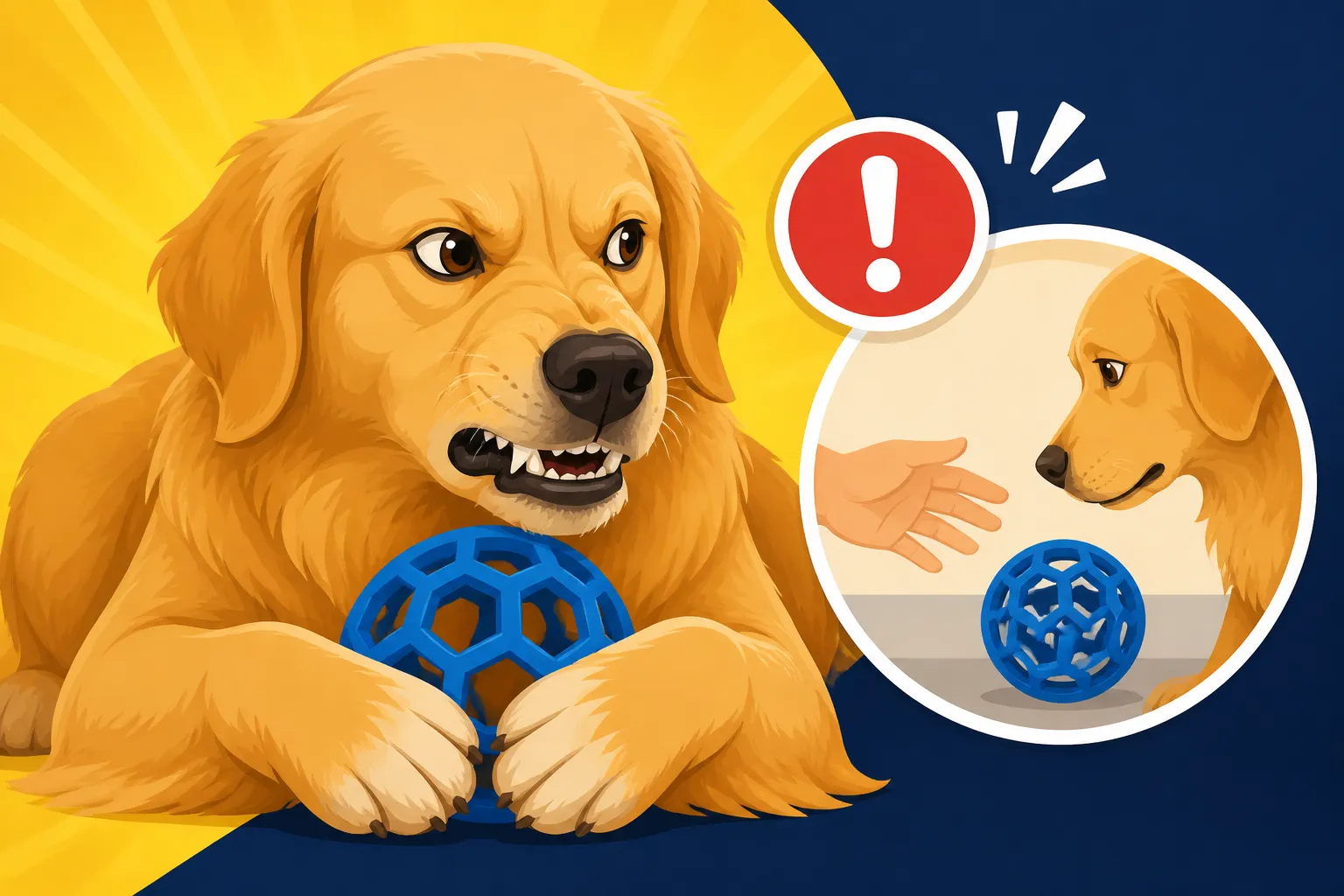
Resource guarding isn't always a dramatic, full-blown aggressive display. It often starts subtly, escalating over time if not addressed. Imagine your Golden is happily chewing on a rawhide, and you approach. An early sign might be a quick stiffening of their body, perhaps their head lowering slightly over the chew, or a momentary pause in chewing as they watch you. It's a non-verbal "don't come closer" signal.
As the guarding behavior progresses, you might observe more overt signs. This could include a low growl, a snarl showing teeth, a quick lunge, or even a snap in the air or a bite if the perceived threat (you or another pet) doesn't retreat. These displays are all about communication – your Golden is saying, in no uncertain terms, that they are protecting their perceived treasure. The item itself can be anything: a food bowl, a favorite ball, a tissue they snatched from the wastebasket, or even a spot on the couch.
It’s crucial to observe these signals carefully and understand that they are part of a communication ladder. A growl is a warning; if the warning is ignored, the dog may feel compelled to escalate to a bite. Our goal in managing this is to respect those early warnings and teach our dogs that our approach means good things, not threats to their possessions.
The Root Causes of Possessiveness
So, why would a Golden Retriever, known for their "soft mouth" and gentle nature, exhibit such possessiveness? While Goldens are generally biddable and people-oriented, they are still dogs, and guarding resources is a natural canine instinct. In the wild, guarding food, mates, or den sites is essential for survival. Domestication hasn't completely erased this ancient programming.
Several factors can contribute to resource guarding. It can be a genetic predisposition, meaning some lines might be more prone to it than others. Early experiences also play a huge role. If a puppy had to fight for food in its litter, or if resources were scarce, they might develop guarding tendencies. Sometimes, owners unintentionally reinforce the behavior; for example, if every time a dog growls over a toy, the owner backs away, the dog learns that growling works. Stress, anxiety, or feeling insecure can also exacerbate guarding. A dog that feels vulnerable might be more inclined to protect what little they feel they have control over. Understanding these roots helps us approach the issue with empathy rather than frustration.
Is it Normal Golden Retriever Behavior?
While resource guarding is a natural canine instinct, the severity and frequency of it in a Golden Retriever are not necessarily "normal" or desirable. Goldens are, by nature, eager to please and generally tolerant. Most healthy, well-socialized Golden Retrievers might show a fleeting moment of hesitation if another dog approaches their prized bone, but they typically don't escalate to aggression with people or even other dogs they trust.
If your Golden is consistently guarding items, showing overt aggression, or if the behavior is directed at family members, it's a significant behavioral issue that needs to be addressed. It's not a trait to be ignored or excused simply because "dogs do that." While the instinct is normal, allowing it to become a deeply ingrained and aggressive behavior is not conducive to a safe and happy home life with a Golden Retriever. It indicates a breakdown in trust or a lack of appropriate training and management. Addressing it quickly helps reinforce the positive aspects of the Golden Retriever temperament we all love.
Spotting the Early Signs of Resource Guarding
Catching resource guarding early, especially in a Golden Retriever puppy, can make a world of difference. The sooner you recognize the subtle cues, the easier it is to intervene and redirect the behavior positively before it becomes deeply ingrained. Don't wait for a full-blown growl or snap; those initial, barely perceptible signals are your key indicators.
Subtle Signals in Golden Retriever Puppies
Golden Retriever puppies are naturally curious and often mouthy, which can sometimes be confused with resource guarding. However, there are distinctions. When a puppy is resource guarding, even subtly, you might notice a shift in their body language. If your puppy has a toy or a chew, and you approach, they might freeze, become very still, and stop breathing for a moment. Their ears might flatten slightly, or their eyes might dart towards you then back to the object. They might also quickly gulp down their food or chew faster when you get near their bowl.
Another common early sign is a "body block." The puppy might physically lean over the item, turn their back to you, or subtly move their body to put distance between you and their treasure. They might even try to pick up the item and move it away from you, to a more "private" spot. These are all attempts to communicate, "This is mine, and I don't want you to take it." While they might not be growling yet, these are significant signals that their possessive instincts are surfacing. Taking note of these actions in a young Golden is crucial for early intervention.
Escalating Behaviors in Adolescent and Adult Goldens
If those early, subtle signs are missed or ignored, resource guarding tends to escalate as a Golden Retriever matures. In adolescent dogs, who are often testing boundaries and going through a "teenage regression," these behaviors can become more pronounced. You might see a hard stare, a stiff tail, or even a low, rumbling growl when someone approaches their guarded item. They might begin to lunge forward an inch or two as a warning, without making contact.
For adult Goldens, particularly those who have practiced guarding for some time, the behaviors can become quite overt and potentially dangerous. This could include a full snarl, baring teeth, a sharp bark directed at the intruder (be it a human or another pet), a quick air snap, or even a bite that makes contact. It's not uncommon for an adult Golden to be fine with their owner but show intense guarding towards other family members, children, or visiting pets, especially if they perceive those individuals as lower in the "household hierarchy" or less predictable. Recognizing this escalation is essential, as the approach to management might need to be more structured and careful. When Golden Retriever Guarding Needs a Behaviorist can provide more insights into when professional help is critical.
Differentiating Guarding from Playfulness
It's easy to mistake some playful Golden Retriever behaviors for guarding, and vice versa. Goldens love to play tug-of-war, and a vigorous game can look intense. They might growl playfully, wrestle, and hold onto a toy with determination. The key difference lies in the context and intent. In play, the dog's body language is usually loose and wiggly, their tail might be wagging, and they might initiate the game. There's an invitation to interact.
Resource guarding, however, is characterized by tension and a clear desire for exclusion. The body will be stiff, the tail might be tucked or held rigid, and the growl will be lower, more menacing, and accompanied by a hard stare. The dog is not inviting interaction; they are actively deterring it. If you try to engage, a guarding dog will often escalate, whereas a playful dog will continue the game or easily drop the item. For example, if you offer a higher-value treat, a playful Golden will likely drop the toy for the treat, while a guarding Golden might ignore the treat or even become more agitated at the perceived threat to their current item. Learning to read your Golden's overall body language – the eyes, ears, mouth, tail, and posture – is key to distinguishing between happy play and potential guarding.
Preventing Resource Guarding in Golden Retriever Puppies
The best offense is a good defense, and nowhere is this truer than with Golden Retriever resource guarding. Preventing it from developing in the first place is far easier than trying to modify established behavior. Puppyhood is a critical window for setting up positive associations around food, toys, and human interaction.
Early Socialization and Positive Associations
From the moment you bring your Golden Retriever puppy home, you have an incredible opportunity to shape their view of the world and their relationship with you. A huge part of preventing resource guarding is building trust and creating positive associations around people approaching their valued items. This isn't about letting people constantly grab things from your puppy, which can actually create guarding. Instead, it's about teaching them that human presence near their resources means good things happen.
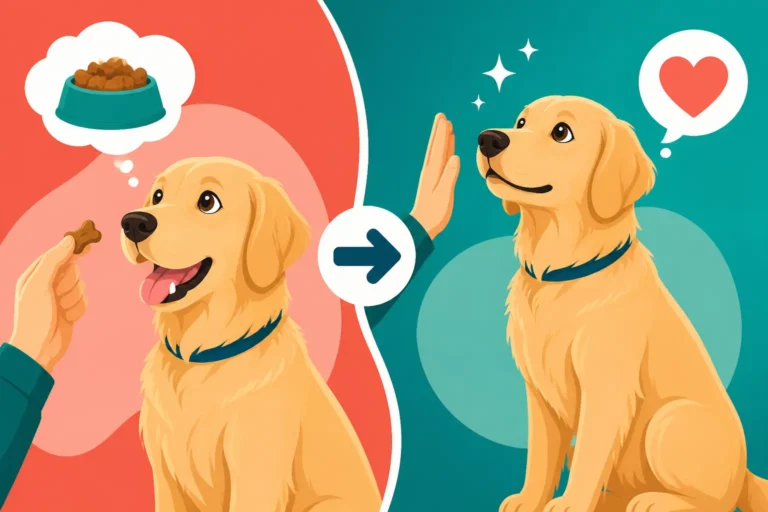
For example, when your puppy is eating, don't just walk by. Stop a few feet away, drop an extra special, high-value treat (like a tiny piece of cooked chicken or cheese) near their bowl, and then walk away. Repeat this often. Your puppy quickly learns: "Human approaches my food = bonus treats!" This counter-conditions any potential anxiety they might have about you taking their food. The same goes for toys. If your puppy is playing with a toy, calmly approach, offer a different, even more exciting toy or treat, and then allow them to engage with the new item. Many effective online puppy training programs, such as BAXTER & Bella, emphasize these kinds of positive reinforcement techniques, building a strong foundation of trust and good manners from day one. This proactive approach helps prevent problems before they even start. Golden Retriever Puppy Socialization Windows delves deeper into the importance of early positive experiences.
"Trading Up" and Trust-Building Exercises
The "trading up" game is one of the most powerful tools you have for preventing resource guarding. It teaches your Golden Retriever that giving up an item is not a loss, but actually leads to something even better. Here's how it works:
- Start simple: Begin with items your puppy isn't overly attached to.
- Approach with a better offer: If your puppy has a toy, approach them with a much higher-value treat (think boiled chicken, cheese, or a favorite chewy treat).
- Offer the trade: Hold the treat near their nose. The moment they drop the toy to take the treat, say "Yes!" or use a clicker, then give them the treat.
- Give back or offer another: Immediately after they eat the treat, either give them back their original toy or offer a different, equally exciting one. The key is to make it a positive exchange, not a forceful taking.
Repeat this process many, many times, gradually working up to items they value more. This builds incredible trust, teaching your Golden that your hands near their items are sources of generosity, not theft. They learn that "giving it up" means a reward, and often, they get the item back anyway, or an even better one. This process is crucial for preventing them from feeling the need to guard.
Managing the Environment to Prevent Triggers
While training is paramount, environmental management is your first line of defense, especially with puppies. Resource guarding often stems from a dog feeling like they have to protect what little they have. By controlling the environment, you can remove many of the situations that might trigger guarding behavior.
For example, when your Golden Retriever puppy is chewing on a special bone, make sure they have a quiet, undisturbed place to enjoy it, away from other pets or small children. Supervise all interactions, particularly around food. Feed puppies in separate areas if there are other dogs in the home. Use slow feeder bowls from Amazon if your Golden tends to gobble their food, which can sometimes lead to guarding the empty bowl. Don't leave high-value items lying around unattended if you suspect your Golden might guard them; put them away until you can supervise a "trading up" session. Teach children never to bother a dog while it's eating or chewing. By proactive management, you are reducing the opportunities for your Golden to feel threatened and practice guarding, thereby preventing the behavior from taking root and becoming habitual.
Managing and Modifying Established Resource Guarding
If your Golden Retriever has already developed resource guarding behaviors, it’s not too late to help them. However, it requires a more systematic and careful approach than prevention, focusing on safety, consistency, and often, professional guidance. The goal is to gradually change your Golden's emotional response to people approaching their resources from one of fear or aggression to one of calm anticipation.
Safety First: Managing the Environment
When dealing with established resource guarding, safety for everyone in the household is your absolute top priority. This means implementing strict management strategies to prevent guarding incidents from happening. Every time your Golden growls or snaps and successfully guards an item, the behavior is reinforced, making it harder to change. Therefore, your first step is to stop those incidents.
Identify the "hot button" items your Golden guards most intensely. These are the items you should remove from their unsupervised access entirely. If it's a specific type of chew, only offer it when your Golden is safely in their crate or a separate room, where no one can approach them. Feed your Golden Retriever in a quiet, undisturbed location, ideally behind a closed door, where no one can accidentally walk by their food bowl. Why a Golden Retriever Growls at Its Food Bowl provides more context on this specific trigger. If they guard specific areas, like a particular spot on the couch, prevent access to that spot. Consider using a long leash indoors (under supervision, never left on unattended) to gently guide your Golden away from items they’ve snatched, rather than trying to physically take them. The less your dog practices guarding, the easier it will be to retrain their response.
Desensitization and Counter-Conditioning
Once you've managed the environment to prevent guarding incidents, you can begin the work of changing your Golden Retriever's emotional response through desensitization and counter-conditioning. This is a gradual process where you teach your dog that human presence near their valued items predicts something wonderful, rather than a threat.
- Start at a distance: Begin with your Golden enjoying a low-value item (like their regular kibble scattered on the floor) while you are far enough away that they don't show any guarding signs.
- Toss high-value treats: From that safe distance, gently toss a very high-value treat (like cooked chicken or hot dogs) towards them, but not at them. Toss it a bit past them, so they have to lift their head to get it. This teaches them that your approach doesn't mean taking, it means giving.
- Gradually decrease distance: Over many sessions, slowly, incrementally decrease the distance from which you toss the treats. Only move closer if your Golden remains relaxed and shows no signs of guarding. If they stiffen or show any stress, you've moved too fast; go back to a greater distance.
- Repeat with various items: Once they are comfortable with you tossing treats from close by during meal times, start practicing with other low-value items, then slowly introduce slightly higher-value items. Always, always, make sure your approach means giving them something better than what they already have.
This process must be done patiently and consistently. Never try to snatch an item away, which will only confirm their belief that you are a threat. If you are having trouble, or if your Golden shows any aggression, stop immediately and seek professional help.
Seeking Professional Help for Severe Cases
While the above strategies are effective for mild to moderate cases of resource guarding in Golden Retrievers, there are times when professional help is absolutely necessary. If your Golden's guarding behavior is severe, involves biting or lunging, is directed at children, or if you feel unsafe or overwhelmed, do not hesitate to contact a certified professional dog trainer or a veterinary behaviorist.
These professionals have the expertise to assess your Golden's specific situation, identify underlying causes (such as anxiety or pain), and develop a tailored behavior modification plan. They can guide you through the desensitization and counter-conditioning process safely, ensuring that you are not putting yourself or others at risk. They can also teach you the nuances of reading your Golden’s body language and timing your interventions perfectly. Working with a professional is an investment in your Golden's well-being and the safety of your household. Resources like the Certification Council for Professional Dog Trainers (CCPDT) or the American College of Veterinary Behaviorists (ACVB) can help you find qualified individuals in your area. For more information on finding the right expert, refer to Choosing a Positive Reinforcement Trainer for a Golden.
Common Triggers and Scenarios for Golden Retriever Resource Guarding
Resource guarding isn't a blanket behavior; it often manifests in specific situations and over particular types of items. Understanding these common triggers can help you predict and prevent guarding incidents with your Golden Retriever. Knowing what they guard and when they guard it allows for targeted management and training strategies.
Food Bowls and High-Value Chews
The most classic and common trigger for resource guarding in any dog, including Golden Retrievers, is food. This can range from their daily kibble bowl to a highly coveted recreational chew like a bully stick or a raw bone. The instinct to protect one's sustenance is powerful. A Golden Retriever might eat faster, growl, or even snap if they perceive a threat to their meal or chew.
To prevent and manage this, always feed your Golden in a quiet, designated spot where they won't be interrupted. If you have multiple dogs, feed them in separate rooms or crates to avoid competition. When offering high-value chews, ensure your Golden can enjoy it in peace. If you need to take an item away (for safety, for instance), always "trade up." Have an even more delicious treat ready to offer before you reach for the guarded item. This reinforces trust and teaches your Golden that your approach means gain, not loss. Over time, your Golden will learn that your hands near their food aren't a threat, but possibly an opportunity for an even tastier morsel. This is especially vital in multi-pet households where competition over resources could lead to conflict. Budget Versus Premium Kibble for a Golden Retriever might impact how they value their food, but guarding can happen with any meal.
Favorite Toys and "Found" Objects
Beyond food, Golden Retrievers can also become possessive over toys, especially their favorites, or even seemingly mundane "found" objects like a stray sock, a plastic bottle, or a stolen remote control. These items, precisely because they are often "forbidden" or highly stimulating (like a squeaky toy), can become incredibly valuable in your dog's mind.
Guarding toys might manifest during play with other dogs, where your Golden body-blocks or growls if another dog approaches their prized tennis ball. When it comes to "found" objects, the guarding can be particularly strong because the Golden knows they aren't supposed to have it, which adds to its perceived value and increases their defensiveness. The moment you approach, they might clamp down on the item, run away, or display warning signs. The "trading up" technique is invaluable here. If your Golden has snatched something inappropriate, immediately offer a super high-value treat in exchange. Once they drop the forbidden item for the treat, you can safely remove it. Never chase your Golden or try to force an item out of their mouth, as this will only intensify their guarding behavior and turn it into a fun game of keep-away or a defensive standoff. Chew Toys That Survive a Golden Retriever can offer some appropriate alternatives to those "found" objects.
Space Guarding and Owner Possessiveness
Resource guarding isn't limited to tangible items; it can also extend to spaces, such as a favorite sleeping spot, a specific piece of furniture, or even a pathway. Some Golden Retrievers might guard their crate, their dog bed, or a particular spot on the sofa, growling if another pet or person tries to join them or pass too closely. This is particularly common if the dog has learned that defending that space works to keep others away.
More complex, and often more challenging, is owner possessiveness. This is a form of resource guarding where the Golden Retriever guards their human companion from other people or pets. They might stand between you and a visitor, growl if another dog tries to snuggle up to you, or become agitated if you hug a family member. This behavior often stems from insecurity or a strong bond mixed with a misunderstanding of social boundaries. Managing this requires clear boundaries from your end, teaching your Golden that you control who gets attention and when. It often involves training a "place" command, so your Golden can be sent to their bed when guests arrive, rewarding them for calmly staying there while others interact with you. In cases of significant owner possessiveness, especially if aggression is present, working with a certified professional is highly recommended to ensure safety and effective behavior modification.
| Resource Guarding Level | Key Behaviors Observed | Recommended Action |
|---|---|---|
| Mild (Early Warning) | Stiffening body, freezing, quick glance, subtle lean over item, eating faster, moving item away. | Proactive "trading up" exercises, consistent positive associations with approach, environmental management. |
| Moderate | Low growl, hard stare, subtle body block, minor lip curl, quick gulping of high-value items. | Strict environmental management, desensitization and counter-conditioning protocol, consider professional guidance. |
| Severe | Deep growl, snarl, baring teeth, air snap, lunge, bite that makes contact, intense guarding over various items/spaces/people. | IMMEDIATE consultation with a certified professional dog trainer or veterinary behaviorist. Strict management to prevent incidents. Safety first. |
Disclaimer
This article is for general informational purposes only and does not constitute professional advice. Laws, prices and regulations vary by location and change over time. Consult a qualified professional for guidance on your specific situation.