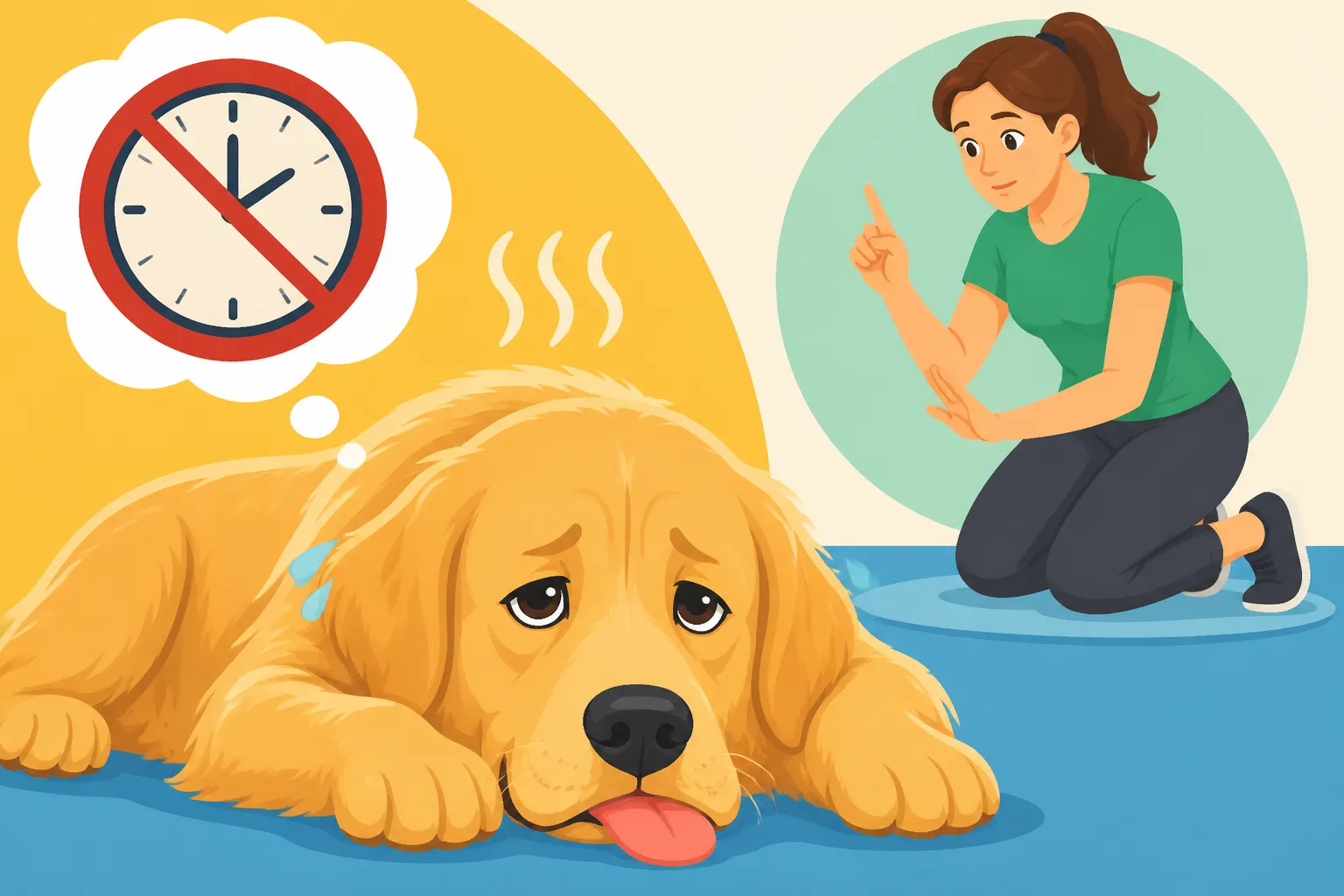
Golden Retriever Training Sessions That Are Too Long
Oh, the sheer joy of bringing home a Golden Retriever puppy! That boundless energy, that earnest gaze, that intelligence just waiting to be tapped. It's so easy to get swept up in the excitement and want to teach them everything right away. But many of us, in our well-meaning enthusiasm, make the common mistake of making training sessions far too long, turning what should be a fun learning experience into a source of frustration for both our beloved Goldens and ourselves. This guide is here to help you understand why shorter, more frequent training sessions are key to a happy, well-trained Golden and how to implement them effectively.
The Pitfalls of Over-Training Your Golden Retriever
It's completely understandable to want to maximize every moment with your new Golden. You’ve got all these commands you want to teach, all this potential to unlock! However, pushing a Golden Retriever, especially a puppy, beyond their mental capacity for focus can quickly backfire. Think of it like trying to cram for an exam when you're already exhausted – the information just doesn't stick.
Diminished Focus and Engagement
When a training session stretches on for too long, the first thing you'll notice is a noticeable drop in your Golden's focus. That initially bright-eyed, eager learner starts to look a little glazed over. Their responses become slower, their sits become sloppier, and their "stays" turn into little investigative expeditions. They might start sniffing the ground more, looking away from you, or even just plopping down and refusing to engage. This isn't stubbornness, it's a sign of mental fatigue.
What happens then is that the training becomes a chore, not a game. If your Golden associates training with feeling bored or overwhelmed, they're much less likely to participate enthusiastically next time. You'll find yourself repeating commands more, and your dog will be less likely to offer the desired behavior proactively. This leads to both of you feeling less successful and can actually slow down their learning in the long run. The goal is to make training something they want to do, not something they have to endure.
Increased Frustration and Stress
Beyond just losing focus, an over-trained Golden can become genuinely frustrated or stressed. Imagine trying to solve a complex puzzle when your brain is already fried – it's exasperating, right? For a Golden, this stress can manifest in various ways. They might start whining, barking excessively, or even engaging in displacement behaviors like licking their paws or scratching themselves. Some might even start nipping or mouthing more, not out of aggression, but out of an inability to cope with the ongoing demands.
This frustration isn't just unpleasant; it's detrimental to their learning. A dog operating under stress can't process information effectively. The cortisol levels rise, making it harder for them to calmly think and respond. More importantly, it can begin to erode the trust and bond you're trying to build. Training should be a collaborative, positive experience that strengthens your relationship, not one that causes tension or anxiety for your furry friend. When your Golden starts to show these signs, it's a clear indicator that their mental gas tank is empty, and it's time for a break.
Risk of Extinction Bursts and Behavioral Setbacks
An often overlooked consequence of overly long training sessions is the risk of "extinction bursts" or even behavioral setbacks. An extinction burst happens when a dog's previously successful behavior is no longer being rewarded, so they try harder or exhibit more intense versions of the behavior in an attempt to get the reward back. In the context of over-training, it might look like your Golden suddenly refusing a command they knew perfectly well, or offering a string of incorrect behaviors one after another, seemingly "forgetting" everything.
This isn't them being difficult; it's a sign of confusion and frustration because they've passed their learning threshold. If you continue to push through this, you risk creating negative associations with the command or even training itself. Your Golden might "shut down" entirely, becoming unresponsive, or they might develop undesirable habits like offering random behaviors in hopes of stumbling upon the right answer. Such setbacks can take longer to undo than the time you saved trying to rush through training. Remember, progress isn't measured by how many commands you teach in one sitting, but by how well your dog retains and performs them consistently.
Understanding Your Golden Retriever's Learning Curve
Just like humans, Golden Retrievers have different capacities for learning and attention depending on their age and individual personality. Acknowledging this is crucial for setting them up for success and avoiding those dreaded over-training pitfalls.
Age-Appropriate Attention Spans
Golden Retriever puppies, despite their intelligence and eagerness, have incredibly short attention spans. Think of a toddler learning a new skill; you wouldn't expect them to sit still for an hour-long lesson. For a young Golden puppy, a training session might realistically only last for 2-3 minutes before their mind starts to wander. Pushing beyond this is almost guaranteed to lead to the frustration we discussed earlier.
As they mature into adolescence, their attention span grows slightly, maybe to 5-7 minutes, but they are also easily distracted by everything in their environment. This is a crucial time for continued, short, focused sessions to reinforce good habits. Even adult Goldens, while capable of longer periods of focus, still benefit immensely from training sessions that are kept concise and engaging. It's far better to have several short, positive training interactions throughout the day than one long, arduous session. For more on this, check out How Long a Golden Retriever Puppy Can Focus and how to avoid Golden Retriever Training Sessions That Are Too Long.
The Importance of Positive Reinforcement and High Value Rewards
Golden Retrievers thrive on positive reinforcement. They are people-pleasers at heart, and they genuinely want to make you happy, especially when there's a tasty reward involved! High-value treats, enthusiastic praise, and playful interaction are the fuel that keeps their training engine running smoothly. If you're asking your Golden to work for extended periods, even if it's just practicing known commands, and the reward isn't consistently exciting, their motivation will wane.
Imagine going to work where your paychecks are late or inconsistent, or the work is boring. You'd quickly lose enthusiasm! It's the same for your Golden. Short, punchy sessions paired with immediate, exciting rewards create a strong positive association with training. This is why it's so important to have a variety of high-value treats on hand, like small pieces of cooked chicken, cheese, or specialized training treats. Even if you're working on advanced concepts, ending each successful rep with a jackpot reward keeps them guessing and excited for the next challenge. When it comes to finding the right motivation, you might find some useful tips in Best Treats for Training a Golden Retriever.
Recognizing Your Golden's Cues to End a Session
Learning to "read" your Golden Retriever is one of the most valuable skills you can develop as an owner. They constantly communicate with us, often through subtle body language. During training, recognizing these cues is paramount to knowing when to call it a day. Early signs of disengagement or stress are key. Look for:
- Lip-licking or yawning: These can be calming signals, indicating mild stress or discomfort.
- Head turns or looking away: Your Golden is trying to disengage from the task.
- Slow or hesitant responses: They might know the command but are too mentally tired to execute it quickly.
- Sniffing the ground or scratching: Another form of displacement behavior, a way to cope with feeling overwhelmed.
- Paw lifting or shifting weight: Can indicate anxiety or uncertainty.
- Lying down or moving away: More overt signs that they are done and want to escape the situation.
The moment you see these signs, it's time to end the session. Ideally, you want to end on a high note – get them to do one easy command they know perfectly, reward them enthusiastically, and then immediately finish. This leaves them feeling successful and eager for the next time, rather than frustrated and drained. Always strive to finish before they decide they're done.
Crafting Effective, Short Training Sessions
The secret to a well-trained Golden Retriever isn't marathon training sessions; it's about consistency, brevity, and making it fun. Short, focused bursts of training scattered throughout the day will yield far better results and build a stronger, happier bond.
The "Rule of Threes" and Micro-Sessions
One excellent strategy is to adopt the "rule of threes" or engage in what are often called "micro-sessions." This means aiming for 3-5 minute training sessions, but doing them multiple times a day. Instead of one long 30-minute session, break it down into five 6-minute sessions, or even ten 3-minute sessions. The total training time might be the same, but the impact is vastly different. Each short session gets your Golden's full, enthusiastic attention, making learning more efficient and enjoyable.
These micro-sessions can easily be woven into your daily routine. Practice a "sit" and "stay" before putting their food bowl down. Work on "down" while you're waiting for the coffee to brew. Ask for a "come" and a "heel" on your way out the door for a walk. These aren't just structured training times; they're opportunities to reinforce good behavior and commands in real-life situations. The consistency of these brief, positive interactions builds reliable habits over time without ever pushing your Golden to mental exhaustion. If you're looking for where to start, you might find First Commands to Teach a Golden Retriever a great resource.
Varying Location, Distractions, and Skills
For your Golden Retriever to truly understand a command, they need to be able to perform it reliably in various environments and with increasing distractions. Sticking to the same spot in your quiet living room will only teach them to "sit" in the living room, not necessarily at the bustling park. This is where short, varied sessions come into their own. Once a command is solid in one quiet location, gradually introduce it in different parts of your home, then in the yard, and finally in public spaces.
The key is to set them up for success. Start with minimal distractions and slowly increase them as your Golden masters the skill. For example, practice "recall" (coming when called) first indoors, then in a fenced yard, then in a park on a long line. Mix up the skills you're practicing too. Don't just drill "sit" twenty times in a row. Rotate between "sit," "down," "stay," and perhaps a fun trick. This keeps their brain engaged and prevents boredom. Resources like BAXTER & Bella offer online training programs that beautifully integrate this concept of varied, short sessions, guiding you through different levels of distraction and skill-building in a structured yet flexible way. They understand that real-world training needs to be adaptable.
Integrating Play and Mental Stimulation
Training doesn't always have to look like a formal obedience class. Goldens are naturally playful, and integrating play into their learning is a fantastic way to keep them engaged, burn off energy, and solidify commands. A quick game of fetch can be an excellent reward for a successful "stay." A session that starts with a few obedience commands can transition into a fun search-and-find game with treats hidden around the room.
Mental stimulation is just as important as physical exercise for a Golden Retriever. Puzzle feeders, for instance, make mealtime a brain-game rather than a gobble-fest. These can be part of a "training" session, teaching patience and problem-solving skills. Or, consider a flirt pole for controlled chasing and retrieve games. These activities not only tire them out mentally but also reinforce your bond and make learning enjoyable. Many fantastic options for puzzle feeders and durable chew toys that stand up to a Golden's enthusiasm are readily available on Amazon, allowing you to easily incorporate these enriching elements into your dog's daily routine.
Common Training Mistakes Beyond Session Length
While session length is a huge factor, it's just one piece of the puzzle. There are other common mistakes enthusiastic Golden Retriever owners make that can hinder progress and lead to frustration for both dog and human.
Inconsistency and Lack of Follow-Through
One of the biggest hurdles in training is inconsistency. It’s easy to get excited about training, dedicate time to it for a few days, and then let it slide. Or perhaps one family member is strict with commands, while another lets the Golden get away with anything. Dogs, especially Goldens who are keen observers, thrive on predictability. If the rules aren't consistent, they become confused about what's expected of them.
For example, if you sometimes allow jumping on guests but sometimes scold it, your Golden won't understand why the behavior is sometimes okay and sometimes not. This lack of follow-through means that even if you have great, short training sessions, the learning doesn't stick in real-world scenarios. Everyone in the household needs to be on the same page, using the same commands, and enforcing the same rules all the time. This doesn't mean being harsh; it means being clear and consistent in your expectations and reactions.
Poor Timing of Rewards
Positive reinforcement relies heavily on precise timing. When your Golden performs the desired behavior, the reward needs to follow immediately – ideally within 1-2 seconds. This instant feedback loop is what allows your dog to connect their action with the positive outcome. If you ask for a "sit," they sit, but you fumble for a treat for five seconds, they might not associate the treat with the "sit." Instead, they might think they're being rewarded for looking at your hand or getting up again.
This is where a clicker can be incredibly useful. A clicker acts as a "marker" signal, precisely pinpointing the exact moment your Golden does something right, bridging the gap between the behavior and the treat. You click the instant they perform the desired action, and then follow with the treat. This clarity accelerates learning and reduces confusion. For a deeper dive into this technique, check out Marker Training a Golden Retriever With a Clicker. Without accurate timing, even the best rewards lose their effectiveness, making training sessions, no matter how long or short, less productive.
Unrealistic Expectations for a Golden's Learning Pace
Yes, Golden Retrievers are incredibly intelligent and often rank high in working intelligence. They pick up new commands quickly, which is wonderful! However, this can sometimes lead owners to have unrealistic expectations. Just because your Golden learned "sit" in two sessions doesn't mean they'll master "stay" with heavy distractions in the same timeframe. Every command, every skill, and every individual dog has its own learning curve.
It's vital to celebrate small victories and not get discouraged by plateaus or regressions. Learning isn't a linear process; there will be days when your Golden seems to "forget" everything, or when a new environment proves too distracting. This is normal. The goal is steady progress, not perfection. Pushing too hard, too fast, can lead to burnout for both of you. Be patient, be kind, and remember that training is a journey, not a destination. Focus on building a strong foundation, and the more advanced skills will come with time and consistent, positive effort.
Understanding Golden Retriever Training Session Lengths
To help visualize how attention spans and effective training durations can vary, here's a quick guide. Remember, these are general recommendations, and your individual Golden Retriever might have unique needs!
| Age Stage | Recommended Session Length | Frequency per Day | Key Focus Areas | Signs of Over-Training |
|---|---|---|---|---|
| Puppy (8-16 weeks) | 2-5 minutes | 5-10 times | Basic obedience (sit, name), socialization, house training, bite inhibition | Excessive yawning, nipping, sniffing, lying down, ignoring |
| Adolescent (4-18 months) | 5-10 minutes | 3-5 times | Proofing commands, recall, leash manners, focus amidst distractions, impulse control | Whining, barking, pulling away, "testing" boundaries, lack of eye contact |
| Adult (1.5+ years) | 10-15 minutes | 1-3 times (maintenance) | Advanced commands, consistency, problem-solving, reinforcement of good habits | Slow responses, disinterest, frustration, general lack of enthusiasm |
This table clearly illustrates that shorter, more frequent bursts of activity are almost always preferable, especially during those critical puppy and adolescent phases. As your Golden matures, you can consider slightly longer durations, but the principle of ending on a high note remains paramount.
Disclaimer
This article is for general informational purposes only and does not constitute professional advice. Laws, prices and regulations vary by location and change over time. Consult a qualified professional for guidance on your specific situation.