Introducing a Golden Retriever to Children
Bringing a new Golden Retriever into a home with children, or even having a baby arrive into a home with an existing Golden, can be a time filled with excitement and a fair bit of anxiety. You want your beloved dog and your precious children to be the best of friends, but the reality is that introducing them requires careful planning, patience, and a deep understanding of both your dog's needs and your children's development. This guide will walk you through creating a safe, harmonious environment where your Golden Retriever and kids can thrive together, minimizing stress for everyone involved.
Understanding Golden Retriever Temperament Around Children
Golden Retrievers are renowned for their gentle, patient, and friendly nature, making them one of the most popular family dogs. This reputation isn't unfounded; their breed characteristics often align wonderfully with a home bustling with kids. However, it's crucial to remember that every dog is an individual, and even the sweetest Golden needs proper guidance and boundaries when interacting with children.
The Golden Retriever's Natural Affinity for Families
One of the defining traits of a Golden Retriever is their inherent desire to be part of the family. They thrive on companionship and are generally eager to please, which can be a huge asset when teaching them how to interact with children. Goldens are typically tolerant and good-natured, often displaying an almost saintly patience with the unpredictable movements and noises that kids can make. Their "soft mouth," a trait specifically bred for retrieving delicate game without damaging it, also means they are less likely to intentionally injure with their jaws, though puppy nipping is a separate issue that needs addressing. Many Golden Retrievers seem to instinctively understand that children are vulnerable and often adjust their play style accordingly, becoming gentler and more careful. This natural predisposition makes them wonderful candidates for family life, but it doesn't mean you can skip the introductions or supervision.
Common Challenges and Misconceptions
Despite their wonderful temperament, there are still common challenges and misconceptions to navigate. One big mistake is assuming your Golden will "just know" how to behave around children without any training or supervision. A Golden Retriever might tolerate a lot, but even their patience has limits. Children, especially young ones, often don't understand canine body language or appropriate interaction. They might pull tails, poke eyes, climb on the dog, or grab toys, all of which can be upsetting or even painful for a dog. A Golden might respond with a growl, a snap, or simply try to escape, and while these are normal canine communications, they can be misinterpreted or cause fear. Furthermore, the sheer energy of a Golden Retriever puppy can be overwhelming for small children, and an excitable adolescent Golden can accidentally knock a child over during play. It's also a misconception that a dog "should" accept anything from a child. Dogs have boundaries, and it's our job as responsible adults to teach both dog and child how to respect those boundaries for a safe and happy home.
Preparing Your Home and Kids for a Golden Retriever
Preparation is key to a smooth introduction and a harmonious future. This isn't just about getting dog supplies; it's about setting up a safe physical environment and educating every member of the family on their roles and responsibilities. Taking these steps before your Golden even arrives, or before your baby comes home, will lay a solid foundation.
Establishing Safe Spaces and Boundaries
Every dog, especially one sharing a home with children, needs a designated safe space where they can retreat and be undisturbed. This might be a crate, a dog bed in a quiet corner, or a room with a baby gate. It's their sanctuary, and children must be taught from day one that when the dog is in this space, they are to be left alone. This boundary is non-negotiable and provides your Golden Retriever with a much-needed sense of security and control. For instance, a cozy crate tucked into a den or a spare bedroom can become their personal haven. You can find excellent, sturdy crates and baby gates on platforms like Amazon that can help you cordon off areas of your home or provide a secure den for your Golden. Consistent enforcement of this rule prevents potential conflicts born from a dog feeling trapped or overwhelmed by constant child interaction.
It’s equally important to child-proof areas that are just for the dog. Make sure food bowls, toys, and beds are in places where young children can't easily access them and potentially disrupt the dog while they're eating or resting. This proactive approach helps prevent resource guarding issues or accidental confrontations over prized possessions. For children, especially toddlers, it's a good idea to have areas they can play freely without constantly interacting with the dog, using baby gates to create physical barriers if necessary. This teaches both dog and child that not every moment needs to be spent together, fostering mutual respect for personal space.
Educating Children on Dog Etiquette
This is perhaps the most critical component of preparation. Children need to understand how to interact with a dog safely and respectfully. For younger children, this involves simple rules: "Be gentle," "No pulling ears or tails," "Let the dog come to you," and "Leave the dog alone when they are eating or sleeping." Demonstrating gentle petting, using a "soft voice," and showing them how to offer a treat safely are great starting points. You can even role-play with a stuffed animal to practice these behaviors. For older children, you can delve deeper into understanding canine body language. Teach them to recognize signs of stress or discomfort in a dog, such as yawning, lip-licking, turning away, or a tucked tail. Understanding these signals can prevent them from pushing a dog past its comfort zone.
A great way to get older children involved and invested is through structured training programs. Online programs, like those offered by BAXTER & Bella, often have family-friendly components that teach children how to safely participate in training exercises, fostering a positive relationship built on mutual understanding and respect. They learn to be "dog smart" and understand that the Golden isn't a toy, but a living, feeling creature with needs. Emphasize that interacting with the dog should always be a positive experience for both the child and the dog. This education isn't a one-time conversation; it's an ongoing process as children grow and their understanding evolves. Consistent reinforcement from parents is crucial to embed these lessons.
The First Introductions: Setting the Stage for Success
The initial meetings between your Golden Retriever and children are pivotal. How you manage these moments will heavily influence their future relationship. The goal is always to create positive, calm, and supervised experiences. Avoid chaotic, high-energy encounters that could overwhelm either party.
Controlled and Gradual Exposure
Never just unleash a Golden Retriever puppy into a room full of excited children, or vice versa. The first introductions should be carefully controlled and brief. For a new puppy, allow the pup to settle into its crate or designated safe space first. Once calm, introduce children one or two at a time, always with an adult closely supervising. Keep the initial meeting very short, just a few minutes, focusing on calm, gentle interactions. Use positive reinforcement liberally; praise both the children for being gentle and the puppy for being calm. High-value treats for the dog are a must to create a positive association with the children.
If introducing a baby to an existing Golden, bring home items with the baby's scent (blankets, clothing) beforehand to allow your Golden to investigate them calmly. When the baby arrives, keep the initial introduction calm. Have the baby in your arms, allowing the Golden to approach on a leash if necessary, and sniff at their own pace. Reward calm curiosity. Avoid any sudden movements or loud exclamations that might startle the dog. This slow, gradual exposure, increasing in duration as comfort grows, is far more effective than forcing interactions. Remember, it's about quality, not quantity, in these early stages. Socializing a Golden Retriever Puppy is a great resource to ensure your pup gets off to the right start with all new experiences, including children.
Creating Positive Associations
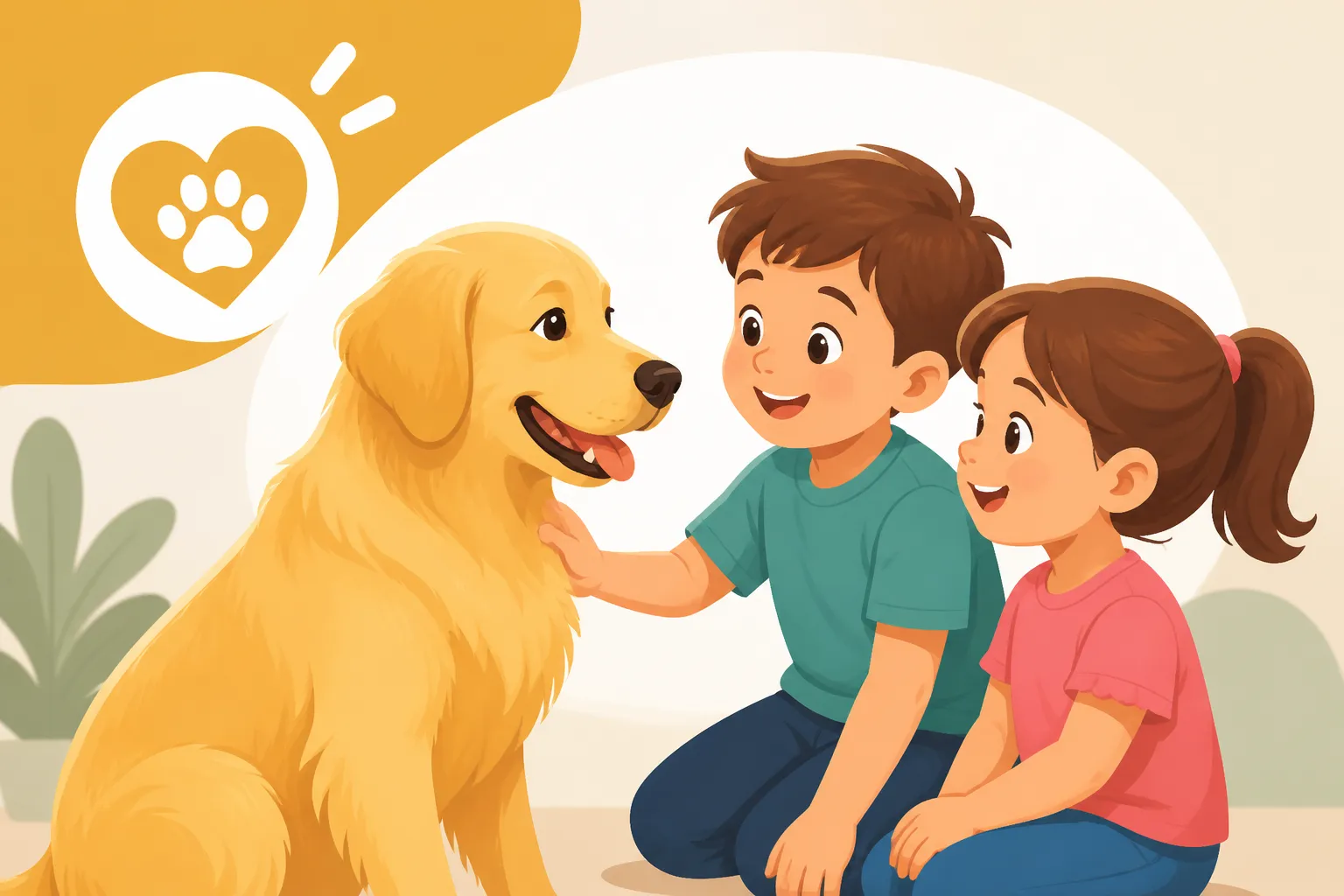
The key to a successful relationship is ensuring that both your Golden Retriever and your children associate positive experiences with each other. For the dog, this means good things happen when children are around. This could be receiving treats for being calm, getting gentle pets from the child (with adult guidance), or playing a calm game of fetch with an adult overseeing. Children can be involved in feeding the dog (under supervision), giving treats for good behavior, or helping with grooming by gently brushing the dog's coat. These interactions build a foundation of trust and affection.
Avoid using children as "discipline tools" or letting them provoke the dog. Negative experiences can quickly sour the relationship and lead to fear or aggression. If a child is too rough, immediately remove the child, not the dog, and redirect the child to appropriate behavior. Similarly, if the dog shows signs of discomfort, calmly remove the dog to its safe space. The goal is for the dog to see children as sources of good things, not threats or annoyances. Consider teaching your Golden basic commands like "sit" or "down" that children can then ask for, and reward, with your guidance. This empowers children to interact constructively and reinforces the dog's training. Programs like BAXTER & Bella emphasize positive reinforcement, making it easier to integrate these methods into family life.
Establishing Rules and Boundaries for Everyone
A successful household with Golden Retrievers and children requires clear, consistent rules that everyone understands and follows. This isn't about being strict, but about creating a predictable environment where both children and dogs feel safe and know what's expected of them.
Defining No-Go Zones and Dog Space
Just as your Golden Retriever needs a safe space, there might be "no-go zones" for your dog within the home, or conversely, areas where children are not allowed to bother the dog. For example, some families choose to keep the dog out of bedrooms or dining areas during meals. Baby gates can be invaluable here. If your Golden is crated, ensure children understand that the crate is the dog's private den, and they are never to reach inside or disturb the dog when it's resting there. This respect for boundaries is paramount for preventing stress in your Golden and potential reactive behaviors. If your Golden is resting on their bed, that should be their sanctuary where children are taught to leave them alone.
Conversely, there might be areas where children are allowed to play freely without dog interference, especially for very young children who are still learning to move safely. This could be a playpen for a baby, or a gated off area for a toddler. These clear physical boundaries reduce the chances of accidental rough play or a dog feeling cornered. It's about proactive management to prevent issues before they arise. Regular enforcement of these "dog rules" by all adults in the household helps children understand the importance of respecting their furry family member's space.
Teaching Gentle Hands and Respectful Interaction
One of the biggest challenges with children and dogs is teaching appropriate physical interaction. Kids, especially toddlers, can be naturally clumsy or overenthusiastic. They might grab fur, pull ears, or try to "ride" the dog. It's vital to consistently teach "gentle hands." Demonstrate how to softly stroke the dog's back or chest, avoiding sensitive areas like the head, tail, or paws, which many dogs find uncomfortable when touched by strangers or small, unpredictable hands. Always supervise these interactions, physically guiding a child's hand if necessary.
Teach children to approach the dog calmly and let the dog initiate contact. If the dog walks away, they should respect that signal. Never force a dog to endure unwanted attention. Furthermore, teach children not to take toys or food directly from the dog, which can lead to resource guarding issues. Instead, teach a "trade" game (offering a treat for a dropped item) or simply ensure the dog's high-value items are picked up when children are playing near them. Learning to read your Golden's subtle body language, as detailed in our guide Golden Retriever Cancer Warning Signs to Watch For (though in a different context, the principles of observation apply), can also help you intervene before a situation escalates. Remind children that our Goldens are members of the family, and we treat family with kindness and respect.
Supervised Interaction and Reading Dog Body Language
Even after extensive preparation and training, supervision remains paramount. Children and dogs should always be supervised when together, especially until you are absolutely confident in their interactions. This doesn't mean just being in the same room; it means actively observing and being ready to intervene.
The Importance of Active Supervision
Active supervision means you are not just passively present, but fully engaged in watching the interactions between your Golden Retriever and your children. This means putting down your phone, stepping away from the computer, and focusing on their play. An adult should always be within arm's reach, ready to redirect, intervene, or remove either party if necessary. This close supervision allows you to prevent accidental roughhousing, ensure appropriate behavior from both sides, and reinforce good habits. It also allows you to intervene if your child is getting too boisterous, or if your Golden is showing early signs of discomfort.
Think of it like being a referee: you’re there to ensure fair play, prevent fouls, and maintain safety. Active supervision also helps you identify patterns. Does your Golden get overwhelmed after a certain amount of time? Does your child tend to get too excited around the dog when specific toys are out? Knowing these triggers helps you proactively manage the environment and anticipate potential issues. Even the calmest, most tolerant Golden can have an off day, and even the most well-behaved child can make a mistake. Your presence makes all the difference. For situations where you can't actively supervise, using management tools like crates or gates, as discussed in Crate Training a Golden Retriever Puppy, is essential.
Recognizing Warning Signs and Stress Signals
Learning to read your Golden Retriever's body language is a critical skill for any owner, but especially when they interact with children. Dogs communicate primarily through body language, and often give subtle cues long before they resort to growling or snapping. Look for these early warning signs that your Golden might be uncomfortable, stressed, or nearing their limit:
| Body Language Signal | What it Might Mean | Action to Take |
|---|---|---|
| Lip Licking | Mild stress, appeasement, "I'm uncomfortable" | Remove dog or child, create space |
| Yawning | Stress (when not tired), appeasement | Observe closely, provide space |
| Head Turn/Body Turn Away | "Please leave me alone," avoidance | Call dog, lead to safe space |
| Stiff Body/Tail | Tension, potential discomfort, preparing to react | Immediately separate dog and child |
| Tucked Tail | Fear, anxiety | Reassure dog, remove from stressful situation |
| "Whale Eye" | Showing the whites of the eyes, often with head turned away | Significant stress, high risk, separate immediately |
| Growling | Clear warning, "Stop what you're doing!" | Immediately separate, seek professional help |
| Snapping (air) | Last warning before a bite | Immediately separate, seek professional help |
Recognizing these signals allows you to intervene before a situation escalates. If you see your Golden showing any of these signs, gently separate the dog and child. This teaches your dog that you are their advocate and will protect them, which builds trust. It also teaches children that there are limits. Ignoring these warning signs can lead to the dog feeling unheard and potentially escalating their communication to a more forceful level. Regular observation will help you pick up on your individual dog's specific subtle cues.
Continued Training and Socialization
The introduction isn't a one-and-done event; it's an ongoing process of training, socialization, and reinforcement throughout your Golden Retriever's life. As children grow and the dog ages, their needs and interactions will evolve.
Reinforcing Good Behavior and Manners
Consistency is absolutely vital. Regularly reinforce your Golden Retriever's good behavior around children with praise, treats, and affection. Reward calm greetings, gentle play, and respecting boundaries. If your Golden tends to jump up excitedly, work on Teaching a Golden Retriever Four on the Floor when greeting people, including children. Practice impulse control exercises, such as "leave it" and "wait," which are invaluable for managing interactions around children and their toys. These consistent training efforts help your Golden understand what is expected of them and builds a strong foundation of good manners.
Equally important is reinforcing your children's good behavior. Praise them when they are gentle, respectful, and follow the rules. This positive reinforcement encourages them to continue interacting appropriately. If a child forgets a rule, gently remind them and guide them to the correct action, rather than scolding. Remember that your Golden Retriever puppy is going through a Golden Retriever Chewing Through Adolescence phase, and then a The Golden Retriever Teenage Regression, which means their manners might lapse. Patience and continued training are essential during these developmental stages for both your dog and your children.
Continued Socialization and Exposure
Even after a successful introduction, it's important to continue positive socialization experiences for your Golden Retriever. This doesn't just mean with your own children, but with other calm, dog-savvy children (under strict supervision) as well. Controlled exposure to various ages and temperaments of children, always in positive contexts, can help generalize their good behavior. This also helps your Golden stay comfortable with the unpredictable nature of kids as they grow. Golden Retriever Puppy Socialization Windows highlights the importance of early exposure to many different sights, sounds, and people, including children, for a well-adjusted adult dog.
Continue to involve your children in appropriate dog care activities, such as helping with walks (if old enough and capable), supervised feeding, or playtime. This fosters a sense of responsibility and connection. However, always monitor their comfort levels. If your Golden Retriever shows signs of Fearful Behavior in a Golden Retriever or anxiety around children at any point, it's crucial to address it immediately. This might involve stepping back on interactions, consulting with a professional dog trainer or behaviorist, and re-evaluating your management strategies. The goal is a long, happy, and safe relationship for everyone in the family.
Disclaimer
This article is for general informational purposes only and does not constitute professional advice. Laws, prices and regulations vary by location and change over time. Consult a qualified professional for guidance on your specific situation.