Golden Retriever Greeting Manners at the Door
Oh, the Golden Retriever doorway dance! It's a familiar sight for so many of us: you hear a knock or a doorbell, and suddenly your calm, sweet companion transforms into an excited, bounding missile, convinced that the only way to express their joy is by launching themselves at your unsuspecting guest. This guide is here to help you navigate those enthusiastic greetings, teaching your Golden better manners so everyone, two-legged and four-legged, can enjoy arrivals.
Understanding Why Your Golden Jumps Up
It’s easy to get frustrated when your Golden Retriever seems to lose all sense of decorum at the sound of the doorbell. But understanding why they do it is the first step toward teaching them a more appropriate way to greet. It's rarely about being disobedient; it's almost always about pure, unadulterated excitement and a lack of clear communication on our part.
The Golden Retriever Instinct to Greet
Let's be real, Golden Retrievers are bundles of joy, and they wear their hearts on their furry sleeves. Their entire existence revolves around loving people and being close to them. When someone arrives at your home, it's often the most exciting part of their day – a new person, new smells, new attention! For a Golden, jumping up is often their way of trying to get closer to a person's face, to sniff them, and to say "HELLO, I AM SO HAPPY YOU ARE HERE!" in the most direct way they know how. It’s an instinctual desire for connection, a holdover from puppyhood when they might have jumped on their mother or littermates. They don't mean any harm; they just lack the social graces we humans value. Their happy wagging tail, combined with a strong desire to make contact, often leads to that aerial greeting.
Communication and Excitement Overload
The truth is, many of us inadvertently reinforce the very behavior we don't want. Think about it: when your Golden jumps up, what's the first thing most people do? They might push the dog down, say "no," or even make eye contact and talk to them. To your Golden, any attention, even negative attention, is still attention. It confirms that jumping up gets a reaction. Add to that the sheer overstimulation of a new person, and it's a recipe for chaos. The energy in the room spikes, voices get higher, and the dog's internal excitement meter goes off the charts. They're often so overwhelmed by the sudden shift in atmosphere that they can't think clearly about what you've tried to teach them. It’s a classic case of excitement overload making good manners fly right out the window. They haven't learned an alternative way to channel that burst of energy and happiness.
Laying the Foundation for Calm Greetings
The good news is that Goldens are incredibly smart and eager to please, which means they can absolutely learn to greet politely. It takes consistency, patience, and a clear strategy. The key is to start simple and manage the environment so your dog doesn't even have the opportunity to practice the unwanted behavior.
Training the "Four on the Floor" Rule
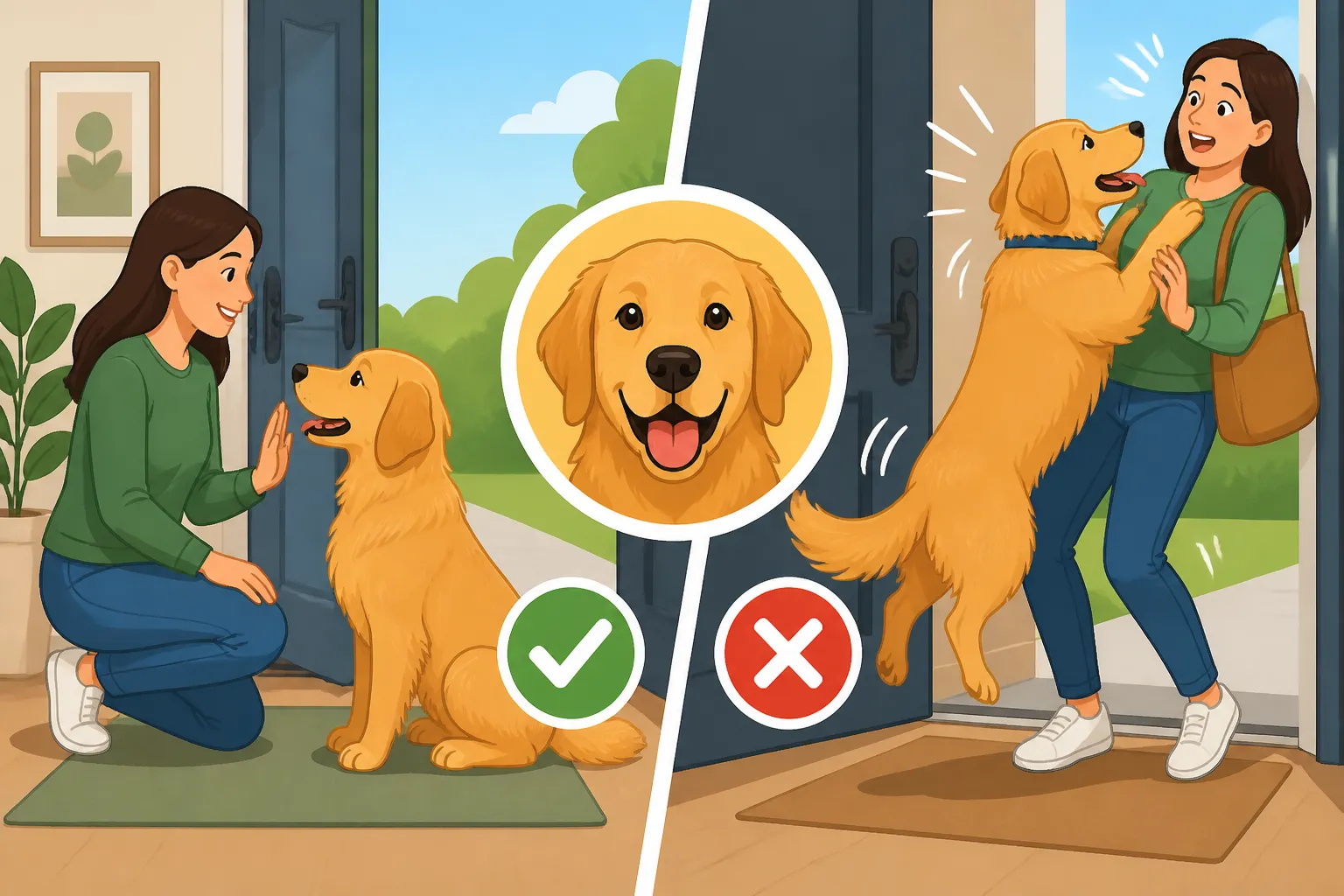
This is the golden rule (pun intended!) for polite greetings. The idea is simple: your Golden's four paws must stay on the floor for them to receive any attention. If they jump, attention immediately stops. The moment all four paws are down, even for a split second, that's your chance to reward them. Start practicing this in low-distraction environments first, like with just you and your dog in a quiet room. Approach your dog, and if they start to rise or jump, turn your back immediately, cross your arms, and completely ignore them. No eye contact, no talking. The instant they put all four paws on the ground, turn back, praise them softly (like "Good!") and give them a small, high-value treat. If they jump again, repeat the turning away.
You'll quickly see that your Golden starts to understand the connection: jumping makes you disappear, calm makes you reappear with treats. Once they're consistent with you, gradually introduce other family members, always ensuring everyone follows the exact same "four on the floor" rule. This is a crucial step in Teaching a Golden Retriever Four on the Floor. It helps them learn impulse control and understand that calm behavior gets them what they want – your loving attention.
Managing the Environment Before the Bell Rings
Before you even think about guests, managing the environment is your secret weapon. Proactive management prevents your Golden from rehearsing the unwanted behavior, making it easier for them to learn the new, polite way. Consider using a baby gate or a sturdy crate (you can find many options on sites like Amazon) to create a barrier between your dog and the front door when you're expecting company. This isn't a punishment; it's a management tool. Before guests arrive, you can also give your Golden a long-lasting chew or a puzzle toy filled with peanut butter to occupy their mouth and mind. A dog that's happily working on a treat is less likely to be focused on the door.
For dogs with extreme excitement, having them on a leash before the doorbell rings allows you to have more control. You can step on the leash or hold it to prevent jumping, giving you more opportunities to reward calm. The goal is to set your Golden up for success, not failure. Think about how much daily Exercise a Golden Retriever Needs Each Day and ensure they've had a good walk or play session before any anticipated arrivals. A tired Golden is often a calmer Golden. This proactive approach helps reduce their overall arousal levels before the trigger even occurs.
Practical Steps for Doorway Success
Once your Golden understands "four on the floor" in a calm setting, it's time to apply those skills to the actual doorway chaos. This requires a bit of rehearsal and coordination, especially if you have an extra enthusiastic greeter.
The "Controlled Entry" Method
This method involves simulating arrivals to practice polite greetings. Start with a family member or a trusted friend acting as your "guest." Have your guest ring the doorbell or knock, then wait outside while you prepare your Golden. Put your dog on a leash, or have them behind a baby gate in a nearby room. When the "guest" comes in, they should completely ignore your Golden. No eye contact, no petting, no talking. They should walk into the house and go sit down somewhere.
Your job is to reward your Golden for keeping "four on the floor." If they lunge or jump, gently guide them back with the leash or step in front of them, using your body as a barrier. The instant their paws are down, reward them with a small, delicious treat. Only once your Golden is calm, with all four paws on the floor, should the guest briefly acknowledge them, maybe with a quick pet or a quiet "hello," before returning to ignoring them. The key is short bursts of attention for calm behavior. Repeat this process, gradually extending the time your Golden needs to stay calm before getting attention. Websites like BAXTER & Bella offer excellent online courses that walk you through these kinds of training scenarios step-by-step. This teaches your Golden that polite greetings, not frantic jumping, are the key to getting what they want.
Here’s a quick overview of the controlled entry steps:
| Step | Golden's Action (Desired) | Your Action | Guest's Action |
|---|---|---|---|
| 1. Preparation | Calm, leashed, or behind gate | Prepare treats, position Golden | Rings bell/knocks, waits outside |
| 2. Entry (Ignore Phase) | Excited but contained | Prevent jumping with leash/body, ignore noise | Enters, walks in, completely ignores |
| 3. Calm Moment | All four paws on floor | "Yes!" or click, treat immediately | Continues ignoring (e.g., sits down) |
| 4. Brief Acknowledgment | Remains calm, paws on floor | Release for brief, calm interaction | Short, calm pet/greeting, then ignore |
| 5. Repeat & Extend | Longer periods of calm | Gradually increase duration of calm required | Re-enters, repeats ignoring phase |
Tools and Aids to Help You
Sometimes, a little extra help can make all the difference. For Goldens who are incredibly excited, having a physical barrier can be invaluable. A tall baby gate can contain them in a safe space away from the door, allowing them to settle down before being introduced to guests. You can find a wide variety of these gates on Amazon, from pressure-mounted to hardware-mounted, depending on your needs. For dogs that get overstimulated, a stuffed Kong or a long-lasting chew given before guests arrive can redirect their energy into a positive, quiet activity. Some owners find a front-clip harness or a head halter helpful for better leash control during greetings, as they make it harder for your Golden to pull or jump forcefully.
Another useful aid is a verbal cue like "place" or "bed." If your Golden has learned to go to a specific spot and stay there on command, you can use this as part of your greeting routine. "Rover, place!" before the doorbell rings can give them a job to do and keep them contained until they are calm enough to greet politely. The key is to find tools that support your training, not replace it. Remember, managing their general Golden Retriever energy level by age is also important, as a well-exercised dog is often more amenable to calm behavior.
Troubleshooting Common Doorway Challenges
Even with the best intentions and consistent training, you might still encounter some bumps in the road. Golden Retrievers are creatures of habit, and breaking old habits takes time and perseverance. Don't get discouraged if your dog has an off day!
When Visitors Aren't on Board
This is arguably one of the biggest challenges! You’ve put in all the work, and then a well-meaning visitor comes over, kneels down, and encourages your Golden to jump right up, undoing all your hard work in seconds. It’s incredibly frustrating. The best approach is proactive communication. Before your guest even enters your home, explain your training rules. Something like: "We're working on polite greetings with Fido, so could you please ignore him when you first come in? No petting or talking until his four paws are on the floor. Once he's calm, then you can say hello."
If a visitor forgets or struggles, you might need to manage the situation more strictly. This could mean keeping your Golden on a leash or behind a gate for longer, or even moving them to a separate room for a few minutes until the initial excitement passes and your guest is settled. Remember, you are your dog's advocate, and it's okay to politely enforce the rules for the sake of their training. It also helps if your guests understand the Golden Retriever Temperament and Personality and their natural exuberance.
Dealing with Relapses and High-Energy Situations
Relapses are a completely normal part of any dog training journey, especially during the adolescent phase (often referred to as The Golden Retriever Teenage Regression). Your Golden might be doing wonderfully, and then one day, boom – they're back to jumping like a puppy. Don't despair! This usually means you need to go back to basics. Revisit your "four on the floor" practice in low-distraction settings. Sometimes, new or highly stimulating situations, like a big party or a visit from a particularly exciting person, can overwhelm your Golden's self-control.
For high-energy events, it’s often best to prioritize management over active training. For example, have your Golden in their crate with a special chew during the busiest period of guest arrivals. Once things have settled down, you can then bring them out on a leash for controlled, polite introductions, rewarding calm behavior. If you notice your Golden gets particularly wound up during these times, consider more Mental Enrichment for a Bored Golden Retriever throughout the day, ensuring they're not just physically tired but mentally stimulated too. Consistency is your superpower here. Every time you redirect a jump into a calm sit or stand, you're reinforcing the right behavior.
What to Do When a Golden Retriever Jumps on Visitors
When your Golden Retriever jumps on visitors, your immediate reaction can either reinforce or extinguish the behavior. It’s critical to have a consistent plan that everyone in the household, and ideally your guests, understands and implements. This isn't about scolding or punishing; it's about teaching an alternative, more polite way to interact.
The "No Response" Protocol
The most effective way to address jumping is to make it unproductive for your Golden. This means giving absolutely no attention for the jumping behavior. When your Golden leaps up, the person being jumped on should immediately turn their back, cross their arms, and look away. No eye contact, no pushing the dog down, no verbal commands or "no!" This is incredibly difficult for many people because our instinct is to interact. However, if jumping gets no reaction whatsoever, your Golden quickly learns it's a wasted effort. They'll start to try other behaviors to get attention.
The moment all four paws are back on the floor, that's when the person can turn around and offer calm, gentle praise and perhaps a quick pet. If the Golden jumps again, the attention ceases immediately, and the person turns their back again. This consistent "on/off" switch for attention teaches your Golden that polite, calm behavior is the only way to earn positive interaction. This approach is highly effective and builds on the "four on the floor" principle we discussed earlier. It takes patience, especially with an excitable Golden.
Teaching an Alternative Greeting Behavior
While ignoring jumping is essential, it’s equally important to teach your Golden what to do instead. Simply telling them "no" without providing an alternative can be confusing. The most common alternative is to teach them to sit or stand calmly for a greeting. Before a guest even comes in, cue your Golden to sit. As the guest enters and ignores the dog, you can continuously reward your Golden for maintaining their sit or stand, keeping their paws on the floor.
You can also teach them to hold a toy in their mouth as a greeting. Golden Retrievers are natural "retrievers" and often like to carry things. If they have something in their mouth, it's physically harder for them to jump or mouth at guests. Encourage them to go find a specific toy when the doorbell rings and bring it to you or a designated spot. Reward them for holding it. This leverages their natural instincts in a positive way. For Why Golden Retriever Puppies Are So Mouthy, teaching them to carry a toy can be a great redirection from nipping hands, too. If their mouth is full, they can't jump up and grab your clothes.
Consistent Practice and Guest Education
The success of managing jumping behavior at the door hinges on absolute consistency. Every single person who interacts with your Golden, both family members and guests, needs to be on the same page. A single instance where jumping is rewarded (even accidentally, like by a guest who pets them while they're still off the ground) can set your training back significantly. This is why educating your guests is so important. A simple sign on the door or a friendly heads-up before they come in can make a world of difference.
Practice isn't just for when real guests arrive. Stage frequent "fake" arrivals with family members. Practice in different locations within your home. If your Golden tends to get overly excited, start with shorter practice sessions and gradually increase the duration. Remember, Goldens thrive on routine and clear expectations. If you're struggling, don't hesitate to seek advice from a professional, positive reinforcement trainer. They can offer personalized strategies and help you troubleshoot specific challenges you might be facing. Choosing a Positive Reinforcement Trainer for a Golden can make a huge difference in how quickly and effectively your dog learns these vital manners.
Disclaimer
This article is for general informational purposes only and does not constitute professional advice. Laws, prices and regulations vary by location and change over time. Consult a qualified professional for guidance on your specific situation.