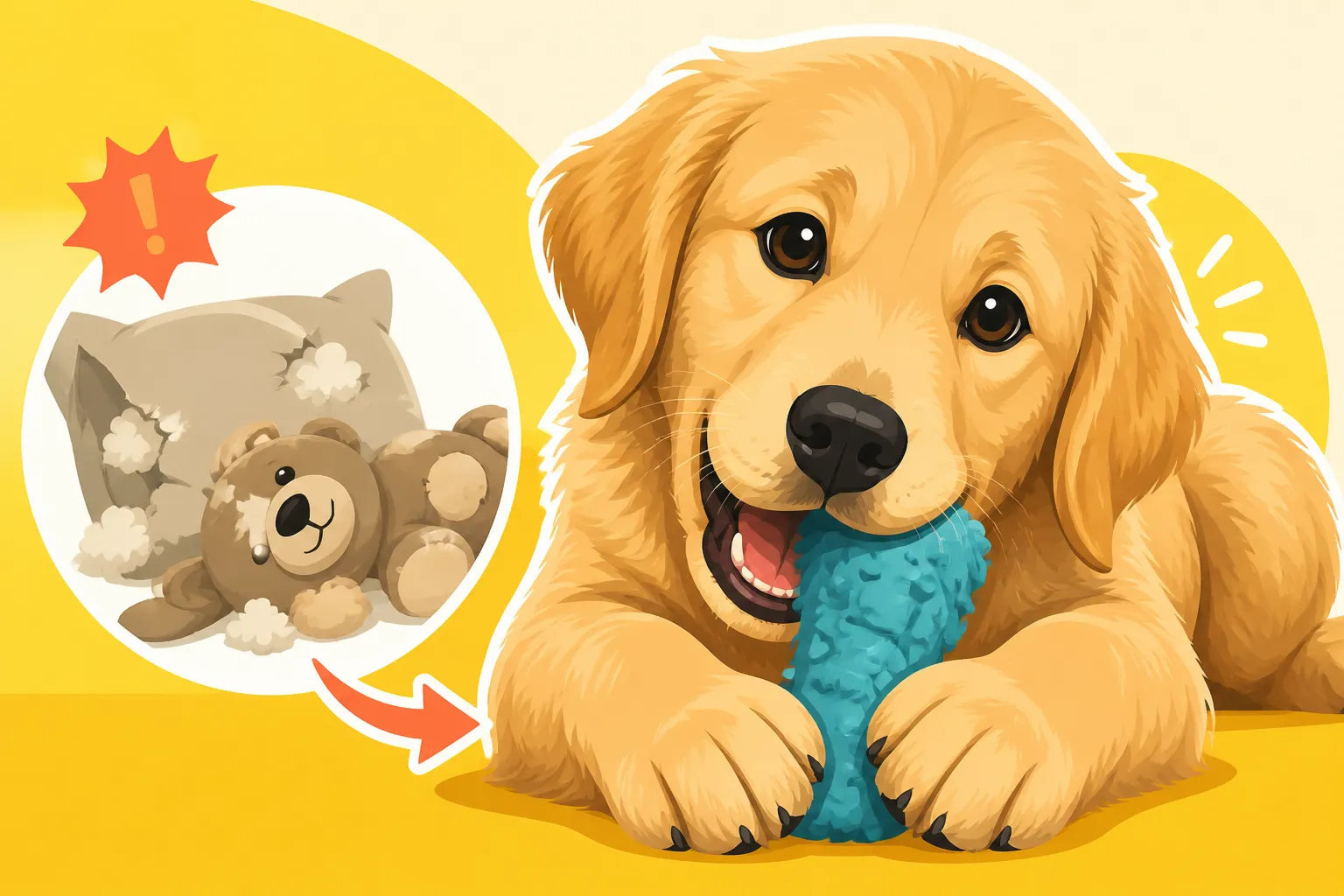
Golden Retriever Chewing at Eight Months
If your 8-month-old Golden Retriever seems to be constantly searching for something, anything, to chew on, you're not alone. What started as cute puppy nipping has likely escalated into a full-blown mission to destroy household items, leaving you with splintered furniture legs, mangled shoes, and a sense of utter bewilderment. This guide will walk you through why your adolescent Golden Retriever is channeling their inner beaver, differentiate between normal chewing and destructive habits, and arm you with practical strategies to manage and redirect this powerful instinct.
Why Your Golden Retriever Is a Chewing Machine at Eight Months
Eight months old is a fascinating, often frustrating, time in a Golden Retriever's life. They're no longer tiny, sleepy puppies, but they haven't quite matured into calm, settled adults either. This period, often called adolescence, brings a surge of energy, curiosity, and a powerful urge to explore the world with their mouths. Understanding the root causes of this intensified chewing is the first step toward managing it effectively.
Adolescent Chewing Instincts
Just like human teenagers, adolescent Golden Retrievers are exploring their boundaries, testing their strength, and grappling with a lot of physical and mental changes. At eight months, their adult teeth are fully in, but that doesn't mean the urge to chew goes away. Far from it! Chewing is a natural, instinctual behavior for dogs. It helps them relieve stress, explore their environment, strengthen their jaws, and even keep their teeth clean. For an adolescent Golden, who is bursting with energy and learning about their place in the world, chewing becomes a primary outlet. It's how they self-soothe, self-entertain, and interact with objects.
Imagine your Golden finding a new scent on your shoe. Their first instinct might not be to sniff it; it might be to pick it up, carry it around, and then inevitably, to chew it. This isn't out of malice, but pure canine curiosity and instinct. They are building new neural pathways, figuring out cause and effect (e.g., "if I chew this, it falls apart, which is satisfying!"), and generally being a boisterous, happy, and slightly destructive teenager. This is also when many Goldens go through Golden Retriever Chewing Through Adolescence, a phase where they might seem to forget all their training.
Lingering Teething Pains and Jaw Development
While most of your Golden's adult teeth should be in by eight months, some might still be settling, or their gums might occasionally feel irritated. Think about wisdom teeth in humans – sometimes they just ache! This lingering discomfort can certainly contribute to the desire to chew. More significantly, their jaws are still developing and strengthening. Chewing provides essential exercise for those growing jaw muscles.
The bones and ligaments in their skull and jaw are still firming up, and strong, appropriate chewing helps facilitate this process. If they don't have suitable outlets, they'll seek out alternatives, which could be your coffee table leg or the arm of your favorite armchair. They're not just trying to annoy you; they're genuinely working out their mouths. Providing things like frozen kongs or safe, durable chews can help alleviate any subtle discomfort while satisfying this developmental need.
Boredom and Pent-Up Energy
A Golden Retriever, especially an adolescent one, needs a significant amount of physical and mental stimulation every single day. If they aren't getting enough, that boundless energy and intelligent mind will find its own (often destructive) outlets. Chewing is a fantastic way for a bored Golden to pass the time. If you leave your 8-month-old Golden alone for hours with nothing to do but stare at the walls, they will invent their own entertainment, and it usually involves their mouth.
A long walk around the neighborhood might be good, but it's often not enough for a young, energetic Golden. They need to run, play, swim, and engage their minds with training and puzzle toys. A Golden who spends their day in a state of under-stimulation is a prime candidate for destructive chewing. They might systematically work their way through items in the house simply because it gives them something to do, a task to complete, and a way to burn off steam. This is closely related to What a Bored Golden Retriever Destroys.
Anxiety and Stress
Sometimes, chewing isn't just about boredom or instinct; it can be a manifestation of underlying anxiety or stress. Separation anxiety is a common culprit, especially in a breed as social and people-oriented as the Golden Retriever. If your Golden chews destructively primarily when left alone, particularly near exit points like doors or windows, and exhibits other signs like excessive barking, howling, or house-soiling, it might be more than just a chewing problem.
Other stressors, like changes in routine, new people or pets in the house, or even loud noises, can also trigger anxious chewing. It's a self-soothing mechanism, similar to how some people bite their nails when stressed. Recognizing the signs of Golden Retriever Separation Anxiety Signs is crucial, as the approach to managing anxiety-driven chewing is different from simply redirecting playful chewing. Observe when and where your Golden chews most intensely to help pinpoint if anxiety is a factor.
Effective Strategies to Manage Adolescent Chewing
Once you understand why your Golden Retriever is chewing, you can implement targeted strategies to manage this behavior. The goal isn't to stop chewing entirely – that's impossible and undesirable – but to channel it towards appropriate outlets and prevent damage to your belongings.
Providing Appropriate Chew Toys
This might sound obvious, but many owners underestimate the sheer volume and variety of chew toys an adolescent Golden needs. You need durable toys, interesting toys, and a rotation of toys to keep them engaged. Think about what your Golden wants to chew – something with texture, something that offers resistance, something that smells interesting.
Look for toys designed for "power chewers" or "extreme chewers." Brands offer a wide range of options, from tough rubber toys that can be stuffed with treats to nylon bones that satisfy the urge to gnaw. You can often find a vast array of durable chew toys on Amazon, making it easy to experiment with different types to see what your Golden loves best. Always supervise new toys to ensure they are safe and won't break into pieces that could be swallowed. Regularly check toys for wear and tear, and discard anything that becomes a choking hazard. For ideas on particularly tough options, you might look into Chew Toys That Survive a Golden Retriever.
Implementing Redirection Techniques
Redirection is key. Every time you catch your Golden chewing on something inappropriate, calmly interrupt the behavior and immediately offer an approved chew toy instead. Praise them enthusiastically when they take the correct toy. Consistency is vital here. If sometimes you let them chew on an old shoe and other times you correct them, you're sending mixed signals that will confuse your Golden.
Keep appropriate chew toys readily available in every room your Golden has access to. If they start gnawing on the couch, firmly say "No," take the forbidden item away (if possible), and immediately present a suitable chew toy. When they start to chew on the toy, offer praise and maybe even a small, high-value treat. This teaches them, "Not this, but this is okay!" Make the approved chew toys more enticing than your furniture by stuffing them with peanut butter or freezing them for a longer-lasting challenge.
Boosting Mental and Physical Exercise
A tired Golden is a good Golden, and a mentally stimulated Golden is an even better Golden. Increase both the duration and intensity of their daily exercise. For an 8-month-old Golden, this could mean two good walks or runs a day, plus dedicated playtime in the yard. Fetch, swimming, or even a hike are excellent ways to burn off physical energy. Exercise a Golden Retriever Needs Each Day will give you more context on this.
Don't forget mental exercise! Golden Retrievers are highly intelligent and thrive on having a "job" to do. Incorporate short training sessions throughout the day, teaching new tricks, practicing obedience commands, or engaging in scent work games. Puzzle feeders, often available on Amazon, are wonderful for making mealtime a mental challenge instead of just a quick gulp-and-go affair. Filling a Kong with wet food and freezing it can provide a good 30-60 minutes of focused chewing and licking, which is both mentally stimulating and satisfying. This helps with Puzzle Feeders That Occupy a Golden Retriever.
Considering Structured Training
Formal training can make a huge difference in managing adolescent behaviors, including chewing. A good training program will not only teach your Golden what not to do, but more importantly, what to do instead. Positive reinforcement training methods are highly effective for Goldens, as they respond well to praise and rewards. Look for trainers who specialize in positive methods and understand adolescent dog behavior.
Many online training resources and programs can guide you through this stage. For example, platforms like BAXTER & Bella offer comprehensive online puppy and dog training programs that cover everything from basic obedience to problem behaviors. Such structured guidance can provide you with the tools and techniques to effectively communicate with your Golden, teaching them impulse control and appropriate behaviors, which in turn reduces destructive chewing. Learning commands like "leave it" and "drop it" are invaluable during this stage.
When Chewing Signals a Bigger Problem
While most adolescent chewing is normal and manageable, there are times when it crosses the line into something more concerning. Knowing the difference can help you decide when to seek professional help from a vet or a certified professional dog trainer.
Distinguishing Normal vs. Destructive Chewing
Normal chewing, even when intense, is usually directed at appropriate chew toys or easily redirected. It might involve a little exploration of forbidden items, but with consistent intervention, your Golden learns what's off-limits. Destructive chewing, on the other hand, is characterized by its intensity, target, and the difficulty in stopping it.
| Characteristic | Normal Adolescent Chewing | Concerning Destructive Chewing |
|---|---|---|
| Targets | Primarily on designated chew toys, occasional curiosity on low-value items (e.g., shoe left on floor). | Furniture, walls, doors, crates, electrical cords, personal items despite available toys. |
| Intensity | Vigorous but usually stops when redirected to a toy. | Persistent, frantic, difficult to interrupt; may ignore redirection. |
| Context | Happens during play, boredom (briefly), or when settling down. | Often occurs when left alone, during thunderstorms, or when stressed. |
| Outcome | Toys are well-chewed, other items are usually intact. | Significant damage to household items, ingestion of non-food objects. |
| Owner's Presence | Can be observed while owner is present. | Often happens when owner is absent or unable to supervise closely. |
If your Golden is consistently destroying high-value items, ingesting pieces of non-food objects, or chewing so intensely that they injure their mouth or paws, it's time to investigate further.
Signs of Separation Anxiety
As mentioned before, separation anxiety can manifest as destructive chewing. If the chewing predominantly occurs when you leave your Golden alone, especially within the first 15-45 minutes of your departure, and is coupled with other signs, anxiety is a strong possibility. These signs include:
- Excessive vocalization: Barking, howling, or whining when alone.
- House-soiling: Urinating or defecating indoors, even if fully house-trained.
- Pacing or trembling: Observed via a pet camera.
- Escape attempts: Damaging doors, windows, or crates in an effort to get out.
- Self-mutilation: Licking or chewing paws or flanks excessively.
If you suspect separation anxiety, you'll need a different approach than simply buying more chew toys. It requires a gradual, systematic desensitization program, often with the guidance of a professional behaviorist. Online resources or certified professional dog trainers, sometimes found through organizations like BAXTER & Bella, can offer specialized support for anxiety-related behaviors. Ignoring separation anxiety will not make it go away and can lead to escalating destructive behaviors and distress for your Golden.
Medical Reasons for Excessive Chewing
While less common at eight months, certain medical conditions can sometimes contribute to excessive chewing. Pain or discomfort in the mouth, gastrointestinal issues, or even certain nutritional deficiencies can prompt a dog to chew more.
For instance, if your Golden is showing signs of oral pain, such as dropping food, reluctance to eat certain textures, or pawing at their mouth, a vet visit is in order. Occasionally, stomach upset or nausea can lead to chewing on unusual items, as dogs might instinctively try to soothe themselves. If your Golden suddenly starts chewing excessively or fixates on non-food items, and it's accompanied by other symptoms like lethargy, vomiting, diarrhea, or a change in appetite, a trip to the veterinarian is highly recommended to rule out any underlying health issues. Why Goldens Need Vet Visits Twice a Year can give you more details on routine health.
Preventing Chewing Issues Long-Term
Managing chewing in an 8-month-old Golden isn't just about surviving the adolescent phase; it's about setting them up for success as well-behaved adults. Long-term prevention involves consistent management, ongoing training, and proactive care.
Environmental Management
This is your first line of defense. If your Golden can't get to it, they can't chew it. Until your Golden has proven they can be trusted, practice vigilant "puppy-proofing" – even if they're not a puppy anymore! Put away shoes, secure electrical cords, block access to valuable furniture, and pick up anything off the floor that could become a tempting target. Use baby gates or exercise pens to limit access to certain rooms when you can't actively supervise.
When you leave your Golden alone, even for short periods, ensure they are in a safe, chew-proof environment. A sturdy crate (properly introduced and made into a positive space) can be invaluable. Make sure their designated safe space contains plenty of appropriate chew toys. The more successful your Golden is at chewing only appropriate items, the stronger that habit becomes. Remember, they are creatures of habit, and every time they chew something inappropriate without consequence, that behavior is reinforced.
Consistent Training and Reinforcement
Training isn't a one-and-done deal; it's an ongoing conversation with your dog. Continue to reinforce good chewing habits through positive reinforcement. When your Golden chooses an appropriate toy, praise them. When they ignore a forbidden item, reward them. The "leave it" and "drop it" commands are incredibly powerful tools for managing chewing behavior. Practice these commands regularly, starting in low-distraction environments and gradually increasing the challenge.
Consider enrolling in advanced obedience classes or exploring dog sports like agility or rally. These activities provide excellent mental and physical challenges and strengthen the bond between you and your Golden, making them more likely to listen to your cues. Consistency from every family member is crucial – everyone needs to be on the same page about what's allowed and what's not, and how to redirect chewing. Consistency helps your Golden understand the rules without confusion. For tips on continuing education, you might find Choosing a Positive Reinforcement Trainer for a Golden helpful.
Regular Vet Check-ups
Maintaining your Golden Retriever's overall health is a vital part of preventing behavioral issues like excessive chewing. Regular veterinary check-ups, even if your dog seems perfectly healthy, can catch subtle issues early. Your vet can assess their dental health, ensuring there are no painful or impacted teeth, and can rule out any underlying medical conditions that might be contributing to their chewing habits.
Discuss any changes in chewing behavior, appetite, or energy levels with your veterinarian. They can offer advice, recommend appropriate dental chews, or suggest further investigations if they suspect a medical cause. Staying proactive with your Golden's health means they are less likely to develop discomfort that might manifest as unwanted chewing. Don't forget their Golden Retriever Vaccination Schedule is important too!
As frustrating as it can be, your 8-month-old Golden Retriever's chewing phase is a normal, albeit challenging, part of their development. With patience, consistency, and a proactive approach, you can successfully navigate this period and guide your Golden towards being a well-adjusted, non-destructive member of your family.
Disclaimer
This article is for general informational purposes only and does not constitute professional advice. Laws, prices and regulations vary by location and change over time. Consult a qualified professional for guidance on your specific situation.