Why a Golden Retriever Growls at Its Food Bowl
It's incredibly unsettling and often quite frightening when your sweet, loving Golden Retriever suddenly snarls or growls over their food bowl. You expect nothing but warmth and wags from your Golden, so to see such a strong display of what feels like aggression can leave you feeling confused, hurt, and even a little scared. This guide is here to unravel the mystery behind why a Golden Retriever might growl at its food bowl, explain the underlying behaviors, and provide clear, actionable steps to help you address this challenging situation safely and effectively.
Understanding Resource Guarding in Golden Retrievers
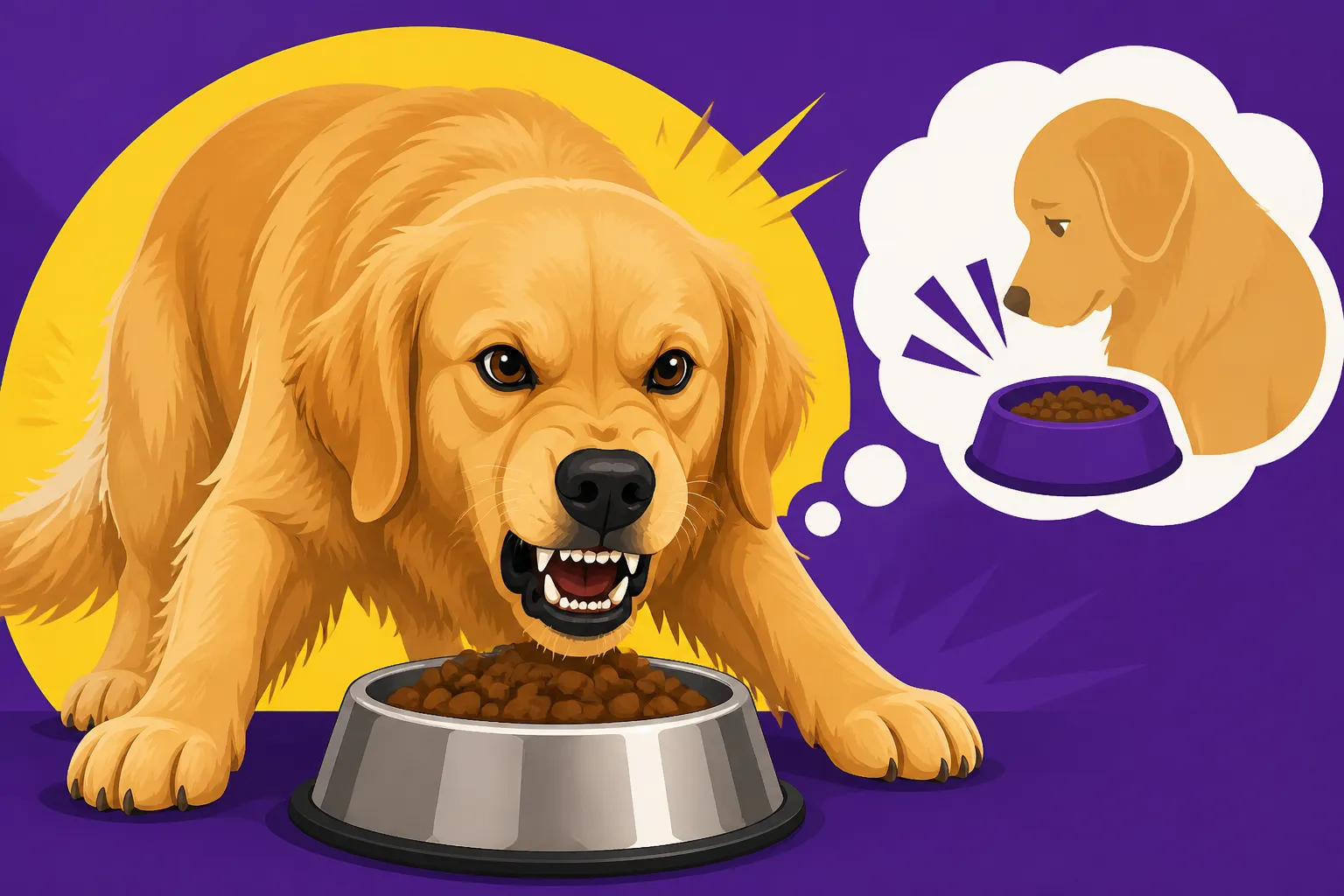
When your Golden Retriever growls at you or another pet while they're eating, what you're witnessing is a classic sign of resource guarding. This isn't necessarily about aggression in the way we typically think of it, but rather a deeply ingrained instinct to protect something they value – in this case, their food. It’s a common behavior across many dog breeds, and even our gentle Goldens can exhibit it.
What Resource Guarding Actually Looks Like
Resource guarding isn't always a dramatic, teeth-baring snarl. Sometimes it's much more subtle, especially in the early stages. You might notice your Golden Retriever stiffening their body as you approach, lowering their head over the bowl, eating faster, or giving you a "hard stare" – where their eyes seem to lock onto you without blinking, showing the whites of their eyes. As the guarding escalates, you could hear a low growl, a snarl, a snap, or even a quick lunge or bite. The intensity can vary wildly from dog to dog and even situation to situation. It's their way of communicating, "This is mine, stay away." They're not being "bad"; they're acting on instinct.
The important thing to remember is that this behavior is a spectrum. A dog might guard a highly prized steak bone but be perfectly fine with you near their regular kibble. Or they might only guard when another dog approaches, but not a human. Understanding these nuances is crucial for addressing the behavior effectively. It's not a personal affront; it's an innate drive surfacing.
The Evolutionary Roots of Resource Guarding
To truly understand resource guarding, we have to look back at the ancestral origins of dogs. In the wild, resources like food, mates, and safe dens were vital for survival. A dog that couldn't protect its food from competitors, whether other canines or scavenging animals, wouldn't survive long. This instinct to guard valuable items is deeply wired into their genetic makeup. While our domesticated Goldens don't have to hunt for their next meal, that ancient instinct still lies dormant, ready to be triggered.
Even though your Golden lives in a safe home with regular meals, their brain still processes food as a high-value, potentially scarce resource. They don't differentiate between you, their loving owner, and a rival wolf trying to steal their dinner. Their instinct simply says, "Protect this." This behavior isn't a sign of mistrust in you as their provider, but rather a primal survival mechanism. It’s why trying to simply assert dominance often backfires, as it can escalate their need to guard even more fiercely.
Why Goldens, Despite Their Sweet Nature, Can Still Exhibit This
Golden Retrievers are renowned for their gentle, friendly, and eager-to-please temperaments. They're often seen as the epitome of the "family dog" – patient with children, sociable with strangers, and generally quite biddable. So, when a Golden growls over food, it can be particularly shocking and confusing for owners. "My Golden? Aggressive? Impossible!" you might think. However, even the sweetest breeds can exhibit resource guarding.
Their intelligence and strong retrieving drive, while wonderful for training and games like fetch, can sometimes manifest in less desirable ways. A dog bred to carry game gently in its mouth might also feel a strong sense of ownership over what's in its mouth or near its body. It's not a flaw in their personality but a powerful instinct. Genetics can also play a role; if a Golden's parents or close relatives exhibited resource guarding, there's a higher chance they might, too. Early experiences, or a lack of proper socialization around food, can also contribute. It's a complex behavior rooted in biology and influenced by environment.
Common Triggers and Warning Signs
Identifying the specific situations that trigger your Golden Retriever's food guarding is the first step toward managing and modifying the behavior. It’s like being a detective, looking for clues in their body language and the context of the situation.
Specific Scenarios That Provoke Growling
Most commonly, food guarding is triggered when someone or something approaches the dog while it's eating, especially if the dog perceives the approach as a threat to their meal.
- Approaching the Bowl: This is the classic scenario. You walk past, bend down, or reach for their bowl, and they react. It doesn't matter if your intention is to add more food or simply pick it up; to them, it's an invasion.
- Taking Food Away: This is a particularly strong trigger. Attempting to remove their food bowl, even if they're finished, can provoke a severe reaction. This is often where owners get bitten because the dog feels its most prized possession is being stolen.
- Other Pets: If you have multiple dogs or even a cat, one Golden might guard its food from the others. This can lead to tension at mealtimes and even fights. This is often about competition, even if there's plenty of food to go around.
- Children: Young children, often not understanding canine body language, might innocently approach a dog eating, try to pet them, or even pick up a dropped piece of food. This can be extremely dangerous if the Golden is guarding. Teaching Kids How to Handle a Golden Retriever is paramount for safety.
- High-Value Treats: Bones, chews, or particularly delicious human food items can often trigger guarding even in dogs who are normally fine with their regular kibble. These items are seen as exceptionally valuable.
Body Language Cues Beyond the Growl
Long before a growl erupts, your Golden Retriever will be sending clear signals that they're uncomfortable and about to guard their resource. Learning to read these subtle cues is vital for prevention and safety.
- Stiffening Body: Their body might become rigid, their tail might stop wagging, and their posture becomes very still and tense. This is their way of saying, "Don't come closer."
- Hard Stare: The "whale eye" where you can see the whites of their eyes, or an intense, unblinking stare directed at you or the approaching object. Their focus is solely on the perceived threat.
- Lowering Head Over Food: They might try to physically cover their food with their head and body, hunching over it to make themselves appear larger and more protective.
- Eating Faster: If you approach and they suddenly start gobbling their food at an alarming rate, it's a sign they're trying to consume it before it can be taken away. This often happens with Goldens that tend to eat quickly anyway; using Slow Feeder Bowls for a Fast-Eating Golden can help, but won't solve guarding.
- Lip Licking or Yawning (in context): These can be displacement behaviors, indicating stress and discomfort. If your dog is doing this as you approach their food, it’s a warning sign.
- Freezing: They might stop eating entirely and just freeze, staring intently. This is a clear "back off" signal.
Recognizing these cues allows you to intervene before the situation escalates to a growl or snap, preventing both injury and further reinforcement of the guarding behavior.
Early Signs in Puppies Versus Adult Goldens
Resource guarding can manifest differently depending on your Golden Retriever's age. It's often easier to address in puppies, but it's crucial to identify it early.
- Puppies: In a Golden Retriever puppy, resource guarding might look like an intense focus on their food bowl, a quick snap at a littermate or even your hand if you get too close, or a slight stiffening. They might snatch toys or chews and run off to a secluded spot. These early behaviors are often dismissed as "just puppy stuff," but they are prime opportunities to start working on prevention. For instance, a puppy might be reluctant to share a chew or might give a tiny growl if another puppy tries to take a special toy. This isn't inherently "bad," but it means the guarding instinct is present and needs to be managed through early training and socialization. Golden Retriever Puppy Nipping at Children can sometimes stem from similar possessive instincts, though often it's just play biting.
- Adult Goldens: In adult Goldens, the behavior can be more established and intense. It might have been present since puppyhood and gone unaddressed, or it could develop later in life due to a stressful event, a change in environment, or even an underlying medical condition causing discomfort or anxiety. An adult Golden's growl is usually much clearer and more purposeful, and their reactions can be more serious, potentially involving a bite. It’s important not to punish an adult Golden for growling, as this often suppresses the growl, making them go straight to a bite without warning. Instead, focus on understanding and re-training.
| Behavior | Puppy Resource Guarding | Adult Resource Guarding |
|---|---|---|
| Intensity | Often subtle, playful, or experimental | Can be intense, clear, and potentially dangerous |
| Triggers | Often high-value treats, new toys | Food bowl, special chews, stolen items |
| Body Language | Stiffening, quick snaps, running off | Hard stare, freezing, growls, lunges, bites |
| Motivation | Learning boundaries, instinct | Established habit, anxiety, instinct |
| Intervention Ease | Easier to redirect and shape | Requires consistent, careful counter-conditioning |
Practical Strategies to Address Food Bowl Guarding
Addressing food bowl guarding requires patience, consistency, and a commitment to positive reinforcement. The goal is to change your Golden Retriever's emotional response to your presence near their food, from anxiety or possessiveness to anticipation of good things.
The "Trade-Up" Method
This is one of the most effective and safest ways to address resource guarding. The core idea is to teach your Golden that a human approaching their food bowl means more good things are coming, not that their current good thing is being taken away. It builds a positive association.
- Start with Distance: Begin by simply walking past their bowl while they are eating, but far enough away that they don't react. As you pass, gently toss a high-value treat (something they absolutely adore, like cooked chicken or cheese, not just their regular kibble) into or near their bowl. Continue doing this for several sessions. You want them to look up, see you, and then look for the bonus treat.
- Gradually Reduce Distance: Over days or weeks, slowly decrease the distance from which you toss the treat. The key is to never get so close that they show any signs of guarding. If they start to stiffen, you're too close; back up a step or two.
- The Approach and Retreat: Once they are comfortable with you tossing treats from a closer distance, try approaching the bowl, tossing a treat, and then immediately backing away. This teaches them that your approach is temporary and results in a reward.
- The Gentle Touch (Optional, Advanced): Only once they are consistently relaxed and happy when you approach and toss treats, you can very briefly touch their bowl, then immediately drop an even higher-value treat into it. This step is for advanced cases and requires extreme caution. Never try to pick up their bowl until the behavior is completely resolved and they willingly give it up for a trade.
- Always Trade, Never Take: If you ever need to take something away from your Golden Retriever – a dropped medicine, a dangerous object they shouldn't have – always offer a trade for something even better. For example, "Can I trade you that sock for this delicious piece of chicken?" This reinforces the idea that giving up an item leads to a positive outcome. Make sure you have Best Treats for Training a Golden Retriever ready for these moments.
The success of the "trade-up" relies on pairing your presence with something positive, making them want you to approach.
Desensitization and Counter-Conditioning
These are the scientific terms for gradually exposing your Golden Retriever to the trigger (you near their food) while changing their emotional response (from fear/possessiveness to joy/anticipation).
- Desensitization: This means systematically and slowly exposing your dog to the trigger at a low intensity, without causing a reaction. For food guarding, this involves starting at a distance where your Golden is completely relaxed, as described in the "trade-up" method. You are desensitizing them to your presence near their bowl.
- Counter-Conditioning: This involves changing your dog's emotional response to the trigger. Instead of feeling threatened when you approach, you want them to feel happy and excited because they associate your presence with delicious treats. Every time you approach and toss a treat, you are counter-conditioning their negative association with a positive one. This is also how you might work on other behaviors like Building Reliable Recall in a Golden Retriever by pairing your call with something good.
Consistency is absolutely key here. Every single mealtime and every high-value chew should be an opportunity to practice this. Family members must be on board and follow the same protocol. Never punish your Golden for growling, as this suppresses the warning signs and can lead to a bite without any prior communication.
Management Techniques to Prevent Incidents
While you're working on behavior modification, managing the environment is crucial to prevent any guarding incidents from occurring. Safety first!
- Feed in a Separate, Quiet Area: If you have multiple pets or small children, feed your Golden Retriever in a closed room, a crate, or a separate area where they can eat undisturbed. This removes the primary trigger and prevents potential conflicts.
- Supervise Meal Times: Always supervise, especially if other pets or children are present. This allows you to intervene safely if a situation arises, usually by redirecting or creating distance. For instance, if another dog approaches, you can call that dog away.
- Pick Up Bowls Between Meals: Don't leave food bowls down all day, especially if your Golden is a slow eater or tends to guard. Put the bowl down for a set time (15-20 minutes), and then pick it up, even if there's food left. This teaches them to eat when food is available and that the bowl isn't a permanent fixture to defend. This also aligns with How Much to Feed a Golden Retriever Puppy or an adult, as it ensures measured portions.
- No Free-Feeding: Free-feeding (leaving food out all day) can make resource guarding worse as it implies a constant resource that needs defending. Scheduled meals create an opportunity for training.
- Give High-Value Chews in Crates or Designated Safe Zones: If your Golden guards bones, bully sticks, or other special chews, give these items to them in their crate or a quiet room where they won't be bothered. This eliminates the need for them to guard from others. For example, a sturdy chew toy from Amazon can be given in their crate.
- Teach a "Drop It" or "Leave It" Command: While not for active guarding of the bowl, teaching a reliable "drop it" or "leave it" command for other items can be incredibly useful. This can be taught using lower-value items first, and progressively higher ones, always with a "trade-up" for something better. Teaching a Golden Retriever to Come When Called also falls into the category of general obedience that supports overall good behavior.
Remember, management isn't a permanent solution, but it's a vital safety measure that allows you to work on the underlying behavior modification without risking injury or reinforcing the guarding.
When to Seek Professional Help
While the "trade-up" method and management strategies are excellent starting points, some resource guarding behaviors are too entrenched, too intense, or too dangerous to tackle alone. Knowing when to call in a professional is a sign of responsible pet ownership.
Recognizing When It's Beyond DIY Training
You should absolutely seek professional help if:
- You feel unsafe: If your Golden Retriever's growling has escalated to snapping, lunging, or biting, even if it's just a warning bite that doesn't break the skin, you are no longer in a safe position to manage the behavior on your own.
- The guarding is worsening: If, despite your best efforts with positive reinforcement, the guarding behavior is becoming more frequent, more intense, or is extending to more items or people.
- It involves children: Any instance of guarding directed towards a child requires immediate professional intervention. The risk of serious injury is too high.
- The growling is unpredictable: If you can't reliably predict what will trigger the guarding, it suggests a deeper issue that needs expert assessment.
- You're seeing generalized anxiety or fear: Sometimes resource guarding is a symptom of underlying anxiety or fear. A professional can help identify and address these root causes. Fearful Behavior in a Golden Retriever needs a comprehensive approach, and guarding might be one manifestation.
It’s crucial to understand that professional help isn't a failure on your part, but an investment in your Golden Retriever's well-being and the safety of everyone in your home.
What a Behaviorist or Certified Trainer Can Do
A qualified professional, such as a Certified Professional Dog Trainer (CPDT-KA) or a Certified Applied Animal Behaviorist (CAAB), possesses the knowledge and experience to safely and effectively address complex behavioral issues like resource guarding.
- Assess the Situation: They will observe your Golden Retriever's behavior, ask detailed questions about its history, triggers, and your current management strategies. They can differentiate between typical resource guarding and other forms of aggression. They'll also help you understand the nuances of Golden Retriever Temperament and What to Expect that might contribute.
- Develop a Tailored Plan: A good professional will create a step-by-step, positive reinforcement-based behavior modification plan specifically for your Golden and your household. This plan will likely incorporate elements of desensitization, counter-conditioning, and management, but with professional guidance on intensity, timing, and safety.
- Provide Hands-On Guidance: They can demonstrate techniques, guide you through practice sessions, and help you read your dog's body language more accurately. This hands-on support is invaluable.
- Address Underlying Issues: If there's an underlying medical condition contributing to pain or irritability, or if anxiety is a major factor, a behaviorist can advise on veterinary consultations or medication if necessary, working in conjunction with your vet.
- Ensure Safety: Their primary concern will be your safety and your Golden's welfare, ensuring that all interventions are carried out without risk of injury. Companies like BAXTER & Bella offer online puppy and dog training programs that, while not a replacement for an in-person behaviorist for severe guarding, can provide excellent foundational obedience and relationship-building tools that can support a professional's plan. They focus on positive reinforcement and building a strong bond, which is crucial for addressing such issues. Before engaging, always check for specific modules on resource guarding.
For more information on finding the right expert, refer to Choosing a Positive Reinforcement Trainer for a Golden.
The Importance of Safety First
No matter what, your safety and the safety of others in your household, especially children, must be the top priority.
- Never Punish a Growl: While it's tempting to reprimand a growling dog, doing so is extremely dangerous. A growl is a warning. If you punish the growl, your Golden Retriever learns that giving a warning results in punishment, so they might skip the warning next time and go straight to a bite. You're essentially removing their communication system.
- Avoid Confrontation: Never try to physically dominate your Golden Retriever, take food away by force, or "show them who's boss." This escalates guarding behavior and increases the risk of a bite.
- Educate Everyone: Make sure every member of your family understands the rules for interacting with your Golden around food and other resources. Consistency from everyone is paramount. This includes understanding Golden Retriever Guarding a Bone or Toy as well as the food bowl.
- Seek Help Early: The sooner you address resource guarding, the easier and safer it is to manage and modify. Don't wait until the behavior becomes deeply ingrained or someone gets hurt.
- Consider a Muzzle: For severe cases, or during training, a basket muzzle can be a temporary safety tool, allowing you to work with your Golden without fear of bites. A good behaviorist can guide you on muzzle training.
Dealing with food guarding can be stressful, but with the right approach and, when necessary, professional guidance, you can help your Golden Retriever overcome this instinct and feel secure around their valuable resources. Remember, they are not being malicious; they are simply communicating in the way dogs naturally do. Your understanding and patient guidance can make all the difference.
Disclaimer
This article is for general informational purposes only and does not constitute professional advice. Laws, prices and regulations vary by location and change over time. Consult a qualified professional for guidance on your specific situation.