Golden Retriever Recall Around Other Dogs
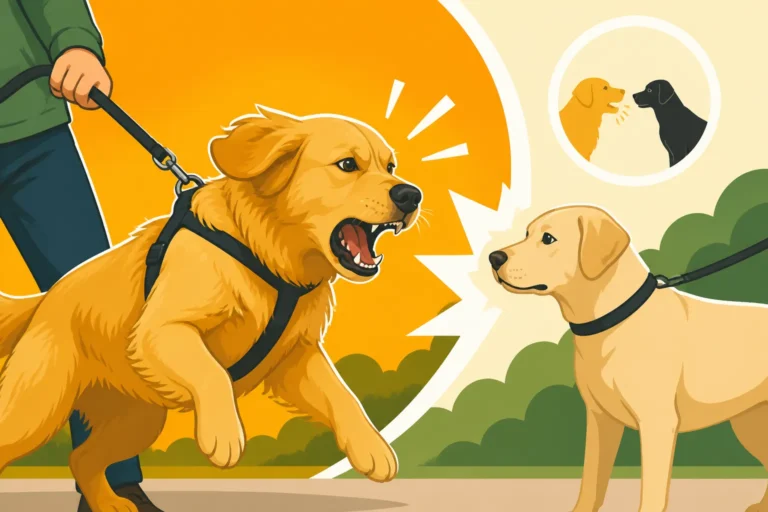
Oh, the sheer joy of watching your Golden Retriever bound through a field, tail wagging, truly happy and free! But that blissful image can shatter in an instant when another dog appears, and suddenly, your carefully trained "come!" becomes a mere suggestion in the wind. Many Golden owners feel that familiar pang of panic when their sweet, usually compliant companion develops selective hearing the moment a furry friend is in sight. This guide is all about tackling that exact frustration, helping you build a rock-solid recall for your Golden Retriever, even when surrounded by the ultimate distraction: other dogs.
Understanding Why Other Dogs Are Such a Big Distraction
It's not just your Golden; most dogs find the presence of another canine incredibly compelling. For our beloved Golden Retrievers, who are inherently social, playful, and often eager to greet, another dog isn't just a distraction—it's an invitation to a party. Understanding the root of this powerful draw is the first step in effectively managing it.
The Golden Retriever's Social Nature
Golden Retrievers are practically born with a social calendar already booked. They thrive on interaction, not just with their human families, but with other dogs too. They often want to run, play, and engage in classic dog behaviors like chasing and wrestling. This isn't a flaw in their personality; it's a core part of what makes them such wonderful companions. When they see another dog, especially one that looks like it might be up for a game, their natural instincts kick in. That strong desire to connect can easily override even the best-practiced recall cue, especially if the training hasn't been specifically proofed for high-distraction environments. It's not defiance; it's pure, unadulterated Golden joy. Think of it like a kid spotting an ice cream truck – everything else just fades into the background.
Instinctive Behaviors and Drive
Beyond just being friendly, Golden Retrievers possess strong drives that can be activated by other dogs. Their retrieving instinct, for instance, can sometimes manifest as a desire to "retrieve" another dog for play, chasing after them with boundless energy. They might have a strong prey drive, not necessarily to harm, but to chase and engage in a playful pursuit. Furthermore, many Goldens are highly motivated by novelty and excitement. A new dog represents a fresh face, a new smell, and potentially a new playmate, all of which are incredibly stimulating. If your Golden is a field line dog, these drives might be even more pronounced, making focus a real challenge. Their entire history is about working with humans to retrieve game, but when off-leash, that focus can shift dramatically to the most exciting thing in the environment.
Environmental Factors and Reinforcement
Sometimes, the environment itself reinforces the distraction. If your Golden frequently gets to run up to and play with every dog they see off-leash, they quickly learn that "other dog" equals "fun, independent playtime." This creates a powerful reinforcement history where ignoring your call often leads to a more rewarding outcome (socializing with the other dog). The problem isn't the other dog, per se, but the lack of consistent, higher-value reinforcement for choosing to return to you. If returning to you means the fun stops, why would they? You're competing with one of the most exciting things in their world, and your recall needs to consistently win that competition.
Building a Rock-Solid Recall Foundation
Before you can even dream of your Golden Retriever ignoring another dog for you, you need a recall so strong that it works in your living room, then your yard, then the quiet park. This isn't a quick fix; it's a patient, step-by-step process that builds trust and value for returning to you.
Start in a Low-Distraction Environment
You wouldn't expect a child to learn calculus on a rollercoaster, right? The same goes for your Golden. Begin all recall training in an environment where there are virtually no distractions—your quiet living room, a securely fenced yard, or a quiet area of your home. Use a distinct, consistent recall cue, like "Come!" or your Golden's name followed by "Here!" Make it exciting and high-pitched. When they come, throw a party! Jackpot them with their absolute favorite, high-value treats (think cooked chicken, cheese, or even liverwurst) and lots of enthusiastic praise. Do this dozens of times a day, for short, fun sessions. The goal is to build an incredibly strong, positive association with the recall cue: "When I hear that word, awesome things happen if I run back to my human!" This is where foundational positive reinforcement training methods, often advocated by resources like BAXTER & Bella, really shine. Teaching a Golden Retriever to Come When Called is a great place to start.
Increase Value for Returning to You
This is critical: you must be more interesting and rewarding than any other dog, squirrel, or smell in the park. This means your "jackpot" reward needs to be truly exceptional. If you're using plain kibble, but your dog goes bonkers for hot dogs, guess what you need to start using for recall practice? Vary your rewards, too. Sometimes it's food, sometimes it's a favorite squeaky toy, sometimes it's a quick game of tug or chase. The key is that returning to you is the gateway to the best things in life.
Think about it from your Golden's perspective: if they're playing with another dog, having the time of their life, and you call them back only to receive a pat on the head and a dry piece of kibble, that's a poor exchange. You need to make coming back to you feel like winning the lottery every single time. Also, practice randomly, not just when you need them to come. Call them, reward lavishly, then immediately release them to go back to what they were doing. This teaches them that coming back doesn't always mean the fun ends, which actually makes them more likely to come next time.
Using a Long Line for Safety and Practice
A long line (15-30 feet) is an indispensable tool for practicing recall in increasingly distracting environments while maintaining safety. It allows your Golden Retriever to have the illusion of freedom while giving you control. Start using the long line in your quiet yard, then move to a park at off-peak hours when other dogs are scarce. Let the line drag on the ground, allowing your dog to explore. Periodically, call them. If they hesitate, gently reel them in while continuing your enthusiastic recall cue. As soon as they reach you, jackpot them!
The long line is not for punishment; it's a safety net and a training aid. Never yank your Golden with it. The idea is to associate the cue with returning, not with being forcibly pulled. If you're consistent, your Golden will quickly learn that the line isn't there to restrict them, but rather to ensure they always get that amazing reward for returning to you. You can find excellent quality long lines on Amazon, often labeled as "check cords" or "training lines." Long Line Training for a Golden Retriever offers more in-depth advice on using this tool effectively.
| Training Stage | Environment | Distraction Level | Key Focus | Rewards | Tools |
|---|---|---|---|---|---|
| Foundation | Home, quiet yard | Very Low | Building positive association with recall cue | High-value food, toys, praise | Leash, collar |
| Controlled Distr. | Quiet park (off-peak hours) | Low to Medium | Introducing mild environmental distractions, ensuring success | High-value food, toys, praise | Long line, leash |
| Specific Distr. | Park with distant dogs | Medium to High | Practicing recall with other dogs present at a manageable distance | Exceptional food, toys | Long line, treats pouch |
| Proofing/Real World | Busy park, dog park (briefly) | Very High | Consistently choosing recall over ultimate distractions, proofing skill | Max-value rewards | Long line (initially) |
Gradually Introducing Distractions: Other Dogs
This is where the rubber meets the road. You've got a great recall indoors and in your quiet spaces. Now, it's time to strategically introduce other dogs into the training scenario, making sure your Golden succeeds at every step.
Distance is Your Friend
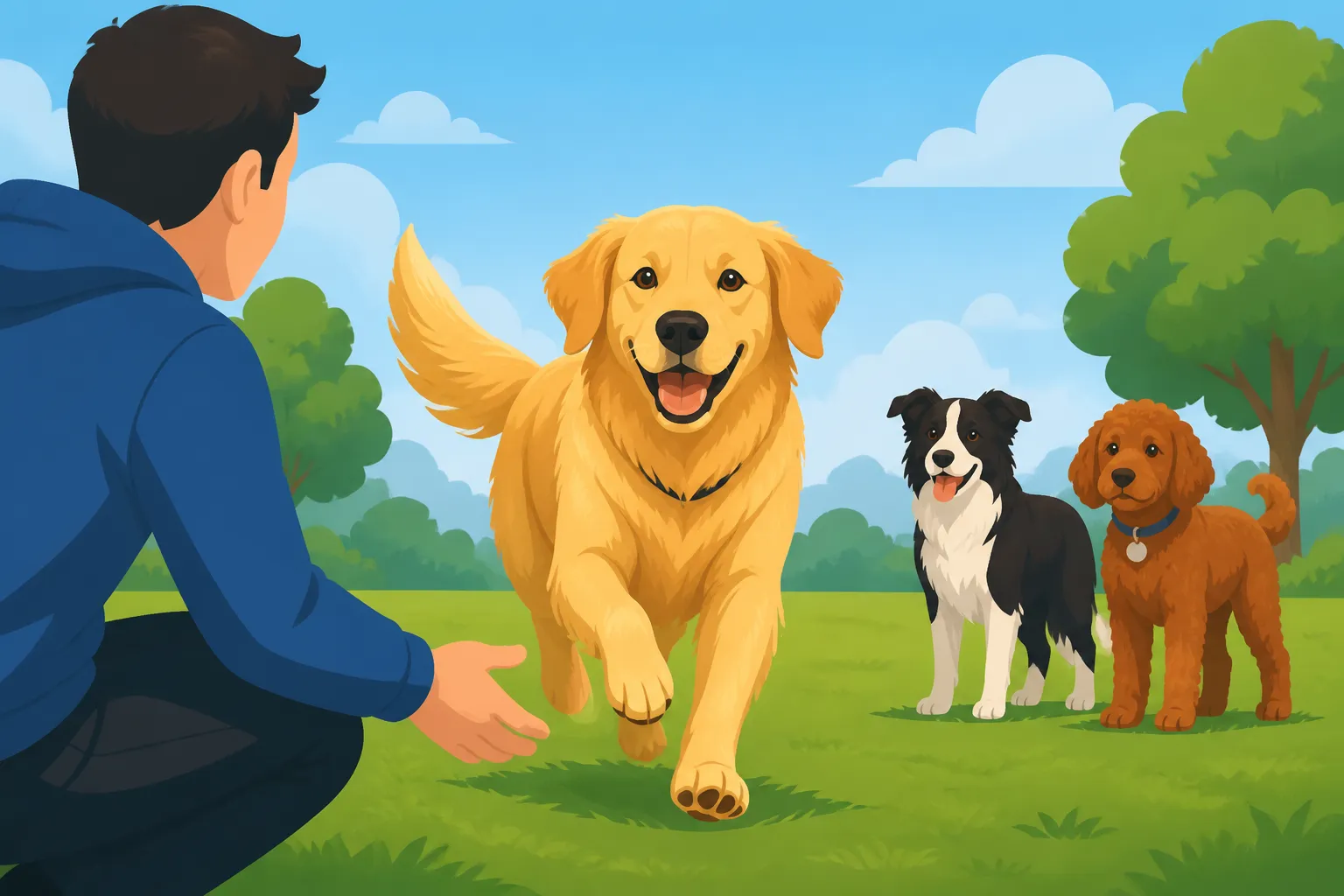
When you first start practicing recall around other dogs, distance is your most powerful tool. Head to a large open park where you can spot other dogs from a significant distance – far enough that your Golden notices them but isn't yet completely consumed by the urge to run over. Put your Golden on a long line. As soon as they spot another dog, before they start to fixate or pull, give your recall cue. If they turn towards you, even a little, reward them with your absolute highest-value treat. If they don't respond, gently reel them in with the long line while repeating your cue, then reward them when they reach you.
The goal here isn't to prevent them from seeing other dogs, but to teach them that even when another dog is present, returning to you is the best choice. Repeat this many, many times, always starting at a distance where they can succeed. Slowly, over weeks or even months, you can gradually decrease the distance to other dogs as your Golden's recall improves.
Strategic Setup and Helper Dogs
If you have a trusted friend with a calm, well-behaved dog, you can set up controlled training scenarios. Start with your friend and their dog standing still at a considerable distance. Practice recalls with your Golden, moving closer to the helper dog only as your Golden consistently succeeds. The helper dog should remain neutral, not engaging with your Golden unless you give permission. This allows you to control the variables and ensure your Golden is set up for success, rather than hoping for a cooperative stranger's dog.
Consider enrolling in a local dog training class, too. Many trainers offer specialized Puppy Classes Worth It for a Golden Retriever or intermediate obedience courses that specifically address distractions. These classes often use helper dogs or have multiple dogs in a controlled environment, providing invaluable practice opportunities with a professional guiding you.
Positive Interruption and Redirection
Sometimes, your Golden might be so focused on another dog that a simple recall cue doesn't cut it. This is where a positive interruption can be useful. A sharp clap, a distinctive whistle, or a specific, excited sound you make can break their focus for a moment. The instant their head snaps towards you, give your recall cue and reward immediately. This isn't about scaring them; it's about briefly redirecting their attention so they can hear your cue.
You can also use a favorite squeaky toy to get their attention, tossing it away from the other dog as you give your recall cue. The key is to redirect their excitement towards you and your reward, making you the most compelling thing in that moment. Remember, if your Golden is already bolting towards another dog, it's often too late for a polite recall. The training needs to happen before they've completely disengaged from you.
Troubleshooting and Maintaining Recall
Even with the best training, recall around other dogs can be challenging. It's a skill that requires ongoing practice and attention, especially as your Golden matures and encounters new situations.
What to Do When Your Golden Ignores You
It happens to the best of us. You call, and your Golden just keeps trotting towards that other dog, tail wagging, ears deaf to your pleas. First, resist the urge to get angry or frustrated. Your Golden isn't being malicious; they're just being a dog with a strong instinct. If you're on a long line, gently reel them in. If they're off-leash and out of reach, walk calmly towards them, rather than chasing, which can turn it into a fun game for them. Once you reach them, snap the leash on and take a break from off-leash play.
Analyze why they ignored you. Were you too close to the distraction? Was your reward not high enough value? Did you call when you knew they were already too engaged? Reassess your environment and your training plan. Go back a step in your distraction progression. Never call your Golden if you aren't confident they will come, as every ignored cue teaches them that the word is optional. Sometimes, simply changing your voice to something more exciting or using a special, "emergency only" recall word can help reset the situation. For understanding behavior shifts, reading about The Golden Retriever Teenage Regression can offer insight.
Proofing and Generalization
Proofing means practicing your recall in every conceivable situation: different locations, different weather, different people, and yes, different dogs. Once your Golden reliably comes when another dog is across the park, try it when a dog is jogging by at a moderate distance. Then, when a dog is walking calmly. The goal is for your Golden to generalize the behavior – to understand that "come" means come, no matter what.
Generalization also means practicing with different types of dogs. A small yappy dog might be a different level of distraction than a large, quiet one. Practice with dogs on-leash, off-leash, dogs playing, dogs sniffing. The more varied the scenarios, the stronger and more reliable your Golden's recall will become. This is an ongoing process throughout their life.
Ongoing Practice and Reward Schedules
Recall isn't a "train it once and forget it" skill. It's like a muscle you need to keep exercising. Continue to practice recall in various environments, even after you feel it's solid. You don't need to jackpot every single time once the behavior is reliable, but you should never make coming back a negative experience. Occasionally, still throw those huge parties for returning, even when it's easy. This keeps the value high.
Consider a variable reward schedule: sometimes they get a small treat, sometimes a medium, sometimes the absolute best. This makes them hopeful that this time might be the jackpot, increasing their motivation to come every time. And always, always praise them for a job well done. A happy, wagging Golden running back to you is the best reward for everyone involved! Keeping your Golden well-exercised, as detailed in Exercise a Golden Retriever Needs Each Day, also helps with focus during training sessions.
Disclaimer
This article is for general informational purposes only and does not constitute professional advice. Laws, prices and regulations vary by location and change over time. Consult a qualified professional for guidance on your specific situation.