How Long to Transition a Golden Retriever’s Food
Changing your Golden Retriever's food can feel like walking a tightrope – you want to introduce them to something new and perhaps better, but the thought of a messy digestive upset keeps you frozen. Many of us have been there, dealing with sudden bouts of diarrhea or a completely turned-up nose because we rushed the process. This guide is here to walk you through exactly how long and how carefully you should transition your Golden Retriever's food, helping you avoid those tummy troubles and ensure a smooth dietary shift.
Why a Slow Transition is Crucial for Your Golden's Tummy
You might think changing dog food is as simple as opening a new bag, but for your Golden Retriever, it's a much more delicate dance. Their digestive system isn't designed for abrupt changes, and understanding why will help you appreciate the importance of a gradual approach.
The Digestive System of a Golden Retriever
Imagine your Golden's gut as a bustling city, filled with trillions of microscopic residents – bacteria, yeasts, and other microorganisms that form their gut microbiome. These tiny workers are specialized, each group thriving on the specific nutrients and ingredients in your dog's regular food. When you suddenly switch foods, it's like shutting down the familiar infrastructure and demanding the residents adapt instantly to a completely new way of life. They simply aren't equipped to do it overnight.
Their digestive enzymes, which are responsible for breaking down food, are also accustomed to a particular composition of proteins, fats, and carbohydrates. Introducing a novel formula without warning can overwhelm these enzymes, leading to incomplete digestion. This undigested food then makes its way further down the intestinal tract, becoming a feast for opportunistic, less beneficial bacteria. The result? A digestive rebellion that can manifest in various uncomfortable ways. It’s all about giving that internal ecosystem time to adjust and rebuild its balance for the new diet. This is a fundamental reason why simply swapping out one food for another can lead to such unpleasant outcomes.
Common Symptoms of Too-Fast Transitions
When you rush a food change, your Golden Retriever's body will certainly let you know, often in ways that are far from pleasant for both of you. The most common sign is often diarrhea, which can range from soft stools to watery messes, sometimes with mucus or even a little blood. This happens because the gut lining becomes irritated and struggles to absorb water and nutrients properly. Then there's the vomiting. Some Goldens, especially those with more sensitive stomachs, might throw up their meals, sometimes shortly after eating, sometimes hours later. It’s a clear sign their body is rejecting what it can't process.
Beyond the obvious, you might notice increased gas, which is rarely a joy for anyone in the household, or your Golden might show signs of discomfort like bloating, restlessness, or a hunched posture. They might even lose their appetite altogether, turning away from a bowl of food that previously excited them, signaling a deeper discomfort. Nobody wants to clean up these kinds of messes, or see their beloved companion feeling poorly, which is why taking the time to transition properly is always worth the effort. For a deeper dive into issues like this, you might find Golden Retriever Food and Skin Allergies helpful, as sometimes digestive upset can hint at broader sensitivities.
The Step-by-Step Guide to a Smooth Food Transition
So, you’re ready to switch your Golden's food. Great! But how do you actually do it without causing a commotion in their tummy? The key is a slow, steady introduction, often spanning about a week to ten days, though some Goldens might need even more time.
The Standard 7-10 Day Method
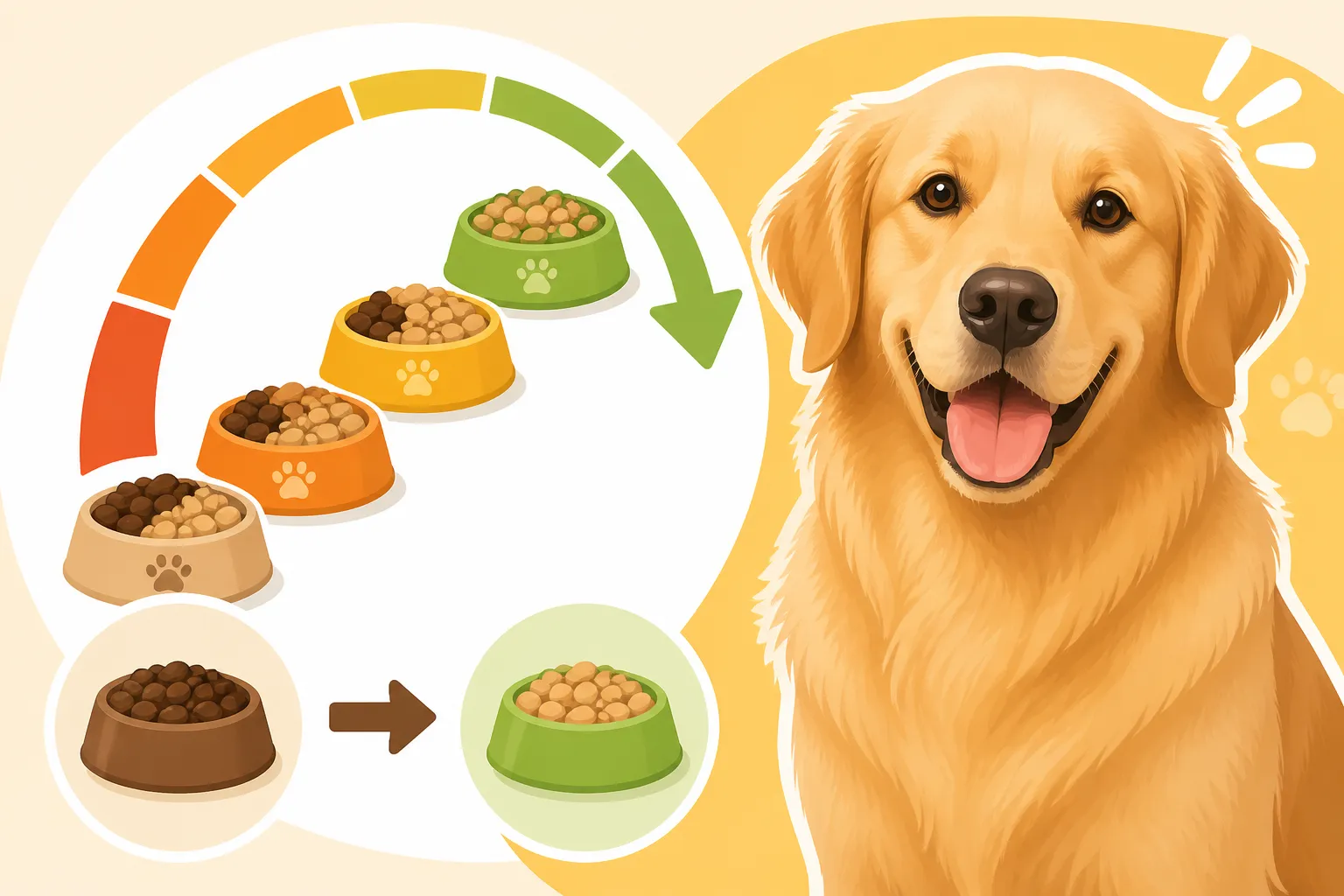
This is the most widely recommended and effective approach for transitioning dog food. It involves gradually increasing the proportion of the new food while decreasing the old food over several days. Here’s a typical schedule, but remember, this is a guideline, not a rigid rule:
- Days 1-2: 25% New Food, 75% Old Food. Start by replacing just a quarter of your Golden’s usual meal with the new food. Mix it thoroughly. This small change allows their digestive system to get a first gentle introduction to the new ingredients without being overwhelmed. Observe their stool quality and energy levels closely during these first couple of days. If everything looks good – firm, healthy stools and no signs of upset – you can proceed.
- Days 3-4: 50% New Food, 50% Old Food. Now, you'll mix half of the new food with half of the old. This is a significant step, and it's where some Goldens might start to show mild signs of adjustment, like slightly softer stools. Don't panic, but pay extra attention. If the stools remain soft or they seem uncomfortable, it's a signal that you might need to extend these two days into three or four.
- Days 5-6: 75% New Food, 25% Old Food. As you move into the final stages, the new food makes up the majority of their meal. By now, your Golden’s digestive system should be largely acclimated. Continue to monitor for any digestive upset. If they've handled the previous stages well, they should manage this step smoothly.
- Day 7 and Beyond: 100% New Food. If your Golden has sailed through the previous days with no issues, you can now confidently feed them 100% of the new food. Continue to watch them for a few more days, just to be sure there are no delayed reactions.
This method gives their body, especially that vital gut microbiome, ample time to adapt its enzyme production and bacterial populations to the new dietary composition. It prioritizes their comfort and health over speed.
When to Slow Down (or Speed Up) the Process
While the 7-10 day guide is a solid starting point, it's really just that – a starting point. Your Golden Retriever is an individual, and their body might have its own timeline. You are their best advocate, so pay close attention to their cues.
Signs to Slow Down: If at any point during the transition your Golden experiences significant digestive upset – persistent loose stools, diarrhea, vomiting, excessive gas, or a noticeable decrease in appetite – it's a clear signal to slow down. Don't hesitate to revert to the previous day's ratio or even earlier, and hold that ratio for an extra few days until their system settles. For instance, if you're at 50/50 and they start having soft stools, go back to 25% new food for another 2-3 days before attempting to increase the new food again. Some Goldens, particularly puppies or senior dogs, or those with a history of sensitive stomachs, might need a two-week or even three-week transition. Take your time, there’s no prize for finishing fast! Golden Retriever Puppy Feeding Amounts and Schedule might offer insights into managing diets for younger dogs.
When a Bit Faster Might Be Okay (with caution): On the flip side, some Goldens have iron stomachs and barely bat an eye at changes. If your dog shows absolutely no signs of discomfort or changes in stool quality after 24-48 hours at a new ratio, you might be able to accelerate the process slightly, shortening each step by a day. However, always proceed with caution. It's far better to err on the side of too slow than too fast. A little extra patience upfront can save you a lot of clean-up and a trip to the vet down the line.
Essential Tools and Considerations
Making a food transition as smooth as possible isn't just about the ratios; it's also about the environment and how you observe your Golden.
First, consistency in feeding times is more important than ever. Sticking to a regular schedule helps regulate their digestive system, making it easier to predict and monitor their reactions to the new food. If they usually eat twice a day, maintain those times.
Second, consider your feeding equipment. If your Golden is a "gobbler" who inhales food too quickly, a slow feeder bowl can be incredibly helpful. Rapid eating can sometimes lead to air swallowing, which can cause discomfort and even increase the risk of more serious issues like bloat, especially in deep-chested breeds like Golden Retrievers. While not directly related to food transition, digestive issues can exacerbate or be confused with bloat, so keeping an eye on eating speed is wise. You can find a variety of slow feeder bowls from retailers like Chewy or Amazon.
Third, and perhaps most crucial, is meticulous monitoring of stool quality. This is your primary indicator of how well the transition is going. Keep a mental (or even physical) note of consistency, color, and frequency. Any deviation from their normal healthy stool should prompt you to slow down.
Lastly, don't introduce other new variables during the food transition. Avoid new treats, different supplements, or major changes to their routine like intense exercise or travel. You want to isolate the food change as the only new factor, so you can accurately pinpoint the cause if any issues arise. If you're considering new supplements, it's often best to wait until the food transition is complete and they are fully acclimated to their new diet. For more on dietary choices, Reading a Dog Food Label for a Golden Retriever is a great resource.
Factors Influencing Your Golden Retriever's Transition Time
Every Golden Retriever is unique, and what works for one might not work for another. Several factors can significantly impact how long your particular dog needs to adjust to a new food.
Age and Sensitivity
A Golden Retriever's age plays a significant role in their digestive resilience. Puppies often have more sensitive digestive systems that are still developing. Their gut microbiomes are less established, making them more prone to upset with dietary changes. A puppy might need a longer, slower transition, perhaps extending the 7-10 day method to two weeks or even more. Introducing new foods too quickly to a puppy can also lead to nutrient absorption issues, which can impact their growth. Conversely, senior Goldens might also require a more gradual approach. As dogs age, their digestive efficiency can decrease, and they may become more prone to sensitivities or have underlying health conditions that make abrupt changes difficult. Their bodies just don't bounce back as quickly. Feeding a Senior Golden Retriever provides more tailored advice for our older companions.
Beyond age, some Goldens simply have naturally sensitive stomachs, regardless of their life stage. They might be prone to digestive upset from even minor changes, or they could have mild food sensitivities that make them react more strongly to new ingredients. If you know your Golden falls into this category, always plan for a much slower transition than the standard guidelines.
Type of Food Change
The magnitude of the change in food type also affects transition time.
Kibble to Kibble (Same Brand, Different Formula): This is often the easiest transition. If you're staying within the same brand but switching from, say, a puppy formula to an adult formula, or a chicken-based recipe to a lamb-based one, the core ingredients and processing might be similar enough that the transition is relatively smooth. A standard 7-10 day transition is usually sufficient.
Kibble to Kibble (Different Brand): Switching to an entirely different brand means a potentially significant change in ingredients, nutrient ratios, processing methods, and even the source of those ingredients. This can be more taxing on the digestive system, and you might need to lean towards the longer end of the 7-10 day scale, or even add a few extra days to each step if your Golden shows sensitivity.
Kibble to Fresh/Cooked or Raw Diet: This is typically the most significant dietary shift and often requires the longest and most careful transition. The gut microbiome needs to completely re-calibrate to process raw or fresh, minimally processed ingredients, which have different moisture content, nutrient availability, and bacterial profiles compared to conventional kibble. Some owners even opt for a "sudden switch" directly to raw, but this method is often only recommended under the guidance of a holistic vet or experienced raw feeder, and it carries a higher risk of initial digestive upset. For most, a very gradual, multi-week transition is safer, perhaps incorporating a "digestive rest" day with a bland diet between the old kibble and the new fresh food. Companies like Ollie often provide guidance on how to transition to their fresh food diets, recognizing the importance of this careful approach. You can typically find a wide range of fresh and raw food options to explore on platforms like Amazon.
Your Golden's Individual Digestive Health History
Perhaps the most telling factor in determining transition time is your Golden Retriever’s personal history with digestive health. Has your dog always had a robust stomach, rarely bothered by anything they eat? Or have they been prone to occasional loose stools, sensitive to certain treats, or perhaps even had chronic issues like inflammatory bowel disease (IBD)?
A Golden with a history of tummy troubles, allergies, or chronic conditions will almost certainly require an extended and meticulously slow transition. What might take a healthy Golden a week could easily take a sensitive Golden two to three weeks, or even longer. For example, if your Golden has been diagnosed with Hypothyroidism in Golden Retrievers, their metabolism might be slower, potentially impacting their digestive process and requiring more patience. It's not just about avoiding immediate symptoms but ensuring long-term comfort and health. Consult with your veterinarian if your Golden has a complex health history before making significant dietary changes. They might recommend specific probiotics or digestive enzymes to support the transition.
| Transition Type | Recommended Duration | Notes |
|---|---|---|
| Kibble (same brand, new formula) | 7-10 days | Often the smoothest, less drastic change. |
| Kibble (new brand) | 10-14 days | More significant changes in ingredients/processing. Monitor closely. |
| Kibble to Fresh/Cooked | 14-21 days | Major change in food structure and moisture. Consider bland diet interlude. |
| Kibble to Raw | 21 days + | Most complex change. Often benefits from vet guidance and probiotics. |
| Sensitive Golden Retriever | 14-30 days + | Always slow, observe closely, regress if needed. |
What to Do If Your Golden Experiences Digestive Upset
Even with the most careful transition plan, sometimes your Golden Retriever's system just doesn't agree with the change, or perhaps you misjudged their sensitivity. It's not uncommon, and knowing how to respond is crucial for their comfort and health.
Recognizing Signs of Distress
First, learn to differentiate between mild adjustment and genuine distress. Mild symptoms like slightly softer stools or a bit of gas for a day or two might be normal during a transition. However, there are red flags that indicate a bigger problem:
- Persistent Diarrhea: If soft stools progress to watery diarrhea that lasts for more than 24-48 hours, or if it's accompanied by blood or mucus, it's a concern.
- Vomiting: Any vomiting, especially if it's repeated or severe, is a sign that something isn't right.
- Lethargy and Loss of Appetite: If your Golden is normally enthusiastic about food but suddenly refuses meals, or seems unusually tired, weak, or withdrawn, it's a serious indicator of discomfort.
- Pain or Discomfort: Whining, restlessness, difficulty getting comfortable, a hunched posture, or tenderness when touched around the abdomen could signal pain.
- Bloating: A distended or hard abdomen, especially if accompanied by retching without producing anything, is an emergency. While rare, Bloat in Golden Retrievers and the Signs Owners Miss are critical for every Golden owner to know, as bloat can be life-threatening.
If you observe any of these severe signs, or if mild symptoms persist for more than a couple of days, contact your veterinarian immediately. Don't try to tough it out or self-diagnose, as digestive issues can sometimes mask more serious underlying conditions.
Practical Steps to Manage Mild Symptoms
For milder symptoms, like just slightly softer stools without vomiting or lethargy, you can take a few steps at home to help settle your Golden’s stomach:
- Go Back a Step (or Two) in the Transition: The most important thing is to reduce the amount of new food. If you were at 50/50, go back to 25% new food. If they were fine there, go back to 100% old food for a day or two to let their system reset. Hold at this comfortable ratio for several more days before attempting to slowly increase the new food again.
- Introduce a Bland Diet: For a day or two, feed your Golden a bland diet of boiled, plain chicken (no skin, no bones) and plain white rice. This provides easily digestible nutrients and can help calm an irritated stomach. Once their stools are firm, gradually reintroduce their regular (or transitioning) food.
- Consider Probiotics: Probiotic supplements can help replenish and balance the good bacteria in your Golden’s gut. Many vets recommend them during and after digestive upset. Choose a canine-specific probiotic. Probiotics for a Golden Retriever's Digestion can offer more detail on this.
- Ensure Hydration: Diarrhea and vomiting can quickly lead to dehydration. Make sure your Golden always has access to fresh water. You can also offer low-sodium chicken broth if they're not drinking much water.
- Small, Frequent Meals: Instead of two large meals, offer smaller portions more frequently (e.g., three or four times a day) during the recovery phase. This is less taxing on a sensitive stomach.
Remember, while these steps can help with mild upset, if you have any doubts or if your Golden's condition worsens, a call to the vet is always the safest course of action. It's much better to be safe than sorry when it comes to your beloved companion's health.
Disclaimer
This article is for general informational purposes only and does not constitute professional advice. Laws, prices and regulations vary by location and change over time. Consult a qualified professional for guidance on your specific situation.