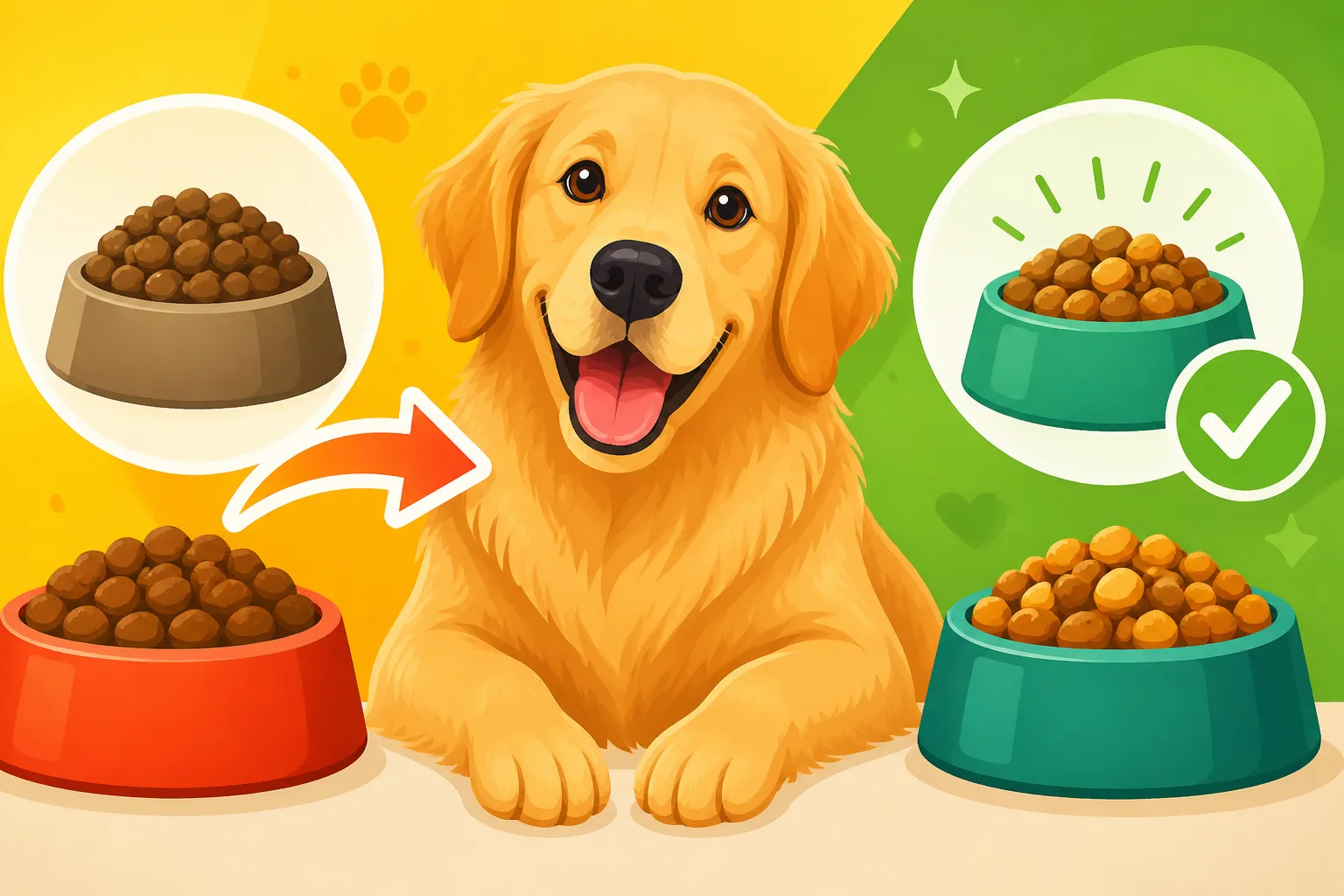
Switching a Golden Retriever’s Food Without Upset
It's incredibly frustrating when you find the "perfect" new food for your beloved Golden Retriever, whether it's for their sensitive stomach, to tackle allergies, or simply to upgrade their nutrition, only for the excitement to turn into a messy, upset tummy. This guide is here to walk you through the proper way to transition your Golden Retriever to a new food, helping you avoid those dreadful digestive woes and ensuring a smooth, happy dietary switch for your furry family member.
Why a Slow Transition is Crucial for Golden Retrievers
When we decide to change our Golden Retriever's food, sometimes we get a little eager, thinking a quick switch won't hurt. After all, it's just food, right? But the truth is, a Golden Retriever's digestive system is a finely tuned machine, and a sudden change can throw it completely out of whack. Their gut flora—the beneficial bacteria that help them digest food—are accustomed to a specific composition of nutrients, fibers, and proteins. Introducing a brand-new food abruptly is like asking your stomach to suddenly process a completely different cuisine without any preparation.
Think about it from your Golden's perspective. One day they're happily munching on their usual kibble, and the next, they're faced with a completely new texture, smell, and ingredient list. This can be a shock to their system, leading to symptoms like gas, bloating, vomiting, and, most commonly, diarrhea. Golden Retrievers, with their often sensitive stomachs and predisposition to certain digestive issues, benefit immensely from a gradual introduction that allows their body ample time to adjust. It's not just about comfort; it's about preventing potentially severe digestive upset that could require a vet visit.
This gradual approach also gives you, the owner, time to observe how your Golden reacts to the new ingredients. If any issues arise, you can pinpoint them more easily during a slow transition than if you just went cold turkey. It's a small investment of time that pays off huge dividends in your dog's health and your peace of mind.
Understanding Your Golden's Digestive Sensitivity
Golden Retrievers are generally hearty dogs, but like all breeds, they have their quirks when it comes to digestion. Many Goldens can be prone to conditions such as food allergies or sensitivities, which can manifest as skin issues, chronic ear infections, or, of course, gastrointestinal distress. Their deep chests also make them a breed at higher risk for bloat, a life-threatening condition where the stomach fills with gas and can twist. While a slow food transition doesn't directly prevent bloat, maintaining a healthy, stable digestive system is always a good practice. Bloat in Golden Retrievers and the Signs Owners Miss covers this vital topic in more detail.
If your Golden has a history of digestive problems, perhaps chronic soft stools or occasional vomiting, then an even slower transition might be warranted. Some Goldens thrive on a consistent diet and react poorly to any change, no matter how minor. For these sensitive souls, taking extra days or even weeks for the transition is not just a recommendation; it's a necessity. It’s all about listening to your dog's body and giving them the gentle care they deserve. You might also find this especially important if you're switching to a completely different type of food, like moving from a dry kibble to a fresh food diet like what Ollie offers, which has a very different moisture and ingredient profile.
The Step-by-Step Guide to a Smooth Food Transition
Alright, let's get down to the nitty-gritty of how to actually make this food switch happen without any drama. This isn't just about mixing foods; it's a process, a journey that your Golden Retriever's tummy will thank you for taking slowly. Rushing it simply isn't worth the risk of a messy situation, not to mention the discomfort for your beloved companion.
Week-Long Transition Schedule
The standard recommendation for most dogs is a 7-day transition, and this generally works well for many Golden Retrievers. This schedule allows for a gradual increase of the new food while simultaneously decreasing the old food, giving the digestive system time to adapt. Here’s a typical breakdown:
- Day 1-2: 25% New Food / 75% Old Food: Start by replacing just a quarter of your Golden's regular meal with the new food. This is a gentle introduction, allowing their system to get a taste of what's to come without overwhelming it. Watch closely for any signs of upset like gas, loose stools, or decreased appetite.
- Day 3-4: 50% New Food / 50% Old Food: If the first couple of days went smoothly, you can now increase the new food to half of the meal. Your Golden should be showing no adverse reactions at this stage. If they are, it's a sign to slow down and hold at the 25% mixture for a few more days, or even revert to the original food if symptoms are severe.
- Day 5-6: 75% New Food / 25% Old Food: With continued success, move to a mixture where the new food makes up the majority of their meal. By now, their digestive enzymes should be well on their way to adjusting to the new ingredients.
- Day 7 Onward: 100% New Food: If all has gone well through the previous stages, your Golden Retriever should be ready to enjoy their new food exclusively!
It's really that simple in theory, but the key is consistent observation and patience. This 7-day plan is a guideline, not a strict rule. Some Goldens might need more time. You can find more detailed discussions on this topic in How Long to Transition a Golden Retriever's Food.
Here’s a handy table to visualize the transition process:
| Day | Old Food Percentage | New Food Percentage | Notes |
|---|---|---|---|
| 1-2 | 75% | 25% | Observe closely for any signs of upset (gas, loose stool, vomiting). |
| 3-4 | 50% | 50% | If no issues, increase new food. Slow down if problems occur. |
| 5-6 | 25% | 75% | Nearing full transition. Continue monitoring stool consistency. |
| 7+ | 0% | 100% | Full switch. Continue to observe for a few more days. |
Adjusting for Sensitive Stomachs or Picky Eaters
Not all Goldens are the same, and some will require a more nuanced approach. If your Golden Retriever has a notoriously sensitive stomach or a history of dietary issues, don't hesitate to stretch that 7-day schedule into 10 days, two weeks, or even longer. Instead of increasing the new food by 25% increments, you might do 10% or 15% every few days. For instance, you could spend four days at 25% new food, then four days at 50%, and so on.
Picky eaters can present a different challenge. Sometimes, they might just pick out the old food and leave the new, or vice-versa. In these cases, it helps to mix the foods very thoroughly to prevent them from "sorting" their meal. You can also try adding a little warm water to the mixed kibble to enhance the aroma and make it more appealing, especially if you're introducing a new type of texture or flavor. If your Golden is particularly resistant, make sure the new food is a high-quality option that smells and tastes appealing. Brands like Ollie, known for their fresh, human-grade ingredients, can often tempt even the pickiest eaters due to their palatability.
When you're trying to figure out the right portion sizes for a growing puppy, a resource like Golden Retriever Puppy Feeding Amounts and Schedule can be incredibly helpful to ensure they're getting the right balance during this transition. For adults, Feeding an Adult Golden Retriever Twice a Day offers insights into maintaining their feeding routine.
What to Do If Digestive Upset Occurs
Even with the most careful transition, sometimes things don't go as smoothly as we'd hoped. Your Golden Retriever might still experience some mild upset. The key is to recognize the signs and know when to adjust your strategy or seek veterinary advice. Don't panic; it's a common hurdle, but it's one we can navigate together.
Signs of Digestive Distress
Keep a close eye on your Golden for these indicators that their tummy isn't happy:
- Loose Stools or Diarrhea: This is the most common sign. A stool that is softer than usual, or downright watery, indicates digestive upset. Pay attention to frequency as well; more frequent bowel movements are also a red flag.
- Vomiting: While a single vomit might not be a huge concern, repeated vomiting or vomiting combined with lethargy definitely warrants attention.
- Excessive Gas: More flatulence than usual, especially if it's particularly stinky, can mean their gut bacteria are having a hard time with the new food.
- Decreased Appetite: If your Golden, who normally devours their food, is suddenly hesitant to eat, it could be due to stomach discomfort.
- Lethargy: A tired, subdued Golden is always a concern. If they're usually energetic but are now low on energy, it's a sign something is off.
- Abdominal Pain: Whining, restlessness, a hunched posture, or reluctance to be touched on the belly could all indicate discomfort.
If you notice any of these signs, particularly diarrhea or vomiting, stop increasing the new food. Revert to the last successful ratio, or even go back to 100% old food for a day or two until symptoms resolve. Once your Golden's stomach has settled, you can try resuming the transition, but at an even slower pace. For example, if diarrhea started on Day 3 (50/50 mix), go back to Day 1's ratio (25% new food) and stay there for a longer period, perhaps 3-4 days, before attempting to increase again.
When to Consult Your Veterinarian
While minor digestive upset is often manageable at home with a slower transition, there are definitely times when a vet visit is absolutely necessary. Never hesitate to call your vet if you're concerned. It's always better to be safe than sorry, especially with a Golden.
Seek immediate veterinary attention if your Golden experiences:
- Severe or Prolonged Diarrhea: If the diarrhea is profuse, watery, or contains blood or mucus, or if it lasts for more than 24-48 hours, it's time to see the vet. Dehydration is a real risk with severe diarrhea.
- Repeated Vomiting: More than two or three episodes of vomiting within a short period, or vomiting that continues for more than 12-24 hours, needs professional assessment.
- Lethargy, Weakness, or Collapse: These are serious signs that indicate more than just a minor tummy ache.
- Bloated Abdomen: A swollen or distended belly, especially if accompanied by unproductive retching, restlessness, or pain, could be a sign of bloat, a life-threatening emergency for deep-chested breeds like Goldens. Bloat Risk in a Deep-Chested Golden explains more about this critical issue.
- Refusal to Eat or Drink: If your Golden isn't consuming water, dehydration can quickly become a serious problem.
Your vet might recommend a bland diet, like boiled chicken and rice, for a few days to settle their stomach before attempting the food transition again. They might also prescribe medication to help with nausea or diarrhea. Remember, you're your Golden's advocate, so trust your gut if you feel something isn't right.
Choosing the Right Food for Your Golden Retriever's Health
Switching food isn't just about the mechanics of the transition; it's about making an informed choice for your Golden's long-term health and happiness. With so many options out there, from budget kibbles to premium fresh diets, it can feel overwhelming. But understanding what makes a good food for a Golden Retriever can help you feel confident in your decision.
Factors to Consider When Selecting a New Food
When you're standing in the pet store aisle or browsing online on Chewy or Amazon, here are some key considerations for your Golden's new diet:
- Life Stage: Is your Golden a puppy, an adult, or a senior? Each life stage has different nutritional requirements. Puppies need more calories and specific calcium-to-phosphorus ratios for healthy bone growth, which is critical for breeds prone to hip and elbow dysplasia. Senior Goldens, as covered in Feeding a Senior Golden Retriever, often benefit from lower calorie, joint-supportive formulas.
- Activity Level: A highly active Golden who spends hours retrieving in the field will need more calories and protein than a couch potato Golden who enjoys leisurely strolls.
- Specific Health Needs: Does your Golden have allergies, sensitivities, or other conditions? For instance, if your Golden suffers from Golden Retriever Food and Skin Allergies, you might need a limited-ingredient diet or a novel protein source. If they're managing their weight, look for lower-calorie options. Discussing these needs with your vet is always a good starting point.
- Ingredient Quality: Look for foods with whole, identifiable ingredients. A quality food will list a named meat source (e.g., "chicken meal," not "meat meal") as one of the first few ingredients. Avoid excessive fillers, artificial colors, flavors, and preservatives.
- Brand Reputation and Research: Choose reputable brands that conduct feeding trials and have veterinary nutritionists on staff. Be wary of marketing trends and always prioritize solid nutritional science. For instance, the discussion in Grain-Free Food and Golden Retriever Heart Health highlights the importance of making informed decisions about trending diets.
Reading a Dog Food Label for a Golden Retriever is an excellent resource for deciphering all the jargon and truly understanding what you're feeding your furry friend.
Long-Term Benefits of a Well-Chosen Diet
A healthy, appropriate diet is one of the foundational pillars of your Golden Retriever's well-being. It's not just about filling their belly; it's about fueling their body, supporting their immune system, maintaining a shiny coat, and promoting strong joints and muscles. When you choose wisely and transition carefully, you're setting your Golden up for a lifetime of vitality.
A diet that meets all their nutritional needs can help manage their weight, which is incredibly important for a breed prone to joint issues. Golden Retriever Weight and Joint Damage really underscores how crucial maintaining an ideal weight is. The right food can also contribute to better energy levels, improved digestion, and a stronger immune response, helping them ward off common ailments. Ultimately, investing time and care into selecting and transitioning your Golden Retriever's food is an investment in their long, happy, and healthy life.
Disclaimer
This article is for general informational purposes only and does not constitute professional advice. Laws, prices and regulations vary by location and change over time. Consult a qualified professional for guidance on your specific situation.