Why Golden Retrievers Follow You Room to Room
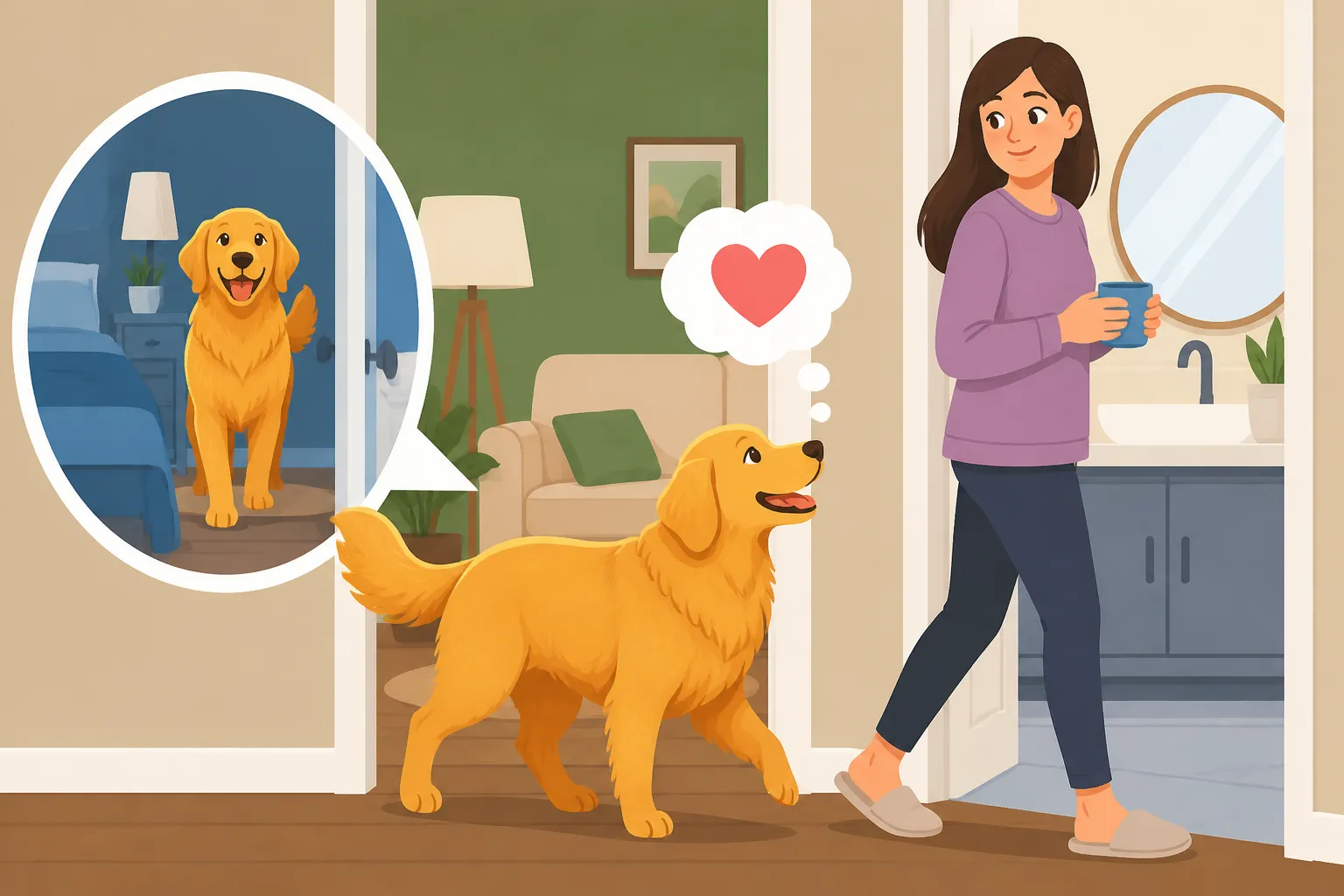
If you're a Golden Retriever owner, you've likely experienced the phenomenon: that furry shadow that follows you from the kitchen to the bathroom, from the bedroom to the living room, and back again. It's often endearing, sometimes a tripping hazard, and can leave you wondering if you'll ever have a moment to yourself! This guide will delve into the various reasons why Golden Retrievers exhibit this "Velcro dog" behavior, exploring their deep-seated instincts and how you can foster a healthy balance between their desire for companionship and developing a little independence.
The Golden Retriever's Innate Companionship and Pack Mentality
Golden Retrievers are renowned for their friendly, outgoing nature and their intense devotion to their human families. This isn't just a charming trait; it's a fundamental aspect of their breed history and genetic makeup that shapes their need to be close to you.
A Breed Bred for Close Partnership
When you look at the origins of the Golden Retriever, you understand why they are so attuned to human companionship. They were meticulously bred in the Scottish Highlands by Lord Tweedmouth specifically to work alongside hunters, retrieving game birds without damaging them. This job required keen intelligence, a gentle mouth, and, most importantly, a close working relationship with their human handler. They weren't meant to range far independently but to stay connected and responsive. This history means that a Golden's instinct is to be an active participant in your life, constantly checking in and wanting to know what you're doing. It's hardwired into them to be part of the team, and in a domestic setting, you are their team. This strong desire for partnership is a core part of the Golden Retriever Temperament and Personality.
The Comfort of Your Presence
For a Golden Retriever, your presence is often synonymous with security, comfort, and all good things. Imagine being a dog: the world can be a big, confusing, and sometimes scary place. You, their human, are the provider of food, shelter, safety, and affection. Your mere proximity offers immense reassurance. When you move from room to room, they often follow simply because being near you makes them feel safe and content. It's like a child always wanting to be in the same room as their parent; it's a fundamental need for connection. They aren't just looking for something specific; often, they're simply seeking the peace that comes from knowing you're right there.
You Are Their Whole World
It's easy to forget, amidst our busy human lives, that for many dogs, especially Goldens, we are truly the center of their universe. They don't have jobs, social media, or a commute. Their entire day revolves around you and the activities you share. So, when you get up and move, it's a significant event in their day. "Where are they going? What are they doing? Can I be a part of it?" These are the silent questions probably running through their golden heads. This profound attachment, while heartwarming, also explains why they might develop Separation Anxiety in Golden Retrievers if not managed correctly, as their world literally shrinks when you leave.
Understanding the Motivations Behind the "Velcro" Behavior
While the inherent companionship of a Golden Retriever is a primary driver, specific daily motivations often fuel their constant shadow act. It’s not always about deep affection, but sometimes about more practical, dog-centric concerns.
Seeking Attention and Interaction
Let's be honest: Goldens are masters of subtly demanding attention. If you're moving around, you're doing something, and that something might involve them. A shift in position, a sigh, a trip to the kitchen – any of these can be interpreted as an invitation for interaction. Maybe it means a belly rub, a quick game of tug, or simply a scratch behind the ears. By following you, they're positioning themselves for the next potential moment of connection. If you frequently respond to their following with a pat or a kind word, you're inadvertently reinforcing the behavior. They learn that being your shadow often pays off in positive attention. This is why consistent training and Mental Enrichment for a Bored Golden Retriever are so important.
Fear of Missing Out (FOMO)
Golden Retrievers are often characterized by their joyful enthusiasm, and this extends to a profound fear of missing out on anything interesting. Is that crinkle of a bag leading to a treat? Is that opening of the pantry door signaling mealtime? Is that reaching for the leash an indication of a walk? They don't want to miss a single opportunity for fun, food, or adventure. Every movement you make, every door you open, every sound you utter, could be the precursor to something exciting. So, they follow, hoping to be included in whatever wonderful thing is about to happen. This can be especially true for puppies during their Golden Retriever Puppy Socialization Windows as they are trying to soak up every new experience.
Monitoring for Resources
While it sounds a bit strategic, part of a dog's natural instinct is to be aware of where resources are. You are the ultimate resource provider. When you go to the kitchen, it's where the food is kept. When you go to the bathroom, perhaps there's a fresh drink of water. When you head to the living room, that's often where the comfy spots and shared cuddles happen. By trailing you, they're keeping a mental map of where the good stuff originates. They're not being manipulative; they're simply being dogs, keeping tabs on their primary provider and the source of all the comforts in their lives. They might even hope that your movement will accidentally dislodge a dropped treat or toy, demonstrating their perpetual optimism.
| Scenario | Likely Motivation | What Your Golden Hopes For |
|---|---|---|
| You get up and walk to the kitchen | Food/Treat Potential | A dropped crumb, a snack, meal prep |
| You go to the bathroom | Water/Proximity | A cool drink from the toilet (eek!) or just closeness |
| You move from sofa to desk | Attention/Inclusion | A pet, a game, to be near you |
| You head towards the front door | Outing/Adventure | A walk, a car ride, a trip to the park |
| You go upstairs to bed | Companionship/Sleep | To sleep near you, get last pets |
| You open a cabinet/drawer | Curiosity/Discovery | Something interesting to investigate |
When Following Becomes Problematic: Addressing Over-Attachment
While a Golden Retriever's devotion is endearing, there are times when this constant shadowing can cross the line from sweet companionship to a sign of over-attachment or even anxiety. Recognizing the difference is crucial for your dog's well-being and your own sanity.
Signs of Excessive Clinginess
Normal "Velcro" behavior for a Golden usually means they simply want to be in the same room as you, or follow you when you move. It's often calm and quiet. However, excessive clinginess can manifest in a few distinct ways. If your Golden whines, paces, or shows signs of distress (like panting, drooling, or destructive chewing) not just when you leave the house, but when you simply step into another room, that's a red flag. They might block doorways, trip you constantly, or even try to squeeze into impossibly small spaces just to be touching you. If they seem unable to settle unless they are physically touching you, or if their anxiety spikes the moment you break eye contact or move away, these are signs that their attachment might be unhealthy. This isn't just an inconvenience; it can be a source of constant stress for your dog. For more on the specific challenges of this breed, check out Whether Golden Retrievers Get Separation Anxiety.
Encouraging Independent Play and Space
The key to reducing excessive clinginess isn't to push your Golden away, but to teach them that being alone, even for short periods, is a positive experience. Start by providing engaging activities that they can enjoy independently. Interactive toys, like puzzle feeders stuffed with a portion of their daily kibble (many excellent ones can be found on Chewy), can occupy their minds and bodies. Introduce a favorite chew toy or a long-lasting treat when you need to step away briefly. The goal is to make these items so appealing that they become a positive association with your temporary absence. Practice having them settle in one spot while you move to another, rewarding them for staying calm. This slowly builds their confidence in their own company.
Creating a Safe, Engaging "Sanctuary"
Every Golden Retriever needs a place they can retreat to, a personal sanctuary where they feel safe and comfortable even when you're not right there. This could be a crate, a designated dog bed in a quiet corner, or a specific room. Make this space incredibly inviting. Outfit it with a plush, orthopedic bed – again, great options are available from retailers like Chewy – and always have a favorite toy or two readily available. Never use this space as punishment. Instead, encourage your Golden to go there voluntarily with treats and praise. Feed them meals in this spot, or offer them a special long-lasting chew only when they are relaxing there. The idea is to build a positive association, so they see their sanctuary not as a place of abandonment, but as a cozy haven where good things happen, even when you're momentarily out of sight. This strategy is vital for Building Alone-Time Tolerance in a Golden Puppy and older dogs alike.
Practical Strategies to Foster Healthy Independence
While it's wonderful to have a devoted companion, nurturing a bit of independence in your Golden Retriever is beneficial for both of you. It reduces their anxiety and allows you to move freely without feeling constantly shadowed.
Structured Alone Time
One of the most effective ways to help your Golden develop independence is through structured alone time. This isn't about ignoring them, but about systematically teaching them that your absence is temporary and not a cause for alarm. Start small:
- "Go to your mat/bed": Teach a command for them to go to their designated spot. Reward heavily for staying there.
- Short departures: Once they're settled, step into an adjacent room for just a minute or two. Don't make a fuss when you leave or return. The goal is for them to not even realize you're gone at first.
- Gradual increase: Slowly extend the time you're out of sight. Go to another floor, step outside for a few minutes, or even leave the house for 10-15 minutes.
- No fanfare greetings: When you return, avoid over-the-top greetings. Wait until they are calm before offering a quiet pet. This prevents them from associating your return with an anxiety-inducing explosion of excitement.
Consistency is paramount here. Practicing this several times a day, even when you don't need to leave them, builds resilience. This directly supports the advice in Leaving a Golden Retriever Home Alone.
Enriching Their Environment
A mentally and physically stimulated Golden Retriever is a happier, more independent dog. If their environment is boring, they're much more likely to seek out human interaction to alleviate that boredom. Think about how much Exercise a Golden Retriever Needs Each Day, and ensure they're getting it. Beyond physical activity, mental exercise is crucial.
- Puzzle toys: These are fantastic for keeping their minds engaged. Brands like Kong and Outward Hound (which you can find easily on Chewy) offer a wide range of options that dispense treats as your dog manipulates them.
- Chew toys: Provide durable, safe chew toys. Chewing is a natural, stress-relieving activity for dogs.
- Scent games: Hide treats around the house and encourage them to sniff them out. This engages their powerful sense of smell and tires them out mentally.
By providing these engaging outlets, you empower your Golden to entertain themselves, rather than relying solely on you for stimulation.
Consistency is Key
Dogs thrive on routine and predictability. If your behavior is inconsistent – sometimes you reinforce their shadowing, other times you get frustrated – it sends mixed signals and can actually heighten their anxiety, making them more clingy.
- Establish a routine: Predictable mealtimes, walks, and play sessions give your Golden a sense of security.
- Set boundaries: Decide where your Golden is allowed to follow you and where they are not. For example, if the bathroom is a no-dog zone, consistently redirect them out.
- Use a consistent cue: If you want them to stay in a room, use a consistent verbal cue like "stay" or "wait," and reward them when they comply.
- Involve the whole family: Ensure everyone in the household is on the same page regarding these strategies. Inconsistent rules from different family members can confuse your dog and hinder progress.
| Strategy Component | Purpose | Example Application |
|---|---|---|
| Gradual Alone Time | Build comfort with absence | Step into next room for 1 min, return calmly |
| Positive Reinforcement | Reward desired behavior | Treat for staying on their bed while you move |
| Environmental Enrichment | Combat boredom and foster self-amusement | Give a new puzzle toy when you need quiet time |
| Consistent Boundaries | Define expectations | Always redirect from the bathroom entrance |
| No "Big Deal" Departures/Returns | Minimize anxiety triggers | Quietly exit and enter, no enthusiastic hellos |
| Designated Safe Space | Provide a secure retreat | A comfy crate with a favorite chew |
Remember, your Golden Retriever's desire to be near you comes from a place of love and their inherent nature. With patience, understanding, and consistent application of these strategies, you can help them become a confident, well-adjusted companion who loves you dearly but can also enjoy a little independent downtime.
Disclaimer
This article is for general informational purposes only and does not constitute professional advice. Laws, prices and regulations vary by location and change over time. Consult a qualified professional for guidance on your specific situation.