Signs of Heatstroke in a Golden Retriever
It’s a cruel irony that our beloved Golden Retrievers, with their sunny dispositions and love for outdoor adventures, are so incredibly susceptible to heatstroke. You see them romping in the park, splashing in a lake, or just basking in the sun, and your heart swells with joy. But that very enthusiasm, combined with their thick, insulating coats, can turn a beautiful summer day into a terrifying emergency in mere minutes. This guide isn't here to scare you, but to empower you with the knowledge to recognize the subtle whispers and the urgent shouts of heatstroke, so you can act swiftly and potentially save your best friend's life.
Why Our Goldens Are So Prone to Overheating
It’s easy to look at a Golden Retriever on a warm day and think, "Oh, they just love the sun!" But beneath that gorgeous, flowing fur lies a series of factors that make them uniquely vulnerable to overheating. Understanding these predispositions is the first step in prevention and early detection.
The Insulating Power of That Glorious Double Coat
One of the Golden Retriever’s most distinguishing features, their dense, water-repellent double coat, is also their Achilles' heel in warm weather. This coat was bred for function: to protect them from icy waters and harsh outdoor elements while retrieving game. The soft, thick undercoat acts like a thermal blanket, trapping air and keeping them warm. While fantastic for winter hikes or plunges into frigid lakes, it becomes a severe disadvantage when temperatures rise.
Imagine wearing a heavy wool sweater and a thick winter jacket on a hot summer day. That’s essentially what your Golden is sporting. They can’t just shed it off at will. Even with diligent Grooming a Golden Retriever's Double Coat, removing loose hair, the inherent structure of their coat will still trap heat close to their body. Many well-meaning owners consider shaving their Golden in summer, believing it will cool them down. In reality, Why You Never Shave a Golden Retriever is a critical piece of information: shaving can actually disrupt the natural insulation and protection, leading to sunburn and making it harder for their skin to regulate temperature effectively. This beautiful coat, while a hallmark of the breed, demands extra vigilance from us during the warmer months.
Their Boundless Enthusiasm and Drive
If there’s one thing a Golden Retriever is, it’s enthusiastic. Whether it’s chasing a tennis ball, greeting a new friend, or just exploring a new scent, they approach life with an unbridled zeal. This wonderful trait, however, can put them at risk. Goldens are notoriously driven and will often push past their physical limits without complaint, especially when engaged in an activity they love.
They don’t always know when to stop. You might be throwing a ball, and they'll keep running, panting heavily, long after their body is telling them to slow down. Their desire to please you and their love for the game can override their natural instinct to rest. This is why it’s up to us, as their guardians, to enforce breaks, monitor their activity levels, and always provide ample shade and fresh water. A Golden might sprint for that frisbee one too many times, and before you know it, their core body temperature has spiked dangerously. Understanding Golden Retriever Heat Tolerance and Overheating is crucial for every owner to prevent them from overexerting themselves.
Underlying Health Factors and Age
Beyond their coat and temperament, certain health factors and life stages can make a Golden Retriever even more susceptible to heatstroke. For instance, an overweight Golden has more insulating fat, making it harder for their body to dissipate heat. This extra weight puts a strain on their cardiovascular system, exacerbating the risk. If you're wondering how much your furry friend should weigh, consider looking at How Extra Weight Shortens a Golden Retriever's Life. Older Goldens, in particular, may have underlying health conditions that compromise their ability to regulate body temperature, such as heart conditions like Subaortic Stenosis in Golden Retrievers or kidney disease. Their bodies simply aren't as efficient at cooling themselves down as they once were.
Puppies, too, can be more vulnerable. Their thermoregulation systems aren't fully developed, meaning they struggle to maintain a stable body temperature in extreme conditions. This is why special care must be taken with Exercise Limits for a Golden Retriever Puppy. Even a seemingly healthy adult Golden can be at risk, though. Any Golden with a thick coat, high energy drive, or who is unacclimated to heat can suffer from heatstroke. It's not just about the obvious factors; a combination of subtle risks can quickly compound into a dangerous situation. It's part of Caring for a Senior Golden Retriever, understanding that their needs change and their vulnerability to environmental factors increases.
The Subtle Shifts: Early Indicators of Heat Stress
Recognizing heatstroke isn't always about seeing a dog collapse. Often, the earliest and most critical signs are subtle. Catching these initial cues can make all the difference, allowing you to intervene before the situation becomes life-threatening. You know your Golden best, so pay attention to any deviations from their normal behavior.
Behavioral Cues That Shout "I'm Too Hot!"
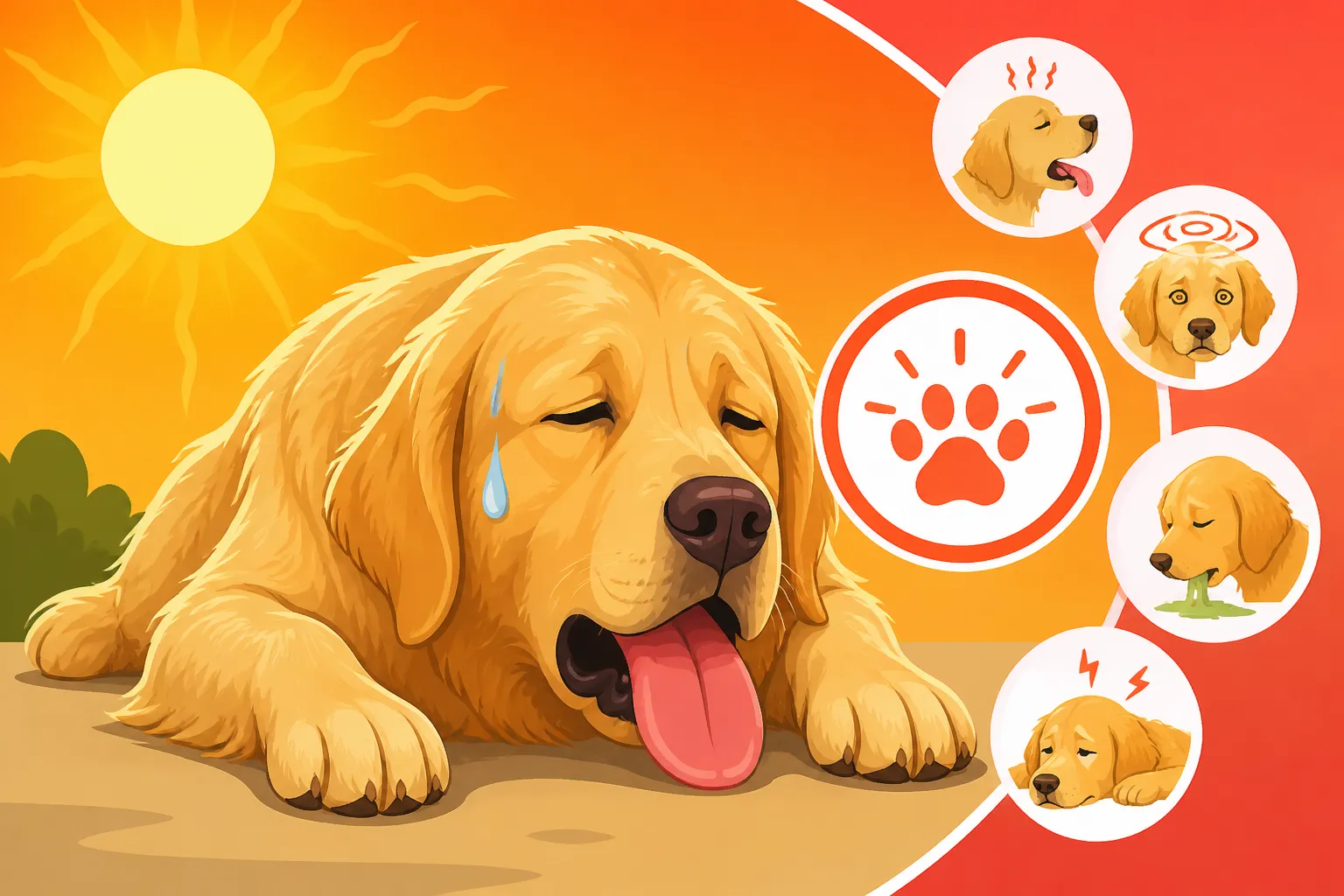
One of the first things you'll likely notice is a change in their panting. While panting is how dogs cool themselves, excessive panting is a red flag. This isn't just a slight increase after a run; it's panting that seems unusually loud, rapid, and deep, almost labored, even when they haven't been exercising vigorously. They might appear restless, unable to settle down, constantly shifting positions, or pacing around as if trying to find a comfortable spot that simply doesn't exist. They're searching for relief, instinctively moving towards shaded areas or repeatedly trying to access water.
Another behavioral sign is a sudden loss of focus or an unusual lethargy. Your normally attentive Golden might ignore commands, seem disoriented, or just appear "off." They might slow down significantly on a walk or refuse to engage in play, which for a Golden, is highly uncharacteristic. Perhaps they're lying down more than usual, even in situations where they'd normally be active. These subtle shifts in personality and activity levels are their way of telling you they're in distress, long before physical symptoms become glaringly obvious. Trust your gut if your Golden just doesn't seem like themselves.
Physical Signals You Need to Pay Attention To
As heat stress progresses, more tangible physical signs begin to emerge. Take a peek at your Golden's gums. Normally, they should be a healthy pink. If they are a bright, almost brick-red color, it indicates that blood vessels are dilating excessively in an attempt to dissipate heat. This bright red color can be a crucial early warning. Another tell-tale sign is the consistency and amount of their saliva. You might notice thick, ropy saliva dripping from their mouth, and they’ll be drooling much more than usual. This is a sign their body is struggling to cool down and they might also be becoming dehydrated.
Feel their skin, especially on their belly or the inside of their thighs. It might feel unusually hot to the touch, much warmer than just slightly warm fur. You can also carefully check their heart rate; if it feels excessively fast or seems to be pounding, it’s another indicator of their body working overtime to combat the heat. While some of these signs can be subtle individually, when seen together, they form a clear picture of a dog in trouble. Having a portable water bowl, easily found on sites like Amazon, or a cooling vest from Chewy, can be helpful preventative measures during hot outings.
When Heatstroke Becomes a Critical Emergency
If early signs of heat stress are missed or ignored, heatstroke can rapidly escalate into a life-threatening crisis. At this stage, the body's internal cooling mechanisms are completely overwhelmed, leading to cellular damage, organ failure, and severe neurological issues. These are the moments when every second truly counts.
Gastrointestinal and Motor System Distress
When heatstroke enters this critical phase, the body's internal systems begin to shut down. You might observe severe gastrointestinal distress, including profuse vomiting, which can sometimes contain blood, and bloody diarrhea. This indicates significant damage to the lining of the stomach and intestines, and potentially internal bleeding. It's a grave sign that vital organs are being compromised. The body's ability to maintain balance and coordination also rapidly deteriorates.
Your Golden might start staggering, stumbling as if they're drunk, or develop a noticeable weakness in their legs. Their muscles might twitch involuntarily. Ultimately, they may collapse entirely and be unable to stand, even when prompted. This loss of motor control is deeply concerning and indicates severe systemic distress. It's a sign that their body is no longer able to support itself, and they are in extreme danger. This level of physical distress might make you wonder if your Golden is experiencing pain, and it’s likely they are. For more on what to look for when your dog is suffering, you might find Signs a Golden Retriever Is in Pain helpful in other contexts.
Alarming Neurological Red Flags
As the core body temperature continues to rise unabated, the brain and central nervous system suffer immense damage. This leads to a terrifying array of neurological symptoms. You might witness muscle tremors that progress into full-blown seizures, which are a dire emergency. Disorientation becomes extreme; your Golden might seem utterly lost, confused, or unresponsive to their name or your presence. Their eyes might appear dull, glazed over, or unfocused, losing that bright, intelligent spark we love so much.
In the most severe cases, your Golden Retriever may lose consciousness, slipping into a coma. This is the ultimate red flag, indicating irreversible brain damage or impending organ failure. At this point, the situation is incredibly critical, and survival rates drop significantly with each passing minute. Products like cooling vests, readily available on platforms like Chewy or Amazon, can be lifesavers in these moments, but they are only a temporary measure to buy time until veterinary care.
What to Do: Immediate Action and Veterinary Care
Witnessing your Golden Retriever succumb to heatstroke is terrifying, but knowing what to do immediately can significantly improve their chances of survival. Your quick actions are crucial, but they are not a substitute for professional veterinary care.
First Aid Steps You Can Take Right Away
The absolute first step is to get your Golden out of the heat and into a cooler environment immediately. Ideally, this means an air-conditioned room, but shade under a tree or even a cool, tiled floor is better than nothing. Time is of the essence here, so don't delay.
Next, you need to actively cool their body. Resist the urge to use ice-cold water, as this can cause blood vessels to constrict, actually trapping heat inside and potentially inducing shock. Instead, use cool (not freezing) water. A garden hose can work wonders; direct it over their body, particularly focusing on areas with less fur like the belly, armpits, and groin. If a hose isn't available, wet towels applied to these areas, replaced frequently as they warm up, are effective. A fan directed at their wet body will also aid in evaporative cooling. Offer small amounts of water for them to drink, but never force it down their throat, as they could aspirate it.
While performing these cooling measures, try to take their temperature rectally if you have a thermometer. Stop cooling when their temperature reaches around 103°F (39.4°C), as their body temperature can continue to drop even after cooling stops, potentially leading to hypothermia. You might find a good thermometer for your Building a First Aid Kit for a Golden Retriever.
Here’s a quick overview of symptoms and actions:
| Symptom Category | Early Heat Stress Signs | Advanced Heatstroke Signs | Immediate Action |
|---|---|---|---|
| Breathing/Panting | Excessive, loud, rapid panting; labored breathing | Very shallow or gasping breaths; cessation of panting | Move to cool area, apply cool water, use fan |
| Gums/Saliva | Bright red gums; thick, ropy saliva; excessive drooling | Pale or blue gums; very dry mouth; foam around mouth | Offer small amounts of water; continue cooling |
| Behavior/Movement | Restlessness, seeking shade; lethargy; loss of focus | Staggering, stumbling, collapse; muscle tremors, seizures | Gentle movement to cool spot; call vet immediately |
| Overall Demeanor | Anxious expression; general "off" feeling | Unresponsive; unconsciousness; glazed eyes | Emergency Vet Visit REQUIRED, regardless of initial improvement |
| Body Temperature | Feels very hot to touch | Extremely high (>104°F/40°C) or rapidly dropping | Continuous cooling until ~103°F/39.4°C, then stop to prevent hypothermia; seek vet care |
The Non-Negotiable Need for Professional Help
Even if your Golden Retriever appears to recover and their symptoms seem to subside after your initial first aid, a veterinary visit is absolutely, unequivocally essential. Heatstroke doesn't just impact visible symptoms; it can cause insidious internal damage to organs like the kidneys, liver, heart, and brain that isn't immediately apparent. These internal injuries can manifest hours or even days later, leading to severe complications or even death if left untreated.
When you call your vet, tell them you're bringing in a suspected heatstroke case so they can prepare for your arrival. The veterinary team will assess your Golden's overall condition, likely administer intravenous (IV) fluids to combat dehydration and support organ function, monitor their core body temperature, and run blood tests to check for organ damage, clotting issues, and electrolyte imbalances. They might also provide medications to address any neurological symptoms or internal bleeding. The speed of intervention dramatically impacts the prognosis, so don't hesitate. For more information on what to expect when faced with sudden veterinary costs, consider reading Golden Retriever Emergency Vet Bills. It’s an investment in their life and well-being.
Disclaimer
This article is for general informational purposes only and does not constitute professional advice. Laws, prices and regulations vary by location and change over time. Consult a qualified professional for guidance on your specific situation.