Whether Golden Retrievers Still Hunt Today
Many Golden Retriever owners wonder if their sweet, goofy companions still hold onto the strong hunting instincts their ancestors were famous for. It's a valid question, especially when you see them curled up on the couch, looking nothing like a rugged field dog. This guide will explore how the Golden Retriever's original purpose influences them today, how some still excel in their traditional roles, and how every Golden owner can tap into these natural drives to enrich their dog's life, even if a hunting trip isn't on the calendar.
The Enduring Hunting Instinct of the Golden Retriever
Despite generations of being cherished family pets, the Golden Retriever's genetic blueprint as a hunting dog is incredibly resilient. These aren't just pretty dogs; they were purposefully bred for a demanding job, and those instincts, though perhaps dormant in some lines, are always there, waiting to be acknowledged and engaged. Understanding this heritage is key to truly understanding your Golden.
A Legacy of Waterfowl Retrieving
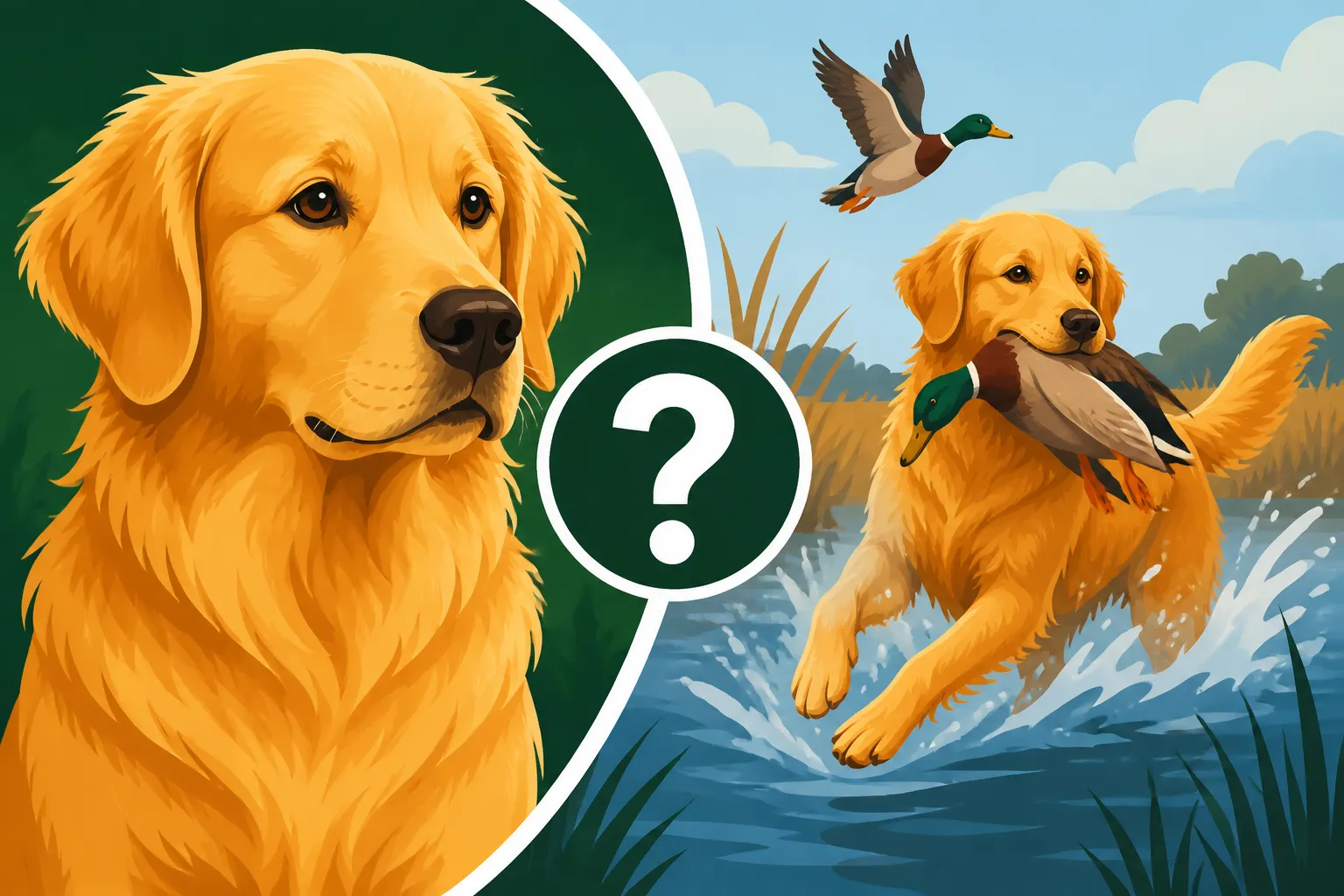
The Golden Retriever's story began in the mid-19th century in the Scottish Highlands, where Lord Tweedmouth sought to create the ultimate gundog. He wanted a dog that was powerful yet gentle, intelligent, and eager to please, capable of retrieving waterfowl from icy lochs and dense cover, day in and day out. The result was a dog with an unparalleled drive to fetch, a love for water, and an incredible nose for game. When you see your Golden plunge into a pond after a thrown stick or meticulously sniff out a dropped toy in tall grass, you're witnessing generations of selective breeding at play. This isn't just random behavior; it's the echo of their original calling. If you're curious about their origins, I've written extensively on What Golden Retrievers Were Bred to Do.
Imagine the scene: a hunter's shot rings out, and a bird falls into a thicket or a cold, fast-moving river. The Golden Retriever, unwavering, marks the fall, pushes through challenging terrain or water, finds the bird, and brings it back, often with a proud, soft delivery. This incredible focus and dedication are what made them indispensable. Today, while fewer Goldens are actively hunting, the desire to work with their human, to retrieve, and to please remains a defining trait, regardless of whether it's a pheasant or a squeaky tennis ball they're bringing back.
Even without formal hunting training, many Goldens exhibit this innate drive. They might bring you every sock they find, enthusiastically retrieve toys dropped under furniture, or become utterly fixated on birds in the park, not to chase aggressively, but to point and mark. It's a reminder that beneath the fluffy, affectionate exterior lies a powerful, purpose-driven dog who thrives on having a job to do, especially one that involves fetching and carrying.
The "Soft Mouth" and Its Purpose
One of the most remarkable traits bred into Golden Retrievers, directly related to their hunting role, is their "soft mouth." This isn't just a quaint term; it describes their ability to carry game, like a downed bird, gently without damaging it. A well-trained Golden can retrieve a raw egg without cracking it. This careful handling was crucial for hunters who needed their game brought back intact, not chewed or mangled. This trait truly sets them apart from many other breeds.
This soft mouth manifests in everyday life with Goldens who gently carry their toys, perhaps a favorite stuffed animal, around the house for hours. They might greet you at the door with a slipper or even a piece of mail, offering it up like a treasured trophy. It's not about possession in an aggressive sense; it's about the deep-seated joy they derive from holding and presenting something. This gentle nature is a direct link to their ancestry, a testament to the meticulous breeding that shaped them.
Training a puppy to understand the concept of "give" or "drop it" is often easier with Goldens because their inclination is to please and not to damage what they hold. You can use this to your advantage in playful retrieving games, reinforcing their natural tendency to carry items carefully. This is also why they excel in many assistance roles; their gentle touch makes them perfect for picking up dropped items for people with mobility challenges.
Why the Instinct Persists Even in Pet Goldens
The hunting instinct, particularly the retrieving drive, is deeply ingrained in the Golden Retriever's DNA. It's not something that simply disappears because a dog lives in a suburban home instead of a hunting lodge. Genetics play a powerful role, and selective breeding for traits like a strong retrieve, biddability, and a love for water has left an indelible mark on the breed. This means that even if a Golden Retriever has never seen a hunting blind, they likely still possess the inherent desire to fetch, carry, and work alongside their human.
Think of it like this: a human might have a natural talent for music or art, even if they never pursue it professionally. Similarly, a Golden Retriever has a natural talent for retrieving, even if their "game" is limited to a tennis ball or a Frisbee. This persistence of instinct is why Goldens often take to games of fetch with such intensity and why they are so eager to carry items in their mouths. It fulfills a deep-seated, ancestral need.
Ignoring these instincts can sometimes lead to boredom or undesirable behaviors. A Golden who isn't given an outlet for their retrieving drive might become restless, chew on inappropriate items, or seek "jobs" of their own devising, which may not always align with your household rules. Providing appropriate avenues to express these natural tendencies is crucial for their well-being and happiness.
Modern Roles: From Field to Family Companion
While the image of a Golden Retriever patiently waiting in a duck blind might be less common than it once was, the breed has adapted beautifully to modern life. Their innate traits that made them exceptional hunting partners—intelligence, trainability, loyalty, and that famous "soft mouth"—now make them outstanding family companions, service animals, and competitive athletes.
Competitive Field Trials and Hunt Tests
For those Golden Retriever enthusiasts who wish to honor and preserve the breed's working heritage, competitive field trials and hunt tests provide an excellent avenue. These events simulate hunting scenarios, allowing dogs to demonstrate their natural retrieving abilities, marking skills, scenting prowess, and obedience under pressure. They are judged on their performance, reinforcing the standards of a true working retriever. These events are not about hunting live game, but rather about showcasing the dog's trained abilities. For more on this, you might find Golden Retriever Achievements in Field Trials interesting.
Participating in these events requires significant dedication to training, often beginning in puppyhood. Dogs learn to sit quietly in a blind, retrieve multiple "birds" (often bumpers or dummies) from land and water, respond to hand signals and whistles from a distance, and remain steady amidst distractions. It's a testament to the Golden's intelligence and desire to please that they excel in such demanding disciplines, often working in perfect harmony with their handlers.
These competitions are vital for preserving the working lines of Golden Retrievers, ensuring that the instincts and physical capabilities that define the breed are maintained. Breeders focused on field lines often produce dogs with higher energy and stronger drive, specifically for these types of activities, compared to those bred primarily for conformation shows. There's a real difference between Field, Show and English Cream Golden Retrievers in terms of their typical drive.
How Owners Can Tap into Their Golden's Natural Drive
Even if you have no intention of entering field trials, you can still provide enriching outlets for your Golden's natural retrieving drive. The key is to understand what motivates them: the joy of fetching, the challenge of finding, and the satisfaction of working with you. Simply throwing a ball in the backyard is a start, but you can elevate this to engage their minds as well.
Consider setting up "retrieving drills" in your yard or a safe park. Hide a toy in tall grass and encourage your Golden to "find it," using their nose. Practice multi-retrieve scenarios by throwing two or three bumpers in different directions and having them remember where each one landed, retrieving them in order. This kind of structured play isn't just physical exercise; it's vital mental stimulation that fulfills their innate desire to work. Golden Retriever Retrieving Instinct and How to Use It offers many practical tips.
Another wonderful way to engage their drive is through dog sports like obedience, rally, or even agility, which incorporate elements of retrieving and problem-solving. These activities build confidence, strengthen the bond between you and your dog, and provide a fantastic outlet for their energy and intelligence. Remember, a bored Golden Retriever can sometimes become a destructive one, so channeling their energy positively is always a good idea.
The Importance of Mental and Physical Stimulation
Regardless of whether your Golden Retriever is a budding field champion or a dedicated couch potato, providing adequate mental and physical stimulation is paramount for their health and happiness. Their historical role as working dogs means they thrive on having a purpose and ample opportunities to use both their bodies and their brains. A lack of either can lead to frustration, anxiety, and behavioral issues.
Physical exercise for a Golden Retriever isn't just about walks; it needs to be engaging. Fetch is a classic for a reason, but also consider swimming, hiking, or even running alongside you once they are mature enough. The amount of Exercise a Golden Retriever Needs Each Day can vary, but generally, they are high-energy dogs. Activities that allow them to use their strong bodies and boundless energy in a constructive way are best. A good game of fetch with a durable toy, perhaps from Chewy, can be an excellent daily ritual.
Mental stimulation is just as crucial. Puzzle toys, scent work games (like hiding treats around the house for them to find), and learning new tricks all help keep their intelligent minds sharp. These activities tap into their problem-solving abilities and their natural drive to "work" for a reward. A mentally tired Golden is often a well-behaved Golden, happy to settle down after a fulfilling session. If you're looking for ideas, Mental Enrichment for a Bored Golden Retriever has some great suggestions.
Beyond Traditional Hunting: Modern "Retrieving" Jobs
The Golden Retriever's aptitude for retrieving, coupled with their gentle nature and high intelligence, has naturally led them into many other invaluable roles in modern society. These "retrieving" jobs may not involve game birds, but they absolutely leverage the same core traits that made them exceptional hunting companions.
Search and Rescue and Detection Work
The Golden Retriever's incredible sense of smell and their unwavering focus make them prime candidates for search and rescue (SAR) operations and various detection tasks. Their friendly demeanor means they are generally well-received by those they find, and their endurance allows them to cover large areas. Whether searching for missing persons in wilderness environments or urban collapse zones, or detecting specific scents like narcotics or accelerants, Goldens prove their worth time and again.
In SAR, Goldens use their powerful noses to locate human scent, often air-scenting to pick up a trail from a distance. Their drive to "find" and "retrieve" a person—even if it's just by barking and leading their handler—is a direct evolution of their retrieving instinct. They are trained to indicate a find, often by returning to their handler and giving an alert signal, then leading back to the source of the scent.
Similarly, in detection work, Goldens are trained to locate specific target scents and then provide a passive alert, such as sitting or lying down, without disturbing the source. Their eager-to-please attitude and stamina are huge assets in these demanding fields. These roles are a profound testament to how the Golden Retriever's ancestral abilities have been adapted to serve humanity in critical ways.
Therapy and Service Dog Roles
Perhaps one of the most widely recognized modern roles for Golden Retrievers is as therapy and service dogs. Their calm temperament, high trainability, and gentle nature make them perfectly suited for these sensitive jobs. The same "soft mouth" that carefully carried a bird now helps a person with disabilities retrieve dropped keys, open doors, or even carry essential items.
As service dogs, Goldens can perform a myriad of tasks, from guiding individuals with visual impairments to providing physical assistance for those with mobility challenges. Their inherent desire to be close to their human and their intuitive understanding of human emotion contribute immensely to their success in these roles. The bond formed between a service dog and their handler is incredibly strong, rooted in trust and mutual reliance.
Therapy dogs bring comfort and joy to countless individuals in hospitals, nursing homes, schools, and disaster zones. A Golden Retriever's warm presence, wagging tail, and willingness to accept gentle petting can significantly reduce stress and promote healing. Their gentle retrieving instinct allows them to pick up toys to present to patients or even retrieve items for staff, always with that characteristic Golden warmth and enthusiasm. If you're interested in this path, there are steps to Golden Retriever Therapy Dog Certification Steps.
Everyday Retrieving Fun and Games
Even for the average pet owner, incorporating retrieving games into daily life is one of the easiest and most rewarding ways to honor your Golden's heritage and keep them happy. These aren't just trivial pastimes; they are essential for satisfying a deep-seated instinct and maintaining your dog's physical and mental health. There are so many Fetch Games That Tire a Golden Retriever out there.
Classic fetch with a ball or a durable retrieving dummy is a perennial favorite. Many Goldens will play until their legs give out, eager for that next toss. You can elevate this by playing "hide and seek" with their toys, making them use their nose to locate the hidden treasure. This transforms simple fetch into a stimulating scent game. For a true water lover, throwing floating toys into a safe pond or lake allows them to indulge their aquatic instincts inherited from generations of water retrievers.
You can also teach your Golden to "help" around the house by retrieving specific items. Training them to pick up their toys and put them in a basket, or bringing you your slippers, can be a fun and engaging way to channel their drive. It not only provides mental stimulation but also reinforces their bond with you through cooperative tasks.
| Activity Type | Description | Instinct Engaged | Benefits |
|---|---|---|---|
| Traditional Hunting | Retrieving game birds (waterfowl, upland) in the field. | Mark, find, retrieve, deliver gently, scent. | Preservation of breed traits, partnership with handler, environmental awareness. |
| Field Trials/Hunt Tests | Simulated hunting scenarios for competitive performance. | Mark, find, retrieve, deliver gently, scent, obedience, steadiness. | Showcases training, breed standard, mental & physical challenge. |
| Backyard Fetch/Games | Throwing toys for retrieval, hide-and-seek with toys. | Retrieve, run, find, carry, interact with human. | Physical exercise, mental engagement, strengthens bond. |
| Scent Work/Nose Games | Hiding treats/scented articles for the dog to find. | Scenting, problem-solving, focus. | Mental enrichment, builds confidence, low impact exercise. |
| Assistance/Therapy Work | Retrieving dropped items, providing comfort. | Gentle retrieve, intuition, social engagement, focus. | Life-changing for individuals, builds deep bond, sense of purpose. |
| Dog Sports | Obedience, Rally, Agility, Dock Diving. | Obedience, retrieve, agility, focus, athleticism, water skills. | High level of physical & mental stimulation, teamwork, confidence. |
Supporting Your Golden's Natural Abilities
Whether your Golden Retriever is a working dog, a competitive athlete, or a beloved family pet, nurturing their natural abilities requires consistent effort and the right approach. From foundational training to selecting appropriate gear and ensuring proper nutrition, supporting their inherent drives will lead to a happier, healthier Golden.
Training for Retrieval and Focus
Early and consistent training is key to developing your Golden's retrieving instincts in a positive and controlled manner. Start with basic commands like "sit," "stay," and "come" in a low-distraction environment. Building a solid foundation of obedience is crucial, especially for activities that require off-leash work or focus amidst distractions. A strong "come" command, for example, is essential whether they're retrieving a bumper in a field or just playing at the park. Teaching a Golden Retriever to Come When Called is a skill every owner should master.
Once basic obedience is established, you can begin to hone their retrieving skills. Start with short, easy retrieves, making it a fun and rewarding experience. Use a cheerful tone, plenty of praise, and high-value treats to motivate them. Gradually introduce more challenging elements, like retrieving from different textures (water, tall grass) or teaching them to wait for a "fetch" cue. Always end on a positive note, keeping training sessions short and enjoyable. Training a Golden Retriever From Puppy to Adult provides a great roadmap.
For Goldens with a particularly high drive, consider working with a professional trainer specializing in gundog work or competitive obedience. They can provide guidance on advanced techniques and help you tap into your dog's full potential safely and effectively. Remember, consistency and positive reinforcement are your best tools in harnessing their natural enthusiasm.
Gear and Resources for Instinctual Play
Having the right gear can make all the difference in engaging your Golden's natural retrieving abilities. Forget flimsy toys that won't last; Goldens need durable, purpose-built items that can withstand their enthusiastic retrieves and powerful jaws. Many online retailers, like Chewy, offer a vast selection of dog supplies to support an active Golden.
Look for items like:
- Durable retrieving dummies or bumpers: These mimic the size and weight of game birds and are designed for repeated throwing and retrieving, often floating for water work.
- High-quality tennis balls or rubber balls: A staple for fetch, ensure they are size-appropriate to prevent choking hazards.
- Floating toys: Essential if your Golden loves water, ensuring the toy stays on the surface for easy retrieval.
- Long lines: A long leash (15-30 feet) is invaluable for practicing recall and retrieving in open areas safely, before your Golden has reliable off-leash skills.
- Treat pouches: For carrying high-value rewards during training sessions.
Beyond physical gear, consider resources like books on gundog training, online courses, or local dog clubs that offer classes in obedience, scent work, or even introductory retrieving workshops. These resources can provide invaluable knowledge and support as you explore your Golden's inherited talents.
Nutrition for an Active Golden
An active Golden Retriever, especially one engaging in retrieving games, dog sports, or actual hunting, requires a diet that supports their energy levels and overall health. Just like human athletes, their nutritional needs can be higher than those of a less active companion. Choosing Dog Food for a Golden Retriever is an important decision.
Look for a high-quality dog food formulated for large, active breeds. Key considerations include:
- Protein content: Active dogs need ample protein to support muscle repair and growth. Look for recipes where a named meat source (chicken, beef, lamb) is the first ingredient.
- Healthy fats: Fats are a concentrated source of energy and support skin and coat health. Omega fatty acids, often from fish oil, are particularly beneficial.
- Appropriate carbohydrate sources: Provide sustained energy without causing digestive upset.
- Joint support: Ingredients like glucosamine and chondroitin are often included in large breed formulas, which can be beneficial for Goldens, a breed prone to joint issues.
Always consult with your veterinarian to determine the best diet for your specific Golden Retriever, taking into account their age, activity level, and any individual health considerations. They can help you calculate appropriate feeding amounts to maintain a healthy weight and ensure your dog is receiving all the nutrients they need to thrive in whatever role they undertake. Remember, proper nutrition fuels their instincts and keeps them ready for their next big retrieve, whether it's a dummy or a dropped remote control.
Disclaimer
This article is for general informational purposes only and does not constitute professional advice. Laws, prices and regulations vary by location and change over time. Consult a qualified professional for guidance on your specific situation.