Front-Clip Versus Back-Clip Harness for a Golden
One of the most common frustrations I hear from Golden Retriever owners is the struggle with leash pulling. You dream of those serene walks with your beloved companion trotting politely by your side, but instead, you often find yourself being dragged down the street, feeling more like a water skier than a dog walker. This guide aims to demystify the world of dog harnesses, specifically looking at the front-clip versus back-clip debate, to help you find the right tool for more enjoyable walks with your Golden.
Understanding the Golden Retriever's Pulling Instinct
Golden Retrievers are wonderful dogs, known for their friendly nature, intelligence, and boundless enthusiasm. However, that very enthusiasm, combined with their strength and retrieving drive, can translate into a mighty pull on the leash. It’s not necessarily a sign of defiance; often, it’s just your Golden trying to explore the world at their own pace.
Why Golden Retrievers Pull
Think about it from your Golden’s perspective. Their world is a rich tapestry of smells, sounds, and exciting sights, and they want to get to them now. They have a natural instinct to pull, especially if they were bred from lines with a strong working or field background. To them, pulling against resistance means they're getting closer to that fascinating scent or potential playmate. This natural inclination means that without proper training, a Golden Retriever will quickly learn that pulling gets them where they want to go, reinforcing the behavior.
Furthermore, many Goldens are highly motivated by scent. A new patch of grass, a lamppost where another dog left a message, or even just the lingering smell of a squirrel can be an irresistible siren call. Their powerful noses guide them, and their strong bodies follow. If you've ever felt like your arm was being extended by several inches, you know exactly what I mean when their nose finds something truly interesting. This drive, while endearing in many ways, definitely adds to the challenge of Loose Leash Walking With a Golden Retriever.
The Impact of Pulling on Owners and Dogs
Constant pulling isn't just annoying; it can be downright dangerous and uncomfortable for both of you. For us humans, it can lead to shoulder strain, back pain, or even falls, especially if your Golden spots a rabbit and decides to take off like a rocket. It makes walks stressful rather than relaxing, and sometimes, it even discourages owners from taking their dogs out as often as they should, which is a shame for such an active breed that thrives on exercise.
For your Golden, a traditional collar, especially a choke or prong collar, can put immense pressure on their trachea, risking injury to their neck, spine, and even their thyroid. Even a flat collar can cause discomfort and damage if they're constantly jerking against it. Excessive pulling can also impact their gait and overall joint health over time, especially for a breed prone to orthopedic issues like hip and elbow dysplasia. We always want our Goldens to be comfortable and safe, and a constantly strained neck is neither.
The Back-Clip Harness: Familiarity and Comfort
The back-clip harness is probably what comes to mind for most people when they think of a dog harness. It’s a common choice, and for many dogs, it works perfectly fine. However, it's essential to understand its design and limitations, especially if you have a powerful Golden Retriever who tends to pull.
How Back-Clip Harnesses Work
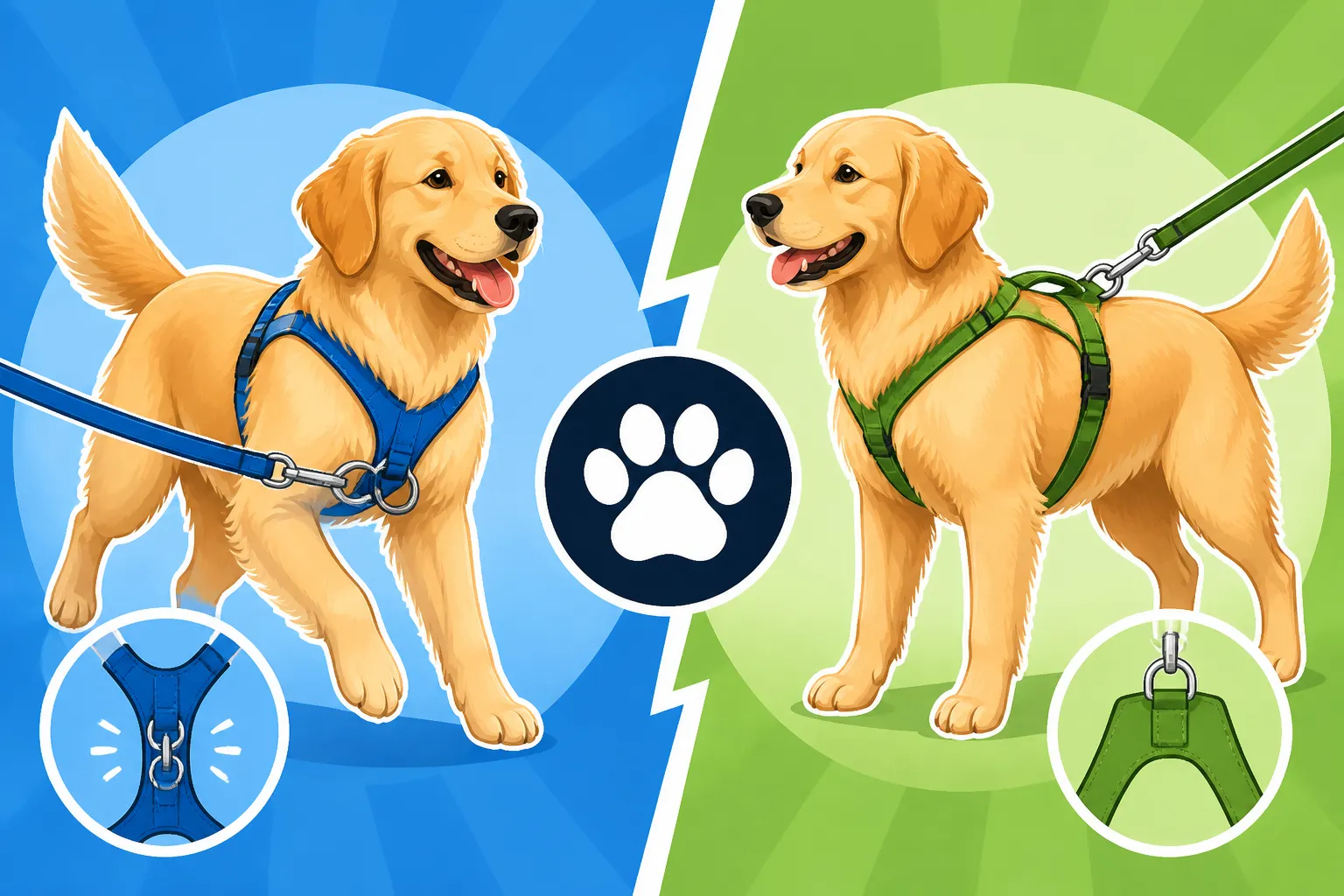
A back-clip harness, as the name suggests, features a D-ring or attachment point located on the dog's back, usually between their shoulder blades. When you attach the leash here, the pressure from pulling is distributed across their chest and shoulders, rather than concentrating it on their neck, as a traditional collar would. This design makes it a much safer and more comfortable option than a collar for many dogs, particularly those with delicate tracheas or those prone to neck injuries.
These harnesses come in various styles, from simple straps to more padded, vest-like designs. They are generally easy to put on and take off, often with buckles or adjustable straps. For a Golden Retriever, finding one that fits snugly but doesn't chafe, especially around their armpits, is crucial due to their double coat and active nature. A good fit ensures comfort during long walks and play.
When a Back-Clip Harness is a Good Choice
A back-clip harness shines for Goldens who already have good leash manners or for puppies who are just starting to learn. If your Golden walks politely by your side, rarely pulls, and responds well to verbal cues, a back-clip harness offers a comfortable and secure way to walk them without putting any strain on their neck. It’s also an excellent choice for smaller, less powerful dogs, or those who are elderly or have respiratory issues, as it avoids any pressure on their throat.
For casual strolls in low-distraction environments, or when you’re carrying your Golden through a busy area where you just need to keep them close, a back-clip harness provides adequate control without interfering with their natural stride. It's often the go-to for many pet parents simply because of its ease of use and its familiar design. If your Golden is a true gem on the leash, you might not ever need to look beyond a well-fitting back-clip harness.
Limitations of Back-Clip Harnesses for Strong Pullers
Here's where the back-clip harness often falls short for many Golden Retriever owners. While it distributes pressure, it doesn't discourage pulling. In fact, for a strong dog like a Golden, it can sometimes inadvertently encourage it. When the leash attaches to their back, it gives them the leverage to lean into the pull with their entire body, much like a sled dog. They engage their strong chest and shoulder muscles, and that means you end up being pulled along with even more force.
I’ve had clients describe feeling like they were trying to steer a freight train with a piece of string when their Golden was on a back-clip harness. It provides very little directional control. If your Golden suddenly lunges sideways towards a squirrel, you have less ability to redirect their momentum effectively. This can be especially frustrating if you're trying to work on Stopping a Golden Retriever From Pulling on Leash during training sessions. While great for comfort, it's often not the best tool for teaching or correcting leash manners in an enthusiastic Golden.
The Front-Clip Harness: A Training Game Changer
If you've been struggling with your Golden Retriever's pulling, a front-clip harness might just be the solution you've been searching for. It works on a completely different principle than a back-clip harness, effectively turning your dog's natural pulling instinct into a self-correcting mechanism.
How Front-Clip Harnesses Work to Discourage Pulling
The magic of the front-clip harness lies in its leash attachment point: a D-ring located on the dog's chest. When your Golden starts to pull forward, the leash, attached to the front, naturally steers them sideways. Instead of being able to lean into the pull, they are gently but firmly redirected. This breaks their forward momentum and makes it difficult for them to continue pulling with force. Essentially, every time they pull, they turn themselves back towards you, which is precisely where you want their attention during a walk.
Many front-clip harnesses, like those you can easily find on Amazon, also feature a strap that goes across the chest and often another that wraps behind the front legs. This design ensures that the pressure is distributed comfortably across their chest and shoulders, without putting strain on their throat or rubbing their delicate armpit area. It's a humane and effective way to teach your Golden that pulling doesn't get them to their destination faster; it actually slows them down and reorients them.
Benefits of Using a Front-Clip Harness
The primary benefit, hands down, is the dramatic reduction in pulling. Owners often report an almost immediate difference in their Golden’s leash manners, even without extensive training. This makes walks far more enjoyable and manageable, transforming a frustrating chore into a pleasant bonding experience. With less pulling, you're also less likely to experience arm strain or feel out of control, making walks safer for you.
Beyond reducing pulling, front-clip harnesses offer better control and easier redirection. If your Golden lunges at a distraction, a gentle tug on the leash from the front will turn their body, preventing them from charging forward. This increased control is invaluable, especially in busy environments or when encountering other dogs or people. Many positive reinforcement trainers, including programs like BAXTER & Bella, often recommend front-clip harnesses as a primary tool for teaching Leash Manners for a Strong Golden Retriever because they work with the dog’s natural movement rather than against it. It's a valuable tool to use in conjunction with consistent training.
Potential Downsides and Considerations
While incredibly effective, front-clip harnesses aren't without their considerations. Some dogs, particularly those with a very wide chest or deep keel (like some Golden Retrievers), might experience rubbing or chafing in the armpit area if the harness isn't fitted correctly or made with soft, padded materials. Always check for redness or irritation after walks, especially when first introducing the harness.
Another potential issue is that if your Golden is a particularly determined puller, they might still try to twist or contort their body to pull. In these cases, consistent training is still paramount, and the harness acts as a valuable aid rather than a complete fix. Additionally, some front-clip harnesses can be a bit more cumbersome to put on than simple back-clip designs, especially if your Golden is wiggly. It’s important to practice putting it on calmly and associate it with positive experiences. For some Goldens, the front clip can also get tangled with their front legs if the harness is too loose, so a proper fit is absolutely essential.
Choosing the Right Harness for Your Golden Retriever
Deciding between a front-clip and a back-clip harness isn't a one-size-fits-all decision. It depends heavily on your Golden's individual pulling habits, temperament, and your training goals. The goal is always to create a comfortable, safe, and effective walking experience for both of you.
Factors to Consider Beyond Clip Location
While the clip location is crucial for controlling pulling, there are other important factors to consider when selecting a harness for your Golden. Material is key: look for durable, yet soft and breathable fabrics that won't chafe your Golden's skin, especially given their thick double coat. Padding around the chest and armpits can prevent discomfort. Adjustable straps are also vital to ensure a snug, secure fit that prevents escape artists from slipping out, but isn't too tight.
Think about visibility, too. If you walk your Golden in the early mornings or evenings, a harness with reflective stitching can be a lifesaver. Ease of use is another practical consideration – some harnesses are simpler to buckle than others, which can be a real plus when you have an excited Golden ready to go! Finally, consider your Golden's Golden Retriever Body Condition Scoring. A very lean dog might need more padding, while a heftier one will need robust straps.
Combining Harness Types with Training
A harness, whether front or back clip, is a tool, not a magic wand. For the best results, it should always be used in conjunction with positive reinforcement training. If your Golden is a strong puller, starting with a front-clip harness can provide immediate relief and make training much easier. Once they've learned better leash manners, you might find that you can transition to a back-clip harness for recreational walks, or use a back-clip for less stimulating environments and the front-clip for more challenging ones.
Many owners find success by initially using a front-clip harness to teach loose-leash walking, and then gradually transitioning to a back-clip harness as their Golden masters the skill. Programs like BAXTER & Bella offer comprehensive online puppy training that can guide you through these steps, emphasizing positive reinforcement techniques. Remember, consistency is key, and rewarding your Golden for walking nicely by your side will reinforce the desired behavior far more effectively than any tool alone. Consider enrolling in Golden Retriever Training Class Costs to get professional guidance.
Fitting Your Golden Retriever for a Harness
A poorly fitting harness, regardless of its type, can cause discomfort, chafing, and even lead to your Golden escaping. When fitting a harness, you should be able to comfortably slide two fingers under any strap, especially around the chest and behind the front legs. The harness should sit snugly, but not restrict movement. Pay close attention to the area behind the front legs; chafing here is common, so ensure ample space and padding.
For a Golden Retriever, measure their chest girth (the widest part of their rib cage, usually just behind the front legs) and their neck circumference. Different brands will have slightly different sizing charts, so always double-check. Don't assume that because one brand's large fits, another's will. When in doubt, go to a local pet store where staff can help you try on different styles. Or, if you're ordering online from a site like Amazon, make sure to read reviews about sizing and fit from other Golden owners and check the return policy. Remember that a growing Golden Retriever Puppy's Growing Joints can be impacted by a harness that rubs or restricts movement, so ensure it’s comfortable.
Here’s a quick comparison of the two harness types to help you visualize their differences:
| Feature | Back-Clip Harness | Front-Clip Harness |
|---|---|---|
| Leash Attachment | D-ring on the dog's back (between shoulder blades) | D-ring on the dog's chest (front) |
| Primary Effect on Pulling | Minimal deterrence; can encourage pulling leverage | Discourages pulling by redirecting forward momentum |
| Control Level | Less directional control; dog can pull ahead | Greater directional control; redirects dog sideways |
| Comfort for Dog | High, if well-fitted; no throat pressure | High, if well-fitted; no throat pressure, but potential for armpit rub if ill-fitting |
| Ideal For | Loose leash walkers, smaller dogs, seniors, general walks, dogs with Golden Retriever Heart Murmurs a Vet Hears | Strong pullers, training loose leash walking, high-distraction environments, puppies learning manners |
| Ease of Use | Generally simple to put on | Can be slightly more involved to put on initially |
Ultimately, finding the perfect harness for your Golden Retriever is about understanding their needs and choosing a tool that supports your training goals. Whether it's the familiar comfort of a back-clip or the game-changing control of a front-clip, the right harness can make all the difference in enjoying those cherished walks with your furry best friend.
Disclaimer
This article is for general informational purposes only and does not constitute professional advice. Laws, prices and regulations vary by location and change over time. Consult a qualified professional for guidance on your specific situation.