Quieting a Golden Retriever Who Barks at Noises
It's a familiar scenario for many Golden Retriever parents: you're enjoying a quiet moment, perhaps sipping your coffee or watching TV, when suddenly the peace is shattered. A leaf blows past the window, a distant siren wails, or the mail carrier's truck rumbles by, and your sweet, usually calm Golden erupts into a volley of barks, convinced the world is ending. This guide is here to help you navigate the often-frustrating world of noise-triggered barking, offering empathetic insights into why your Golden acts this way and practical, actionable strategies to bring calm back to your home.
Understanding Why Your Golden Retriever Barks at Noises
Before we can tackle the barking, it’s crucial to understand why your beloved Golden Retriever feels the need to alert you to every little sound. It’s rarely out of spite, and often stems from their deeply ingrained instincts, learned behaviors, or even underlying anxieties. Acknowledging the root cause is the first step toward finding a sustainable solution.
Instinctive Alerting and Territorial Behavior
Golden Retrievers, while known for their friendly and gentle nature, are still dogs with instincts passed down through generations. Part of being a canine companion means being an alert system for their pack – which is you, their family. When they hear an unusual noise, their immediate instinct can be to bark to warn you of a perceived intrusion or change in their environment. It’s their way of saying, "Hey, did you hear that? Something's happening!"
Think about it: a delivery truck pulling up, a neighbor closing their car door, or someone walking by your house – these are all signals that your Golden wants to communicate. It's often not an aggressive territorial bark, but more of an "I heard something, and I'm letting you know" kind of bark. They’re fulfilling a very ancient role, even if in modern suburbia it feels excessive. This can be particularly pronounced in dogs who take their job as family protector very seriously, even if the "threat" is merely a gust of wind.
For many Golden owners, the frustration isn't that they bark at all, but that they bark at everything. The constant stream of minor sounds that we barely register can become major events for a Golden, whose hearing is far more acute than ours. What sounds like a faint rustle to you might be a full-blown declaration of squirrel war to them. They're just doing what they're wired to do, but we need to help them understand what's truly worth alerting us to, and what isn't.
Learned Behavior and Attention Seeking
Sometimes, what starts as an instinctive bark can evolve into a learned behavior, especially if it inadvertently gets your Golden Retriever what they want: attention. Goldens thrive on interaction and engagement with their people. If every time they bark at the mail carrier, you rush to the window, yell at them to stop, or even just make eye contact, you've essentially rewarded the behavior with attention. Even negative attention is still attention, and for a Golden, that can be a powerful motivator.
Consider a scenario where your Golden barks at a squirrel in the yard. You might walk over, look out the window, and then try to calm them down. From your dog's perspective, they barked, and you came over to investigate with them. This reinforces the idea that barking at external stimuli leads to a fun, shared activity with you. They've learned that barking is an effective way to get you involved in their perceived "crisis," whether it's a real one or just a blowing plastic bag.
This pattern can be tricky to break because it's so ingrained. Owners often get into a cycle where they react to the barking, the dog gets attention, and the barking continues. To truly address this, we need to carefully evaluate our own reactions and ensure we're not accidentally fueling the fire. Teaching them alternative behaviors that also get your attention, but are more appropriate, will be key.
Anxiety, Fear, or Overstimulation
Another significant reason Golden Retrievers bark at noises can be rooted in anxiety, fear, or simply being overstimulated by their environment. Not all barks are "alert" barks; some are "I'm scared" barks. A sudden, unexpected loud noise like a firecracker, thunder, or even a dropped pan can genuinely startle a sensitive Golden, leading to barks that are an expression of fear. This can be particularly true for sounds they can't quite pinpoint or understand. For more on specific fears, you might want to look into Thunderstorm Fear in Golden Retrievers or Golden Retriever Fireworks Anxiety.
Noise sensitivity can develop over time, or a dog might simply be predisposed to it. A Golden living in a busy urban environment, for example, might be constantly bombarded with sirens, traffic, construction, and people, leading to chronic overstimulation. They might feel overwhelmed and use barking as a way to cope with the sensory overload. This isn't about being "bad"; it's about being stressed.
Sometimes, barking at noises can also be a symptom of a larger anxiety issue, like separation anxiety. While often manifesting when the dog is left alone, an anxious Golden might bark excessively at noises even when you're home, as they're already on edge. It's important to observe if the barking is accompanied by other signs of stress, such as pacing, panting, trembling, or destructive behaviors, as this points to a deeper emotional cause that needs gentle, consistent intervention. It's also worth ruling out any physical discomfort or changes in health; sometimes, a dog in pain might be more reactive to sounds. Consider if you've noticed any Quiet Signs a Golden Retriever Is Hurting.
Strategies for Managing and Reducing Noise-Related Barking
Dealing with noise-related barking in a Golden Retriever requires a two-pronged approach: managing the immediate environment to reduce triggers and actively training your dog to respond differently. It's a journey that takes patience, consistency, and a whole lot of empathy for your furry friend.
Management: Controlling the Environment
One of the quickest ways to start reducing noise-related barking is to manage your Golden's environment. This isn't a long-term fix for the underlying behavior, but it can provide immediate relief and create a calmer space where training can be more effective. Think of it as setting the stage for success.
First, consider blocking visual access to external triggers. If your Golden barks at every person or dog walking past your window, simply drawing the curtains, using privacy film on lower window panes, or even strategically placing furniture can make a huge difference. If they can't see the "threat," they often feel less compelled to bark at it. For those tricky spots, you can find various window films and even blackout curtains on Amazon that can help obscure the view without completely darkening your home.
Second, implement sound masking techniques. This involves introducing ambient noise that helps drown out the sudden or irritating sounds that trigger your Golden. A white noise machine, a fan, or even playing classical music or talk radio can create a consistent soundscape that makes those abrupt external noises less jarring. This can be especially helpful if your Golden is sensitive to specific sounds like the garbage truck, neighbor's children, or the mail delivery. Again, Amazon offers a wide selection of sound machines that can be a game-changer for many households.
Finally, create a designated "safe space" for your Golden. This might be a cozy crate in a quieter part of the house, a bed under a desk, or a specific room where they can retreat. Equip this space with a comfy bed, favorite chew toys, and maybe even a puzzle feeder. Teach your Golden to go to this spot when noises occur. This gives them a sense of control and a place to decompress. If your Golden struggles with being in their crate, our guide on Crate Training a Golden Retriever Who Cries might offer some valuable tips for making it a positive den.
Training: Teaching an Alternative Behavior
Management is a great first step, but the real solution lies in teaching your Golden Retriever how to respond differently to noises. This involves positive reinforcement training, where you reward desired behaviors rather than punishing unwanted ones. It’s about building new associations and giving your dog a constructive outlet.
A classic technique is teaching a "Quiet" command. Start by letting your Golden bark a few times at a trigger. Then, when there's a brief lull, or you can interrupt them with a startling (but not scary) sound (like a clap), immediately say "Quiet!" and reward them with a high-value treat the moment they stop barking. The timing is crucial. Repeat this, gradually extending the time they need to be quiet before getting the reward. Over time, they’ll associate the "Quiet" cue with ceasing their barking and getting a reward.
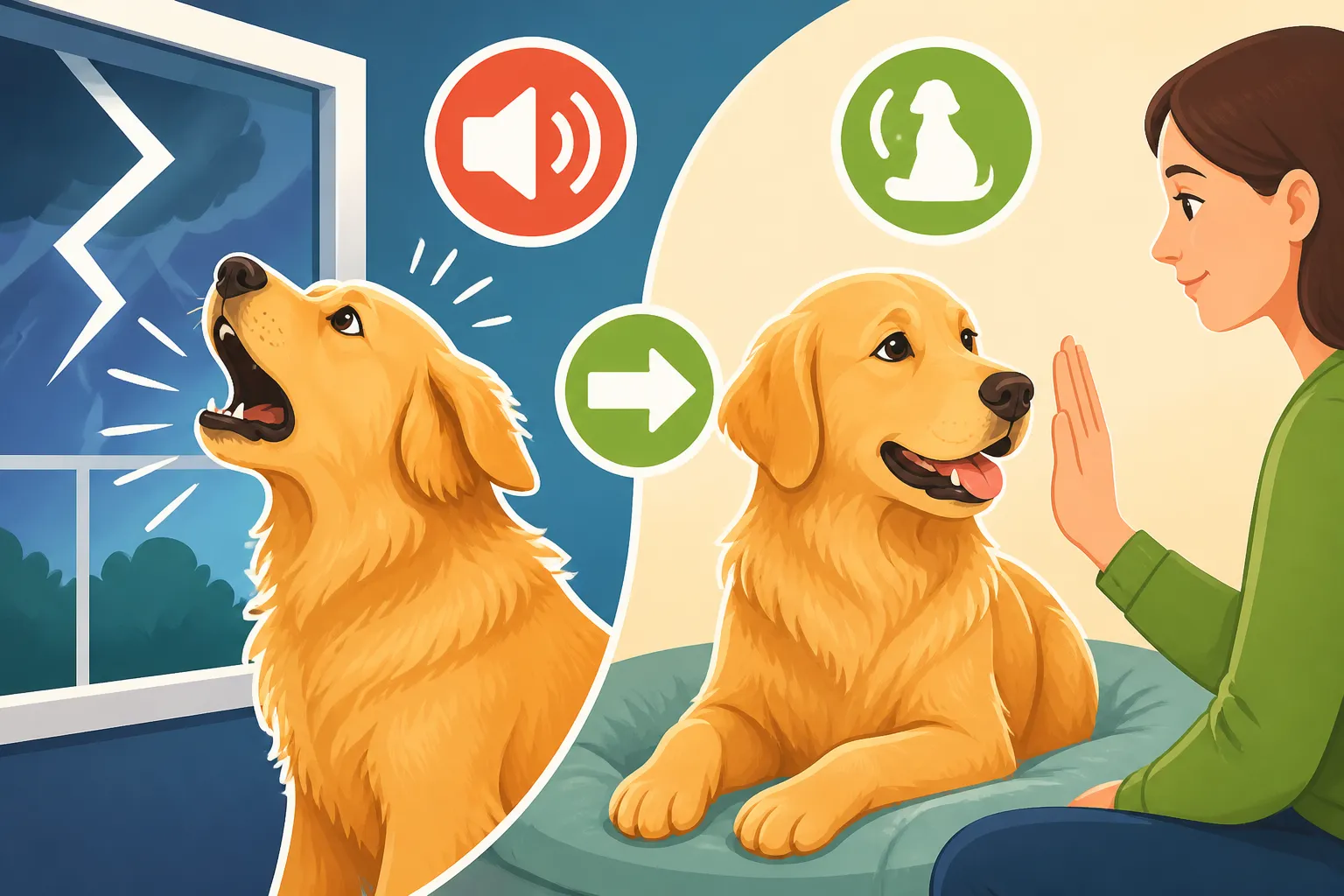
Another effective strategy is teaching a "Go to Place" or "Settle" command. This involves training your Golden to go to a specific mat or bed and stay there calmly when cued. When a noise trigger occurs, instead of letting them bark, direct them to their "place." Reward them for staying calm and quiet in their spot. This diverts their attention and gives them a focused task. Many online training platforms, such as BAXTER & Bella, offer comprehensive courses on teaching foundational commands like "Place" and "Settle" that can be incredibly helpful for noise reactivity. You might also find tips in articles like Teaching a Golden Retriever to Sit and Stay to reinforce the principles of positive training.
Counter-conditioning and desensitization are powerful tools for noise sensitivity. Counter-conditioning involves changing your dog's emotional response to a trigger from negative (fear, excitement leading to barking) to positive. When a trigger noise occurs, immediately give your Golden a high-value treat or engage them in a favorite game. The goal is for them to associate the noise with something good. Desensitization means gradually exposing your Golden to the trigger noise at very low, non-reactive levels, then slowly increasing the volume or intensity while consistently counter-conditioning. You can find recordings of common sounds (doorbells, sirens, thunder) online and play them quietly, rewarding your dog for remaining calm.
Enriching Your Golden's Life to Reduce Stress
A happy, fulfilled Golden Retriever is generally a calmer Golden Retriever, and less likely to resort to excessive barking out of boredom, frustration, or pent-up energy. Ensuring your Golden has adequate physical exercise and mental stimulation is not just about keeping them fit, but also about supporting their emotional well-being.
Physical exercise is paramount for a Golden. These dogs were bred to work and retrieve, and they have significant energy stores. A brisk walk or a good play session helps to burn off excess energy that might otherwise be channeled into reactive barking. A Golden who has had a satisfying run or a long walk is more likely to nap peacefully through the neighborhood sounds than one who is bouncing off the walls with unspent energy. Our article on Daily Walk Length for a Golden Retriever can give you a better idea of how much activity your Golden needs.
Beyond physical activity, mental stimulation is equally important. Goldens are intelligent dogs who thrive on having a "job" to do. Puzzle feeders, scent games, and short, engaging training sessions can challenge their minds and provide an outlet for their intelligence. A dog who is mentally tired is often a dog who is less prone to nuisance barking. Mental Enrichment for a Bored Golden Retriever offers a wealth of ideas to keep your Golden's brain engaged. Consider rotating their toys, teaching new tricks, or even hiding treats around the house for them to sniff out.
Finally, maintaining a consistent routine can greatly reduce anxiety in many dogs. Knowing when to expect meals, walks, and playtime helps your Golden feel secure and in control of their world. A predictable schedule can reduce general stress levels, making them less reactive to unexpected noises. When a Golden feels safe and knows what's coming, they're less likely to feel the need to sound the alarm for every minor disturbance.
When to Seek Professional Help for Excessive Barking
While many instances of noise-related barking can be managed with consistent effort at home, there are times when it’s truly best to bring in the big guns. Recognizing these red flags isn't a sign of failure, but rather a wise decision that prioritizes your Golden Retriever’s well-being and your household's peace.
Recognizing Red Flags
It's one thing for your Golden to let out a few barks at the mailman; it's another if the barking becomes incessant, compulsive, or starts to negatively impact their quality of life or yours. One major red flag is if the barking is nonstop, without any discernible break, or if it seems to be triggered by even the most minor, almost imperceptible sounds. This could indicate a heightened state of anxiety or even a developing behavioral disorder.
Another serious sign is if the barking is accompanied by other clear indicators of distress or anxiety. This might include pacing, panting excessively even when cool, drooling, trembling, destructive chewing (especially around exits or windows), or house soiling. These combined behaviors suggest that your Golden isn't just "being naughty," but is genuinely struggling with underlying fear or anxiety. A sudden onset of barking in a dog that was previously quiet should always prompt a vet visit to rule out medical issues.
Consider the impact on your Golden and your family. If the barking is preventing your dog from resting properly, leading to tension in the household, causing issues with neighbors, or making you dread certain times of day, it’s a clear signal that the problem has moved beyond simple nuisance and into the realm of needing specialized intervention. Your Golden deserves to feel calm and secure, and if the current methods aren't achieving that, it's time to re-evaluate.
Consulting a Vet or Certified Behaviorist
The very first step when barking becomes excessive or concerning is always a visit to your veterinarian. They can perform a thorough physical exam and potentially run diagnostic tests to rule out any underlying medical conditions that might be contributing to the barking. Pain, changes in hearing, or even cognitive decline in older Goldens can manifest as increased vocalization or reactivity to sounds. It’s crucial to ensure there isn't a physical reason for their distress before diving into behavioral training.
If medical issues are ruled out, your vet can often recommend a Certified Professional Dog Trainer (CPDT) or, for more severe cases, a Veterinary Behaviorist (Dip ACVB) or a Certified Applied Animal Behaviorist (CAAB). These professionals have specialized knowledge and experience in diagnosing and treating complex behavioral problems. A CPDT can help you implement advanced training protocols and address learned behaviors, while a Veterinary Behaviorist can provide a medical diagnosis for behavioral issues and, if necessary, prescribe medication in conjunction with a behavior modification plan.
Don't view seeking professional help as a personal failure or an admission that you can't handle your dog. It's quite the opposite – it shows a deep commitment to your Golden Retriever's well-being and a willingness to explore every avenue to help them. These experts can offer tailored strategies that you might not have considered, providing a roadmap to a calmer, happier life for both you and your Golden. Finding a good trainer is key, and our guide on Choosing a Positive Reinforcement Trainer for a Golden can help you select the right professional.
Common Mistakes and What to Avoid
In the heat of the moment, when your Golden Retriever is barking incessantly at a noise, it's easy to fall into traps that can actually make the situation worse. Understanding these common pitfalls can help you avoid counterproductive responses and maintain a positive, trusting relationship with your dog.
Punishing Barking Incorrectly
One of the most common and damaging mistakes owners make is trying to punish barking out of frustration. Yelling at your Golden, using spray bottles, shaker cans, or even considering devices like shock collars might seem like a quick fix, but for a sensitive breed like a Golden Retriever, these methods are often counterproductive and harmful. When you yell at your dog for barking, they might interpret it as you barking with them, reinforcing their belief that there's something to bark about. Alternatively, it can cause fear and anxiety, leading them to suppress their barking in your presence, but still bark when you're gone, or to develop new, more problematic behaviors due to stress.
Punishment can damage the precious bond of trust you have with your Golden. If they're barking out of fear or anxiety, punishing them only exacerbates their emotional state, making them even more fearful or anxious. They don't understand why they're being punished, only that a scary noise is happening, and now their human is also scary. This can lead to a dog who is afraid to express themselves, or worse, one who becomes withdrawn or even defensively aggressive. Instead of punishing the bark, focus on interrupting it calmly and redirecting their attention towards a desired behavior that you can then reward.
Remember, Goldens want to please you. If they understood that barking at certain noises bothered you, they'd try to stop. They just don't make that connection, especially when driven by instinct or fear. Your role is to guide them gently, not to instill fear or confusion. Focus on positive reinforcement, teaching them what to do instead of punishing them for what you don't want them to do.
Inconsistency and Giving Up Too Soon
Another major hurdle in addressing noise-related barking is a lack of consistency and giving up before the training has had a chance to work. Behavior modification is rarely a quick fix; it requires patience, dedication, and a united front from everyone in the household. If one person allows barking while another tries to train, your Golden will quickly become confused about the rules, and progress will stall.
It's a marathon, not a sprint. You might have days where your Golden seems to "get it," and then days where they regress, barking at everything with renewed vigor. This is often part of an "extinction burst," where the behavior temporarily gets worse before it gets better, as the dog tries harder to get the old, familiar reaction from you. It's crucial not to give up during these challenging phases. Stick to your plan, reinforce the desired calm behaviors, and trust the process.
Think about how many times your Golden has practiced barking at noises – hundreds, if not thousands, of repetitions over their lifetime. It's going to take many repetitions of the new desired behavior to overwrite that deeply ingrained pattern. Celebrate small victories, be patient with setbacks, and remember that every consistent interaction builds towards the goal. If you're using tools like puzzle feeders (see Puzzle Feeders That Occupy a Golden Retriever) or specific calming aids, ensure they are used consistently within your routine to maximize their effectiveness.
| Approach | Focus Area | Key Strategies | Pros | Cons |
|---|---|---|---|---|
| Management | Environment & Triggers | Blocking visuals (curtains, film), sound masking (white noise, music), creating a safe den/crate. | Provides immediate relief, reduces opportunities for barking, creates a calmer atmosphere, good starting point. | Doesn't address underlying behavior, requires constant upkeep, dog might still react if triggers bypass management. |
| Training | Dog's Response | "Quiet" command, "Go to Place," counter-conditioning, desensitization, positive reinforcement. | Teaches alternative, desired behaviors, fosters communication, builds confidence, long-term solution. | Requires significant time and consistency, can be frustrating in early stages, may need professional guidance for complex cases. |
Disclaimer
This article is for general informational purposes only and does not constitute professional advice. Laws, prices and regulations vary by location and change over time. Consult a qualified professional for guidance on your specific situation.