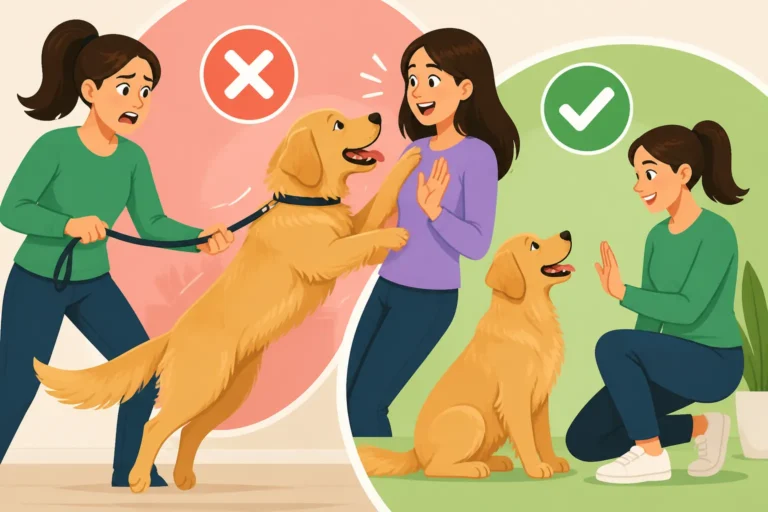
Teaching a Golden Retriever to Sit and Stay
It's incredibly frustrating when you want your Golden Retriever to listen, especially in situations where a simple "sit" or "stay" could prevent chaos or even keep them safe. We've all been there: your beautiful Golden is bounding towards an open door, or eagerly greeting a guest by jumping, and your pleas feel like they're falling on deaf ears. This comprehensive guide is here to walk you through the process of teaching your Golden Retriever these fundamental commands, turning those moments of panic into calm, controlled interactions.
Why "Sit" and "Stay" Are So Important for Your Golden Retriever
Beyond just basic obedience, "sit" and "stay" are truly foundational commands that unlock a whole world of positive communication and safety for your Golden Retriever. Think of them as the building blocks for every other good behavior you want to instill. Without these, managing your enthusiastic companion can feel like herding a very fluffy, very happy, but utterly oblivious, cloud.
Foundation for Good Manners and Safety
Imagine a scenario: you're out for a walk, and suddenly, a squirrel darts across your path. Your Golden, with their strong prey drive, tenses, ready to lunge. A solid "sit" or "stay" can be the difference between a sudden jerk on the leash and a calm, controlled moment where you can regain their attention. These commands aren't just about showing off; they're vital safety nets. They allow you to pause your dog's actions, giving you precious seconds to assess a situation and intervene. Whether it's preventing them from dashing into a street, jumping on an elderly relative, or just making sure they don't help themselves to the dinner off the counter, these commands are your best friends. They teach your Golden to look to you for direction, rather than acting purely on impulse, which is crucial for a breed known for its energy and exuberance. Golden Retriever Temperament and Personality goes into more detail about their natural disposition.
Building Communication and Trust
Teaching "sit" and "stay" isn't just about drilling commands; it's about building a language between you and your Golden. Every successful "sit" followed by a reward, every moment they hold a "stay" and then get praised, reinforces that you are a reliable, positive source of guidance. Your Golden learns that listening to you leads to good things – treats, praise, toys, and affection. This consistent positive reinforcement fosters a deep bond of trust. They learn that when you ask for something, it's not a punishment, but an opportunity for connection and reward. This trust is invaluable, especially as they grow and encounter new, potentially overwhelming situations. A dog who trusts your judgment is far more likely to respond even when highly stimulated.
Getting Started: The Right Tools and Mindset
Before you even begin saying "sit," it's worth taking a moment to gather your supplies and, just as importantly, get your own head in the game. Training isn't a chore; it's an investment in your relationship with your Golden, and approaching it with the right attitude will make all the difference.
Essential Training Supplies
You don't need a professional trainer's arsenal, but a few key items will make your journey much smoother. First and foremost, you'll need high-value treats. These aren't your everyday kibble; we're talking about small, soft, super tasty morsels that your Golden absolutely adores. Think tiny pieces of cooked chicken, cheese, or specialized training treats you can find on Amazon or at your local pet store. The higher the value, the more motivated your Golden will be. Next, a clicker can be an incredibly powerful tool. A clicker acts as a precise marker, telling your dog exactly the moment they performed the desired action. Paired with treats, it creates a clear signal that they've done something right. Many trainers swear by clicker training, finding it speeds up learning significantly. Consider a good quality leash and collar or a well-fitting harness, especially when you start practicing "stay" with a bit of distance and potential for distraction. Finally, having some engaging toys can also be helpful for redirecting attention or as an alternative reward. You might also find courses from platforms like BAXTER & Bella offer structured guides on what supplies you'll need.
Your Role as the Trainer (Patience is Key!)
Your Golden Retriever is smart, eager to please, and generally a joy to train, but they're still dogs, and they have off days just like we do. Patience is not just a virtue in dog training; it's an absolute necessity. Frustration on your part will only confuse and demotivate your dog. Keep your training sessions short, positive, and frequent. Think 5-10 minutes, several times a day, rather than one long, arduous session. End on a high note, even if it means asking for an easy command your dog knows perfectly. This keeps training fun and prevents burnout for both of you. Consistency is also vital. Everyone in the household needs to use the same cues, hand signals, and reward system. If one person allows jumping while another discourages it, your Golden will be utterly confused. Remember, your Golden wants to make you happy, but they need clear, consistent guidance to understand what that actually means. Golden Retriever Training Sessions That Are Too Long offers more insights into managing your training time effectively.
Step-by-Step: Teaching "Sit" to Your Golden Retriever
"Sit" is often one of the first commands people teach, and for good reason: it's relatively easy for a dog to understand, and it's incredibly useful. Let's break down how to get that fluffy rear end on the floor.
Lure and Reward Technique
This is arguably the easiest and most common way to teach "sit," especially to puppies or dogs new to training. Start with your Golden Retriever standing in front of you. Hold a high-value treat close to their nose. Now, slowly move the treat up and back over their head, towards their tail. As the treat moves back, their nose will follow it, and their rear end will naturally lower to the ground. The moment their bottom touches the floor, immediately say "Yes!" or "Good!" (or click your clicker if you're using one) and give them the treat. Practice this several times in a row, making sure the reward is instant. The speed of your reward is crucial here; it helps your dog connect the action (sitting) with the positive outcome (the treat). Don't worry about the verbal cue "sit" yet; we just want them to understand the motion.
A little tip: if your Golden tries to jump up for the treat as you lure it back, simply lower the treat slightly and move it back again. You want to guide them, not force them. Keep your movements smooth and gentle. After a few successful repetitions, take a short break to keep your dog engaged and prevent them from getting bored or frustrated.
Adding the Verbal Cue and Hand Signal
Once your Golden is consistently sitting with the lure, it's time to add the verbal command and a hand signal. As your Golden is standing, say "Sit" clearly and calmly. Immediately after saying the word, perform the lure motion (moving the treat over their head) as before. The instant their rear hits the floor, mark the behavior with your "Yes!" or click, and deliver the treat. Repeat this many, many times. The goal is for your Golden to associate the word "sit" with the action of sitting.
For a hand signal, you can use the same motion of lifting your hand (with or without a treat initially) up and back over their head. Many people also use a simple open palm gesture, moving it downwards. Choose a hand signal that is distinct and easy for you to remember and perform consistently. After several sessions, you'll notice your Golden starting to respond to just the verbal cue or hand signal, even before you complete the lure motion. This is a huge win!
Phasing Out the Lure and Generalization
The next step is to gradually fade out the lure. Start by making your lure motion smaller and less obvious. Instead of moving the treat all the way over their head, just make a small gesture with your empty hand (the hand signal) while saying "Sit." If your Golden sits, reward them generously. If they don't, go back to using a slightly more obvious lure for a few repetitions before trying the smaller gesture again. The goal is for your dog to respond to the verbal cue and hand signal alone.
Once your Golden is reliably sitting on cue in one location, it's time to generalize the command. This means practicing "sit" in different rooms of your house, then in your backyard, and eventually in more distracting environments like a park or on a busy sidewalk. Each new environment is like learning the command all over again, so be prepared to go back to a more obvious lure or higher-value treats initially. This process builds a strong understanding that "sit" means "sit" everywhere, not just in the kitchen. When to Start Training a Golden Retriever Puppy emphasizes the importance of starting these foundational commands early.
Mastering "Stay": Adding Duration and Distance
Once your Golden has a reliable "sit," you can introduce "stay." This command teaches impulse control and is arguably even more valuable for safety and good manners. It's a bit more challenging, so be ready with extra patience and plenty of delicious treats.
Introducing the "Stay" Cue
Start with your Golden Retriever in a solid "sit" position. Face them, holding a treat. Say "Stay" clearly, and then immediately take one small step back. If your Golden remains in the "sit" position, step back to them, say "Yes!" or click, and give them the treat. Do not call them to you; you want to reward them for staying in place. If they get up, simply reset them in a "sit" and try again. Don't scold them; just make it clear that getting up means no treat.
Repeat this several times, always stepping back to them to reward. The initial goal is just for them to understand that "stay" means to hold their position for a brief moment. Keep these initial "stays" very, very short – literally one or two seconds. Always reward them before they break the stay, even if it feels like you're rewarding them for something they were about to do anyway. This builds their confidence in the command.
Gradually Increasing Duration
Once your Golden is consistently holding a "stay" for a second or two while you take one step back, you can start to increase the duration.
Here's a step-by-step progression, always returning to your dog to reward:
- Start with the basics: "Sit," then "Stay." Take one step back, count one second, step back to your dog, "Yes!"/click, treat.
- Two seconds: "Sit," "Stay." Take one step back, count two seconds, step back to your dog, "Yes!"/click, treat.
- Slowly increase: Add one second at a time. If your dog breaks the stay, calmly reset them and go back to a shorter duration where they were successful. It's better to have many short, successful stays than a few long, failed ones.
- Vary the time: Don't always go in predictable increments (1, 2, 3, 4 seconds). Sometimes hold for 3 seconds, then 1, then 5, then 2. This teaches them that "stay" means "stay until I release you," rather than them anticipating a set time.
Remember, the release cue is important. Once you've rewarded them for staying, use a cheerful release word like "Okay!" or "Free!" This tells them the command is over and they can move. This is also a good time for a quick play session or a praise party. Best Treats for Training a Golden Retriever are especially important for keeping motivation high during these more challenging exercises.
Slowly Adding Distance
After your Golden can reliably hold a "stay" for 5-10 seconds in one spot, you can begin adding distance. This builds on the duration training.
- Short distance, short duration: Start with your Golden in a "sit-stay." Say "Stay." Take one step back, hold for a very short duration (1-2 seconds), then return to your dog, "Yes!"/click, treat.
- Increase steps: Once they are solid with one step, try two steps back, then return, reward.
- Combine distance and duration: As they get better, you can gradually combine the two. For example, "Sit," "Stay," take two steps back, wait three seconds, then return, reward.
- Turning away: Eventually, you'll be able to turn your back on your dog for a second or two, then walk around them, always returning to the initial spot to reward before releasing.
Just like with duration, if your Golden breaks the stay, calmly reset them. Don't chase them or get angry; simply bring them back to the original spot, put them in a "sit," and try again with less distance or duration. This prevents them from learning that breaking a stay gets them attention or allows them to avoid the exercise. Always return to the dog to reward the stay, then give your release cue. This prevents your dog from associating the reward with coming to you. Teaching a Golden Retriever to Come When Called is a separate, but equally important, command for safety and recall.
| Step | Goal for "Sit" | Goal for "Stay" | Duration/Distance | Reward Strategy |
|---|---|---|---|---|
| 1: Lure | Golden's rear touches ground | N/A | Instant | Treat + verbal marker (Yes/Click) |
| 2: Cue & Signal | Golden sits on verbal/hand | N/A | Instant | Treat + verbal marker |
| 3: Fade Lure | Golden sits on cue alone | N/A | Instant | Treat + verbal marker |
| 4: Intro "Stay" | Golden holds sit | 1-2 seconds | 1 step back | Treat delivered at dog's position |
| 5: Increase Duration | Golden holds sit | 5-10 seconds | 1 step back | Treat delivered at dog's position |
| 6: Increase Distance | Golden holds sit | 3-5 seconds | 2-3 steps back | Treat delivered at dog's position |
| 7: Generalize | Golden holds sit/stay | Variable | Variable environments | Treat, praise, or toy at dog's position |
Common Challenges and Troubleshooting
Let's be real, dog training isn't always a smooth, linear path. There will be bumps, plateaus, and moments where you feel like your Golden has completely forgotten everything you taught them. This is normal! Understanding common challenges and having strategies to overcome them will save you a lot of headaches.
When Your Golden Just Won't Sit
Sometimes, despite your best efforts with the lure, your Golden might seem clueless or resistant. Here are a few things to consider:
- Is the treat high-value enough? Seriously, if your Golden isn't highly motivated by the treat, they might not bother. Experiment with different options until you find one they can't resist. Small pieces of cooked chicken, cheese, or even liverwurst are often big hits.
- Is your lure clear? Ensure your hand motion is smooth and consistent. If your hand moves too quickly or too slowly, or in an erratic path, your Golden might not understand what you want them to do. The arc over their head should encourage their nose up and back, naturally tucking their rear.
- Are they physically comfortable? If your Golden is showing any signs of discomfort when sitting, such as stiffness or reluctance, it's worth a vet check. While Goldens are prone to Golden Retriever Hip and Elbow Dysplasia Explained, sometimes it's just a growing pain or an awkward position. Rule out any pain issues first.
- Are you waiting too long to reward? The timing of your reward is everything. If you wait even a second too long after their bottom hits the ground, they might not connect the sit with the treat. Be lightning-fast with that "Yes!" or click and the treat delivery.
- Are you asking too much too soon? If your Golden is getting frustrated, you might be pushing too hard. Go back to basics, make it super easy, and end on a positive note. Build up slowly.
Remember, some Goldens are just naturally more rambunctious or a bit more "bouncy" in their initial learning phases. Keep it light, keep it fun, and celebrate every tiny success.
Breaking Stays Early
This is a classic Golden Retriever move – they're just so eager to please (and get that treat!) that they often anticipate the release.
- Go back to basics: If your Golden is breaking stay, it means you've progressed too quickly. Reduce the duration and distance to where they are successful. Get several perfect, short stays, and then slowly build up again.
- Reinforce the "stay" word: As you step away, you can gently repeat "stay" in a low, calm voice, but don't nag. The word is the cue, not a constant reminder.
- The "reset" method: If they break, don't reward or scold. Simply walk them back to the exact spot they were, put them back into a "sit," and calmly say "Stay." Try again, but for a shorter duration or distance. They learn that breaking the stay doesn't get them out of the exercise; it just means they have to do it again.
- Don't lure them back: Never call your dog to you from a "stay" position. The reward comes when you return to them while they are still in position. If you call them, you're teaching them that "stay" means "come when called later," which defeats the purpose.
- Use a consistent release cue: Always use the same release word (e.g., "Okay!" or "Free!") so your Golden knows exactly when the command is finished. Until they hear that word, they should remain.
- Manage distractions: If you're practicing in a busy park and they're breaking, you're setting them up for failure. Start in a quiet room, then a slightly less quiet room, then the backyard, before moving to highly stimulating areas. Gradually introduce distractions.
Dealing with Distractions
Distractions are the ultimate test of any command, and Goldens, for all their intelligence, can be easily sidetracked by a new smell, a passing dog, or a chirping bird.
- Build a solid foundation first: Do not attempt to practice "sit" or "stay" in a highly distracting environment until your Golden is rock-solid on the commands in a quiet, familiar place.
- Gradual exposure: Introduce distractions slowly. Start with very mild distractions, like someone walking quietly past, or a favorite toy placed a distance away. As your Golden succeeds, gradually increase the intensity and proximity of the distractions.
- Increase treat value: When you move to more distracting environments, bring out the absolute best treats you have. Those boiled chicken pieces or tiny hot dog slices might be just the ticket to hold their attention when a squeaky toy is calling their name.
- Shorten sessions: In distracting environments, keep your training sessions even shorter than usual. Five successful "sit-stays" might be enough for a session in the park.
- The "look at me" cue: Teaching a "watch me" or "look at me" command can be invaluable. This teaches your Golden to make eye contact with you on cue, instantly pulling their attention away from distractions. Teaching a Golden Retriever to Sit and Stay builds a crucial foundation for this.
- Use a long line: When practicing "stay" outdoors or in an unfenced area, a long line (a lightweight leash 15-30 feet long, available on Amazon) can be a lifesaver. It allows your dog to feel a sense of freedom but gives you control if they decide to break the stay and bolt. This is especially useful for building Golden Retriever Recall and Off-Leash Reliability.
Remember, every time your Golden successfully ignores a distraction to follow your command, you're building their impulse control and reinforcing their trust in you.
Advanced Applications and Maintaining Skills
Once your Golden Retriever is a "sit" and "stay" superstar, the real fun begins. These aren't just parlor tricks; they're tools that integrate into a well-mannered, happy life together.
Integrating Commands into Daily Life
The true power of "sit" and "stay" comes when you use them consistently in everyday situations. This isn't just about formal training sessions; it's about making these commands a natural part of your routine.
- Mealtime manners: Instead of a chaotic scramble for the food bowl, ask your Golden to "sit" and "stay" while you put their bowl down. Only release them with your "Okay!" cue. This teaches patience and control around high-value resources.
- Doorway etiquette: Before going through any doorway (your front door, the car door, a crate door), ask for a "sit" and "stay." This prevents them from dashing out unexpectedly and gives you control, especially in potentially unsafe situations. It’s also great for greeting guests without a furry missile launching at them.
- Greeting guests: When someone comes to the door, have your Golden "sit" and "stay" a few feet away. This prevents jumping and allows guests to enter calmly. Once the initial excitement has passed, you can release them for a polite greeting.
- Walking on leash: When you stop to chat with a neighbor, or cross a busy street, ask your Golden to "sit-stay" at your side. This keeps them calm and focused on you, rather than pulling or getting tangled. This complements efforts in Loose Leash Walking With a Golden Retriever.
- During grooming: Asking for a "sit" or a short "stay" can make things like brushing, wiping paws, or ear cleaning much easier and less stressful for both of you.
By consistently integrating these commands, you’re not just practicing them; you’re showing your Golden that these behaviors have real-world benefits and create a more harmonious life.
Practicing in New Environments
Your Golden might be a pro at "sit" and "stay" in your living room, but add a new scent, a new sound, or a new person, and it can feel like you're starting from scratch. Generalization is crucial.
- Vary locations: Practice in different rooms of your house, then the yard, then a quiet street, a park at an off-peak hour, and eventually busier locations. Each new environment brings different sights, sounds, and smells that will challenge your dog's focus.
- New surfaces: Practice "sit" and "stay" on grass, pavement, carpet, even bumpy trails. This helps your Golden understand the command applies regardless of where their bottom lands.
- Different people: Have friends or family members ask your Golden to "sit" or "stay" (using your consistent cues). This helps your Golden understand the command applies universally, not just to you.
- Simulate real-life scenarios: Practice at the vet's office (even just in the waiting room), at a pet-friendly store, or a local coffee shop patio. These real-world scenarios are where these commands are most valuable.
- Start easy in new places: When introducing a new, distracting environment, always go back to shorter durations and less distance. Set your Golden up for success, then gradually increase the challenge as they adjust.
This constant exposure helps solidify the commands, making them truly reliable regardless of the situation. It’s why structured programs, such as those offered by BAXTER & Bella, emphasize practicing in diverse settings.
Keeping Training Fun and Engaging
Nobody likes a boring teacher, and dogs are no exception! Golden Retrievers thrive on engagement and positive interaction. Keeping training fun ensures your dog remains eager to learn and participate.
- Mix it up: Don't always start with "sit," then "stay." Vary the order of commands, or intersperse them with play.
- Play games: Turn "sit" and "stay" into games. For example, a game of "Red Light, Green Light" where "stay" is red light and "okay" is green. Or hide-and-seek where your Golden has to "stay" while you hide, then "find" you on release.
- Use different rewards: While high-value treats are primary, don't forget other motivators. Sometimes the reward can be a quick game of fetch, a favorite squeaky toy, or enthusiastic praise and belly rubs.
- Short and sweet: Keep individual training sessions brief (5-10 minutes) to prevent boredom and maintain high motivation. It's better to have several short, positive sessions throughout the day than one long, draining one.
- End on a high note: Always end a training session with a command your Golden knows perfectly, followed by a big reward and lots of praise. This leaves them feeling successful and looking forward to the next session.
- Continue learning: Training isn't a one-time event; it's an ongoing journey. Even well-trained Goldens benefit from refreshers and learning new tricks. Consider Golden Retriever Obedience Titles and Sports like Rally or Agility to keep their minds sharp and build on their foundation. This constant engagement strengthens your bond and keeps your Golden happy and mentally stimulated.
Disclaimer
This article is for general informational purposes only and does not constitute professional advice. Laws, prices and regulations vary by location and change over time. Consult a qualified professional for guidance on your specific situation.