Golden Retriever Puppy Feeding Amounts and Schedule
Bringing home a Golden Retriever puppy is one of life's greatest joys, but it can also be a little overwhelming, especially when you start thinking about their diet. You're probably staring at bags of puppy food, trying to decipher charts, and wondering if you're doing it all correctly to ensure your fluffy new family member grows up healthy and strong. This comprehensive guide is here to walk you through everything you need to know about feeding amounts and schedules for your Golden Retriever puppy, taking the guesswork out of this crucial stage of their development.
The Critical First Steps: What Your Puppy Ate Before You
When you first bring your adorable Golden Retriever puppy home, one of the most important pieces of information you can get from your breeder or rescue organization is exactly what food they were eating. This isn't just a casual detail; it's the foundation for a smooth transition into your home and for maintaining their digestive health during an already stressful period of adjustment. Changing environments, meeting new people, and leaving their littermates is a lot for a tiny pup to handle, and adding a sudden dietary switch can lead to unnecessary stomach upset, which is the last thing you want to deal with.
Why Consistency Matters in Early Days
Think about it from your puppy's perspective. Everything is new. The smells, the sounds, the faces, the routines – it's a whirlwind of sensory input. Their little bodies are also adjusting to new stressors, and their developing digestive systems are quite sensitive. Sticking to the exact food they were on for at least the first week, or even two, allows their system to remain stable while they adapt to everything else. This consistency helps prevent common issues like diarrhea, vomiting, and lack of appetite, which can be alarming for new owners and uncomfortable for the puppy. It also gives you time to observe their normal eating habits and bathroom schedule, establishing a baseline before introducing any changes.
Many reputable breeders will even send you home with a small supply of the food they've been feeding, often enough for a few days to a week. This isn't just a nice gesture; it's a vital part of setting your puppy up for success. If your breeder didn't provide this, make sure to ask them for the exact brand and formula so you can purchase it ahead of time. You might find specialty foods on Chewy or other pet supply retailers. Don't underestimate the power of this simple step in making your puppy's initial days with you as happy and healthy as possible.
Transitioning Food: A Gradual Process
Once your Golden Retriever puppy has settled in and you're ready to switch them to a new food – perhaps one you've researched thoroughly and decided is best for their long-term health, especially a specific Large Breed Puppy Food and Why Goldens Need It – it’s absolutely crucial to do so gradually. A sudden change can still trigger digestive upset, even if your puppy is otherwise well-adjusted. Their gut microbiome needs time to adapt to new ingredients and nutrient profiles. Rushing this process is a recipe for messy accidents and an unhappy pup.
The key to a successful food transition is a slow introduction over 7 to 10 days. Start by mixing a small amount of the new food with their old food. For example, on days 1-3, use 75% old food and 25% new food. Observe your puppy's stool and appetite. If everything looks good, gradually increase the new food while decreasing the old. Days 4-6 might be 50/50. Days 7-9, you'd go to 25% old food and 75% new. By day 10, your puppy should be eating 100% new food without any issues. If at any point you notice soft stools, diarrhea, or vomiting, slow down the process and hold at the current ratio for a few extra days until their system adjusts. This patient approach prevents problems and ensures your puppy's comfort.
How Much to Feed Your Growing Golden Retriever Puppy
Determining the right amount of food for your Golden Retriever puppy isn't an exact science that can be universally applied, as individual puppies have varying metabolic rates, activity levels, and growth spurts. However, there are excellent guidelines that provide a solid starting point. The goal is to provide enough nutrients for healthy growth without overfeeding, which can lead to serious developmental issues for a large breed like a Golden. It’s a balance you’ll continually adjust as they mature.
Understanding Puppy Food Labels and Guidelines
The first place you should always look for guidance on feeding amounts is the bag of your puppy's specific food. Manufacturers invest significant research into formulating their foods and creating appropriate feeding guidelines. These charts typically provide a daily feeding amount based on your puppy's current weight and age. You'll often see recommendations broken down by weight ranges (e.g., 5-10 lbs, 10-20 lbs) and age in months. For instance, a 3-month-old, 20-pound Golden Retriever puppy will have a different recommended intake than a 6-month-old, 45-pound pup.
It’s crucial to remember that these are daily totals. If the bag recommends 3 cups of food per day for your puppy's weight and age, that means 3 cups divided into their meals, not 3 cups per meal. Always read the label carefully for specific instructions, as different brands and formulas have varying calorie densities. A high-quality kibble might require less volume than a lower-calorie alternative to meet the same nutritional needs. Don't be afraid to pull out a measuring cup and be precise; "a handful" isn't going to cut it when it comes to puppy nutrition. For more detailed insights, you can review a Golden Retriever Puppy Feeding Chart by Weight.
Adjusting Portions Based on Growth and Activity
While the food bag provides an excellent starting point, your puppy is an individual, and their needs will evolve. You'll need to learn to "read" your puppy and make subtle adjustments to their food intake. A highly active Golden Retriever puppy who spends hours playing, running, and exploring will naturally burn more calories than a more sedate one who enjoys longer naps. Similarly, puppies going through a growth spurt might suddenly seem hungrier and need a slight increase in their daily intake.
A key indicator of whether you're feeding the right amount is your puppy's body condition. You should be able to easily feel, but not clearly see, their ribs. They should have a discernible waist when viewed from above, and their belly should tuck up slightly when viewed from the side. If their ribs are visible or they look too thin, you might need to increase their food slightly. Conversely, if you can't feel their ribs without pressing, or if they lack a waist, it's time to reduce their portions. Regularly check their weight against growth charts and consult with your vet during The First Vet Visit for a Golden Retriever Puppy to ensure they are on a healthy growth curve. Remember, slow and steady growth is paramount for large breeds to protect their developing joints. How Much to Feed a Golden Retriever Puppy will give you a good base, but keep observing your unique pup!
Establishing a Golden Retriever Puppy Feeding Schedule
One of the most foundational aspects of raising a well-adjusted Golden Retriever puppy, right alongside potty training, is establishing a consistent feeding schedule. This isn't just about providing sustenance; it's about building routine, aiding digestion, and facilitating predictable potty breaks. A haphazard approach to feeding can lead to unpredictable energy levels, digestive upset, and a much harder time with house training.
The Three-Meals-a-Day Routine (and Why it's Important)
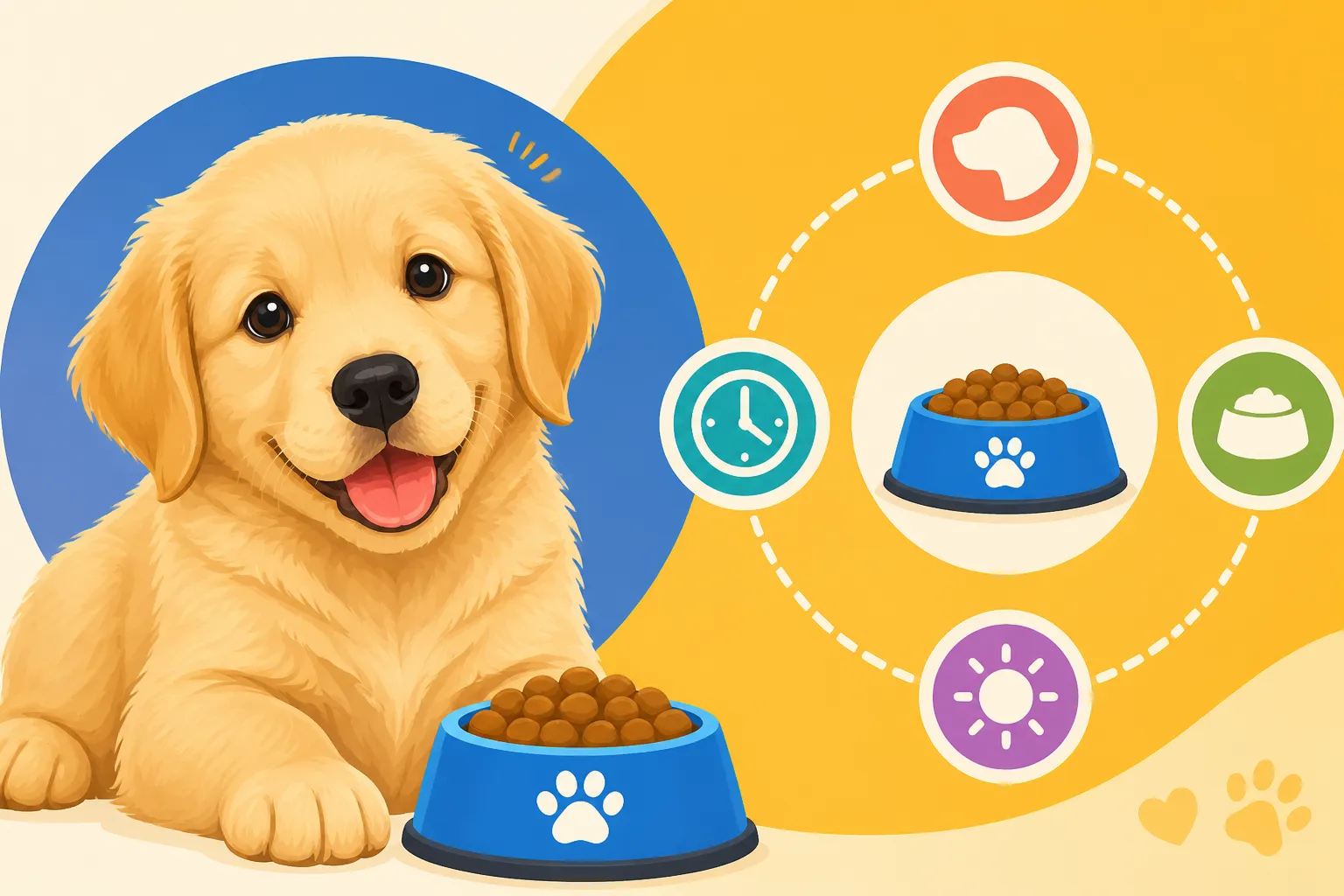
For most Golden Retriever puppies between 8 weeks and 6 months of age, a routine of three meals spaced throughout the day is ideal. This schedule ensures a steady supply of nutrients for their rapid growth and development, preventing large swings in blood sugar that can make a puppy feel either sluggish or overly excitable. Imagine a human child trying to learn and grow on just one giant meal a day – it wouldn't be optimal! For puppies, smaller, more frequent meals are much easier on their developing digestive systems.
A typical schedule might look something like this: breakfast around 7:00 AM, lunch around 12:00 PM, and dinner around 5:00 PM. This leaves a good gap between meals and allows plenty of time for digestion and subsequent potty breaks before bedtime. Providing food at predictable times also helps regulate their bowel movements, making house training significantly easier because you'll know roughly when they'll need to go outside after eating. This predictability helps both you and your puppy feel more secure and in control during a phase that can often feel chaotic. For example, an 8-week-old puppy who has just eaten will almost certainly need to go outside within 15-30 minutes. Sticking to a schedule also means they anticipate mealtime, which can reduce frantic behavior or begging between meals.
Nighttime Feeding and Potty Breaks
As your Golden Retriever puppy gets older, typically around 4-6 months, you might start to wonder about reducing the number of meals. However, it’s generally recommended to stick with three meals a day until at least 6 months, and often up to a year, especially for large breeds. This helps support their immense growth without overtaxing their systems with massive single meals. Once they are a bit older, say 6-12 months, you can gradually transition them to two meals a day. This usually means combining the lunch portion into the breakfast and dinner meals, ensuring the total daily amount remains the same. When a Golden Retriever Drops to Two Meals is a good read for understanding this transition.
When it comes to nighttime, the timing of the last meal is crucial for successful potty training and a good night's sleep for everyone. Aim to feed your puppy their last meal no later than 5:00 PM or 6:00 PM. This allows several hours for digestion and multiple potty breaks before their final bedtime trip outside. For instance, if dinner is at 5:00 PM, they can have potty breaks at 5:30 PM, 7:00 PM, and a final one right before bed around 9:00 PM or 10:00 PM. This drastically reduces the likelihood of nighttime accidents. If your puppy is still very young (8-12 weeks) and struggles to hold it overnight, you might still need one middle-of-the-night potty break, but a consistent feeding schedule will help extend the time between breaks.
Choosing the Right Food for Your Golden Retriever Puppy
The sheer number of dog food brands and formulas on the market can be absolutely dizzying, making the choice for your precious Golden Retriever puppy feel monumental. It's not just about picking any puppy food; it's about selecting the right puppy food, one that supports their specific needs as a large breed with a predisposition for certain joint issues. This decision is one of the most impactful you'll make for their long-term health and well-being.
Large Breed Puppy Formulas: A Non-Negotiable
For Golden Retrievers, feeding a specifically formulated large breed puppy food is not merely a suggestion; it’s a critical component of their healthy development. Unlike regular puppy foods, large breed formulas are designed with a modified calcium-to-phosphorus ratio and a slightly lower calorie density. Why does this matter? Golden Retrievers grow incredibly fast, and this rapid growth, particularly if fueled by too many calories or an imbalance in minerals, can put undue stress on their developing bones and joints. This increased stress can exacerbate conditions like Golden Retriever Hip and Elbow Dysplasia Explained, which are already prevalent in the breed.
The controlled growth rate promoted by large breed puppy food helps ensure their skeletal system develops at a healthy pace, allowing bones and joints to mature properly without being overburdened. When selecting a food, look for terms like "large breed puppy formula" or "large breed growth." Brands like Purina Pro Plan, Royal Canin, Eukanuba, and Hill's Science Diet all offer excellent large breed puppy options. You might find a wide variety of these products available on Amazon for convenient delivery, but always double-check the specific "large breed" designation. Don't fall for the trap of thinking more calories or higher protein means "better" for a growing Golden; it's about the right balance for their unique developmental trajectory.
Understanding Ingredients and Nutritional Needs
Beyond the "large breed" designation, it’s essential to scrutinize the ingredient list and guaranteed analysis on the dog food bag. A high-quality puppy food for a Golden Retriever should feature a named meat source (e.g., chicken meal, lamb meal, salmon) as the first ingredient. This indicates a primary source of animal protein, which is vital for muscle development. Avoid foods where the first ingredient is a vague "meat meal" or a plant-based protein. The guaranteed analysis will tell you the minimum percentages of crude protein and crude fat, and maximum percentages of crude fiber and moisture. For a large breed puppy, you're generally looking for protein in the mid-20s percentage-wise and fat in the mid-teens, but consult your vet for precise recommendations based on your puppy's individual needs.
Also, pay attention to the source of carbohydrates, which provide energy. Whole grains like brown rice, barley, and oats are generally good choices. While grain-free diets became popular, recent research has linked certain grain-free foods to potential heart issues in some breeds, including Golden Retrievers, so it's best to discuss this with your vet. Avoid foods with excessive fillers, artificial colors, or vague "by-products." A food with DHA (docosahexaenoic acid), an omega-3 fatty acid, is a plus, as it supports brain and eye development. Reading a Dog Food Label for a Golden Retriever is an invaluable skill that empowers you to make informed decisions for your pup's nutrition. Remember that ingredients for puppies also need careful Calcium and Phosphorus in a Golden Puppy's Food balancing to prevent problems.
Common Feeding Mistakes and How to Avoid Them
Even with the best intentions, new Golden Retriever puppy owners can inadvertently fall into common feeding traps that, while seemingly harmless, can have significant long-term consequences for their growing dogs. Understanding these pitfalls and actively working to avoid them is just as important as knowing what to feed your puppy.
The Dangers of Overfeeding and Fast Growth
One of the most prevalent and damaging mistakes is overfeeding a Golden Retriever puppy. It's so easy to do; those adorable puppy eyes and bottomless appetites can make you think they're constantly starving! However, allowing a large breed puppy to grow too quickly puts immense strain on their still-developing skeletal system. This rapid, uncontrolled growth is a major contributing factor to the development and severity of orthopedic issues like hip and elbow dysplasia. Imagine trying to build a skyscraper with underdeveloped foundations; it simply won't stand the test of time as well.
An overweight puppy carries extra pounds that stress joints, and the accelerated growth itself can lead to problems like osteochondrosis (OCD), where cartilage fails to develop properly. Instead of aiming for the largest, heaviest puppy, the goal should be steady, moderate growth, allowing bones and joints to mature at their natural pace. Always refer to the feeding guidelines on your specific large breed puppy food, and err on the side of slightly less if your puppy looks pudgy. Regular body condition scoring and vet check-ups are essential. For a deeper dive into this, read Overfeeding a Golden Retriever Puppy and Why Fast Growth Damages a Golden Retriever's Joints. It truly makes a difference in their adult soundness.
Avoiding Free-Feeding and Scraps
Another common mistake is free-feeding, which means leaving a bowl of food out for your puppy to graze on throughout the day. While this might seem convenient, it's problematic for several reasons, especially for a Golden Retriever. First, it makes it impossible to monitor how much your puppy is actually eating, which can lead to overeating and weight gain. Second, it disrupts their potty training schedule; if they're eating whenever they please, their bathroom needs become unpredictable. Third, it can make them finicky eaters, as they never experience true hunger. For more on this, check out Why Golden Retriever Puppies Should Not Free Feed.
Similarly, feeding table scraps, even small ones, can be detrimental. Human food is often too rich, too fatty, or contains ingredients that are outright toxic to dogs. Even seemingly harmless items can cause digestive upset, leading to diarrhea or vomiting. Beyond the health risks, giving in to begging at the table reinforces undesirable behaviors and undermines their regular diet. It also sets a precedent for your Golden to always expect food from your plate, which can be a tough habit to break. Stick to designated puppy food and appropriate training treats, and make mealtime a structured event in their day.
Hydration and Treats: Essential Components of a Healthy Diet
While the focus often falls on the type and quantity of kibble, two other crucial elements of your Golden Retriever puppy's diet deserve equal attention: fresh water and appropriate treats. Neglecting either of these can impact their health, training, and overall well-being.
Ensuring Constant Access to Fresh Water
Water is arguably the single most important nutrient for your Golden Retriever puppy, yet it's often taken for granted. Puppies, like all living beings, need constant access to fresh, clean water to maintain proper bodily functions, regulate temperature, aid digestion, and transport nutrients. Dehydration can quickly become serious in puppies, leading to lethargy, loss of appetite, and other health issues. It's not enough to just fill their bowl once a day; that water can quickly become stale, evaporate, or be contaminated with food bits or dirt.
Always have at least one, and ideally several, bowls of fresh water available in different locations around your home. If you have multiple floors, ensure there's a water bowl on each level. If your puppy is crated, a water bottle can be attached to the crate to ensure hydration, though bowls are preferred when they are out and about. Clean the water bowls daily, washing them thoroughly to prevent bacterial growth. When you're out and about for walks or car rides, always bring a portable water bowl and a bottle of water for your puppy. Just like humans, they need to stay hydrated, especially after playtime or during warmer weather. Observing your puppy's water intake can also be an early indicator of health issues if they suddenly drink significantly more or less.
Smart Snacking: Treats and Training Rewards
Treats are an invaluable tool for training your Golden Retriever puppy, but they must be used wisely to avoid contributing to overfeeding or upsetting their digestive system. It’s easy to get carried away with how many treats you give during a training session or just for being cute. However, those calories add up quickly! When choosing treats, look for small, low-calorie options. Many puppy-specific training treats are designed to be tiny and palatable. You can also break larger treats into smaller pieces to make them last longer and reduce calorie intake.
Consider using a portion of their daily kibble as training rewards. This is an excellent strategy because it ensures they're getting familiar nutrition and reduces the overall caloric impact of treats. If you're using higher-value treats for specific training challenges, remember to account for those calories in their daily food allowance. Brands like Zuke's Mini Naturals or even freeze-dried liver (which can be easily broken into tiny pieces) are popular choices for effective, lower-calorie rewards. Puzzle toys, readily available from retailers like Ollie and Chewy, which dispense small amounts of kibble, are another fantastic way to engage their minds without overfeeding. Always avoid treats with artificial sweeteners, especially Xylitol, which is highly toxic to dogs. Smart treat usage can boost your training success without compromising your puppy's health.
When Your Golden Retriever Puppy Transitions to Adult Food
The day will come when your rambunctious Golden Retriever puppy isn't quite so little anymore, and you'll need to consider switching them from puppy food to an adult formula. This isn't a hard and fast date on the calendar, but rather a developmental milestone that requires observation and careful timing. Rushing the transition or delaying it too long can both have drawbacks.
Signs Your Puppy is Ready for the Switch
Most Golden Retrievers are ready to transition from large breed puppy food to adult large breed dog food between 12 and 18 months of age. For some, especially slower-maturing males, it might even be closer to 24 months. The key is that their growth plates should be largely closed, and they should be reaching their near-adult height. You'll typically notice that their intense growth spurts have slowed down significantly, and they are starting to "fill out" rather than just grow taller.
One of the most important indicators is the lack of noticeable weight gain despite maintaining the same food intake. If your puppy is still growing rapidly, their nutritional needs are higher, and puppy food supports that. However, once growth slows, the higher calorie and nutrient density of puppy food can lead to unwanted weight gain, which, as we discussed, is detrimental to their joints. Your veterinarian is your best resource here. During routine check-ups around the 12-18 month mark, they can assess your Golden's growth, body condition score, and joint health, and advise you on the optimal time to make the switch. Pay attention to signs such as When a Golden Retriever Moves to Adult Food to prepare yourself.
The Importance of a Gradual Transition
Just like when you first brought your puppy home and changed their food, the transition to adult food must be gradual. This isn't a one-day event; it's a process designed to protect your Golden's digestive system from upset. A sudden switch can lead to diarrhea, vomiting, or a reluctance to eat the new food, none of which you want to experience with a dog of Golden Retriever size!
Plan for a transition period of at least 7 to 10 days, if not two weeks, especially if your Golden has a sensitive stomach. Start by mixing 25% new adult food with 75% old puppy food for a few days. If their stools remain firm and their appetite is good, move to a 50/50 mix for another few days. Gradually increase the adult food percentage while decreasing the puppy food until they are fully on the new formula. Observe your dog closely during this time. Any signs of digestive distress mean you should slow down the transition and perhaps hold at the current ratio for an extra day or two. This patient approach ensures their system adapts smoothly and they continue to thrive. You can learn more about Switching a Golden Retriever's Food Without Upset for a seamless process.
Special Considerations for Golden Retriever Puppy Feeding
While general guidelines cover most Golden Retriever puppies, sometimes you encounter unique challenges or situations that require a bit more specific attention. Not every puppy is a textbook eater, and sometimes minor digestive issues pop up that need a thoughtful approach.
Managing Picky Eaters and Food Aversions
It might seem contradictory given their reputation, but sometimes Golden Retriever puppies can be a bit picky. Perhaps they're stressed, feeling under the weather, or simply not enthused by a particular food. If your puppy suddenly turns up their nose at mealtime, first rule out any underlying health issues with a vet visit. Once health is cleared, consider strategies to make mealtime more appealing. Sometimes, simply warming their kibble slightly with a bit of warm water can enhance the aroma and make it more enticing. Adding a small amount of low-sodium chicken broth (ensure it contains no onion or garlic!) or a vet-approved food topper can also help.
Avoid the temptation to offer an endless variety of human foods or constantly switch kibble brands. This can inadvertently reinforce picky eating, teaching your puppy that if they hold out long enough, something better will come along. Offer the food for 15-20 minutes, then pick it up until the next scheduled meal. They will learn to eat when food is available. Some Golden Retrievers prefer wet food, which can be mixed in small amounts with dry kibble. Just be mindful of the calorie content to prevent weight gain. Remember, a healthy puppy will not starve themselves, and consistency is key to breaking picky habits.
Addressing Upset Stomachs and Dietary Sensitivities
Puppies, with their developing digestive systems, can be prone to occasional upset stomachs. This can manifest as loose stools, diarrhea, or even vomiting. If these symptoms are severe, persistent, or accompanied by lethargy, fever, or pain, contact your vet immediately. However, for mild, transient upset, a bland diet can often help. Boiled, plain chicken (no skin or bones) mixed with plain white rice is a classic go-to. This provides easily digestible protein and carbohydrates, allowing their stomach to settle. Feed small amounts frequently over a day or two, then gradually reintroduce their regular food using the slow transition method.
Some Golden Retrievers can develop dietary sensitivities or allergies, which might present as chronic digestive issues (loose stools, gas) or skin problems (itching, hot spots, ear infections). If you suspect a food sensitivity, your vet might recommend a food trial with a novel protein or hydrolyzed protein diet. This involves feeding a specialized, hypoallergenic diet exclusively for several weeks to see if symptoms improve. It’s a dedicated process, but it can provide immense relief for a puppy suffering from chronic discomfort. Always work closely with your veterinarian to diagnose and manage any ongoing digestive or allergic issues, as self-diagnosing can delay proper treatment.
| Age Range (Approx.) | Meals Per Day | Total Daily Food (Cups)* | Key Considerations |
|---|---|---|---|
| 8-12 Weeks | 3 | 1.5 – 3 cups | Small, frequent meals; high growth; potty training focus |
| 3-6 Months | 3 | 2.5 – 4.5 cups | Rapid growth phase; increasing activity levels |
| 6-12 Months | 2-3 | 3 – 5 cups | Growth tapering, filling out; monitor body condition |
| 12-18 Months | 2 | Transition to adult food | Final growth, nearing maturity |
*Note: Total daily food amount is a general estimate. ALWAYS refer to your specific large breed puppy food's packaging for precise recommendations based on your puppy's current weight and age, and adjust based on individual activity level and body condition.
Disclaimer
This article is for general informational purposes only and does not constitute professional advice. Laws, prices and regulations vary by location and change over time. Consult a qualified professional for guidance on your specific situation.