The First Vet Visit for a Golden Retriever Puppy
Bringing a new Golden Retriever puppy home is a whirlwind of excitement, adorable fluff, and endless tail wags. But amidst all the joy, there’s often a quiet anxiety about ensuring your new family member starts life on the healthiest paw possible. That crucial first vet visit can feel daunting, full of unknowns and important decisions. This comprehensive guide will walk you through exactly what to expect, why each step is vital, and how to prepare for a smooth, positive experience, setting your Golden puppy up for a lifetime of well-being.
Why That First Vet Visit Is So Crucial for Your Golden Puppy
Many new puppy parents feel a mix of excitement and apprehension for that first vet visit. It's not just about getting a quick once-over; it's the foundation for your Golden's entire health journey. This initial appointment is far more than a simple check-up; it's a critical step in ensuring your puppy is healthy, free from immediate threats, and on the right track for proper development.
Establishing a Baseline for Lifelong Health
Think of this first visit as laying down the blueprint for your puppy's future health records. Your veterinarian will perform a thorough physical examination, which is much more detailed than anything you might have done at home. They'll meticulously check everything from the tip of your Golden's nose to the end of their wagging tail. This includes inspecting their eyes for clarity, checking their ears for signs of infection, listening intently to their heart and lungs for any murmurs or abnormal sounds, and palpating their abdomen to ensure internal organs feel healthy. They’ll also examine your puppy's teeth and gums, assess their coat and skin for parasites or irritations, and gently manipulate their joints to detect any early signs of lameness or discomfort.
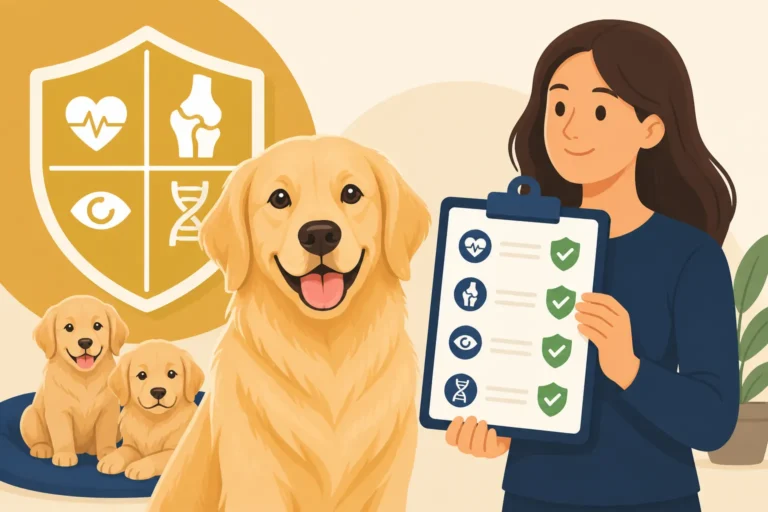
For Golden Retrievers, specifically, this baseline is incredibly important. This breed is known for certain genetic predispositions, such as Heart Conditions Golden Retrievers Are Born With like subaortic stenosis, and joint issues such as hip and elbow dysplasia. While these conditions might not be fully apparent in a young puppy, an experienced vet can sometimes detect subtle indicators or discuss what to watch for as your puppy grows. This early assessment allows your vet to understand your puppy’s starting point, making it easier to identify any changes or concerns as they develop. It also opens the door for proactive discussions about genetic tests your breeder may have performed, or those you might consider in the future to understand your puppy's full genetic picture.
Kicking Off Essential Vaccinations and Parasite Control
One of the most immediate and vital purposes of that first vet visit is to initiate your Golden Retriever puppy's vaccination schedule and ensure they are protected against common, often life-threatening, diseases. Puppies are born with some immunity from their mothers, but this wanes over their first few weeks, leaving them vulnerable. The core vaccines, such as Distemper, Adenovirus (Hepatitis), Parvovirus, and Parainfluenza (often combined into a DAPP or DHPP shot), are absolutely critical. These are typically given in a series of boosters every 3-4 weeks until your puppy is around 16 weeks old, as detailed in a typical Golden Retriever Puppy Vaccination Timeline.
Beyond the core vaccines, your vet will discuss non-core but highly recommended vaccinations, especially for a Golden Retriever. Given their love for the outdoors, water, and exploring, vaccines like Leptospirosis and Lyme disease are often strongly advised to protect against bacterial infections commonly found in soil, water, and from tick bites. Of course, the Rabies vaccine is also a legal requirement in most places and usually given at a slightly older age, typically around 12-16 weeks, depending on local regulations.
Parasite control is another cornerstone of puppy health established at this first visit. Your vet will almost certainly ask for a fresh stool sample to check for internal parasites like roundworms, hookworms, whipworms, coccidia, and giardia. Many puppies come with these from their mothers, and while breeders often deworm, a vet check confirms effectiveness and guides further treatment if needed. Additionally, starting your puppy on a year-round flea, tick, and heartworm preventative is essential. These aren't just nuisances; heartworm disease, transmitted by mosquitoes, is a serious and potentially fatal condition that is much easier to prevent than treat. Your vet can recommend the best and safest products, such as those from reputable brands like Bravecto or Interceptor Plus, tailored to your puppy's age, weight, and your local environment.
What to Expect During Your Golden Retriever Puppy's First Appointment
Walking into the vet's office for the first time with your new Golden bundle can be a mix of excitement and a little bit of anxiety – for both you and your puppy! Knowing what's coming can help ease those nerves. This visit is designed to be comprehensive, covering not just immediate health concerns but also setting the stage for their long-term well-being.
The Comprehensive Physical Examination
The physical examination your Golden Retriever puppy undergoes will be incredibly thorough. It usually starts with recording your puppy's weight, which is important for tracking growth and for accurate medication dosages. Then, the vet will systematically examine your puppy, often from head to tail. They’ll gently palpate your puppy’s head, feeling for any anomalies, and then move to their eyes, checking for discharge, cloudiness, or abnormalities that could indicate conditions like early signs of Progressive Retinal Atrophy in Golden Retrievers or other eye diseases. Their ears will be carefully inspected for signs of infection, mites, or excessive wax, a common concern for floppy-eared breeds like Goldens. The vet will look inside their mouth, assessing gum color, counting baby teeth, and checking for any retained baby teeth or bite issues.
A critical part of the exam involves listening to your puppy’s heart and lungs with a stethoscope. The vet will be listening for heart murmurs, which could be an indicator of congenital heart conditions such as Subaortic Stenosis in Golden Retrievers. While not all murmurs are serious, especially in young puppies, any findings will lead to a discussion about monitoring or further diagnostics. They’ll palpate your puppy’s abdomen, feeling for organ size, tenderness, and any unusual masses. Importantly, the vet will also pay close attention to your Golden’s musculoskeletal system. They’ll gently flex and extend each limb, feeling the joints to detect any early signs of pain, laxity, or stiffness that could hint at developing Golden Retriever Hip and Elbow Dysplasia Explained. While official clearances for these conditions aren't done until a dog is older, this initial check helps flag any potential issues for early intervention or monitoring.
Beyond the physical checks, your vet will also gather a lot of information from you. They'll ask about your puppy's background – where they came from (breeder or rescue), what their parents' health clearances looked like (if known), and any health issues observed in littermates. They'll inquire about your puppy’s diet, asking what they’re currently eating and discussing the importance of proper nutrition for large breed puppies to support healthy bone growth and prevent fast growth that can contribute to joint issues. Questions about your puppy’s elimination habits, energy levels, and general behavior are also standard. This holistic approach ensures your vet understands your Golden as a whole, not just a collection of body parts.
Discussing Diet, Training, and Future Care
After the physical exam and initial vaccinations, your vet will shift to a broader discussion about raising a healthy Golden Retriever. Nutrition is a big topic. For Golden Retrievers, specifically, choosing the right large breed puppy food is paramount. Your vet will explain why these specialized formulas are designed with controlled calcium and phosphorus levels and appropriate calorie density to support slow, steady growth, which is vital for preventing skeletal problems in fast-growing, large breeds. They'll guide you on appropriate Golden Retriever Puppy Feeding Amounts and Schedule and what to look for when Choosing Dog Food for a Golden Retriever.
The conversation will also touch upon early training and socialization. Your vet can provide resources or recommendations for local puppy classes, emphasizing the importance of positive reinforcement and early exposure to various sights, sounds, and experiences to help your Golden develop into a well-adjusted adult. They’ll discuss crucial topics like house training, crate training, and basic manners, offering tips to get you started on the right foot.
Future care will be a significant part of the discussion. This includes scheduling follow-up vaccination boosters, the timing and benefits of Spaying and Neutering Timing for Goldens, and the importance of microchipping for identification should your Golden ever get lost. Your vet will outline a preventative care schedule for the first year, including regular deworming, parasite control, and subsequent wellness exams. This is also an excellent time to talk about financial preparedness for potential health issues. Pet insurance, such as plans offered by Healthy Paws, can be a lifeline for unexpected illnesses or accidents. Your vet team can often provide general information about how pet insurance works and when it might be beneficial to enroll, helping you budget for your Golden’s future healthcare needs. They understand that while we all hope for the best, having a plan for the worst is a responsible part of pet ownership.
Preparing for a Smooth and Positive Vet Experience
Your Golden Retriever puppy's first vet visit can be a big event for both of you. A little preparation can go a long way in making it a positive and less stressful experience, setting the tone for future visits. Remember, early positive experiences are key to fostering a dog that isn't fearful of the vet.
Gathering Essential Information and Supplies
Before you even step out the door, take some time to gather all the necessary paperwork and items. This typically includes:
- Breeder or Rescue Records: This is perhaps the most critical piece of information. Bring any documentation from where you got your puppy, including their birth date, vaccine history (dates and types of vaccines given), deworming schedule, and any health clearances for the parents (OFA, PennHIP, eye, heart certifications, or results from Golden Retriever Genetic Tests Worth Running). This helps your vet avoid repeating vaccinations and gives them a complete picture of your puppy's early care.
- Stool Sample: Your vet will almost certainly ask for a fresh fecal sample to check for internal parasites. Collect a small amount (about a tablespoon) in a clean container or a Ziploc bag just before you leave for the appointment. The fresher, the better!
- List of Questions: It’s easy to get overwhelmed or forget things once you’re in the exam room. Write down any questions or concerns you have about feeding, training, behavior, health, or anything else about your new puppy. No question is too small.
- High-Value Treats: Bring plenty of small, soft, irresistible treats that your puppy loves. These can be used to create positive associations with the vet, distract them during procedures, and reward good behavior.
- Favorite Toy: A comfort toy can sometimes help an anxious puppy feel more secure.
- Secure Carrier or Leash and Collar: Ensure your puppy is safely contained for the car ride and while in the clinic. Even if they’re small enough for a carrier, having them on a leash is crucial for navigating the waiting room and exam areas.
Thinking about what your puppy has been eating is also helpful. Know the brand, specific formula (e.g., large breed puppy), and how much you’re feeding them daily. This information is vital for the vet to assess their nutritional intake.
Acclimating Your Puppy to the Vet Environment
Making the vet’s office a positive place starts even before the first official visit. For many puppies, car rides can be stressful. Start with short, positive car trips to fun places like a park, gradually introducing the car as a source of good things. When it comes to the vet, don't just spring it on them. If possible, ask your vet if you can do a "happy visit" where you just pop in, let your puppy get treats from the staff, sniff around, and leave without any pokes or prods. This builds positive associations.
During the actual visit, keep your demeanor calm and reassuring. If you’re nervous, your puppy will pick up on it. Use your high-value treats constantly. Reward your puppy for calm behavior in the waiting room, for allowing the vet to touch them, and for any procedures they endure. Let the vet and vet techs handle your puppy gently, but don't be afraid to speak up if your puppy seems overly distressed or if you feel something isn't right. Many vets are happy to take a moment to allow your puppy to calm down.
It's also beneficial to practice handling your puppy at home. Get them used to having their paws touched, their ears looked into, their mouth opened, and their tail lifted. Pair these experiences with praise and treats so that when the vet does it, it’s not a completely new or scary sensation. This proactive socialization to handling, combined with positive reinforcement, helps to build confidence and makes future vet visits much smoother for everyone involved.
Common Concerns and When to Act
Even after a successful first vet visit, the journey of puppy parenthood is full of questions and occasional worries. Knowing what's normal, what to watch out for, and when to call your vet is part of responsible Golden Retriever ownership.
Understanding Puppy Vaccination Schedules
The initial vaccination series is one of the most important aspects of your puppy's early health care. It's often misunderstood why puppies need multiple rounds of the same vaccine. This is because the maternal antibodies they receive from their mother can interfere with the effectiveness of vaccines. The booster shots are given to catch the puppy at a point when maternal immunity has waned, ensuring their own immune system can respond effectively to the vaccine.
Here’s a general timeline, though your vet will tailor it specifically for your Golden:
| Age of Puppy | Recommended Vaccinations & Care |
|---|---|
| 6-8 Weeks Old | First DAPP (Distemper, Adenovirus, Parvovirus, Parainfluenza) booster. Fecal exam and initial deworming. Discuss flea, tick, and heartworm prevention. |
| 9-11 Weeks Old | Second DAPP booster. First Leptospirosis vaccine (if recommended). Continue parasite prevention. |
| 12-14 Weeks Old | Third DAPP booster. Second Leptospirosis vaccine. First Lyme vaccine (if recommended). Rabies vaccine (often given at this stage, but can be later based on local laws). |
| 16 Weeks Old | Final DAPP booster. Second Lyme vaccine. Ensure Rabies is administered if not already. |
| 6 Months Old | Spay/neuter discussion and scheduling. |
| Annually | DAPP booster (every 1-3 years depending on vaccine type), Rabies booster (every 1-3 years), Leptospirosis and Lyme boosters (annually if recommended). |
It's important to understand that your puppy isn't fully protected until they've received all their booster shots, typically around 16 weeks of age. During this period, it's wise to limit their exposure to unknown dogs and areas that could harbor diseases, like dog parks, to minimize infection risk.
After vaccinations, it’s normal for puppies to experience mild side effects, such as slight lethargy, a decreased appetite, or soreness at the injection site. These usually resolve within 24-48 hours. However, if you notice severe symptoms like persistent vomiting, diarrhea, facial swelling, hives, or difficulty breathing, contact your vet immediately. These could indicate a more serious allergic reaction.
Spotting Potential Health Issues Early
Even with the best preventative care, Golden Retrievers can face certain health challenges. Knowing what to look for can help you identify potential issues early, leading to better outcomes.
Keep a close eye on your Golden puppy’s gait and activity levels. If you notice any persistent lameness, difficulty rising, or reluctance to play or use stairs, it could be an early sign of joint issues. While When Golden Retriever Hip Dysplasia First Shows often isn't until later, subtle discomfort can sometimes be observed in younger pups. Similarly, persistent coughing, especially after exercise, could indicate a respiratory or cardiac issue. Pay attention to their digestive health; chronic diarrhea or vomiting could signal food sensitivities, parasites, or other gastrointestinal problems. Also, routinely check their skin and coat for unusual Lumps on a Golden Retriever That Need a Vet, excessive itching, redness, or hair loss, which could point to allergies or skin infections, common in Goldens.
The beauty of consistent veterinary care is that your vet can help you navigate these potential concerns. Don't hesitate to call if something seems off with your puppy, even if it feels minor. Often, an early diagnosis makes treatment more effective and less invasive. This is where having a robust pet insurance plan, like one from Healthy Paws, truly comes into its own. If your Golden suddenly develops an unexpected illness or has an accident, pet insurance can significantly ease the financial burden of diagnostic tests, medications, and potential surgeries, allowing you to focus on getting your beloved companion the best care without stressing over exorbitant bills. Thinking ahead about How Big an Emergency Fund a Golden Retriever Needs or investing in insurance can provide immense peace of mind. Regular, consistent communication with your veterinarian is your best tool for ensuring your Golden Retriever lives a long, healthy, and happy life by your side.
Disclaimer
Please remember that the information provided in this article is for educational purposes only and should not replace professional veterinary advice. Always consult with a qualified veterinarian for any health concerns or before making any decisions about your Golden Retriever's care.