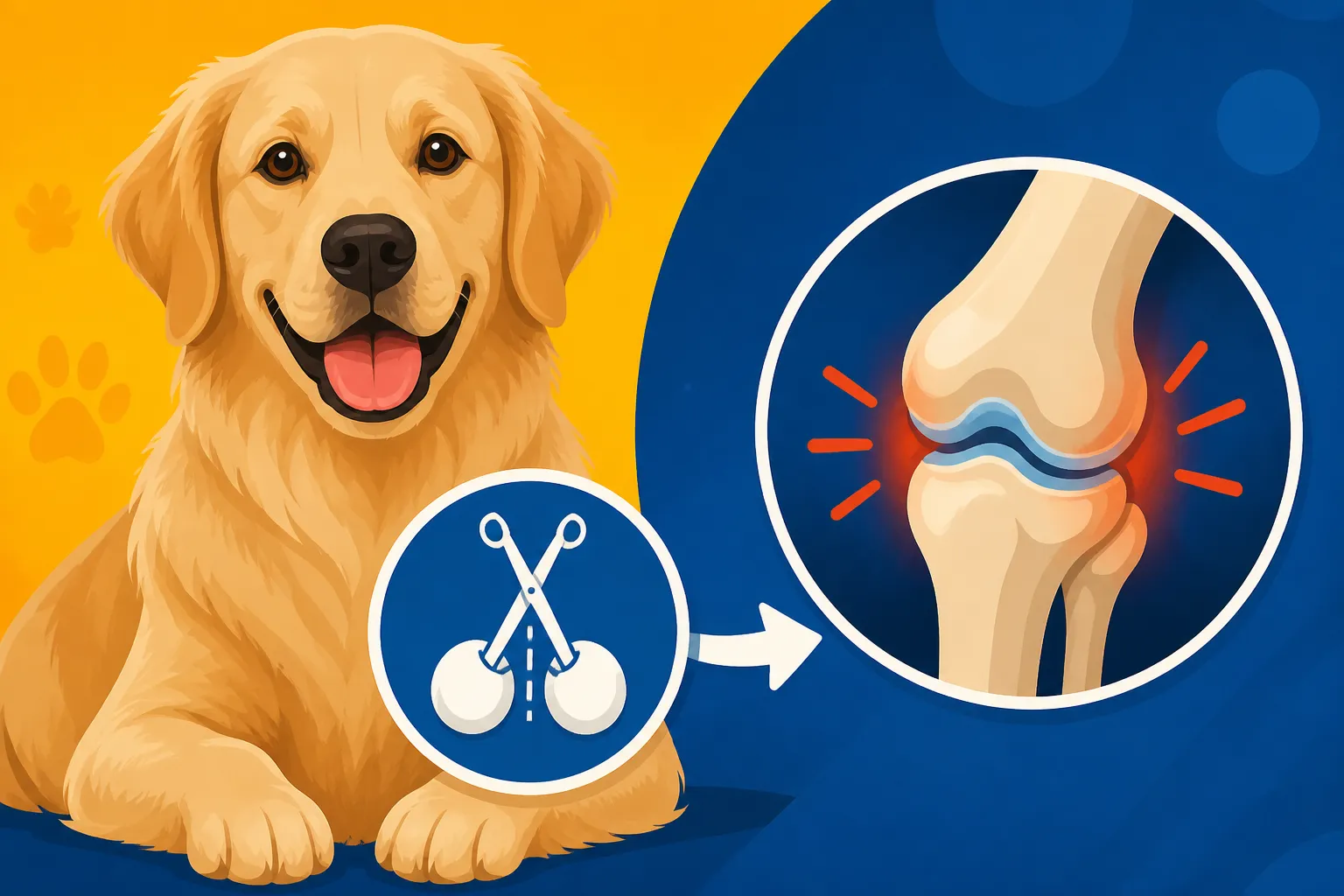
Neutering a Male Golden Retriever and Joint Risk
Deciding when—or even if—to neuter your beloved male Golden Retriever is one of those big life choices that can feel overwhelming. For years, we were given fairly consistent advice, but more recent research, especially concerning large breeds, has thrown a real wrench into what we thought we knew. This guide is here to walk you through the nuances of neutering a male Golden, focusing on the critical link between timing and long-term joint health, so you can make the most informed decision for your furry family member.
The Timing Dilemma: Why Neutering a Male Golden Retriever Isn't a Simple Decision
When you first bring home that adorable, fluffy Golden Retriever puppy, conversations about neutering often come up during those initial vet visits. For decades, the standard recommendation for most dogs was to neuter between six months and a year of age. It was seen as a responsible move for population control, to prevent certain cancers, and to curb some unwanted behaviors. However, as we learn more about canine physiology and long-term health, particularly for larger breeds like our Goldens, the "right" age has become a much more complex discussion, often leading to a lot of confusion and anxiety for dedicated owners.
Traditional Neutering Age and Its Rationale
Historically, the push for early neutering – usually before a dog reached sexual maturity, somewhere around six months old – was driven by several well-intentioned factors. Veterinary schools and practitioners emphasized the role of neutering in preventing accidental pregnancies, which is crucial for reducing the number of dogs in shelters. Beyond population control, early neutering was also believed to significantly reduce the risk of certain health issues, such as testicular cancer and some prostate problems. From a behavioral standpoint, it was thought that neutering early could prevent or lessen undesirable traits like marking territory, aggression towards other intact males, and the urge to roam in search of a mate. For many years, this advice was almost universally accepted, and pet owners were encouraged to follow it without much question, believing it was unequivocally the best path for their dog's health and societal well-being.
Emerging Research on Large Breed Joint Health
The landscape of veterinary advice has been evolving, and recent studies, particularly those focusing on large and giant breeds, have begun to challenge the long-held beliefs about early neutering. One of the most influential bodies of research comes from the University of California, Davis, and studies supported by the Morris Animal Foundation, including the ongoing Golden Retriever Lifetime Study. These investigations have revealed a concerning correlation: male Golden Retrievers neutered before their growth plates have fully closed often show a significantly higher incidence of certain orthopedic conditions.
These studies suggest that the sex hormones (like testosterone) produced by the testes play a vital role in the proper development and closure of growth plates in bones. When these hormones are removed too early, the bones may grow for a longer period, resulting in altered limb proportions and potentially weaker joint structures. This can increase the lifetime risk of debilitating conditions that are already prevalent in Golden Retrievers. Owners grappling with this information often feel torn, wanting to do what's best for their dog but confused by conflicting advice. This new understanding doesn't suggest not to neuter, but rather encourages a careful consideration of when to do it, making the decision much more nuanced than it used to be.
Understanding the Joint Risks in Male Golden Retrievers
It's heartbreaking to see our active, joyful Goldens struggle with mobility issues. As a breed, Golden Retrievers are unfortunately predisposed to several orthopedic conditions, and recent research indicates that the timing of neutering can play a significant role in either mitigating or exacerbating these risks. Understanding the biological mechanisms behind these connections is key to making an informed decision.
The Role of Hormones in Bone Development
Think of your Golden Retriever puppy's skeleton as a house under construction. At the ends of their long bones, there are areas called "growth plates" (or physes). These are essentially cartilage factories, continually producing new bone tissue that lengthens the bones. As a Golden Retriever matures, these growth plates eventually "close" or ossify, meaning they turn into solid bone, signaling the end of vertical growth. This process is heavily influenced by sex hormones like testosterone.
When a male Golden is neutered, especially before his growth plates have naturally closed, the source of these crucial hormones is removed. Without the hormonal signals to stop growing, the long bones can continue to grow for a longer period than they otherwise would. This doesn't necessarily mean your Golden will become a giant; rather, it often results in disproportionate growth, where the bones become longer and sometimes thinner than genetically intended. This altered bone structure can put abnormal stresses on developing joints, affecting their alignment and stability. It's a bit like building a house with slightly off-kilter beams – it might stand, but it's more prone to structural problems down the line. This is a critical factor when considering the appropriate age for procedures like neutering, as disrupting this delicate hormonal balance can have lasting effects.
Specific Orthopedic Concerns Linked to Early Neutering
For male Golden Retrievers, the disruption of hormonal balance from early neutering has been specifically linked to an increased incidence of several serious orthopedic issues. These are conditions that can cause chronic pain, limit mobility, and require expensive, lifelong management or surgery.
- Hip Dysplasia: This is a condition where the hip joint doesn't form properly, leading to a loose fit between the ball (femoral head) and socket (acetabulum). Studies suggest that early neutering may increase the risk and severity of hip dysplasia because the altered bone growth can lead to a shallower socket and looser ligaments, making the joint more unstable. This improper fit causes friction and wear over time, leading to arthritis. Owners often don't see the signs of this until later in life, but the foundation for the problem can be laid early. For more detailed information on this common issue, you might want to read about Golden Retriever Hip and Elbow Dysplasia Explained.
- Elbow Dysplasia: Similar to hip dysplasia, this involves abnormal development of the elbow joint. It's actually a complex condition encompassing several different developmental abnormalities that lead to joint incongruity. Early neutering can contribute to elbow dysplasia through the same mechanism of abnormal bone growth and development, leading to an ill-fitting joint that wears prematurely. You can learn more about Elbow Dysplasia in Golden Retrievers for deeper insights.
- Cranial Cruciate Ligament (CCL) Tears: The CCL in dogs is similar to the ACL in humans – it's a critical ligament in the knee that provides stability. Research has shown a higher incidence of CCL tears in dogs, including Golden Retrievers, that were neutered early. The theory is that the increased bone length and altered joint angles can place greater strain on the ligament, making it more susceptible to tearing, often during routine activity. A torn CCL is a painful injury that almost always requires costly surgery to repair and a long recovery period.
These conditions are not only painful for your dog but also represent a significant financial commitment for owners, even with robust pet insurance like a plan from Healthy Paws. Understanding these specific risks allows owners to have a more informed discussion with their veterinarian about the optimal timing for neutering.
Weighing the Pros and Cons: A Holistic View for Your Golden
Deciding on neutering isn't just about joint health, though that's a huge piece of the puzzle for Golden Retrievers. It's a comprehensive decision that involves balancing potential orthopedic risks with other health benefits, behavioral changes, and your personal lifestyle. It's about looking at your Golden as a whole and making the best choice for his entire life, not just one aspect of it.
Potential Health Benefits of Neutering
While the focus on joint risk from early neutering is significant, it's equally important to remember the well-established health benefits that neutering can offer. These benefits are often why veterinarians traditionally recommended the procedure:
- Elimination of Testicular Cancer Risk: This is perhaps the most straightforward benefit. Since the testes are removed during neutering, your male Golden Retriever will have absolutely no risk of developing testicular cancer, which can occur in intact males, particularly as they age.
- Reduced Risk of Certain Prostate Conditions: Intact male dogs are prone to a condition called benign prostatic hyperplasia (BPH), an enlargement of the prostate gland, which is influenced by testosterone. BPH can lead to difficulty urinating or defecating. Neutering significantly reduces the likelihood of BPH and other testosterone-driven prostate issues, though it doesn't eliminate the risk of all prostate problems (like prostate cancer, which is rare but can occur in both intact and neutered males).
- Reduced Risk of Perineal Hernias: These hernias occur when pelvic or abdominal contents protrude into the perineal region (around the anus), often due to weakening of the pelvic diaphragm muscles, which can be influenced by hormones. Neutering can lower the risk of these painful and often surgically corrected conditions.
- Prevention of Unwanted Pregnancies: This is a huge benefit for responsible pet ownership and community animal welfare. Neutering ensures your Golden doesn't contribute to the problem of pet overpopulation, no matter how careful you think you are.
These benefits are very real and contribute to a Golden Retriever living a longer, healthier life, which is why the conversation needs to be balanced. It's about finding the sweet spot where you maximize these benefits while minimizing potential risks.
Behavioral Considerations and Neutering
Beyond health, many owners consider neutering to influence their Golden Retriever's behavior. While neutering can certainly impact behavior, it’s not a magic bullet and its effects are often nuanced, particularly if done after certain behaviors have become deeply ingrained.
- Roaming and Escape Attempts: Intact males are strongly driven by the urge to find a mate, which often manifests as a strong desire to roam and escape enclosures. Neutering typically reduces this drive, making them less likely to wander. If your Golden has a strong instinct to explore, ensuring your yard is properly fenced is always a good idea.
- Marking Behavior: Testosterone can fuel territorial urine marking. While neutering can reduce or eliminate marking, especially if done before the behavior becomes a habit, older dogs who have been marking for a long time might continue the behavior out of habit.
- Aggression Towards Other Dogs: Intact males can sometimes display aggression towards other intact males, driven by competition for mates or dominance. Neutering can help reduce hormonally-driven aggression, but it won't fix aggression stemming from fear, poor socialization, or past trauma. Proper socialization for a Golden Retriever puppy is always crucial, regardless of neutering status.
- Mounting/Humping: This behavior can be sexually driven, but also occurs due to excitement, stress, or play. Neutering can reduce sexually-driven mounting, but non-sexual humping may continue.
- Hyperactivity: It's a common misconception that neutering will automatically calm down a hyper dog. While some hormonal energy may decrease, a Golden Retriever's energy level is largely dictated by breed, individual temperament, and adequate exercise. Don't expect neutering to be a substitute for proper training and regular physical and mental stimulation.
It's crucial to understand that genetics and early training play a massive role in shaping a Golden's personality. While neutering can influence certain behaviors, it cannot override established habits or deeply rooted temperament traits. A balanced view acknowledges both the potential benefits and the limitations.
Alternative Options and Delayed Neutering
Given the evolving understanding of joint health in large breeds, many Golden Retriever owners are exploring options beyond the traditional early neuter. The concept of "delayed neutering" or "late neutering" has gained significant traction, focusing on allowing a male Golden to fully mature physically before undergoing the procedure.
- Delayed Neutering: This involves waiting until your male Golden Retriever is at least 18-24 months old, often longer, to ensure that his growth plates have fully closed and he has reached skeletal maturity. By waiting, you allow the natural production of hormones to complete its work in bone development, theoretically reducing the risk of conditions like hip and elbow dysplasia and CCL tears. This approach aims to strike a balance: allowing the physical benefits of intact status for longer, while still gaining the health and behavioral benefits of neutering later. However, this means managing an intact male during his rambunctious adolescence, with all the associated responsibilities (managing heat cycles of other dogs, preventing roaming, potential marking, etc.).
- Vasectomy: This is a surgical procedure that sterilizes a male dog by severing the vas deferens, preventing sperm from traveling. Crucially, a vasectomy leaves the testes intact, allowing the dog to continue producing testosterone and other hormones. This means the dog retains the hormonal benefits for skeletal development while being unable to sire puppies. It’s an option that directly addresses the joint risk concern. While not as common as full neutering, some veterinarians offer this. However, a vasectomized dog will still exhibit intact male behaviors (like marking, roaming drive, attraction to females in heat), and will still be at risk for testicular cancer and prostate issues.
- Chemical Castration: This involves implanting a device (like Suprelorin, though not widely available or used for permanent castration in the US for this specific purpose) that temporarily suppresses testosterone production. It's often used for temporary infertility or to gauge behavioral changes before permanent neutering. While it offers a reversible way to assess behavioral responses, it still stops testosterone production, which might impact growth plate closure if used too early and for an extended period. It’s more often used in Europe and for specific cases, rather than a routine alternative for young Goldens in North America.
Consulting with your veterinarian to discuss these options and determine the best timing and approach for your individual Golden Retriever is paramount. Every dog is unique, and what works for one might not be ideal for another.
Here's a quick comparison of the common approaches:
| Feature | Early Neutering (6-12 months) | Delayed Neutering (18-24+ months) | Vasectomy (Hormone-Sparing) |
|---|---|---|---|
| Joint Health Risk | Potentially increased | Potentially reduced | Potentially reduced (hormones retained) |
| Testicular Cancer Risk | Eliminated | Reduced (due to later age, but present) | Present |
| Prostate Issues (BPH) | Reduced | Reduced (due to later age, but present) | Present |
| Unwanted Litters | Eliminated | Eliminated | Eliminated |
| Roaming/Marking | Potentially reduced | May persist longer | Likely persists |
| Aggression (Hormonal) | Potentially reduced | May persist longer | Likely persists |
| Recovery | Generally quicker, less invasive | May be more involved due to size | Similar to neuter (less invasive) |
| Cost | Standard neuter | Standard neuter | Often similar to or slightly more |
Making an Informed Decision for Your Golden Retriever
Ultimately, the decision of when to neuter your male Golden Retriever rests with you, the owner. It’s a significant choice with long-term implications, and it’s completely normal to feel a bit overwhelmed by the conflicting information out there. The key is to gather all the facts, consider your individual dog, and collaborate closely with your veterinary team.
Consulting with Your Veterinarian
Your veterinarian is your most valuable resource in this decision-making process. Don't be afraid to schedule a dedicated appointment just to discuss neutering timing. Come prepared with questions, and don't hesitate to share any research you've done. A good vet will be open to discussion, present all sides of the argument, and help you understand the specific risks and benefits for your Golden Retriever, taking into account his genetics, activity level, and your lifestyle.
It's perfectly acceptable to ask your vet about their approach to neutering large breeds. Some vets are very up-to-date on the latest research and will advocate for delayed neutering, while others may still lean towards earlier intervention based on traditional practice or other factors. If you feel your vet isn't fully addressing your concerns about joint health, it's always okay to seek a second opinion from another veterinarian, perhaps one who specializes in orthopedic health or a veterinary college. This ensures you have a comprehensive understanding before making your final decision. Remember, you are your dog's advocate.
What to Consider When Choosing a Neutering Age
There’s no universal "perfect" age for every single Golden Retriever. Instead, think about a combination of factors specific to your dog and your family situation:
- Your Golden's Individual Development: When are his growth plates likely to close? This typically occurs between 18 and 24 months, but can vary. X-rays can sometimes confirm closure, though it's often inferred by age. Observing his growth patterns is important; a slow and steady growth rate is ideal for joint health. You can also monitor for signs of When a Golden Retriever's Growth Plates Close.
- Genetic Predisposition to Joint Issues: Does your Golden come from lines known for hip or elbow dysplasia? Checking the health clearances a breeder must show for the parents can give you valuable insight. If he has a higher genetic risk, delaying neutering might be even more crucial. Learning about Golden Retriever Genetic Tests Worth Running can also be helpful.
- Behavioral Maturity: Is your Golden showing signs of behavioral maturity or is he still very much a puppy? While hormones drive some behaviors, others are learned. If he's already displaying strong marking or roaming behaviors, an earlier neuter might be considered to prevent these from becoming entrenched, though the joint risks remain.
- Your Ability to Manage an Intact Male: Being an intact male comes with responsibilities. Can you prevent him from breeding? Do you have a secure yard? Are you prepared for potential marking behavior inside your home or increased attention from other dogs while on walks? If you have intact female dogs in your household, managing heat cycles and preventing accidental breeding becomes a significant concern.
- Lifestyle and Activity Level: An extremely active Golden who will participate in sports might benefit more from the fullest possible skeletal development before neutering. On the other hand, a more sedate pet might have slightly less stress on their joints, making the timing a slightly less critical factor. Keep in mind that Golden Retriever Weight and Joint Damage is a critical factor, regardless of neutering status, for all Goldens.
- Pet Insurance: Understanding what your pet insurance covers for orthopedic conditions is also a good idea. Providers like Healthy Paws are there for unexpected vet bills, but pre-existing conditions are usually excluded. It’s another factor in the overall cost of a Golden Retriever's care.
By carefully considering all these points and discussing them openly with your vet, you can arrive at a decision that feels right for you and offers your wonderful Golden Retriever the best chance at a long, healthy, and happy life.
Disclaimer
This article is intended for informational purposes only and does not constitute veterinary advice. Always consult with a qualified veterinarian for any health concerns or before making any decisions about your pet's medical care, including neutering. Individual situations may vary, and your veterinarian can provide the best guidance for your specific Golden Retriever.