Physical Therapy for a Golden Retriever With Bad Hips
There's nothing quite as heartbreaking as watching your vibrant, joyful Golden Retriever struggle with what should be simple movements. When those tell-tale signs of discomfort—a slight limp, hesitation before jumping, or a wobbly gait—start pointing to hip issues, the worry can be overwhelming. You want to ease their pain and give them the best quality of life possible, and often, that leads owners down the path of understanding how physical therapy can be a game-changer for a Golden Retriever with bad hips. This guide is here to walk you through what to expect, the different therapies available, and how you can support your beloved companion right at home.
Understanding the Role of Physical Therapy in Canine Hip Health
Hip dysplasia is a notoriously common ailment in Golden Retrievers, a condition where the hip joint doesn't form correctly, leading to a loose fit between the ball and socket. This poor fit causes friction, pain, and eventually, degenerative joint disease or arthritis. It’s a progressive condition, meaning it often gets worse over time, and it’s a source of immense frustration for dedicated Golden owners. While the thought of managing this condition might feel daunting, physical therapy (PT) offers a beacon of hope, providing non-invasive ways to significantly improve your dog's comfort and mobility.
Why Vets Recommend Physical Therapy for Hip Dysplasia
You might automatically think of surgery when you hear about hip dysplasia, but for many Goldens, especially in the early stages or for those not suitable for surgery, physical therapy is the primary course of action. Your veterinarian or a certified canine rehabilitation therapist will recommend PT because it directly addresses the core issues contributing to your dog's discomfort.
The goal isn't to "fix" the malformed joint, as PT can't magically reshape bones. Instead, it focuses on strengthening the muscles surrounding the hip joint, making them better able to stabilize the joint and reduce painful movement. Think of it like building a strong muscular corset around a wobbly joint. This improved muscle support helps reduce inflammation, alleviate pain, and increase your Golden's range of motion, allowing them to move with greater ease and less discomfort. Beyond pain relief, PT also helps slow down the progression of secondary arthritis that inevitably develops in dysplastic hips. By maintaining muscle mass and joint flexibility, we can often delay the need for more invasive interventions and ensure a better quality of life for your furry friend for longer. You can learn more about this condition in our comprehensive guide, Golden Retriever Hip and Elbow Dysplasia Explained.
The Initial Assessment: What to Expect at a Canine PT Clinic
When you first bring your Golden Retriever to a specialized canine physical therapy clinic, expect a very thorough, head-to-tail examination, much more in-depth than a typical vet check-up. The rehabilitation therapist, often a veterinarian or physical therapist with specialized training in canine rehabilitation, will want to understand everything about your dog's history, lifestyle, and the specific challenges they're facing.
The assessment typically begins with a detailed history. They'll ask about when you first noticed the Golden Retriever Hip Dysplasia Symptoms by Age, how it's progressing, what activities are difficult, and any medications your dog is currently taking. Then comes the physical evaluation. This involves watching your Golden walk and run (gait analysis) to identify any lameness, stiffness, or compensatory movements. They'll gently palpate (feel) your dog's muscles and joints, checking for tenderness, muscle atrophy (wasting), or swelling. They'll also perform goniometry, which involves measuring the precise range of motion in each joint, and assess your dog's overall muscle mass and strength. Don't be surprised if they ask you to send videos of your dog moving at home. This holistic approach ensures that the physical therapy plan they create is completely personalized to your Golden's unique needs, challenges, and your specific goals as an owner.
Common Physical Therapy Techniques for Golden Retrievers with Hip Dysplasia
Canine physical therapy employs a wide range of techniques, blending hands-on approaches with specialized equipment, all designed to target different aspects of hip dysfunction. It’s not a one-size-fits-all solution; your therapist will select the best combination for your Golden.
Water-Based Therapies: Hydrotherapy and Underwater Treadmill
For many Goldens with hip issues, water-based therapies, often collectively called hydrotherapy, are a true blessing. The magic of water lies in its buoyancy. When your dog is in water, their body weight is significantly reduced, which means less stress on their painful hip joints while they move. This allows them to exercise muscles that might be too painful to use on land.
The underwater treadmill is a particularly effective tool. Your Golden walks on a treadmill inside a tank filled with warm water, usually up to their shoulders. The warm water itself helps soothe stiff joints and promote circulation, while the controlled environment of the treadmill allows the therapist to precisely adjust speed and water level. This helps your dog re-learn a natural gait, build strength and endurance without excessive impact, and improve range of motion in a safe, controlled manner. Swimming in a dedicated therapeutic pool can also be highly beneficial for overall cardiovascular fitness and muscle development. However, therapists often prefer the underwater treadmill for hip dysplasia specific treatment because it allows for more controlled, purposeful movement and avoids the twisting motions that can sometimes occur with uncontrolled swimming, which might exacerbate hip pain. When considering these advanced treatments, it's worth noting that many pet insurance plans, like those from Healthy Paws, recognize the value of rehabilitation therapies and often cover the costs, making these beneficial treatments more accessible for owners.
Manual Therapies and Therapeutic Exercises
Beyond the water, hands-on manual therapies are crucial. Your therapist might use gentle massage techniques to relieve muscle tension and pain that often accompanies hip dysplasia. Joint mobilizations, or passive range of motion (PROM) exercises, involve the therapist gently moving your dog's legs through their full range of motion. This helps maintain joint flexibility, prevents stiffness, and improves circulation without your dog actively bearing weight, which can be immensely helpful for stiff or arthritic joints. Stretching, both passive and active, is also incorporated to improve flexibility and prevent muscle contractures.
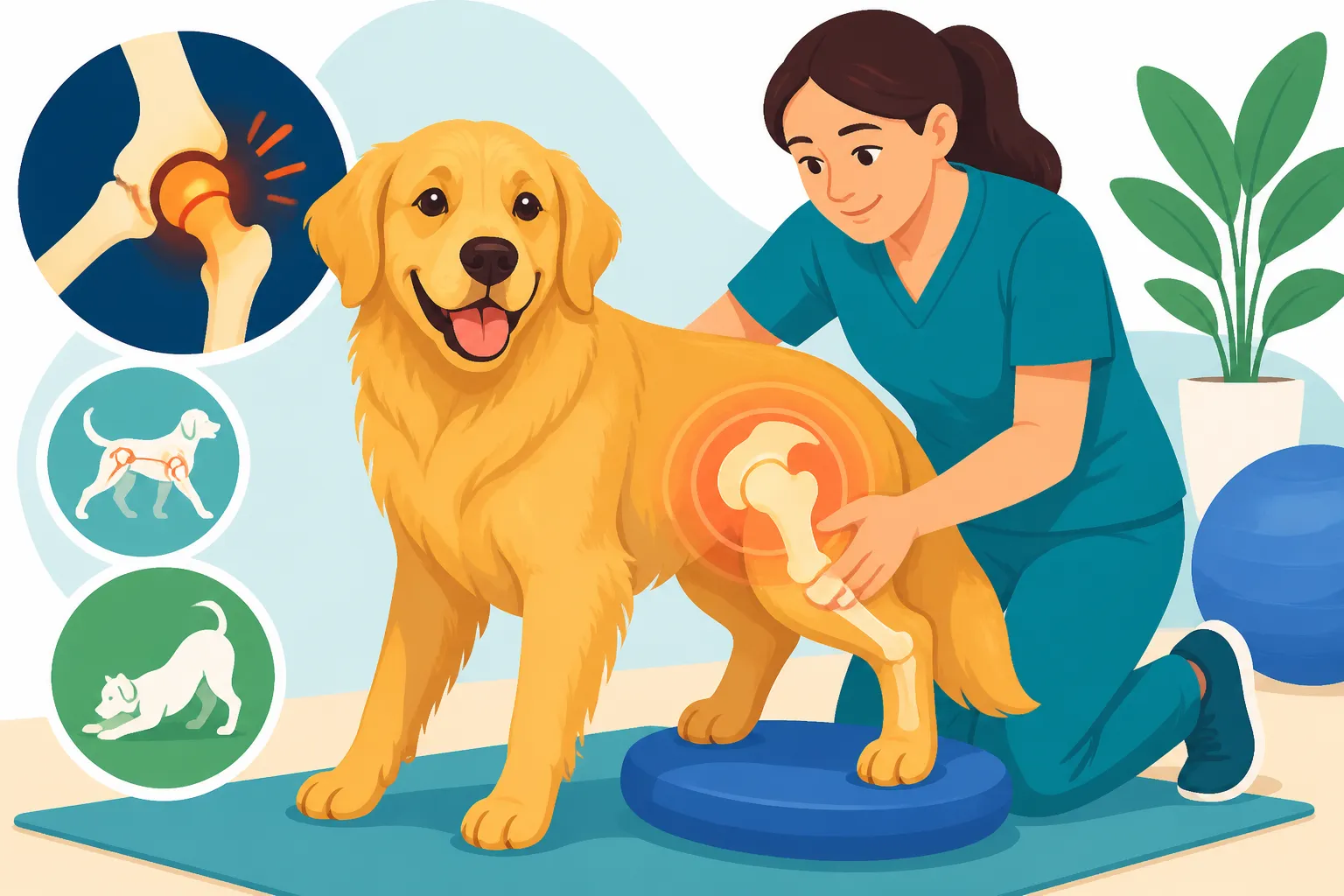
Then there are therapeutic exercises, which are performed both in the clinic and taught to you for home practice. These are specifically chosen to strengthen the core muscles, hindquarter muscles, and improve balance and proprioception (awareness of body position). Examples include using balance boards or wobble cushions to challenge stability, walking over cavaletti poles (low obstacles) to encourage higher leg lifts and active range of motion, and simple "sit-to-stand" exercises to build hindquarter strength. Each exercise has a specific purpose, carefully chosen to address your Golden's individual deficits and build functional strength.
Advanced Modalities: Laser, Ultrasound, and Electrotherapy
Modern veterinary physical therapy also utilizes several advanced modalities that can provide significant pain relief and aid in tissue healing.
Low-level laser therapy (LLLT), also known as cold laser therapy, uses specific wavelengths of light to penetrate tissues without generating heat. This therapy works at a cellular level to reduce pain and inflammation, accelerate tissue repair, and improve circulation. It's often used before or after other exercises to make them more comfortable for your dog. Therapeutic ultrasound is different; it uses sound waves to create deep tissue heating. This can increase circulation, relax muscles, reduce scar tissue, and promote healing in deeper structures. Neuromuscular electrical stimulation (NMES) involves applying small electrical currents to specific muscle groups. This gentle stimulation causes muscles to contract, helping to prevent muscle atrophy (wasting) in areas that aren't being used fully due to pain or weakness, and it can also help re-educate muscles that have "forgotten" how to fire correctly. Finally, pulsed electromagnetic field (PEMF) therapy uses electromagnetic fields to reduce pain and inflammation and stimulate cellular repair, often used for chronic pain and to support bone healing. These modalities are often part of a comprehensive plan and can make a noticeable difference in your Golden's comfort levels.
Establishing an Effective Home Exercise Program
While clinic sessions are invaluable, the real backbone of your Golden's physical therapy success will be the consistent effort you put in at home. It’s where daily dedication truly shines and makes a lasting impact on their quality of life.
The Importance of Consistency and Proper Form
Think of physical therapy like any other rehabilitation program: it requires consistency. You can't just go to a few sessions and expect miracles. Your Golden's therapist will develop a detailed home exercise program (HEP) tailored specifically for them. This program is not just a suggestion; it's a vital part of their recovery and long-term management strategy.
However, consistency must be paired with proper form. Doing exercises incorrectly can be counterproductive and even cause further injury or pain. Your therapist will spend time demonstrating each exercise, explaining the nuances, and often providing videos or written instructions. Don't be shy about asking for repeated demonstrations or clarification. It's much better to ask questions than to inadvertently hurt your Golden. Regular check-ins with your therapist are crucial so they can assess your Golden’s progress, adjust the intensity or type of exercises, and ensure you're performing everything correctly. Remember, the goal is gradual improvement and sustained well-being, not a quick fix.
Practical Exercises You Can Do at Home
Your home exercise program will likely include a mix of controlled movements and gentle strengthening. Here are some common exercises you might be taught:
- Passive Range of Motion (PROM) Exercises: Gently flexing and extending each hip joint without your dog's active participation. This helps maintain flexibility and lubricate the joints. Always move slowly and stop if your dog shows any signs of discomfort.
- Controlled Leash Walks: Short, frequent walks on soft, even surfaces (like grass) are better than one long, strenuous walk. Avoid running or jumping initially. This builds endurance and muscle strength safely.
- Sit-to-Stands: Have your Golden sit squarely, then ask them to stand. Repeat this motion slowly and controllably. This is a fantastic way to build strength in the hindquarters. Start with a few repetitions and gradually increase as they get stronger.
- Weight Shifts: While your Golden is standing, gently push on their side, encouraging them to shift their weight from one hind leg to the other. This improves balance and engages stabilizing muscles.
- Cookie Stretches: Hold a treat to encourage your Golden to stretch their neck towards their hip, then towards their flank, then between their front legs. These gentle stretches improve flexibility through the spine and hips.
Before starting any exercise, ensure your Golden is warmed up with a short, easy walk. And always end with a gentle cool-down. These simple, consistent efforts at home, alongside professional guidance, are critical for Managing Golden Retriever Hip Dysplasia Without Surgery.
Environmental Modifications to Support Your Golden
Your home environment plays a significant role in your Golden's comfort and safety, especially with bad hips. Making a few thoughtful adjustments can greatly reduce strain on their joints and prevent potential injuries.
First and foremost, address slippery surfaces. Hardwood, tile, or laminate floors can be treacherous for a dog with weak or painful hips, leading to slips and falls that exacerbate their condition. Lay down non-slip rugs, carpet runners, or yoga mats in high-traffic areas and wherever your dog rests. Second, consider mobility aids. If your Golden struggles to get onto the couch or bed, invest in dog ramps or pet stairs. We've talked about this before in Do Golden Retriever Puppies Need Ramps?, and the need for them certainly extends to older or dysplastic dogs. For getting in and out of the car, a sturdy ramp is essential. Orthopedic beds are also a must. These specialized beds provide superior support for aching joints, cushioning pressure points, and ensuring your dog gets truly restful sleep, which is vital for recovery and overall well-being.
Finally, managing your Golden's weight is paramount. Even a few extra pounds can significantly increase the load on already compromised hip joints, accelerating wear and tear and increasing pain. Work closely with your vet to ensure your Golden maintains an ideal body condition. This ties directly into How Extra Pounds Damage a Golden Retriever's Hips and Golden Retriever Weight and Joint Damage. If your dog needs a bit of help getting up or down stairs, or just navigating uneven terrain, a supportive harness with a handle, such as those from Ruffwear or Help 'Em Up, can give you the leverage to assist them without straining your back or putting pressure on their hips.
Here's a quick overview of common exercises:
| Exercise Type | Description | Benefits |
|---|---|---|
| Passive Range of Motion | Gently move your dog's hip and knee through their natural range of motion while they are lying down. | Maintains joint flexibility, lubricates cartilage, improves circulation, reduces stiffness. |
| Controlled Leash Walks | Short, slow walks on soft, even surfaces (e.g., grass) with a snug, supportive harness. | Builds endurance and muscle strength in a safe, low-impact manner. |
| Sit-to-Stands | Encourage your dog to sit squarely, then stand up, repeating slowly and in a controlled manner. | Strengthens hindquarter muscles (quads, glutes), improves balance. |
| Weight Shifts | With your dog standing, gently push on their side to encourage shifting weight from one hind leg to the other. | Improves balance, strengthens core and stabilizing hip muscles. |
| Cavaletti Poles | Walk your dog slowly over low poles (or brooms) placed on the ground, encouraging high leg lifts. | Improves active range of motion, proprioception, and hind leg strength, enhances coordination. |
| Balance Boards/Cushions | Have your dog stand on an unstable surface for short periods, supervised. | Engages core and stabilizing muscles, improves balance and body awareness, builds confidence. |
Always consult with your vet or a certified canine rehabilitation therapist before starting any new exercise program.
Long-Term Management and Lifestyle Adjustments
Living with a Golden Retriever who has hip dysplasia means committing to long-term care. Physical therapy is a powerful tool, but it works best when integrated into a broader strategy that includes medical, nutritional, and environmental considerations.
Integrating PT with Other Management Strategies
Physical therapy is rarely a standalone treatment. It forms a crucial part of a holistic management plan for hip dysplasia. Your vet will likely discuss dietary supplements, such as glucosamine, chondroitin, and omega-3 fatty acids, which can help support joint health and reduce inflammation. These aren't magic bullets, but they can be beneficial alongside other therapies.
Pain management is another cornerstone. Your veterinarian might prescribe non-steroidal anti-inflammatory drugs (NSAIDs) during flare-ups, or other medications like gabapentin for neuropathic pain. You can find more details on this in Pain Medication a Vet Prescribes for Goldens. Regular veterinary check-ups are essential, ideally twice a year, as detailed in Why Goldens Need Vet Visits Twice a Year. These visits allow your vet to monitor the progression of the disease, adjust medications, and catch any new issues early. Some owners also explore complementary therapies like acupuncture or chiropractic care, which can offer additional relief for some dogs.
It’s also wise to prepare for the financial aspect of ongoing care. Long-term physical therapy, medications, supplements, and potential future diagnostics can add up. Many dog owners find that pet insurance, especially plans that cover rehabilitation, can be a lifesaver. Companies like Healthy Paws, for instance, offer comprehensive coverage that can significantly reduce the out-of-pocket costs for chronic conditions like hip dysplasia, allowing you to focus on your Golden’s well-being without constant financial worry.
Recognizing Changes and Adjusting the Plan
Hip dysplasia is a progressive condition, which means what works today might need adjustment tomorrow. It's vital for you, as your Golden's primary caregiver, to be vigilant in observing their behavior and mobility. Look for subtle changes: are they slowing down more on walks? Hesitating more before getting up? Are there new Signs a Golden Retriever Is in Pain? Perhaps they've developed a new "bunny hopping gait" when running, a common sign of hindquarter discomfort.
Regular communication with your rehabilitation therapist and veterinarian is key. Your PT program, medication regimen, and even environmental modifications will need to evolve as your Golden ages and the arthritis progresses. The goal is to consistently maintain their comfort and mobility for as long as possible. Don't be discouraged if you need to try new exercises or medications; it’s all part of the journey of managing a chronic condition. You can gain more insights into this aspect in our article Slowing Arthritis Down in an Older Golden Retriever. As time goes on, you might also consider additional Mobility Aids for an Aging Golden Retriever to further support their changing needs.
When to Consider Surgical Options
While physical therapy is incredibly effective for managing hip dysplasia, there are certainly cases where surgery becomes the best, or even necessary, option. If your Golden's pain is severe, despite consistent PT and medication, or if their quality of life is significantly compromised, your vet and rehabilitation specialist might recommend surgical intervention.
There are several surgical procedures available, ranging from femoral head ostectomy (FHO), where the femoral head is removed to eliminate bone-on-bone friction, to total hip replacement (THR), which involves replacing the damaged joint with artificial components. Total Hip Replacement offers the best chance for complete pain relief and return to normal function but is a major surgery with a significant recovery period.
It's important to understand that even when surgery is chosen, physical therapy remains critical. Pre-operative physical therapy helps strengthen muscles, improve range of motion, and prepare your dog for surgery, leading to a smoother recovery. Post-operative physical therapy is absolutely essential for optimal healing, muscle rebuilding, and regaining full function after surgery. Without a dedicated rehabilitation program, the success of even the most advanced surgical procedures can be significantly compromised. For a deeper dive into these options and their associated costs, refer to our guide on Golden Retriever Hip Surgery Costs and Options.
Disclaimer
This article is for general informational purposes only and does not constitute professional advice. Laws, prices and regulations vary by location and change over time. Consult a qualified professional for guidance on your specific situation.