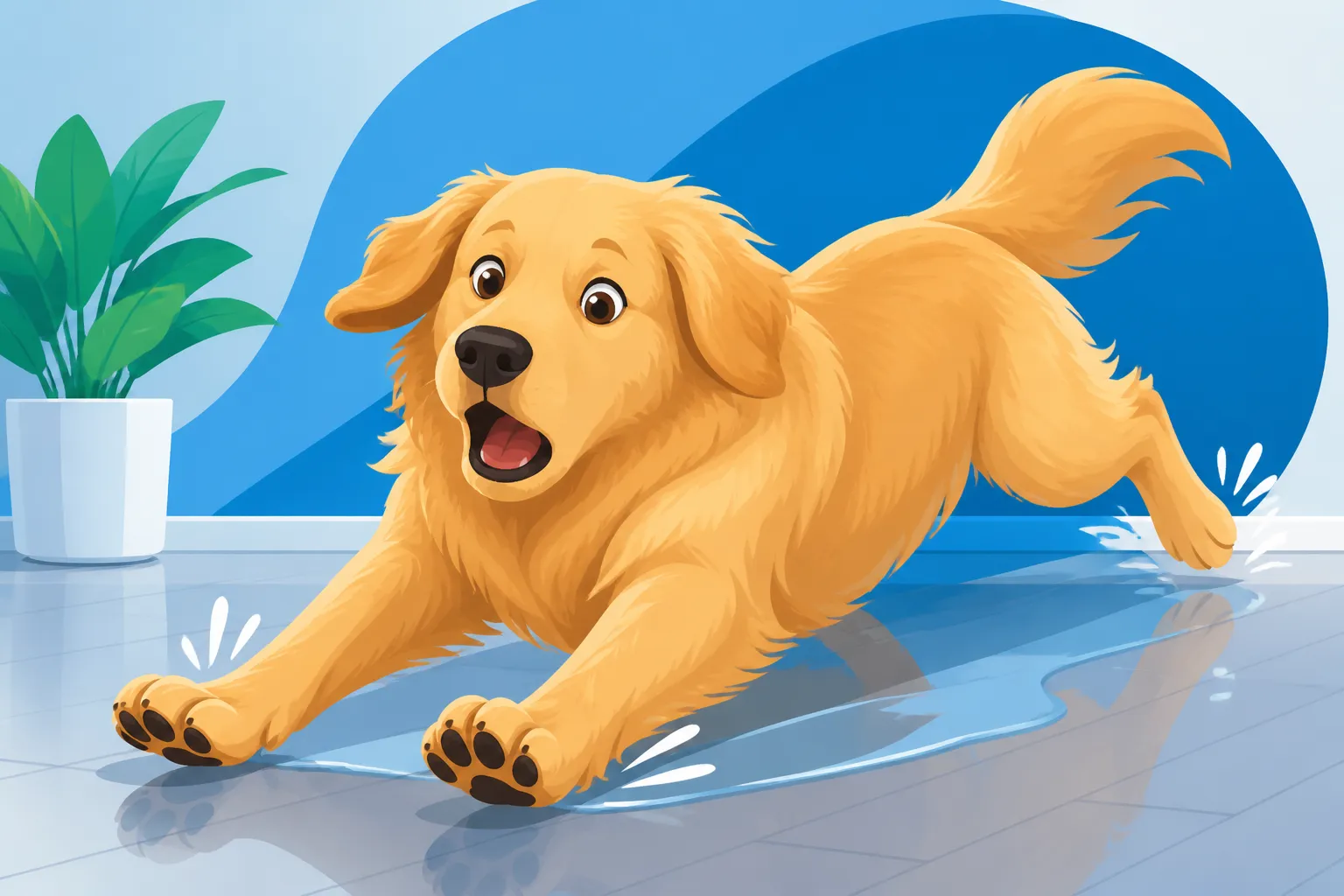
Slippery Floors and a Golden Retriever’s Paws
There’s a specific kind of heart-stopping moment many Golden Retriever owners know all too well: the sudden slip, the wide-legged sprawl, the sound of paws scrambling on a slick floor. It's a common, often scary, reality in homes with hard surfaces, and it leaves us worrying about falls, injuries, and long-term joint damage. This guide is here to walk you through why your beloved Golden might be struggling on those shiny floors and, more importantly, what practical steps you can take to make your home a safer, more comfortable haven for them.
Why Slippery Floors Are Such a Challenge for Golden Retrievers
It might seem counterintuitive that a dog built for agility and retrieving would struggle on a flat surface, but our Goldens are uniquely predisposed to problems on slippery floors. It's not just clumsiness; it's a combination of their physical build, their natural gait, and often, less-than-ideal paw conditions.
Understanding a Golden's Anatomy and Gait
Golden Retrievers are magnificent dogs, known for their strength, enthusiasm, and graceful movement. However, their physical attributes, which are perfect for bounding through fields or swimming in lakes, can become a liability indoors.
Imagine a Golden's natural gait: a powerful stride designed to cover ground efficiently, often involving a bit of a spring or bounce. Their long legs and substantial body weight are meant to move over varied, forgiving terrain like grass, dirt, or snow. On these surfaces, their paws can dig in and find purchase. When you put that same powerful, often enthusiastic, movement onto a hard, smooth surface like hardwood, tile, or laminate, there's simply no friction. Their weight, instead of grounding them, can increase the momentum of a slip. Puppies, with their uncoordinated limbs and boundless energy, are prone to slipping, which can affect their developing joints. Similarly, senior Goldens, whose muscles might be weaker or who are already contending with conditions like Golden Retriever Hip and Elbow Dysplasia Explained, find it even harder to maintain their footing. A minor slip for a young dog can be a significant, painful event for an older one.
The Role of Paws and Nails
A Golden Retriever's paw pads are designed for cushioning and traction, but they aren't miracle workers. The pads themselves offer some grip, but their effectiveness is severely hampered by overgrown nails and excessive hair between the toes.
Think of it this way: your dog’s nails are like cleats. On soft ground, they provide extra grip. On hard floors, however, overgrown nails act like tiny stilts, lifting the paw pads off the ground. This significantly reduces the surface area of the paw pad that can make contact with the floor, robbing your dog of essential traction. If you hear your Golden's nails clicking loudly as they walk, it's a sure sign they're too long and are likely contributing to instability. Furthermore, many Goldens have a fair bit of hair between their paw pads. This hair can mat down and become slick, much like a tiny pair of skates, especially on highly polished floors. It’s a silent culprit that many owners overlook, but it can make a huge difference in their ability to grip.
Age and Health Factors
While any Golden can slip, certain life stages and health conditions amplify the risk and potential severity of falls. It's truly heartbreaking to watch a dog you love struggle with something as basic as walking across a room.
Puppies, for instance, are still learning to control their growing bodies. Their coordination isn't fully developed, and their enthusiasm often outweighs their sense of balance. Frequent slipping during this crucial growth period can put undue stress on their developing joints, potentially exacerbating or even contributing to future orthopedic issues. It's a concern many new puppy owners have, and rightly so. On the other end of the spectrum, senior Goldens are particularly vulnerable. As they age, their muscles naturally weaken, and their proprioception—their awareness of their body's position in space—can decline. Many older Goldens also contend with Arthritis Signs in an Eight-Year-Old Golden or other joint conditions. A slip for a senior dog isn't just an inconvenience; it can lead to serious injury, further mobility decline, and a significant reduction in their quality of life. Even a slight fall can cause a strained muscle, a sprain, or worsen existing arthritis. For these wise old souls, stable footing isn't a luxury; it's a necessity for comfort and health. The thought of them hurting themselves trying to get to their favorite spot is enough to keep any devoted owner up at night.
Immediate Solutions for a Safer Home Environment
The good news is that you don't have to overhaul your entire house or replace all your beautiful flooring to help your Golden Retriever. There are several effective, relatively easy solutions you can implement right away to create a safer, more stable environment.
Strategic Rugs and Runners
This is often the most straightforward and effective fix. Think of your hard floors as ice rinks, and rugs as safe islands your Golden can navigate between.
Placing non-slip rugs, runners, and mats in high-traffic areas, especially where your Golden eats, drinks, sleeps, and plays, can make a world of difference. Focus on pathways they frequently use: from their bed to the kitchen, along hallways, and in front of doors where they might accelerate. Look for rugs with rubber backing to prevent them from sliding around, which would only create a new hazard. If you have rugs without non-slip backing, you can purchase rug grippers or non-slip pads that go underneath. Many online retailers like Chewy or Amazon offer a huge selection of sizes and styles that can blend seamlessly with your home decor, ensuring safety doesn't have to compromise style. It's a small investment that pays off immensely in your dog's comfort and your peace of mind. For senior dogs, making sure there's a clear, carpeted path to their favorite nap spot or the door to the yard is paramount.
Enhancing Paw Grip
Sometimes, rugs aren't enough, or they're simply not feasible everywhere. That's where direct paw enhancement comes in. These solutions aim to improve the natural grip of your Golden's paws.
- Paw Waxes and Balms: Products like Musher's Secret or similar paw waxes create a protective, slightly tacky barrier on the paw pads. This increases friction on smooth surfaces and can also protect against rough terrain outdoors. They are easy to apply and absorb quickly, making them a mess-free option.
- Non-Slip Socks or Booties: These are little socks or boots with rubberized soles that your Golden wears. They take some getting used to, but for dogs with severe slipping issues or those recovering from injury, they can be life-savers. Make sure to get a pair that fits snugly but isn't too tight, and one that has good traction on the bottom. Amazon has a wide array of options, often with reviews from other Golden owners which can be super helpful.
- Paw Trimming: As mentioned before, keeping the hair between your Golden's paw pads trimmed short is critical. This allows the pads themselves to make direct contact with the floor, providing maximum natural grip. You can do this at home with a pair of blunt-nosed grooming shears or ask your professional groomer to do it at their next appointment.
Here's a quick comparison of paw grip solutions:
| Solution Type | Pros | Cons | Best For |
|---|---|---|---|
| Paw Waxes/Balms | Easy to apply, natural feel, also protects pads | Needs regular reapplication, can be slightly messy if over-applied | Mild to moderate slipping, outdoor protection, general paw health |
| Non-Slip Socks/Booties | Immediate strong grip, good for sensitive paws or injuries | Can be uncomfortable for some dogs, may fall off, requires cleaning | Severe slipping, post-surgical recovery, specific indoor areas |
| Paw Hair Trimming | Natural, free, improves overall paw hygiene | Requires regular maintenance, dog must tolerate paw handling | Foundational grip improvement for all Goldens, especially those with fluffy feet |
Nail Maintenance is Key
This might seem basic, but it's fundamentally important and often overlooked. Overgrown nails are one of the biggest contributors to a Golden Retriever's instability on hard floors.
When your dog's nails are too long, they hit the ground before the paw pads do, pushing the foot up and back. This makes it impossible for the paw pads to get the traction they need, leading to splayed toes, reduced grip, and increased slipping. Regular nail trims are non-negotiable for any dog, but especially for Goldens in homes with hard floors. Aim to trim their nails frequently enough so that they don't touch the ground when your Golden is standing naturally. If you hear them click-clack on the floor, they're too long. If you're unsure how to trim them safely, your vet or a professional groomer can show you the ropes. There are great guides available, like How Often a Golden Retriever Needs Nails Trimmed, that can help you establish a routine. Proper nail length allows your Golden's paw pads to do their job – gripping the floor and providing stability.
Long-Term Strategies for Joint Health and Stability
While immediate fixes like rugs and paw waxes can provide instant relief, truly supporting your Golden Retriever's stability on slippery floors involves looking at their overall health and well-being. This proactive approach focuses on strengthening their body and maintaining their joint health, which becomes even more critical as they age.
Managing Weight and Muscle Strength
A healthy weight and strong muscles are like natural shock absorbers and stabilizers for your Golden. They are your dog's first line of defense against slips and falls.
Every extra pound your Golden carries puts additional strain on their joints, making them more susceptible to injury if they slip. Maintaining an ideal body condition is crucial, not just for general health, but specifically for mobility and stability on challenging surfaces. You should be able to feel their ribs easily without pressing hard, and they should have a discernible waist when viewed from above. If you're struggling to keep your Golden at a healthy weight, you're not alone; many of us do. This might involve carefully monitoring their food intake – perhaps switching to a lower-calorie food or reducing treats – and increasing their appropriate exercise. There’s a lot of great information on Golden Retriever Weight and Joint Damage and Getting an Overweight Golden Retriever Back Down that can help guide you. Beyond weight, muscle strength in their core and hindquarters is vital for quick recovery from a stumble. Controlled exercise like swimming, leash walks on varied terrain (grass, trails, not just pavement), and even simple balance exercises can build strength. These activities help them regain their footing faster and absorb impact better, reducing the chance of serious injury.
Supportive Nutrition and Supplements
What you feed your Golden Retriever plays a surprisingly big role in their long-term joint health, which directly impacts their stability. It's about providing the building blocks for strong cartilage and reducing inflammation.
Look for high-quality dog foods that support large breed health, often featuring ingredients beneficial for joints. Some owners opt for fresh food diets, like those offered by Ollie, as they can be precisely formulated and are often seen as more digestible. These diets might provide excellent nutrient absorption for overall vitality. Additionally, joint supplements can be incredibly helpful, particularly for Goldens with a predisposition to joint issues or those showing early signs of stiffness. Common ingredients in these supplements include glucosamine, chondroitin, and Omega-3 fatty acids (often derived from fish oil). These are thought to help maintain cartilage health, lubricate joints, and reduce inflammation, making movements smoother and less painful. Always discuss any supplements with your veterinarian to ensure they are appropriate for your Golden's specific needs and to get the correct dosage. For more in-depth information, you might find Joint Supplements for a Golden Retriever helpful.
Professional Consultation and Physical Therapy
Sometimes, despite all our best efforts, a Golden Retriever might continue to struggle, or an incident might reveal an underlying issue. This is when professional help becomes invaluable.
If your Golden is frequently slipping, showing signs of pain after a fall, or seems to be struggling with mobility even on carpeted surfaces, it's time for a vet visit. They can rule out or diagnose conditions like arthritis, hip dysplasia, or other orthopedic issues that might be contributing to instability. Conditions like Golden Retriever Hip Dysplasia Symptoms by Age can become more apparent with age or after repeated slips. Your vet might recommend a course of anti-inflammatory medication, pain management strategies, or dietary changes. In many cases, they might also suggest physical therapy. Canine physical therapy is a fantastic resource that can help rebuild muscle strength, improve balance and coordination, and increase range of motion. Therapists use exercises, stretches, and even underwater treadmills to safely strengthen your Golden's body without putting excessive strain on their joints. This can significantly improve their confidence and ability to navigate all types of surfaces. Learning about Managing Golden Retriever Hip Dysplasia Without Surgery or Physical Therapy for a Golden Retriever With Bad Hips can offer insights into the benefits of these interventions. Caring for a Senior Golden Retriever is an entire art, and addressing mobility proactively is a huge part of it.
What to Avoid and Common Misconceptions
When our Goldens are slipping and struggling, it's easy to jump to conclusions or inadvertently make things worse. It's important to approach this problem with understanding and a focus on effective, safe solutions.
Don't Blame the Dog
First and foremost, never blame your Golden Retriever for slipping. They are not doing it on purpose, nor are they being clumsy out of spite. It’s an involuntary reaction to an unsuitable environment for their body mechanics.
If your dog slides, gets startled, or even has an accident because they couldn't stand up in time, their reaction is born out of fear, frustration, or discomfort, not a lack of effort. Yelling or punishing them will only create fear and anxiety around movement, making them more hesitant and potentially even more prone to slips as they try to move cautiously. Instead, offer reassurance, help them up if they’re truly stuck, and immediately focus on adjusting their environment. Our Goldens are sensitive creatures, and their confidence can be easily shaken by a scary experience like a bad fall. Your understanding and proactive changes will do far more to help them than any form of scolding. Remember, a happy, confident dog is often a more stable dog.
The Dangers of Ignoring the Problem
Ignoring frequent slipping isn't just a minor inconvenience; it can have serious, cascading negative effects on your Golden Retriever's health and well-being.
Every time your Golden slips, they are putting unnatural stress on their joints, ligaments, and muscles. These micro-traumas can accumulate over time, exacerbating existing conditions like hip or elbow dysplasia, or accelerating the onset of arthritis. A severe fall can lead to acute injuries like sprains, fractures, or even spinal issues, which can require costly veterinary care and a long, difficult recovery. Beyond the physical, there's a significant psychological toll. Dogs who frequently slip can develop anxiety around walking on certain surfaces, leading to a reluctance to move, play, or even get up for necessities. This reduced activity then leads to muscle atrophy, further weakening their support system and creating a vicious cycle of instability and fear. It also dampens their joyful Golden spirit. If you notice Signs a Golden Retriever Is in Pain after a slip, such as limping, whining, or reluctance to move, it's crucial to consult your veterinarian immediately. Proactive measures now can save your beloved companion a lot of pain and discomfort down the road, ensuring they can enjoy their golden years with as much comfort and joy as possible. You might even consider whether Do Golden Retriever Puppies Need Ramps? or similar mobility aids are useful in your home.
Disclaimer
This article is for general informational purposes only and does not constitute professional advice. Laws, prices and regulations vary by location and change over time. Consult a qualified professional for guidance on your specific situation.