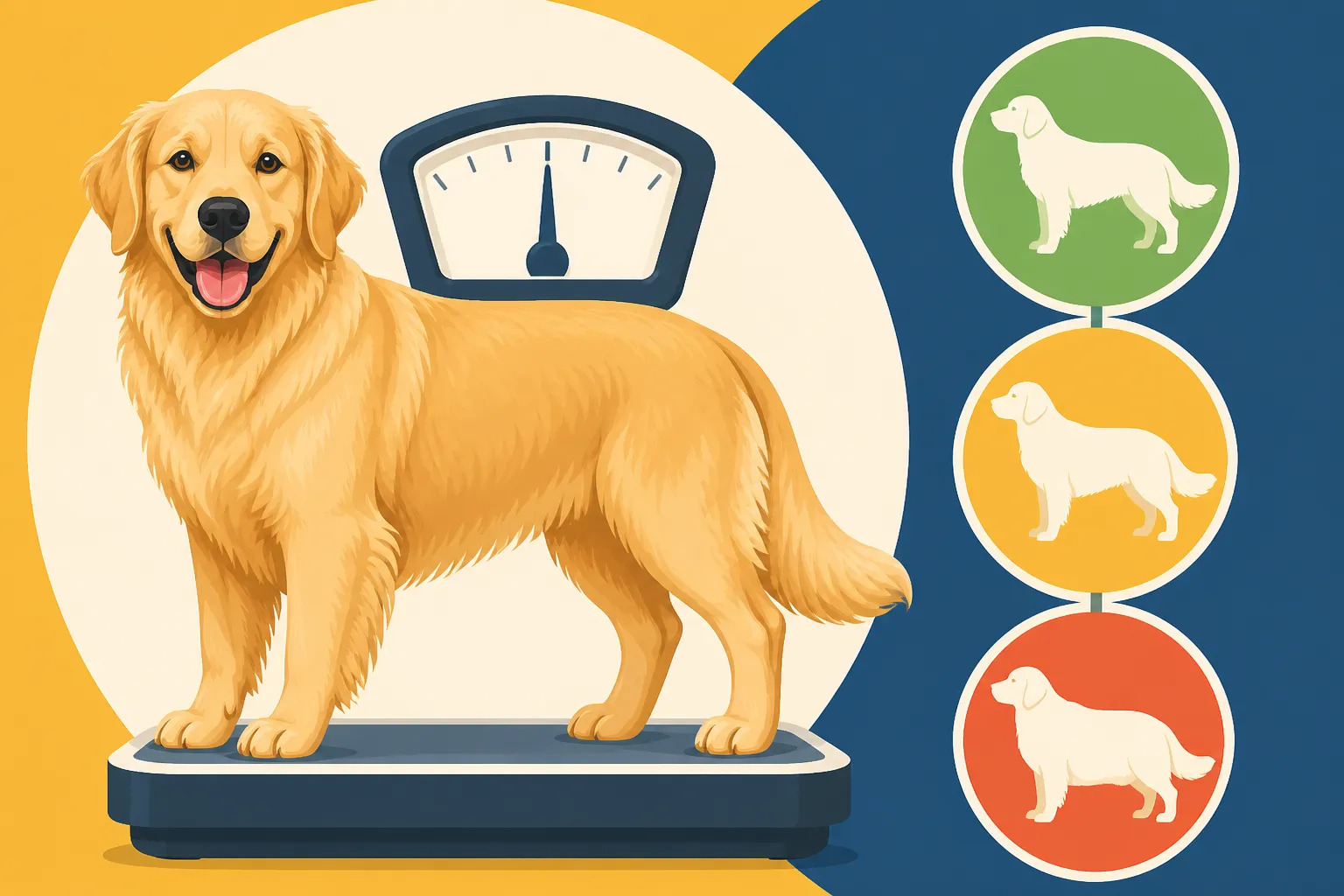
Golden Retriever Weight Ranges in the Standard
It's incredibly common for Golden Retriever owners to obsess over their dog's weight. You bring home this adorable, fluffy puppy, and suddenly, you're tracking every pound, wondering if they're growing correctly or if that extra treat is going to put them over the edge. This guide is here to shed some light on the official Golden Retriever weight ranges set by breed standards, what those numbers actually mean for your beloved companion, and why these guidelines are so important for their overall health.
Understanding the Golden Retriever Breed Standard
When we talk about a "breed standard," it's not just some arbitrary number plucked out of thin air. For a breed like the Golden Retriever, the standard is a comprehensive blueprint established by national kennel clubs, like the American Kennel Club (AKC) in the United States. This standard describes the ideal characteristics of the breed, covering everything from temperament and coat color to physical structure, including height and weight. It's what breeders aim for and what judges evaluate in the show ring, but it also serves as a crucial guide for pet owners regarding what a healthy, well-structured Golden should look like.
Why a Standard Exists
The Golden Retriever breed standard was developed to maintain the breed's distinct characteristics, health, and working abilities. Imagine if there were no guidelines; over generations, Goldens could start looking vastly different from one another, losing the traits that make them so recognizable and beloved. For example, their strong, muscular build and famous "soft mouth" are not just aesthetically pleasing but are critical for their original purpose as retrieving gun dogs. The standard helps ensure these functional traits are preserved. It's about more than just looks; it's about preserving the very essence of the Golden Retriever. When you look at your dog, you're seeing a direct lineage to those original Scottish retrievers, and the standard helps keep that legacy intact.
The Standard as a Health Benchmark
While primarily used for conformation showing, the breed standard also offers an invaluable health benchmark. Dogs that fall within the ideal height and weight ranges are generally less prone to certain orthopedic issues, overexertion, or other health complications that can arise from being significantly undersized or oversized. An ideal weight supports joint health, cardiovascular function, and overall vitality. Deviations, especially being consistently overweight, can put undue stress on their developing or aging joints, such as those prone to Golden Retriever Hip and Elbow Dysplasia Explained. It’s a way of saying, "This is the physical form that best supports their natural activity levels and longevity."
Specific Golden Retriever Weight Ranges
The AKC Golden Retriever breed standard specifies distinct weight ranges for males and females, which is a common practice across many breeds due to natural physiological differences. These ranges represent the ideal, balanced weight for a Golden Retriever that exhibits proper bone structure and muscle mass, aligning with their athletic and powerful build. It’s not about being skinny, but about being fit and proportionate.
Male Golden Retriever Weight
For male Golden Retrievers, the AKC standard stipulates an ideal weight range of 65 to 75 pounds (approximately 29.5 to 34 kg). This weight should be accompanied by an ideal height at the withers (the highest point of the shoulder blades) of 23 to 24 inches. This combination describes a dog that is robust and powerful, with good muscle tone, without appearing bulky or overly lean. A male Golden should feel solid and athletic when you run your hands over him, with a noticeable waist tuck when viewed from above and ribs that you can easily feel but not see.
Female Golden Retriever Weight
Female Golden Retrievers are typically a bit smaller and lighter than their male counterparts. The AKC standard sets their ideal weight range at 55 to 65 pounds (approximately 25 to 29.5 kg), with an ideal height at the withers of 21.5 to 22.5 inches. Just like males, females should possess a sturdy, well-muscled physique. The difference in weight and height between sexes is important for the breed's overall health, as their skeletal structure and energy requirements can vary. A female Golden, at her ideal weight, should still have that characteristic powerful yet graceful build, reflecting her role as a capable retriever.
The Importance of Proportion
It's critical to remember that weight is always relative to height and overall bone structure. A Golden Retriever who is at the taller end of the height standard might comfortably carry a few more pounds within their ideal weight range than a shorter dog. Conversely, a shorter Golden at the upper end of the weight range could easily be considered overweight. The standard emphasizes a balanced, well-proportioned dog where all parts fit together harmoniously. You want to see a dog that looks athletic and capable, not barrel-chested or spindly. This proportion helps prevent excessive strain on joints and ensures efficient movement, which is vital for a dog designed for active work. The emphasis here is on the overall picture rather than just a number on the scale.
Here's a quick reference table for the AKC ideal weight and height standards:
| Golden Retriever Sex | Ideal Weight Range (pounds) | Ideal Height Range (at withers, inches) |
|---|---|---|
| Male | 65-75 | 23-24 |
| Female | 55-65 | 21.5-22.5 |
Why Achieving the Ideal Weight Matters for Your Golden
Falling within the breed standard's weight range isn't just about looking good; it's profoundly linked to your Golden Retriever's long-term health and quality of life. Owners often don't realize the subtle ways an extra five or ten pounds can impact their dog until health issues start to crop up. Keeping your Golden at their ideal weight is one of the most proactive steps you can take to ensure they live a happy, active life for as long as possible.
Joint Health and Mobility
Golden Retrievers are, unfortunately, predisposed to several joint issues, most notably hip and elbow dysplasia. Carrying excess weight dramatically exacerbates these conditions. Imagine trying to walk around all day with a heavy backpack strapped to you – that’s what even a few extra pounds feel like to your dog’s joints, especially if they are already prone to Golden Retriever Hip Dysplasia Symptoms by Age. Over time, this constant strain can lead to faster wear and tear, increased pain, and the early onset of arthritis. A lean, athletic Golden moves with ease, jumps into the car without struggle, and can enjoy long walks and games of fetch for years longer than an overweight counterpart. Maintaining proper weight also helps manage existing conditions, slowing down the progression of joint degeneration and reducing the need for strong pain medications. Physical Therapy for a Golden Retriever With Bad Hips can also be more effective when the dog is at a healthy weight.
Cardiovascular Health and Energy Levels
Just like in humans, excess weight in dogs can strain the cardiovascular system. Their hearts have to work harder to pump blood through a larger body mass, which can lead to complications. An overweight Golden may pant more easily, tire quickly during exercise, and generally have less stamina. This reduced energy can lead to a vicious cycle: less exercise means more weight gain, which further decreases their desire to move. Keeping your Golden at a healthy weight ensures their heart and lungs can function optimally, allowing them to enjoy the vigorous activity they were bred for. You'll notice they have more zest for life, whether it's chasing a ball or simply greeting you with their signature full-body wiggle.
Overall Longevity and Disease Prevention
Studies consistently show a strong link between maintaining an ideal weight and increased lifespan in dogs. An overweight Golden is at a higher risk for a whole host of health problems beyond joint issues, including diabetes, certain types of cancer, kidney disease, and even Bloat Risk in a Deep-Chested Golden. While some of these conditions have a genetic component, weight is a significant controllable factor. By keeping your Golden lean and fit, you're not just preventing discomfort; you're actively working to prolong their life and improve its quality. It means more years of walks in the park, cuddles on the couch, and adventures together. It’s an investment in their future. How Extra Weight Shortens a Golden Retriever's Life dives deeper into this topic.
Factors Influencing Your Golden's Weight Beyond the Standard
While the breed standard gives us an excellent target, several individual factors can influence your Golden Retriever's healthy weight. It's not always as simple as hitting a number on the scale, and what's ideal for one Golden might be slightly off for another, even if they're the same sex and similar height. Understanding these nuances helps you tailor your approach to your specific dog.
Individual Metabolism and Activity Level
Just like people, every Golden Retriever has a unique metabolism. Some dogs are naturally more efficient at burning calories, while others seem to gain weight just by looking at food. A high-energy Golden who spends hours fetching and swimming might need more calories than a more laid-back Golden who prefers shorter walks and couch naps. The key is to match their caloric intake to their actual activity level. If your Golden is a true "field line" dog, they might have a higher metabolism and require more fuel to sustain their exercise. Conversely, a show line Golden might have a slightly lower energy demand. You can find many activity trackers and smart feeders at retailers like Chewy that can help you monitor their intake and output, ensuring a good balance.
Age and Life Stage
A Golden Retriever's ideal weight can fluctuate throughout their life. Puppies are growing rapidly and will gain weight quickly, but it's important not to overfeed them, as fast growth can predispose them to joint issues. Why Fast Growth Damages a Golden Retriever's Joints explains this in detail. Adolescent Goldens (from around 6 months to 2 years) might look lean and lanky, even at their "ideal" weight, as they're still filling out. As Goldens enter their senior years, their metabolism often slows down, and their activity levels may decrease due to Golden Retriever Arthritis and Joint Decline. This means their caloric needs will change, and you might need to adjust their food intake to prevent them from gaining weight. Regular check-ups with your vet, perhaps twice a year, are crucial for monitoring these changes.
Spaying/Neutering Status
Spaying or neutering a Golden Retriever can significantly impact their metabolism and tendency to gain weight. Hormonal changes post-surgery often lead to a decrease in metabolic rate, meaning they don't burn calories as efficiently as intact dogs. Many owners notice their Goldens start to gain weight after their surgery if their diet and exercise aren't adjusted. This doesn't mean you shouldn't spay or neuter, but it does mean you need to be extra diligent about their food portions and ensure they remain active. Neutering a Male Golden Retriever and Joint Risk is a good read on this topic. It’s a common frustration for owners, who often feel caught between health advice. A good quality large-breed dog food, available at places like Chewy, formulated for weight management might be a consideration.
Body Condition Scoring: Beyond the Scale
While the scale provides a number, a much more accurate assessment of your Golden's ideal weight comes from a "body condition score" (BCS). This visual and tactile evaluation helps you determine if your dog is at an ideal weight, too thin, or overweight, regardless of the exact number on the scale. Your vet will often use a BCS chart, usually on a scale of 1 to 9 (with 5 being ideal) or 1 to 5 (with 3 being ideal).
An ideal Golden should:
- Have visible waist: When looking down from above, you should see a clear "tuck" in behind the ribs.
- Have an abdominal tuck: When viewed from the side, their belly should tuck up from their rib cage to their hind legs, not hang low.
- Ribs easily felt: You should be able to feel their ribs easily when you lightly run your hands along their sides, much like feeling the knuckles on the back of your hand. You shouldn't see them prominently, but they shouldn't be hidden under a layer of fat either.
- No excessive fat over spine or tail base: You should be able to feel the bones of their spine and tail base without having to press hard.
If you can't feel their ribs, or if they have no discernible waist, it's a strong indicator they are carrying too much weight, even if they are within the "standard" weight range on the scale. Conversely, if ribs are sharply visible, or their waist is extremely tucked, they might be underweight. Learning Feeling a Golden Retriever's Ribs the Right Way is a simple yet vital skill for every Golden owner. Regularly assessing your Golden's BCS is far more telling than just the number on the scale and will guide your feeding and exercise adjustments much more effectively.
Disclaimer
This article is for general informational purposes only and does not constitute professional advice. Laws, prices and regulations vary by location and change over time. Consult a qualified professional for guidance on your specific situation.