Separation Anxiety in Golden Retrievers
Few things are as heartbreaking and frustrating for a Golden Retriever owner as seeing their beloved companion in distress, especially when you're not even there to comfort them. That gut-wrenching feeling when you come home to chewed-up baseboards, an "accident" on the rug, or a neighbor's complaint about incessant barking isn't just about the damage; it's about the knowledge that your loyal Golden was suffering while you were away. This comprehensive guide is here to unravel the complexities of separation anxiety in Golden Retrievers, helping you understand why it happens, how to prevent it, and most importantly, how to help your dog find peace when left alone.
Understanding Golden Retriever Separation Anxiety
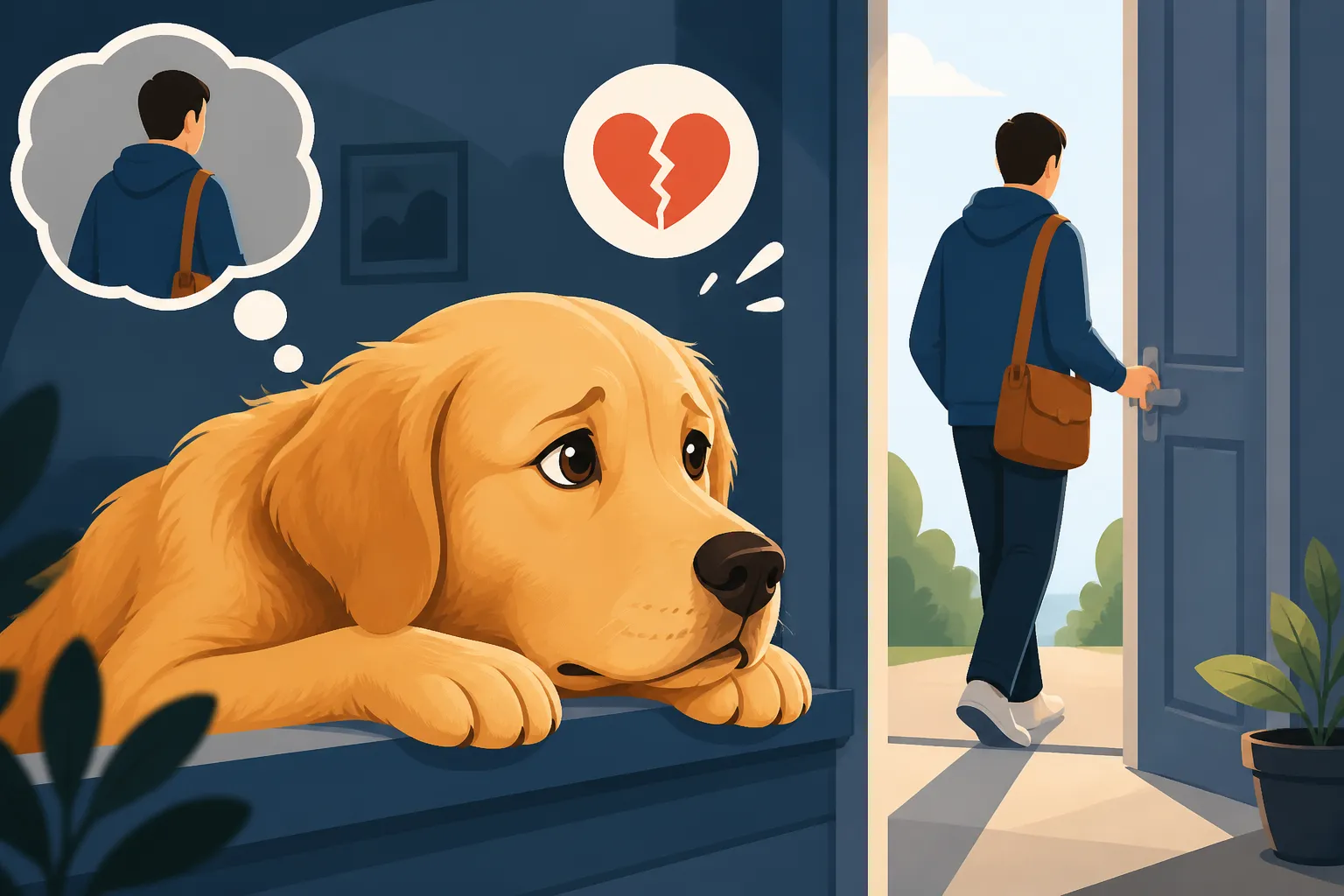
Separation anxiety isn't just your Golden Retriever being "naughty" or "stubborn" because they don't want you to leave. It's a genuine panic disorder, a deep emotional distress that manifests when they are separated from their primary attachment figure, usually you! Because Golden Retrievers are inherently social, devoted, and bond so deeply with their families, they can be particularly susceptible to this challenging condition. Understanding the root causes and recognizing the signs are the first crucial steps toward helping your furry family member.
What Separation Anxiety Actually Looks Like
When we talk about separation anxiety, we're discussing behaviors that go far beyond a little whining when you walk out the door. These actions are driven by genuine panic and fear, not spite or boredom. A Golden experiencing separation anxiety isn't just missing you; they are truly terrified. The outward signs can vary from dog to dog and in intensity, but they almost always involve a frantic attempt to cope with or escape the perceived threat of being alone.
One of the most common and often destructive signs is chewing and destruction. Your Golden might target doorways, window sills, crates, or even furniture, often around exit points. This isn't just playful puppy chewing; it's desperate, often to the point of self-injury (broken teeth, scraped paws). You might find deep gouges or ripped fabric, indicating a dog trying to chew their way out of confinement. It's a desperate attempt to rejoin their pack, no matter the cost.
Another tell-tale sign is inappropriate urination and defecation, particularly if your Golden is otherwise house-trained. This isn't out of defiance but a physical manifestation of severe stress. When a dog is panicking, their bodily functions can be affected. If your Golden has accidents only when left alone, despite being given ample opportunity to relieve themselves beforehand, it's a strong indicator of anxiety, not a lapse in training. These accidents often appear shortly after you leave, rather than hours into your absence.
Excessive vocalization is another major red flag. This can include incessant barking, howling, or sustained whining that begins shortly after you leave and might continue for much of your absence. Neighbors often become aware of this behavior long before the owner does. Unlike occasional "alert barks" at a squirrel, this vocalization is usually high-pitched, frantic, and unrelenting, a distress call to try and bring you back.
Beyond these, you might also observe pacing, panting, or drooling excessively. A Golden with separation anxiety might walk circuits around the house, unable to settle. They might pant heavily, even in a cool room, or drool so much that their chin and chest are soaked. These are physiological responses to extreme stress. In severe cases, they might engage in self-harm, such as licking or chewing their paws until they're raw, or frantically digging at their crate or the floor until their nails are broken. Any of these behaviors, especially when they occur only when you're away, point strongly toward separation anxiety.
Why Goldens Are Prone to Separation Anxiety
Golden Retrievers are practically synonymous with companionship. They were bred for generations to work closely alongside humans, retrieving game, always in tune with their handler's commands and presence. This deep-seated historical purpose has created a breed with an unparalleled desire for human connection, making them remarkably sensitive and attuned to their family's presence. It's precisely this wonderful quality that can, paradoxically, make them more vulnerable to the intense distress of being left alone.
Their incredible devotion means they form incredibly strong attachments to their primary caregivers. They thrive on being part of the family unit, often described as "Velcro dogs" who follow you from room to room, just wanting to be near. This isn't just a charming trait; it's fundamental to their Golden Retriever Temperament and Personality. When that constant companionship is suddenly removed, they don't just feel a bit lonely; they feel utterly abandoned and unsafe. It triggers a primal fear response because, to them, being alone means being vulnerable and unprotected, a stark contrast to their natural inclination for partnership.
Furthermore, Goldens are highly intelligent and often quite sensitive. They pick up on subtle cues, your moods, and changes in routine with remarkable accuracy. This heightened awareness means they can sense your impending departure long before you even pick up your keys. The anticipation of being left alone can start the anxiety cycle even before you've walked out the door, building into a full-blown panic attack once you're gone. Their intelligence, which makes them so trainable and eager to please, can also contribute to their overthinking and distress when their world feels out of alignment.
It's a bittersweet reality: the very traits that make Golden Retrievers such incredible family dogs – their loyalty, affection, and desire for connection – are the same ones that can make them suffer so profoundly when isolated. They're not being manipulative; they're genuinely suffering from a profound emotional disconnect that feels life-threatening to them. Understanding this isn't about making excuses, but about having the empathy needed to approach their anxiety with patience and the right strategies.
Differentiating Anxiety from Boredom or Lack of Training
This is a critical distinction, as the approach to treatment differs significantly depending on whether your Golden is genuinely anxious or simply needs more enrichment or training. Many behaviors that look like separation anxiety can, in fact, stem from boredom or insufficient training, especially in a smart, energetic breed like the Golden Retriever. Misdiagnosing the problem can lead to ineffective, or even detrimental, solutions.
Let's look at the nuances, as outlined in our article Separation Anxiety Versus Boredom in a Golden Retriever. A Golden suffering from boredom might also chew, bark, or have accidents, but the motivation and intensity are different. A bored Golden might chew a shoe because it's available and interesting, or because they need an outlet for excess energy. They might bark at passersby out of curiosity or to get attention. Their accidents might be due to simply not being let out frequently enough, or because they haven't fully grasped house training concepts. These behaviors usually cease when they are given appropriate stimulation, like a new chew toy, a vigorous walk, or consistent training. There's often no frantic, panicked quality to their actions; it's more about occupying themselves or seeking engagement.
On the other hand, a Golden with separation anxiety exhibits behaviors driven by panic. The chewing isn't just on a shoe; it's often destructive to the house itself, particularly around escape routes like doors and windows. The barking isn't intermittent; it's often frantic, high-pitched, and continuous, a distress call. The house-soiling occurs even after they've been given a potty break, and it's accompanied by other stress signals like pacing, excessive drooling, or panting. The key differentiator is the emotional state. An anxious Golden is not just looking for something to do; they are in a state of terror.
Here's a quick comparison table to help you spot the difference:
| Symptom | Boredom & Lack of Training | Separation Anxiety |
|---|---|---|
| Chewing | Chews inappropriate items (shoes, toys, furniture legs) out of curiosity or excess energy. Usually not frantic or self-injurious. | Destroys exit points (doors, windows, crates), often to the point of self-harm (broken teeth, bloody paws). Frantic and desperate. |
| Vocalization | Barks/whines intermittently (at sounds, for attention, out of excitement). Stops when stimulated. | Incessant, frantic barking, howling, or sustained whining, often starts immediately after departure and continues. A clear distress call. |
| House Soiling | Accidents due to inconsistent training, not enough potty breaks, or lack of attention to cues. | Accidents happen shortly after departure, even after being let out. Accompanied by other signs of panic. |
| Body Language | Might seem restless, seek attention, or look for things to do. Calm can be restored with engagement. | Pacing, panting, excessive drooling, trembling, hiding. Cannot settle. Signs of extreme stress. |
| Focus | Can often be redirected to an appropriate toy or activity. Will engage with food puzzles. | Often too distressed to eat treats or engage with puzzle toys left behind. Focused on escape or reunion. |
| Upon Your Return | Happy to see you, but usually a normal greeting. | Overly frantic, prolonged greetings, as if reunited after a long, terrifying ordeal. |
It's vital to observe your Golden closely and, if possible, set up a camera (many affordable options are available on Amazon) to record their behavior when you're gone. This visual evidence will be invaluable in determining the true nature of their distress and guiding your strategy.
Common Triggers and Early Warning Signs
Just like with people, anxiety in Golden Retrievers often doesn't just appear out of nowhere. There are frequently underlying triggers or changes that set the stage, and observant owners can sometimes spot subtle warning signs before the problem escalates into a full-blown crisis. Being attuned to these factors can make a huge difference in prevention and early intervention.
Changes in Routine or Environment
Golden Retrievers, despite their adaptable nature, thrive on routine and predictability. They are creatures of habit, and knowing what to expect in their daily lives provides them with a sense of security and control. Any significant disruption to this established rhythm can be a powerful trigger for anxiety, particularly separation anxiety. Suddenly, their predictable world is thrown into disarray, and this uncertainty can be deeply unsettling for a dog that relies so heavily on consistency.
One of the most common triggers is a change in your work schedule or household dynamics. Perhaps you've suddenly started a new job with longer hours, or your work-from-home arrangement has ended, leading to your Golden being left alone for much longer periods than they are accustomed to. A child going off to college, a family member moving out, or even a long-term visitor leaving can drastically alter the amount of human presence in the home. For a Golden who is used to constant companionship, these abrupt shifts can feel like a profound loss and abandonment, triggering intense panic.
Moving to a new home is another significant environmental trigger. Even if your Golden is with you, the unfamiliar sights, sounds, and smells of a new place can be incredibly disorienting and stressful. Their established territory is gone, and this can heighten feelings of insecurity. During a move, routines are often chaotic, and the dog might spend more time alone in an unfamiliar space, compounding their anxiety. It's a double whammy: new environment and disrupted routine.
Even seemingly minor changes can accumulate. A new baby or pet in the house can shift attention away from your Golden, making them feel displaced. A sudden illness or injury, either in the dog or a family member, can lead to changes in walks, play, or feeding schedules. For a Golden who relies on these predictable interactions, the loss of routine creates a vacuum that anxiety can quickly fill. Being mindful of any recent shifts in your life and understanding their potential impact on your Golden is essential for pinpointing the cause of new or worsening anxiety.
Past Experiences and Shelter Dogs
While any Golden Retriever can develop separation anxiety, those with certain past experiences, particularly rescue dogs, may be predisposed to it. Their history often shapes their emotional landscape, and for a dog that has experienced abandonment or inconsistent care, the fear of being left alone can be amplified and deeply ingrained.
Many Golden Retrievers adopted from shelters or rescues, such as those you might find through organizations specializing in Adopting an Adult Golden Retriever, come with unknown backgrounds. Some may have been surrendered due to a previous owner's inability to manage their anxiety, creating a vicious cycle. Others might have experienced neglect, multiple home changes, or even lived as strays, all of which can lead to a profound insecurity about permanence and safety. These dogs often learn that being alone can mean being abandoned, and this trauma leaves them particularly sensitive to any cues that suggest you might not return. Their anxiety isn't just about missing you; it's about a deep-seated fear of history repeating itself.
Even Goldens from less traumatic backgrounds can be affected. Puppies taken from their mothers too early, or those raised in environments lacking proper socialization to alone time, may also struggle. A Golden who spent their early months in a puppy mill, deprived of consistent human interaction and stable routines, might develop hyper-attachment issues. In these situations, the dog may not have learned the crucial life skill of feeling safe and secure in their own company.
It's important to remember that these dogs aren't "damaged goods"; they are often incredibly resilient and loving, but they carry emotional scars. Their past experiences have taught them that being alone is dangerous, and it takes immense patience and understanding to re-teach them that your departures are temporary and that they are safe. When adopting a rescue Golden, always be prepared for the possibility that they may require extra support in overcoming past anxieties, including separation-related issues.
Subtle Cues Before Full-Blown Anxiety
Separation anxiety doesn't usually hit like a lightning bolt; often, there are quieter, more subtle signs that your Golden is starting to feel uneasy about your impending absence. Learning to recognize these early cues can be incredibly empowering, allowing you to intervene before the full-blown panic sets in. It's like catching a small ripple before it turns into a tidal wave.
One of the most common early warning signs is a heightened state of clinging and hyper-attachment as you begin your "pre-departure routine." This means they might start following you even more closely than usual as you get ready to leave. If your Golden is usually content to snooze on their bed while you get dressed, but now they're shadowing your every move, perhaps even nudging your hand or trying to sit on your feet, it could be a sign of rising anxiety. They're trying to prevent you from leaving by increasing their physical proximity.
You might also notice a change in their response to departure cues. These are the actions you take just before you leave: picking up your keys, grabbing your bag, putting on your shoes, or heading towards the door. For an anxious Golden, these actions become potent triggers. They might start pacing, whining softly, or even refusing a treat you offer before you've even opened the door. Their body language might become tense – a lowered head, tucked tail, or ears pulled back. They're already anticipating the dreaded separation.
Another subtle cue can be changes in appetite or interest. If you offer a favorite treat or a stuffed Kong as you're preparing to leave, and your Golden, who usually devours anything edible, ignores it or only picks at it, this is a significant indicator of stress. When a dog is anxious, their fight-or-flight response kicks in, and eating becomes a low priority. Similarly, if they typically love their puzzle toys but show no interest when you're gone (which you could verify with a camera), their anxiety might be overriding their desire to play.
Even your return greetings can offer a clue. While all Goldens are excited to see their people, an anxious Golden's greeting might be excessively frantic, prolonged, and difficult to calm down. They might jump, whine, and paw at you intensely, taking a long time to settle, as if they've genuinely survived a terrible ordeal. Being observant of these quieter hints can help you address budding anxiety before it fully takes hold and requires more intensive intervention.
Prevention: Setting Your Golden Puppy Up for Success
The old adage "an ounce of prevention is worth a pound of cure" couldn't be more true when it comes to separation anxiety in Golden Retrievers. While you can't guarantee your dog will never experience anxiety, laying a strong foundation during puppyhood can significantly reduce their risk. The goal is to teach your young Golden that being alone is not a scary, traumatic event, but rather a normal, calm, and even pleasant part of life.
Building Alone-Time Tolerance from Day One
This is arguably the most critical aspect of preventing separation anxiety. From the moment your Golden Retriever puppy comes home, you should be actively working on teaching them that it's okay, and even good, to be alone sometimes. This isn't about neglecting them; it's about fostering independence and confidence, starting with very small, manageable steps.
Begin immediately with brief, intentional separations. Don't wait until your puppy is fully integrated into your routine before trying to leave them alone. From day one, put your puppy in a safe, confined space – a puppy pen or a well-appointed crate – with a high-value, long-lasting chew toy or a stuffed Amazon-bought Kong. Then, simply walk out of the room for a few seconds. Don't make a big fuss about leaving or returning. The goal is for your puppy to be so engrossed in their treat that they barely notice you're gone. When you return, again, no fanfare; calmly let them out when they are settled, not when they are whining or barking. This teaches them that your departures are not a big deal and always lead to your return. This process is detailed further in Building Alone-Time Tolerance in a Golden Puppy.
Gradually increase the duration of these absences. Start with 10 seconds, then 30 seconds, then a minute, and so on. The key is to keep it under their anxiety threshold. If they start to whine or panic, you've gone too long. Shorten the next session. You want them to have many successful, calm alone-time experiences. Practice leaving them alone in different rooms of the house while you're still home. Go to another floor, step outside for a minute to get the mail, or just go to the bathroom and close the door. These micro-absences accumulate into a strong foundation of confidence.
It's also important to vary your departure cues. Don't always grab your keys, put on your shoes, and then leave. Sometimes, pick up your keys and then sit on the couch. Put on your coat and then make a cup of coffee. This desensitizes them to these cues, so they don't automatically trigger anxiety. The aim is to make your departures as unremarkable as possible, a routine event rather than a dramatic exit. This structured approach helps your Golden understand that alone time is just another part of their day, allowing them to grow into a more independent and secure adult dog.
Crate Training as a Safe Haven
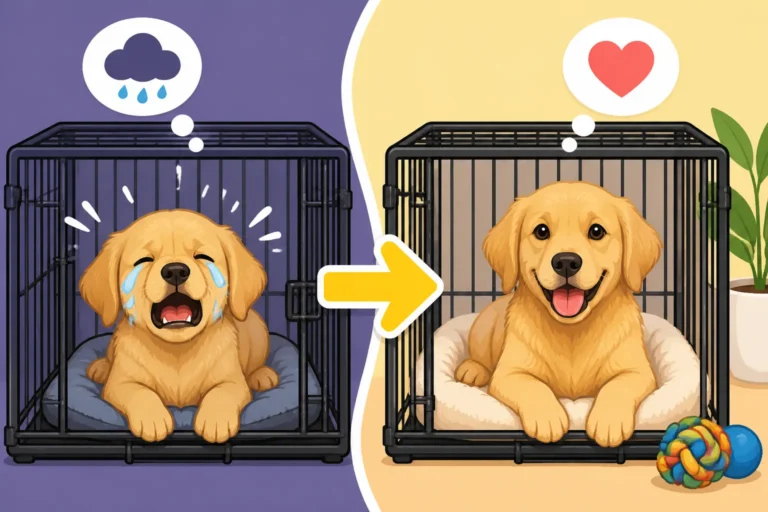
When done correctly, crate training can be an invaluable tool in preventing and managing separation anxiety for Golden Retrievers. The crate should never be used as a punishment; instead, it needs to be introduced as a safe, comfortable, and positive den-like space where your Golden feels secure and can relax. For a deep dive into techniques, refer to our guide on Crate Training a Golden Retriever Puppy.
The process begins with positive association. Introduce the crate with high-value treats, toys, and comfy bedding. Feed your puppy meals inside the crate with the door open. Toss treats in, encouraging them to enter on their own. The goal is for your Golden to choose to go into their crate because it's associated with good things. Never force them in or close the door on an unwilling puppy.
Once they're comfortable going in, start closing the door for very short periods while you're still in the room. Give them a special chew toy that they only get when in the crate. Slowly increase the duration of the door being closed, always ensuring your puppy remains calm and content. If they start to fuss, you've progressed too quickly. You want them to learn that the crate is a peaceful place to chew, nap, or just hang out.
Eventually, you can start leaving the room for short periods while your Golden is calmly crated, following the same gradual increase in time as with general alone-time training. The crate provides a secure, predictable space for your Golden when you're gone, preventing them from roaming the house and potentially engaging in destructive behaviors. It limits their options, which can be surprisingly comforting for an anxious dog, as it gives them one less thing to worry about. For a Golden puppy struggling with Golden Retriever Puppy Sleep and Night Crying, a well-introduced crate can offer immense comfort and security during overnight hours.
It's crucial that the crate is appropriately sized – large enough for them to stand, turn around, and lie down comfortably, but not so large that they can soil one end and sleep in the other. A properly sized crate helps with house training and gives them a snug, secure feeling. By making the crate a positive, safe, and welcoming space, you're not only giving your Golden a secure spot for alone time but also reinforcing their ability to be calm and independent in your absence.
Independent Play and Mental Stimulation
A common misconception is that a tired dog is automatically a calm dog. While physical exercise is undeniably important for Golden Retrievers, mental stimulation and the ability to entertain themselves independently are equally vital in preventing separation anxiety. A dog that only relies on human interaction for entertainment can quickly become frustrated and anxious when left alone.
From a young age, encourage your Golden puppy to engage with interactive toys and puzzles. These are fantastic for Mental Enrichment for a Bored Golden Retriever. Provide a variety of toys that encourage problem-solving, such as puzzle feeders that dispense kibble, snuffle mats, or chew toys that can be stuffed with treats. Toys from brands available on Amazon like Kong, West Paw, or Toppl are excellent for this purpose. The key is to introduce them as enjoyable activities that your puppy can do on their own, without your constant supervision or participation.
Start by giving your puppy a puzzle toy while you're in the room, but not actively engaging with them. Let them figure it out themselves. As they become more adept and interested, you can begin to offer these toys when you take those short, practice absences. This not only keeps their mind active but also associates alone time with a positive, self-directed activity. If they're busy working on a puzzle or happily chewing on a durable toy, they're less likely to focus on your absence or develop destructive habits.
Beyond toys, structured training sessions, even short ones, provide immense mental stimulation. Teaching your Golden new commands or practicing existing ones uses their brainpower and builds confidence. A mentally satisfied Golden is often a more relaxed Golden. Remember, Goldens are highly intelligent; they need their minds to be as active as their bodies. By teaching them to enjoy independent play and providing ample mental challenges, you equip them with coping mechanisms for when you're not around, fostering a healthy sense of autonomy that can significantly buffer against the onset of separation anxiety.
Managing Mild Separation Anxiety in Adult Goldens
If your adult Golden Retriever is starting to show signs of mild separation anxiety, or if you've recently adopted an adult who exhibits these tendencies, don't despair! While it can feel overwhelming, there are many strategies you can implement to help them feel more secure when you're away. The key is consistency, patience, and a deep understanding of your dog's emotional state.
Establishing a Consistent Routine and Predictability
As we've discussed, Golden Retrievers thrive on routine. A predictable schedule provides a sense of security and reduces uncertainty, which is a major contributor to anxiety. For an adult Golden showing signs of separation anxiety, establishing a rock-solid, consistent daily routine is paramount. This helps them understand what to expect and when, making your departures less abrupt and alarming.
Your routine should encompass everything from wake-up times and feeding schedules to potty breaks and exercise. For example, if your Golden typically gets a long walk in the morning, make sure that walk happens at roughly the same time every day, before you need to leave. If they eat at 7 AM, stick to it. The more predictable their day is, the more secure they will feel. When it comes to your departures, try to make them as consistent as possible in terms of timing, if your schedule allows. While this might not always be feasible, even creating a consistent "departure ritual" (or lack thereof) can be helpful.
It's also about creating predictability around your returns. Goldens with separation anxiety are often frantic upon your return because they genuinely feared you wouldn't come back. While it's hard to resist, try to keep your initial greetings calm and low-key. Wait until your Golden has settled slightly before giving them attention. This teaches them that your return is not a huge, dramatic event, but a calm, normal part of the day.
Think of your Golden's routine as their anchor. When their world feels uncertain due to your absence, a predictable routine provides a steady framework. It reassures them that despite your temporary departure, the fundamental structure of their day, and therefore their safety, remains intact. This consistency helps to chip away at the underlying fear that drives separation anxiety.
Desensitization to Departure Cues
For many Goldens with separation anxiety, the panic doesn't start when you leave; it starts long before, as soon as they pick up on your "departure cues." These are the specific actions you routinely take before heading out the door: picking up your keys, grabbing your purse or briefcase, putting on your shoes, or even just heading to the bathroom before leaving. For an anxious dog, these cues become powerful predictors of an impending, dreaded separation.
Desensitization involves systematically stripping these cues of their predictive power. The goal is to break the association between these actions and your actual departure. You do this by performing these actions randomly and frequently, without actually leaving. For example, pick up your keys, walk to the door, then put your keys back down and go sit on the couch. Put on your shoes, walk around the house for a bit, then take them off. Grab your coat, walk to the door, then put the coat back in the closet. Repeat these actions many times throughout the day, in varying sequences, and without any actual departure.
The idea is to make these cues meaningless. When your Golden sees you pick up your keys, you want them to think, "Oh, just the human doing human things," rather than instantly tensing up with anxiety. This process requires patience and repetition. Start with the cues that seem to trigger the most reaction in your Golden, and gradually work through others.
Over time, as these cues no longer consistently predict your departure, their anxiety response to them should diminish. This helps to reduce the anticipatory stress, which is often a significant part of the separation anxiety cycle. By desensitizing your Golden to your departure routine, you're essentially telling them, through your actions, that not every pre-departure motion means you're about to vanish for hours.
Counter-Conditioning Alone Time
Counter-conditioning is about changing your Golden Retriever's emotional response to being left alone from negative (fear, panic) to positive (calm, content). This is achieved by associating your departure with something incredibly desirable and rewarding that they only get when you leave. The goal is to make alone time synonymous with something wonderful.
The most effective tools for counter-conditioning are high-value, long-lasting treats or toys. Think of a Kong stuffed with peanut butter, cream cheese, or wet dog food and then frozen solid, or a durable chew toy filled with irresistible treats. The key is that this item must be so enticing that your Golden will happily focus on it for a significant period. Importantly, they should only get this special treat when you are about to leave and it should be taken away as soon as you return. This makes it truly special and directly links your absence to a positive experience. Many excellent options for these types of toys and treats are available on Amazon.
Start by giving your Golden the special treat just before you perform your desensitized departure cues. As you walk out the door, hand them the treat. This creates a positive association with your departure. Initially, only leave for very short periods (a few minutes) – just long enough for them to become engrossed in the treat. If they finish the treat and then start to panic, you've left for too long. The idea is for them to associate your leaving with the arrival of something fantastic, and ideally, for them to still be enjoying it when you return.
As your Golden becomes more comfortable, you can gradually increase the length of your absences. Always provide the special treat. If they stop eating the treat or start showing signs of anxiety, you've pushed them too far, too fast. The pace must be dictated by your dog's comfort level. The objective is to shift their internal monologue from "Oh no, they're leaving, I'm terrified!" to "Oh good, they're leaving, I get my special Kong!" This powerful redirection of their emotional state is a cornerstone of managing mild separation anxiety.
Addressing Moderate to Severe Cases
When separation anxiety moves beyond mild whining or a bit of chewing into frantic escape attempts, self-harm, or persistent, distressing vocalization, it's considered moderate to severe. At this stage, standard training techniques alone often aren't enough, and a more comprehensive, multi-faceted approach, potentially involving professional help and even medication, becomes necessary. This is where you might also encounter the First Year Costs a New Golden Owner Forgets if you've recently adopted a dog with such issues.
Enlisting Professional Help
If you've tried the prevention and mild management strategies and your Golden Retriever's separation anxiety persists or worsens, it's time to bring in the experts. Severe separation anxiety is a complex behavioral issue that often requires the guidance of a professional who understands canine behavior and can create a tailored treatment plan. Trying to tackle severe cases on your own can be incredibly frustrating and, without proper guidance, may inadvertently worsen the problem.
The first point of contact should ideally be a Certified Professional Dog Trainer (CPDT) with experience in separation anxiety, or even better, a Certified Separation Anxiety Trainer (CSAT). These professionals specialize in this particular issue and employ specific, scientifically-backed protocols for systematic desensitization and counter-conditioning. They can help you identify subtle triggers, guide you through structured practice absences, and teach you how to read your Golden's body language more accurately. Many reputable trainers now offer virtual consultations, allowing you to work with specialists from anywhere. For example, BAXTER & Bella offers online training programs and resources that can connect you with expert guidance, though for severe anxiety, a dedicated CSAT might be needed for the intensive one-on-one support.
For very severe cases, especially those involving self-injury, extreme panic, or where other methods have failed, a Veterinary Behaviorist (DVM, DACVB) is the most appropriate professional. These are veterinarians who have specialized in animal behavior and can diagnose the underlying issues, rule out any medical conditions mimicking anxiety, and prescribe medication if necessary. A veterinary behaviorist can integrate medication with a behavior modification plan, providing a comprehensive approach that addresses both the psychological and physiological aspects of your Golden's anxiety. Their expertise is invaluable when your dog's anxiety is profoundly impacting their quality of life.
It's important to understand that behavior modification for severe separation anxiety is a commitment. It often requires you to avoid leaving your Golden alone at all for a period, which might mean relying on dog sitters, doggy daycare, or bringing your Golden with you whenever possible. This "management" phase allows your Golden to experience a period without triggering their anxiety, making them more receptive to re-training. A professional can help you navigate these practical challenges while focusing on the therapeutic process.
Medical Interventions and Supplements
For many Goldens with moderate to severe separation anxiety, behavioral modification alone, while crucial, may not be sufficient to alleviate their intense distress. In these situations, medical interventions and certain supplements, under the guidance of a veterinarian or veterinary behaviorist, can play a vital supportive role. These aren't "magic pills" that cure anxiety, but rather tools that can help lower your Golden's overall anxiety levels, making them more receptive to training and capable of learning to cope.
Anti-anxiety medications, prescribed by a vet, can be incredibly effective. Just like with humans, certain medications can help regulate brain chemistry, reducing the intensity of panic and fear responses. There are different types of medications, including daily anxiety medications that help maintain a lower baseline anxiety level, and situational medications that can be given shortly before an anticipated departure. Your vet will assess your Golden's specific situation, health history, and the severity of their anxiety to determine the most appropriate medication and dosage. It's crucial to understand that these medications are usually most effective when used in conjunction with a structured behavior modification plan, not as a standalone solution. They help "take the edge off" the panic, allowing your Golden's brain to be more open to learning new associations and coping mechanisms.
Beyond prescription medications, various calming supplements and products are available. These might include pheromone diffusers (like Adaptil), L-theanine supplements, tryptophan, or herbal remedies. While these can be helpful for mild cases or as an additional layer of support for moderate cases, their efficacy varies significantly between individual dogs. Pheromone diffusers, for example, release synthetic dog-appeasing pheromones that can help create a calming environment. L-theanine, an amino acid found in green tea, can promote relaxation without sedation. Always consult your vet before introducing any supplements to ensure they are safe and appropriate for your Golden Retriever, especially if they are already on other medications.
It's also worth considering calming wraps or ThunderShirts, which apply gentle, constant pressure, similar to swaddling a baby. For some Goldens, this pressure can have a remarkably soothing effect, reducing their perceived anxiety during stressful situations. Again, these are supportive tools and should be part of a larger treatment plan. The goal with any medical or supplemental intervention is to reduce your Golden's internal distress to a point where they can actively participate in and benefit from the behavioral training designed to truly resolve the separation anxiety.
Creating a Safe and Soothing Environment
Part of helping a Golden Retriever overcome separation anxiety is transforming their alone-time space into a sanctuary of calm and security. It's about meticulously crafting an environment that minimizes triggers, promotes relaxation, and provides comfort in your absence. This isn't just about giving them a bed; it's about engineering their surroundings for emotional well-being.
First, designate a specific "safe zone" for your Golden when you leave. For many, this is a properly introduced and positive crate, but for some dogs, a small, enclosed room (like a laundry room or a puppy-proofed bathroom) might be better if they have a negative association with a crate or if their anxiety is too severe for confinement. This space should be free of hazards that they might destroy or injure themselves on in a panic. Ensure it's comfortable, with a soft bed (perhaps an orthopedic bed for an older Golden, as mentioned in Caring for a Senior Golden Retriever), access to fresh water, and their favorite, safe chew toys.
Sensory input plays a significant role in a dog's emotional state. Consider using calming sounds to mask outdoor noises that might trigger alarm barking or heighten their anxiety. Playing classical music, reggae, or specific canine-calming music (many playlists are available online) can be incredibly soothing. White noise machines or even a fan can also help. These sounds create a consistent auditory environment that can block out unpredictable external stimuli. If your Golden tends to stare out windows and bark at passersby, consider blocking their view with curtains or blinds, removing a potential trigger for heightened arousal.
Familiar and comforting scents can also help. Leaving a worn piece of your clothing (like a t-shirt you've slept in) in their safe space can provide a subtle, reassuring reminder of your presence. Pheromone diffusers, as mentioned earlier, can also contribute to a calming atmosphere. Some owners even use aromatherapy (such as diluted lavender essential oil, used with extreme caution and never directly on the dog) in the room, though scent sensitivity varies greatly, and it's essential to ensure any scents are dog-safe and not overwhelming.
Ultimately, a safe and soothing environment reduces external stressors and provides a sense of predictability and comfort, allowing your Golden to settle more easily into their alone time. It creates a cocoon of calm that helps them feel less vulnerable and alone, reinforcing the message that they are safe even when you're not physically present.
Lifestyle Adjustments for You and Your Golden
Successfully managing separation anxiety in a Golden Retriever often requires a holistic approach that extends beyond direct training techniques. It means looking at your Golden's entire lifestyle, as well as your own interactions and expectations. Sometimes, small shifts in daily habits can create a profound difference in their overall well-being and ability to cope.
Exercise and Mental Engagement
A physically and mentally exhausted Golden Retriever is a far calmer Golden Retriever. This isn't to say you should run them ragged every day, but ensuring they receive adequate exercise and mental stimulation before periods of alone time is a foundational step in managing anxiety. A Golden with pent-up energy, both physical and mental, is much more likely to manifest that energy in destructive or anxious behaviors when left alone.
For a Golden Retriever, "adequate exercise" means more than a quick trip around the block. They are a high-energy breed, especially in their younger years, bred for active work. A brisk 30-60 minute walk, a vigorous game of fetch (which taps into their retrieving instinct), or a swim can do wonders. Our guide on Exercise a Golden Retriever Needs Each Day offers more specific recommendations. The goal is to send them into their alone time feeling pleasantly tired, not restless. If possible, schedule their most demanding exercise session shortly before you need to leave. This ensures their body is tired, making it easier for them to settle and nap during your absence.
But remember, physical exercise alone isn't enough for a Golden's intelligent mind. They need mental engagement too. Incorporate short training sessions into your daily routine. Ten to fifteen minutes of working on new commands, practicing old ones, or doing scent games can be as tiring as a long walk. Puzzle toys, as mentioned before, are also excellent for this. Giving them a brain-teaser to solve immediately before you leave can focus their mind and provide a productive outlet for their energy, rather than letting it turn into anxiety.
A Golden Retriever that is under-exercised or under-stimulated is prone to a host of behavioral issues, and separation anxiety can certainly be exacerbated by a surplus of unused energy. By prioritizing both physical activity and mental challenges, you help your Golden achieve a state of relaxed contentment, making it significantly easier for them to cope with your absence. Think of it as burning off the "anxiety fuel" before it has a chance to ignite.
The Myth of a Second Dog as a Solution
It's a common, and often well-intentioned, thought among owners dealing with a lonely or anxious Golden: "Maybe my dog just needs a companion! A second dog will keep them company and cure their separation anxiety." While the idea of two happy Goldens cuddling while you're away is certainly appealing, the reality is far more complex, and often, a second dog does not fix separation anxiety, and can even make it worse. Our article Whether a Second Dog Fixes Golden Separation Anxiety delves deeper into this common misconception.
The fundamental issue is that separation anxiety is primarily an attachment disorder directed towards a specific human (or humans). Your Golden isn't anxious about being alone in general; they're anxious about being separated from you. Another dog, no matter how wonderful, cannot replace that specific bond or alleviate that specific fear. While some dogs might find a little comfort in the presence of another canine, it's rarely enough to solve a true separation anxiety problem.
In many cases, adding a second dog can have one of several outcomes:
- No Change: The anxious Golden continues to be anxious, simply with another dog present. The fear of human abandonment remains.
- Creation of Two Anxious Dogs: The new dog, observing the first Golden's distress, can actually learn anxious behaviors. They might start mirroring the pacing, whining, or even destruction, leading to two dogs with separation anxiety instead of one.
- Increased Chaos: Two dogs might escalate destructive behaviors or vocalization, feeding off each other's energy and anxiety.
Furthermore, introducing a second dog requires a significant investment of time, money, and training. You'll have double the expenses, double the training needs, and the potential for new behavioral challenges as the dogs adjust to each other. This is a huge undertaking that shouldn't be layered on top of an existing, significant behavioral problem like separation anxiety.
If you are considering a second dog, it should be because you want a second dog, and only after your first Golden's separation anxiety is well-managed or resolved. A second dog should complement a stable home environment, not be brought in as a quick fix for a complex emotional issue. Focus on addressing the root cause of the anxiety first, with professional help if needed, before introducing another variable into the equation.
Managing Owner Guilt and Frustration
Dealing with a Golden Retriever who suffers from separation anxiety is incredibly challenging, not just for the dog, but for you, the owner. The constant worry, the guilt of leaving them, the frustration of damaged property, and the sheer exhaustion from trying to manage the problem can take a significant toll on your emotional well-being. It's crucial to acknowledge these feelings and develop strategies for managing your own stress, as your emotional state can inadvertently impact your Golden.
First, release the guilt. It's easy to fall into the trap of blaming yourself, believing you've done something wrong or that you're a bad owner. Separation anxiety is a complex condition, and while your actions can influence it, it's not simply a reflection of your worth as an owner. Many loving, dedicated Golden Retriever owners face this exact problem. Understand that your Golden isn't acting out of spite; they are genuinely distressed. Shifting from guilt to empathy can help you approach the problem with a clearer, more productive mindset.
Second, manage your expectations. Resolving separation anxiety is rarely a quick fix. It's a marathon, not a sprint, and there will be good days and bad days, breakthroughs and setbacks. Celebrate the small victories – a slightly longer calm period, less frantic barking, a toy actually engaged with. These small successes are what build into larger progress. Don't expect perfection overnight, or even over a few months. Patience is your most valuable asset.
Third, seek support for yourself. Talk to friends, family, or even an online community of dog owners who understand. Sometimes, just having someone listen to your frustrations can be immensely helpful. If the stress becomes overwhelming, consider seeking personal counseling. Remember, you can't pour from an empty cup; taking care of your own mental health will allow you to be a more patient and effective advocate for your Golden.
Finally, consider practical solutions to alleviate your own stress. If you're concerned about your Golden's behavior while you're gone, invest in a pet camera. Seeing them calm (even for short periods) can be incredibly reassuring. If the destruction is severe, consider temporary management solutions like doggy daycare or a trusted pet sitter during the initial phases of training, to give both you and your home a break, and to avoid triggering your Golden's anxiety. Managing separation anxiety is a journey for both ends of the leash, and giving yourself grace and support along the way is just as important as the training itself.
Long-Term Management and Relapse Prevention
Successfully addressing separation anxiety in your Golden Retriever is a tremendous accomplishment, but it's important to view it as an ongoing journey rather than a destination. Like many behavioral challenges, separation anxiety can re-emerge, especially during times of change or stress. Long-term management and a proactive approach to relapse prevention are key to ensuring your Golden's continued comfort and confidence when you're away.
Continuous Reinforcement and Monitoring
Even after your Golden Retriever has made significant progress and can comfortably handle alone time, continuous reinforcement of positive behaviors is essential. Don't fall into the trap of thinking the problem is "cured" and then reverting to old habits. Consistency remains key.
Continue to practice short, structured absences, even if they are just for 15-20 minutes, a few times a week. Always provide that high-value chew or puzzle toy they associate with your departure. These small, successful experiences reinforce their confidence and maintain the positive association with alone time. Think of it as keeping their "alone-time muscles" strong. If you suddenly stop all reinforcement, those muscles can weaken, and old anxieties might creep back in.
One of the most valuable tools for long-term management is a pet camera. Many affordable options are available on Amazon that allow you to check in on your Golden remotely. This isn't just for crisis management; it's a way to monitor their behavior discreetly. Occasional check-ins can alert you to subtle shifts in behavior that might indicate rising stress levels before they escalate into a full-blown relapse. You might notice them starting to pace a bit more, or taking longer to settle, even if they're not overtly destructive or vocal. Catching these early signs allows you to intervene with reinforcement or adjustments to their routine before the anxiety takes hold again.
Continuous positive reinforcement, coupled with vigilant monitoring, helps ensure that your Golden Retriever maintains the coping skills they've learned. It’s about building a consistent, supportive environment where their confidence in being alone is continually nurtured.
Adapting to Life Changes
Life is unpredictable, and changes are inevitable. Whether it's a new job, a move, a new family member, or even a vacation, any significant shift in your household or routine can potentially trigger a relapse in a Golden Retriever prone to separation anxiety. The key to prevention is proactive and gradual adaptation.
When you anticipate a major life change, start preparing your Golden Retriever well in advance. For example, if you know you'll be working longer hours starting next month, begin incrementally extending their alone time now, well before the change occurs. If a new baby is on the way, slowly introduce them to the new sounds, smells, and shifts in attention that come with an infant. Our guide on Introducing a Golden Retriever to Children offers excellent advice here. The goal is to make any change as gradual and predictable as possible, allowing your Golden to adjust without feeling overwhelmed.
If you're planning a trip and your Golden will be boarded or staying with a sitter, introduce them to the new environment or caregiver slowly. Arrange short visits or overnight stays before the actual long departure. This familiarization reduces the shock of a sudden change in environment and personnel. Remember that even positive changes for you can be stressful for your Golden, so approach them with empathy and planning.
After any significant disruption, pay extra attention to your Golden's behavior. Look for those subtle cues of anxiety – increased clinginess, reluctance to eat, mild pacing. If you see them, don't panic. Simply increase your efforts in continuous reinforcement, shorten alone-time durations temporarily, and re-establish a solid routine. The flexibility to adjust your approach based on your Golden's needs is crucial for long-term success.
When to Re-evaluate and Seek Further Support
Even with the best long-term management strategies, there might be times when your Golden Retriever's separation anxiety seems to regress, or when a new challenge arises that your current tools can't address. Knowing when to re-evaluate your approach and seek further professional support is a sign of responsible pet ownership, not failure.
A significant increase in destructive behavior, renewed vocalization, house soiling, or any signs of self-harm are clear indicators that your current plan is no longer effective enough. If you notice a consistent pattern of anxiety returning, despite your best efforts at continuous reinforcement and adapting to changes, it's time to reach out for help. This might also be the case if your own frustration and stress levels become unmanageable, impacting your relationship with your Golden.
Consider revisiting a certified professional dog trainer, especially one specializing in separation anxiety (CSAT), or scheduling a follow-up with a veterinary behaviorist. They can help identify new triggers, assess if the anxiety has evolved, or recommend adjustments to medication or behavioral protocols. Sometimes, a fresh pair of expert eyes can spot something you've missed or suggest a nuance in training that makes all the difference.
There might also be times when your Golden Retriever develops new health issues that contribute to behavioral changes. For example, an older Golden might start experiencing discomfort from Golden Retriever Arthritis and Joint Decline, which could make them less tolerant of being alone or more prone to anxiety. In such cases, a full veterinary check-up is warranted to rule out any underlying medical causes for behavioral regression.
Ultimately, your goal is to ensure your Golden Retriever lives a happy, calm, and confident life, even when you're not by their side. This often means being willing to adapt, learn, and seek expert guidance when needed. There's no shame in needing ongoing support; it simply demonstrates your unwavering commitment to your beloved companion's well-being.
Disclaimer
This article is for general informational purposes only and does not constitute professional advice. Laws, prices and regulations vary by location and change over time. Consult a qualified professional for guidance on your specific situation.