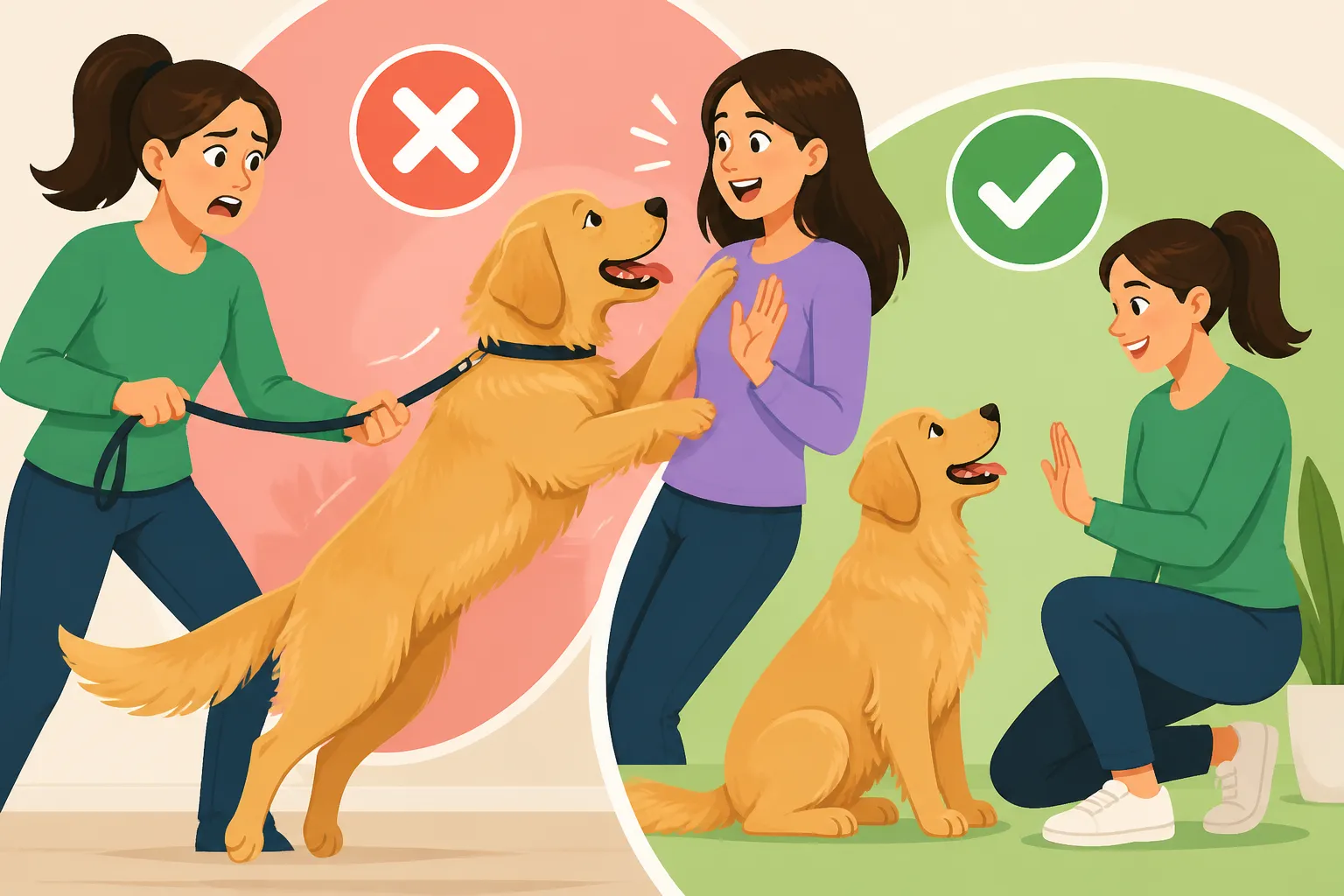
Stopping a Golden Retriever From Jumping on Guests
It’s a scene many Golden Retriever owners know all too well: the doorbell rings, and before you can even open the door, your sweet, fluffy companion transforms into an enthusiastic, four-legged projectile, launching themselves at your unsuspecting guest. While their intentions are purely loving, that kind of greeting can be genuinely overwhelming, sometimes even knocking people over, especially children or the elderly. This guide is here to walk you through why your Golden is jumping and, more importantly, how to teach them a more polite, calm, and manageable way to say hello.
Understanding Why Your Golden Retriever Jumps
Before we can even begin to tackle the "how to stop it" part, we need to dig into the "why." Golden Retrievers are naturally effusive, joyful dogs, and their greetings often come from a place of pure, unadulterated excitement. They aren't trying to be naughty; they're just trying to be Golden. Understanding their motivation is the first step toward effective and empathetic training.
The Excitement Overload
For many Goldens, the arrival of a new person is like winning the lottery and discovering a lifetime supply of their favorite treats all at once. Their enthusiasm simply bubbles over. Think about it from their perspective: a new scent, a new person to potentially get attention from, and perhaps a break in the daily routine. This sudden burst of energy can manifest as jumping, barking, and general over-the-top behavior.
Often, this excitement is a learned behavior. When your Golden was a tiny, adorable puppy, a little jump might have been met with laughter, petting, or even a soft "aww, how cute!" Unintentionally, we taught them that jumping gets attention, and any attention, even negative (like pushing them away), can be reinforcing. They thrive on interaction, and if jumping is the most reliable way to get a reaction, they'll keep doing it. Their Golden Retriever Temperament and Personality predisposes them to want to be close to people and engage, and sometimes they just don't know the "right" way to do it.
Seeking Attention and Affection
Golden Retrievers are renowned for their affectionate nature and their desire to be part of the family action. When a guest arrives, your Golden isn't just saying hello to the visitor; they're also trying to get your attention. They might be thinking, "Look at me! I'm here too! Don't forget about me!" Their big, soulful eyes and wagging tails are begging for a head scratch or a belly rub, and sometimes a jump is their most direct, albeit clumsy, attempt to get closer to a human face for a good sniff or lick.
This isn't always malicious; it's often a puppy-like behavior that persists into adulthood if not properly managed. They want to be involved, to be loved, and to show their love right back. Sometimes, it’s also a way for them to "check in" with the new person, to gather information about them by getting closer to their face and hands. They might not understand personal space boundaries in the same way humans do, making a direct, upright approach seem perfectly reasonable to them.
Building a Foundation for Calm Greetings
Stopping your Golden from jumping isn't about suppressing their joy; it's about channeling it into more appropriate behaviors. This starts with solid foundation training that teaches them what to do instead of what not to do. Positive reinforcement is your best friend here, as it encourages desirable actions rather than punishing unwanted ones.
Teaching "Four on the Floor"
The cornerstone of polite greetings is teaching your Golden Retriever that all four paws must remain on the ground to earn attention. This seemingly simple concept requires consistency and patience, but it’s incredibly effective. Start practicing this when there are no guests around, using family members as "practice guests."
When you or a family member approach, if your Golden starts to lift their paws, immediately turn your back and walk away. The moment all four paws are back on the floor, turn around and offer calm, gentle praise and a small, high-value treat. Repeat this many, many times. The key is that the desired behavior (four paws on the floor) always earns a reward, and the undesired behavior (jumping) always causes attention to disappear. You might find some excellent tools for training, like a clicker or a variety of high-value treats, available on Amazon to aid in this process. Remember, a quick, precise marker like a clicker followed by a treat helps them understand exactly what behavior they are being rewarded for.
Mastering Basic Obedience Cues
Reliable basic obedience commands are absolutely crucial for managing an excited Golden Retriever. Commands like "sit," "stay," and "down" become invaluable tools in preventing jumping. If your Golden knows that a "sit" command means they get a treat or a pat, they are much more likely to comply than to jump for attention.
Practice these commands daily, in various environments and with increasing distractions. For example, once your Golden consistently sits when asked in a quiet room, try asking for a sit when someone walks into the room, then when a friend comes over. This builds confidence and reliability. Teaching them to Teaching a Golden Retriever to Sit and Stay firmly in different situations is critical before expecting them to perform under the high-excitement scenario of a guest arriving. If you're looking for structured guidance, an online training program like BAXTER & Bella offers comprehensive modules on these essential commands, which can be a game-changer for consistency.
Proactive Strategies for Guest Arrivals
Prevention is often the best medicine when it comes to managing an over-excited Golden. Instead of waiting for the jumping to happen and then reacting, think about what you can do before the doorbell rings to set your Golden up for success. This involves managing their environment and their energy levels.
Burning Off Excess Energy
A tired Golden Retriever is a well-behaved Golden Retriever. Before guests arrive, make sure your dog has had ample opportunity to burn off some of that characteristic Golden energy. A long walk, a vigorous game of fetch, or a run at a dog park can make a huge difference. Think about it: if they're already pleasantly tired, they won't have the same overflowing reservoir of energy to launch themselves at your visitors.
This might mean adjusting your daily schedule on days you expect company. Instead of a quick potty break, plan for a full 30-45 minute play session or brisk walk. Engage their minds with puzzle toys or a training session. A physically and mentally stimulated Golden is far more likely to offer a calm greeting than one who has been cooped up all day with pent-up energy. Exercise a Golden Retriever Needs Each Day is a helpful resource to understand just how much activity your particular Golden might need to be content.
Using Management Tools and Techniques
Sometimes, even with the best training, the excitement of a new visitor can be too much. This is where management tools come into play. These tools aren't a substitute for training, but they can bridge the gap and prevent unwanted behaviors while your Golden is still learning.
Consider using a baby gate to create a physical barrier between your Golden and the front door, or even keeping them on a leash when guests first enter. A sturdy baby gate, easily found on Amazon, can allow your dog to see and hear guests without being able to jump on them directly. This gives you control over the initial chaotic moments. You can also place them in a "place" command on their dog bed or crate, providing a safe, designated spot for them to settle. Reward them heavily for staying in their spot as guests enter. This helps teach them self-control during an exciting situation.
What to Do When Jumping Happens
Despite your best efforts, sometimes a jump still happens. It's crucial to have a consistent plan in place for how you and your guests will react. Inconsistency sends mixed signals and makes it harder for your Golden to understand what's expected of them.
The "No Paws Up" Rule
This is a rule that everyone needs to follow: no attention whatsoever when your Golden's paws are off the ground. This means no pushing them down, no making eye contact, no speaking to them, and absolutely no petting. The moment they jump, everyone should immediately turn their back, cross their arms, and completely ignore the dog.
It might feel rude to ignore your excited Golden, but it's the fastest way for them to learn that jumping makes the good stuff (attention, petting) disappear. The instant their paws are back on the floor, and they are calm, then and only then, can they receive attention. This needs to be a unified front; if one person consistently gives attention while jumping, your Golden will learn that jumping is a sometimes-effective strategy, and the behavior will persist.
Redirection and Alternative Behaviors
Instead of focusing on stopping the jumping, focus on redirecting that energy into a more desirable behavior. For example, if your Golden is a notorious jumper, have a favorite toy ready by the door. As a guest approaches, tell your Golden to "get your toy!" and reward them for retrieving it. This gives them something to do with their mouth and body that isn't jumping.
Another effective redirection is to ask for a "sit" or "down" as soon as the doorbell rings. If your Golden is in a sit or down position, they physically cannot jump. Reward them profusely for holding that position, especially when a guest first enters. You can even combine this with the "four on the floor" rule: ask for a sit, if they hold it, the guest can offer a calm pet or a treat. If they jump up, the guest immediately turns away. This technique is often taught in Puppy Classes Worth It for a Golden Retriever, which can provide valuable real-world practice.
Addressing Persistent Jumping Behaviors
Some Golden Retrievers are simply more persistent, more exuberant, or have a longer history of successful jumping experiences. If you've been consistent with the above methods and are still struggling, it might be time to layer in some more advanced techniques or consider professional help.
Desensitization and Counter-Conditioning
This technique involves gradually exposing your Golden to the trigger (guests arriving) while simultaneously pairing it with a positive experience, aiming to change their emotional response. Start with very low-level triggers. For example, simply standing near the door, then ringing the doorbell with no one there. Each time, reward your Golden for remaining calm.
As they succeed at each step, slowly increase the intensity. Have a friend approach the door and then walk away, repeating this without them ever entering. Then, have them open the door slightly and close it. The goal is to keep your Golden under threshold, meaning they are aware of the trigger but not so over-excited that they can't control themselves. This process teaches them that the doorbell or a visitor isn't a cue for chaos, but rather a cue for calm behavior and rewards. Consistency is key here; a program like BAXTER & Bella can help structure this step-by-step.
Enlisting a Professional Trainer
If you’ve tried everything and your Golden Retriever is still launching themselves at every visitor, don't feel discouraged. Sometimes, an experienced eye is exactly what's needed. A certified professional dog trainer, especially one specializing in positive reinforcement, can assess your specific situation, identify subtle cues you might be missing, and develop a customized plan. They can also provide hands-on guidance during practice sessions with real-life scenarios.
A professional trainer can also help rule out any underlying anxieties or other behavioral issues that might be contributing to the jumping. While usually a sign of over-excitement, sometimes what looks like exuberance can mask deeper issues. Finding the right trainer, who understands the Training a Golden Retriever From Puppy to Adult journey, can make a world of difference.
Here's a quick comparison of common strategies to help you choose the best approach for different situations:
| Strategy / Scenario | Best for Puppies | Best for Adult Goldens | Proactive Use | Reactive Use | Requires Guest Cooperation | Requires Equipment |
|---|---|---|---|---|---|---|
| "Four on the Floor" Training | Yes | Yes | Yes | Yes | Yes (ignoring jumps) | No (optional clicker) |
| Basic Obedience (Sit/Stay) | Yes | Yes | Yes | Yes | Yes (rewarding calm) | No (optional treats) |
| Pre-Arrival Exercise | Yes | Yes | Yes | No | No | No |
| Baby Gates / Leash Management | Yes | Yes | Yes | No | No | Yes (gate/leash) |
| Redirection with Toy | Yes | Yes | Yes | Yes | Yes (ignoring jumps) | Yes (toy) |
| Desensitization/Counter-Conditioning | Yes | Yes | Yes | No | No | No (optional treats) |
| Professional Trainer | Yes (for complex cases) | Yes (for persistent issues) | Yes | Yes | Optional | Optional |
Maintaining Consistency and Patience
Training a Golden Retriever takes time, patience, and above all, consistency. Your Golden isn't going to unlearn a deeply ingrained behavior overnight, especially one that has probably given them positive results in the past. Every family member, and even frequent guests, need to be on the same page for the training to truly stick.
The Power of Routine
Dogs, and Golden Retrievers in particular, thrive on routine. When you establish a consistent routine for greetings, your dog learns what to expect and what is expected of them. This means performing the pre-arrival exercise, using management tools, and consistently applying the "four on the floor" rule every single time someone comes to the door. Even a single lapse can confuse your Golden and set back your progress.
A predictable environment where good behavior is always rewarded and unwanted behavior never gets attention will significantly accelerate your training. It helps reduce anxiety and uncertainty for your dog, allowing them to relax and focus on what you're asking of them. This is also why understanding their Golden Retriever Energy Level by Age is important, as their capacity for calm greetings might change slightly as they mature.
Positive Reinforcement and Rewards
Always remember to make training a positive experience. Golden Retrievers are eager to please and respond incredibly well to praise, petting, and high-value treats. When your Golden successfully keeps all four paws on the floor, even for a moment, shower them with attention and rewards. This positive feedback reinforces the desired behavior and makes them more likely to repeat it.
Avoid punishment, harsh words, or physical corrections. These can damage your bond with your Golden and lead to fear or anxiety, potentially creating new behavioral issues. Instead, focus on shaping the behavior you want to see. If they jump, ignore. If they're calm, reward. It’s that simple, but it requires unwavering dedication from your side. Remember that Weaning a Golden Retriever Off Food Rewards should be a gradual process, as initial high-value rewards are crucial for establishing the new behavior. Ultimately, the goal is for them to greet politely because it feels natural and rewarding in itself, not just for a treat.
Disclaimer
This article is for general informational purposes only and does not constitute professional advice. Laws, prices and regulations vary by location and change over time. Consult a qualified professional for guidance on your specific situation.