Stopping a Golden Retriever From Pulling on Leash
Few things are quite as frustrating, or frankly, physically taxing, as walking your beloved Golden Retriever when they've decided they're going to be the lead sled dog. You start out with such high hopes, a lovely stroll, fresh air, bonding time – and within minutes, you're being yanked down the street, feeling like your arm might come out of its socket. This guide is all about giving you the practical strategies, the right tools, and most importantly, the understanding and patience to transform those walks from a wrestling match into a genuinely enjoyable experience for both you and your furry best friend.
Understanding Why Your Golden Retriever Pulls on Leash
Before we can tackle the problem of leash pulling, it's really helpful to understand why your Golden Retriever feels the need to pull in the first place. It's not usually out of malice or disrespect, but rather a combination of instinct, excitement, and a learned behavior that simply works for them. When you know the root cause, you can address it more effectively and with a lot more empathy.
The Instinct to Explore and Lead
Golden Retrievers are intelligent, active dogs with a strong desire to explore their environment. Every sniff is a new piece of information, every rustle in the bushes a potential adventure. For many Goldens, the world outside the front door is just too exciting to walk calmly. They want to get to that interesting smell, greet that person, or investigate that squirrel right now. In their minds, they're not pulling; they're just getting to where the good stuff is, and the leash just happens to be attached to you.
Think about it from their perspective: if they pull and eventually get to the fire hydrant they want to sniff, or the patch of grass they want to roll in, they've just been rewarded for pulling. Over time, this reinforces the idea that pulling works to get them what they want. Plus, dogs don't naturally understand the concept of walking politely beside a human; they move at their own pace, which is often much faster and more erratic than ours. Your Golden might also see you as a slower, less decisive leader if they're constantly dictating the pace and direction of the walk. Loose Leash Walking With a Golden Retriever really starts with you taking the lead.
Excitement and Overstimulation Outdoors
Goldens are known for their enthusiastic, friendly nature, and this often translates into an exuberant response to anything new or exciting during a walk. A passing dog, a jogger, a child on a scooter, or even just the sudden scent of something fascinating – these can all trigger an immediate surge of excitement. This surge often manifests as a powerful lunge forward. It’s hard for a dog to maintain calm composure when their senses are flooded and their adrenaline is pumping.
This isn't a sign of a badly behaved dog, but rather a normal, if sometimes overwhelming, canine reaction. Imagine yourself walking down a street with a friend, and suddenly your favorite celebrity appears just ahead. You'd probably speed up, maybe even pull your friend along, to get a better look! For a Golden, every new dog could be their celebrity, every dropped crumb a gourmet meal. Their excitement isn't meant to cause you grief; it's just pure, unadulterated Golden enthusiasm. Understanding Golden Retriever Leash Reactivity Toward Dogs can help you manage these situations better.
Lack of Early Leash Training Foundations
Sometimes, the pulling issue stems from a lack of consistent, clear guidance right from the start. Many Golden Retriever puppies are simply allowed to pull because they're small, or because owners are focused on other aspects of training. As they grow bigger and stronger, that little tug becomes a full-blown yank. If a dog has never been explicitly taught what a "loose leash" means and that you control the pace and direction, how can they know?
It's a common misconception that dogs will just "grow out" of pulling. Unfortunately, it's a learned behavior that becomes deeply ingrained. If a puppy pulls and gets to say hello to everyone, or reach every interesting smell, that behavior is being reinforced. This isn't about blaming anyone; it's just about recognizing that without specific training, dogs will do what's most natural and rewarding for them. The good news is that even adult Goldens can learn new leash manners, but it requires patience and a systematic approach to retraining. When to Start Training a Golden Retriever Puppy is often the best time to set good habits.
Effective Training Techniques for a Loose Leash
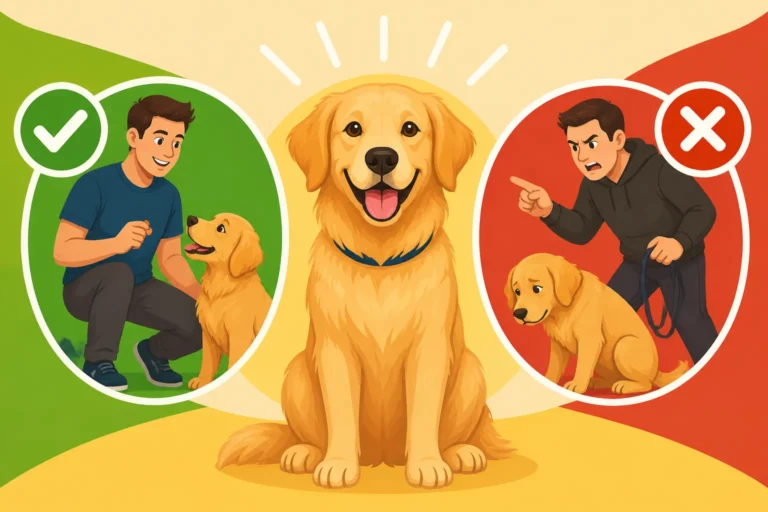
Now that we understand why your Golden might be pulling, let’s dive into the practical solutions. These techniques focus on positive reinforcement, teaching your Golden that a loose leash gets them what they want – forward motion, praise, and treats – while pulling makes them stop.
The Stop-and-Go Method: Becoming a Tree
This is perhaps one of the most fundamental and effective techniques for teaching loose-leash walking. The premise is simple: the moment your Golden Retriever puts tension on the leash, you stop dead in your tracks. You become a tree. Do not move forward until the leash goes slack again. This requires patience, especially at first, but it teaches your Golden that pulling stops the walk.
Here’s how it works:
- Start in a low-distraction environment: Your backyard or a quiet street is ideal.
- Walk forward: As long as the leash is loose, keep walking. Praise and offer a small, high-value treat every few steps while the leash is loose. This teaches them what you do want.
- Stop when they pull: The very instant you feel tension on the leash, freeze. Don't say anything, don't yank back, just stop.
- Wait for slack: Wait until your Golden looks back at you, or the leash slackens naturally. This might take a few seconds, or even a minute if they're particularly excited. They might try to pull again, but you remain a tree.
- Reward and resume: The moment there's slack, mark the behavior with a verbal cue like "Yes!" or a clicker, and give them a treat right at your side. Then, immediately start walking forward again.
- Repeat, repeat, repeat: Consistency is absolutely key. Every single time they pull, you stop. Every single time the leash is loose, you praise and move forward.
This method can feel tedious initially, with many stops and starts. Your five-minute walk might take twenty minutes. But over time, your Golden will connect pulling with stopping, and a loose leash with moving forward and receiving rewards.
Changing Directions: Making Loose Leash Rewarding
Another fantastic way to teach your Golden Retriever that you are in charge of the direction, and that staying with you is rewarding, is to constantly change direction. This keeps your dog engaged and attentive to you, rather than just focused on forging ahead. It also means they can't predict where you're going, so they learn to pay attention.
Here’s the step-by-step:
- Walk with a loose leash: Just like with the stop-and-go method, start walking forward with your Golden. Keep that leash loose.
- Unexpected turns: Every few steps, or whenever you feel your Golden starting to drift too far ahead, change direction suddenly. Turn left, turn right, make a U-turn, or even do an about-face.
- Praise and reward: As soon as your Golden turns with you and the leash remains loose, enthusiastically praise them and offer a treat at your side. This reinforces that staying attentive to your movements is good.
- Avoid yanking: The goal is for your change of direction to gently redirect your dog, not to yank them around. If they're pulling hard, combine this with the stop-and-go method first to reduce the initial force.
- Build engagement: This technique helps build engagement with you, making you more interesting than the environment. It also helps your Golden understand the concept of "heel" or walking politely beside you, as they have to be ready to move in any direction you choose.
By continuously changing direction, your Golden learns that they need to pay attention to where you're going if they want to keep moving. It turns the walk into an active, collaborative experience rather than a passive drag. This also lays a great foundation for Teaching a Golden Retriever to Heel.
Rewarding the Right Behavior: Consistency is Key
Positive reinforcement is the cornerstone of effective dog training, and loose-leash walking is no exception. It’s crucial to heavily reward your Golden Retriever when they are doing what you want, which is walking with a loose leash. Many owners inadvertently focus only on correcting pulling, but forget to praise the moments of good behavior.
Consider these tips for rewarding:
- High-value treats: Especially in the beginning, use treats your Golden absolutely loves. Small pieces of cooked chicken, cheese, or specialized training treats work wonders. The higher the value, the more motivating it is.
- Frequent rewards: Don't wait for five minutes of perfect walking. In the early stages, reward every few steps that the leash is loose. This high rate of reinforcement helps your Golden quickly understand the connection between their behavior and the reward.
- Timing is everything: Deliver the treat immediately (within 1-3 seconds) after the desired behavior (a loose leash). This clear association is vital for learning.
- Varying rewards: While food is powerful, also use verbal praise, gentle petting (if they like it), or even a quick game of fetch (if appropriate and safe) for good behavior.
- Make yourself interesting: Alongside treats, use your voice, body language, and energy to keep your Golden engaged with you. Call their name, do silly little turns, or jog a few steps to keep their attention on you. This makes you more exciting than the distractions around them.
Consistency means that every person who walks your Golden Retriever uses these same techniques. If one person allows pulling and another doesn't, your Golden will become confused and progress will be slow. Make sure everyone in the household is on the same page.
Selecting the Best Anti-Pull Gear
While training techniques are paramount, the right equipment can make a significant difference, especially during the learning phase. Certain harnesses and head halters are designed to help redirect your Golden Retriever's pulling power without causing pain or discomfort. It’s important to choose tools that facilitate learning, not just suppress behavior. Golden Retriever Pulling and Front-Clip Harnesses explains more about these options.
Front-Clip Harnesses: Gentle Guidance
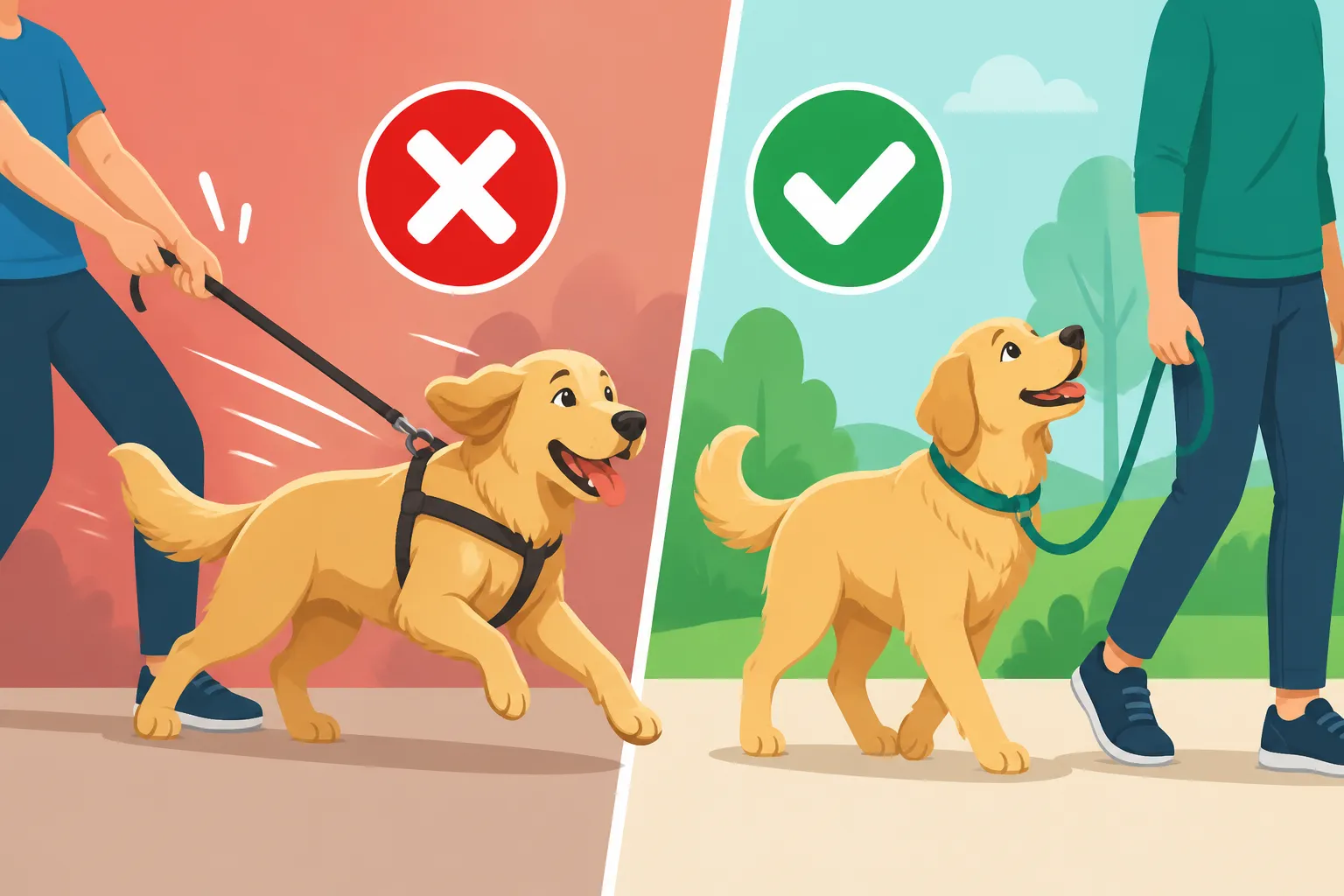
A front-clip harness is often the first recommendation for Golden Retrievers who pull. Unlike traditional harnesses that clip on the back (which can actually encourage pulling by mimicking a sled dog harness), a front-clip harness has the leash attachment ring located on the dog’s chest.
Here’s why they work:
- Redirection: When your Golden pulls, the leash pulls from their chest, which gently turns their body to the side, away from the direction they're trying to pull. This makes it physically uncomfortable and less efficient for them to pull forward.
- No choking: It distributes pressure across their chest and shoulders, rather than their neck, which is safer and more comfortable than a flat collar, especially for a strong-pulling Golden.
- Teaches good habits: While it’s a management tool, it can help you get more control during walks, allowing you to practice loose-leash techniques more effectively. Many brands offer excellent front-clip harnesses, and you can find a wide variety of options on platforms like Amazon.
When choosing a front-clip harness, look for one that fits well, doesn't chafe, and allows for a full range of motion. Brands like Easy Walk, Freedom No-Pull, and Ruffwear are popular choices that many Golden owners find effective. Ensure you get the correct size for your Golden, as a poor fit can be uncomfortable and ineffective.
Head Halters: Maximum Control for Strong Pullers
For particularly strong Golden Retrievers or those with ingrained pulling habits, a head halter (sometimes called a head collar) can provide even greater control. These work similarly to a horse halter, guiding the dog's head and thus their body. Where the head goes, the body follows.
How they benefit:
- Leverage: Because it controls the head, it gives you significant leverage with minimal physical effort. A slight tug on the leash can easily redirect a strong puller.
- Focus: It can help you gently guide your Golden's head back towards you, encouraging eye contact and focus on the handler rather than outward distractions.
- Comfort: When fitted correctly, head halters are not painful. They simply provide a clear, gentle way to communicate direction. However, some dogs initially resist them, so gradual introduction and positive association (treats!) are crucial.
Just like with harnesses, proper fit is essential for a head halter. Brands like the Halti and Gentle Leader are widely used. It's important to remember that a head halter is a training aid, not a muzzle. Your Golden should still be able to pant, drink, and eat treats freely. Always introduce it slowly with positive reinforcement, letting your dog wear it for short periods with treats and praise before attaching the leash for a walk. Never yank or pull hard on a head halter, as this can injure your dog's neck.
Avoiding Counterproductive Tools
While there are many tools on the market, some can be counterproductive or even harmful when trying to teach loose-leash walking. It's crucial to understand why certain tools should generally be avoided for Golden Retrievers.
- Choke Chains and Prong Collars: These tools work by applying pain or discomfort to the dog's neck or throat when they pull. While they might temporarily stop pulling due to fear or discomfort, they don't teach the dog what to do instead. They can damage your Golden's trachea, cause neck injuries, and suppress their natural enthusiasm. For a friendly, sensitive breed like a Golden Retriever, these methods can also damage your bond and lead to fear or aggression. Most positive reinforcement trainers strongly advise against their use.
- Retractable Leashes: While they seem convenient, retractable leashes actually teach your Golden Retriever that pulling is necessary to gain distance. They provide inconsistent tension, which makes it very difficult for your dog to understand what "loose leash" means. Furthermore, they pose safety risks, including rope burns, tangling, and a lack of control in an emergency, especially with a strong dog like a Golden. Stick to a standard 4-6 foot fixed-length leash for training.
Investing in appropriate, humane training gear sets your Golden up for success and keeps your training positive and relationship-focused.
Building Lasting Leash Manners and Overcoming Challenges
Teaching your Golden Retriever to walk politely on a leash isn't a one-and-done deal. It requires ongoing practice, adapting to new situations, and addressing specific challenges that arise. Think of it as an ongoing conversation between you and your dog.
Practicing in Different Environments
You might find that your Golden Retriever walks perfectly on a loose leash in your quiet backyard but transforms into a pulling monster the moment you hit the bustling park. This is completely normal! Dogs don't automatically generalize behaviors to new environments. To build truly reliable loose-leash walking, you need to practice in increasingly distracting settings.
Here’s a practical approach:
- Start simple: Begin your training sessions in your home or a very quiet, fenced yard where distractions are minimal. Master the stop-and-go and direction-changing techniques here.
- Gradually increase distractions: Once your Golden is consistently performing well in the quiet environment, slowly introduce more distractions. This might mean moving to a quiet street during off-peak hours, then a slightly busier street, then a park at a less crowded time, and eventually, a more lively area.
- Short, successful sessions: When you introduce a new, more distracting environment, shorten your training sessions and lower your expectations slightly. Focus on getting a few successful loose-leash steps, reward heavily, and then end on a positive note.
- Proofing: This process of practicing in varied environments is called "proofing." It helps your Golden understand that the rules of loose-leash walking apply everywhere, not just in specific places. Be prepared to go back to basics (more stops, more treats) if a new environment proves too overwhelming initially.
Remember, every new smell, sound, and sight is a potent distraction for your Golden. Their world is rich with information, and learning to filter that out while paying attention to you takes time and practice.
Managing Distractions and Setting Your Golden Up for Success
Distractions are an inevitable part of walking a dog, especially a curious and friendly Golden Retriever. Learning to manage these distractions is key to preventing pulling and maintaining your dog's focus.
- Anticipate and intervene: Become a proactive handler. If you see another dog approaching, or a child on a bike, anticipate your Golden’s reaction. Before they can lunge, get their attention with a cheerful voice, a treat, or a cue like "Look at me!" Reward them for focusing on you before they get overstimulated.
- Increase distance: If a distraction is too intense (e.g., another dog that your Golden really wants to greet), simply increase the distance. Cross the street, turn down a different path. The further away you are, the easier it is for your Golden to remain calm and focused.
- Shorten the leash (strategically): Not to yank, but to gather slack and keep your Golden closer to your side when approaching a known distraction. This gives you more control and makes it easier to redirect their attention to you.
- Structured greeting practice: If your Golden pulls because they have to greet every person or dog, you need to teach them appropriate greeting manners. Start with controlled setups with calm, dog-friendly people or dogs. Practice "sit" or "down" while the distraction is at a distance, rewarding calm behavior, and only allowing a greeting if they remain calm. Programs like those offered by BAXTER & Bella can provide structured online courses to work through these scenarios at your own pace.
- Mental exercise: A tired Golden is often a better-behaved Golden. Ensure your dog is getting enough physical exercise, but also plenty of mental enrichment. Puzzle toys, scent games, and training sessions can help tire them out before a walk, making them less likely to pull out of excess energy.
Setting your Golden up for success means making the right choices about where and when you walk, and being prepared to manage the environment around them.
When to Seek Professional Help
Even with consistent effort, some Golden Retrievers can be particularly challenging on the leash. If you've tried various techniques and tools and are still struggling, it's absolutely okay – and often highly beneficial – to seek professional help. A qualified dog trainer or behaviorist can offer personalized guidance and identify specific issues you might be missing.
Consider professional help if:
- You're making no progress: Despite diligent effort, your Golden's pulling isn't improving, or is even getting worse.
- Your Golden is reactive: If pulling is accompanied by excessive barking, lunging, or growling at other dogs, people, or vehicles, this is beyond simple pulling and requires expert intervention. Golden Retriever Leash Reactivity Toward Dogs needs careful handling.
- You feel overwhelmed or frustrated: Training should be a positive experience for both of you. If you're feeling constantly stressed or defeated, a trainer can provide renewed confidence and a fresh perspective.
- You're unsure about technique: A professional can observe your interactions and provide immediate feedback on your timing, leash handling, and treat delivery, ensuring you're executing techniques correctly.
Look for a certified professional dog trainer (CPDT-KA) or a certified behavior consultant (CBCC-KA) who uses positive reinforcement methods. They can offer group classes for Golden Retriever Training Class Costs, private sessions, or even in-home consultations. Investing in a professional can save you a lot of frustration and help you build a stronger, more harmonious relationship with your Golden Retriever. Choosing a Positive Reinforcement Trainer for a Golden is a great article to help you find the right fit.
Comparison of Anti-Pull Gear
Here’s a quick overview of common anti-pull gear to help you decide which might be best for your Golden Retriever:
| Gear Type | How It Works | Pros | Cons | Best For |
|---|---|---|---|---|
| Flat Collar | Attaches leash to neck; pressure on throat. | Basic, common, good for ID tags. | Encourages pulling, can injure throat/trachea, minimal control. | Dogs with established loose-leash walking skills, light pullers. |
| Back-Clip Harness | Attaches leash to back; distributes pressure over chest/shoulders. | Comfortable, doesn't put pressure on neck. | Can encourage pulling (like a sled dog), little control for strong pullers. | Dogs with good leash manners, for recreational use, or in conjunction with training for light pullers. |
| Front-Clip Harness | Attaches leash to chest; redirects dog when they pull. | Redirects pulling, no neck pressure, good control, widely available. | Can tangle legs if poorly fitted, some dogs resist initially. | Most Golden Retrievers who pull, great training aid. |
| Head Halter | Loop over muzzle, attaches under chin; guides head, thus body. | Excellent control, gentle redirection, good for very strong pullers. | Many dogs resist wearing it initially, requires careful introduction. | Very strong pullers, reactive dogs needing head control, advanced training. |
| Choke Chain | Metal chain constricts around neck when dog pulls. | (Perceived as) immediate cessation of pulling. | Causes pain/discomfort, can damage trachea, suppresses behavior, builds fear/anxiety. | Not recommended by positive reinforcement trainers. |
| Prong Collar | Metal prongs pinch neck skin when dog pulls. | (Perceived as) immediate cessation of pulling. | Causes pain, can damage skin/throat, suppresses behavior, builds fear/anxiety. | Not recommended by positive reinforcement trainers. |
| Retractable Leash | Extends and retracts; allows variable distance. | Gives dog more room to roam (if used in open, safe spaces). | Teaches pulling, inconsistent tension, high risk of injury to dog/handler, lack of control. | Not recommended for training or busy environments; only in very specific, controlled, open areas. |
Disclaimer
This article is for general informational purposes only and does not constitute professional advice. Laws, prices and regulations vary by location and change over time. Consult a qualified professional for guidance on your specific situation.