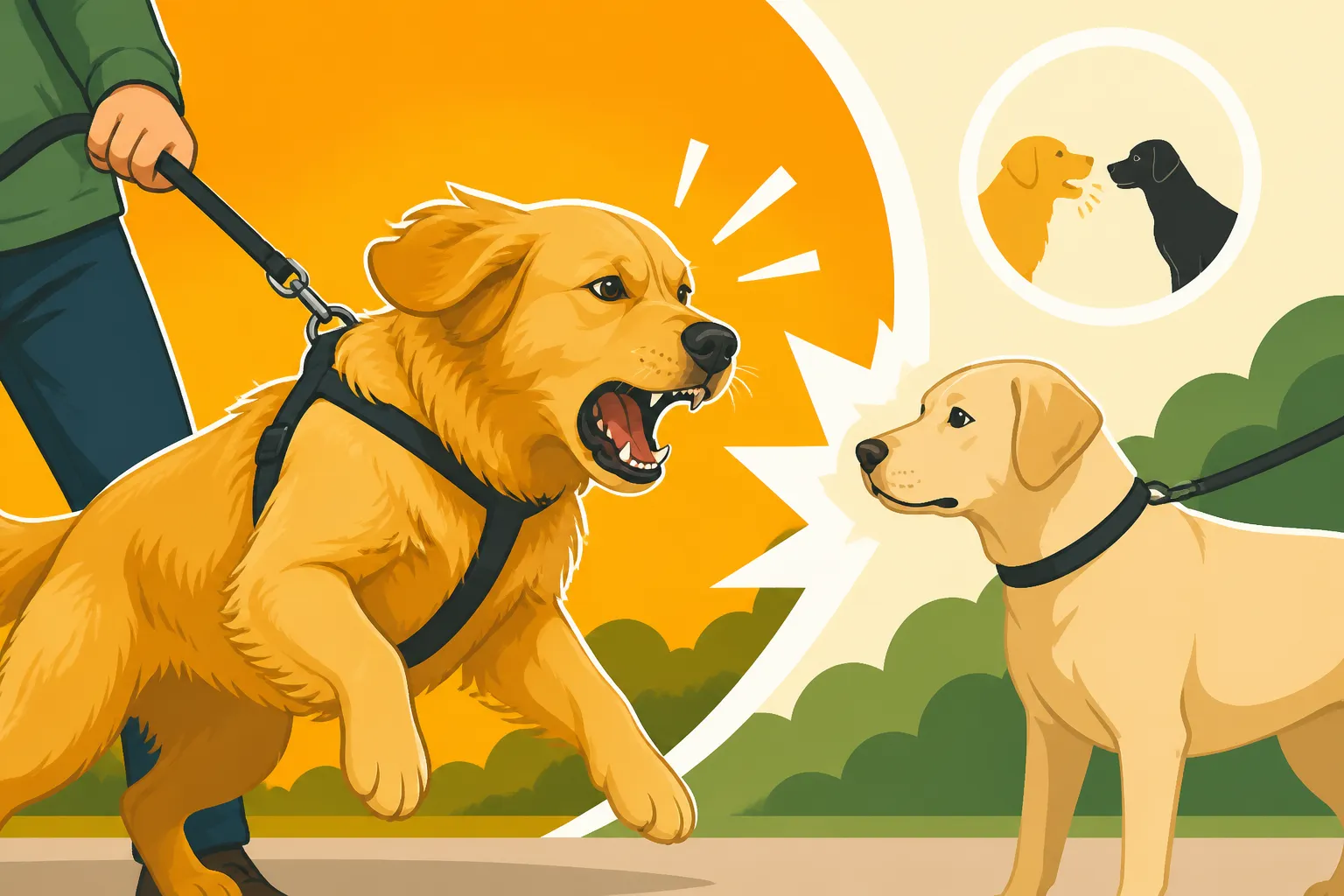
Golden Retriever Leash Reactivity Toward Dogs
It can be incredibly disheartening, and frankly, a bit embarrassing, when your otherwise sweet and friendly Golden Retriever transforms into a barking, lunging, pulling mess the moment another dog appears on the leash. You envisioned leisurely strolls, happy greetings, and a polite companion, but instead, you're wrestling a beast, apologizing to strangers, and dreading every corner. This guide is here to walk you through understanding why your Golden might be reacting this way and, more importantly, give you actionable strategies to help both of you navigate these encounters with more calm and confidence.
Understanding What Leash Reactivity Really Is
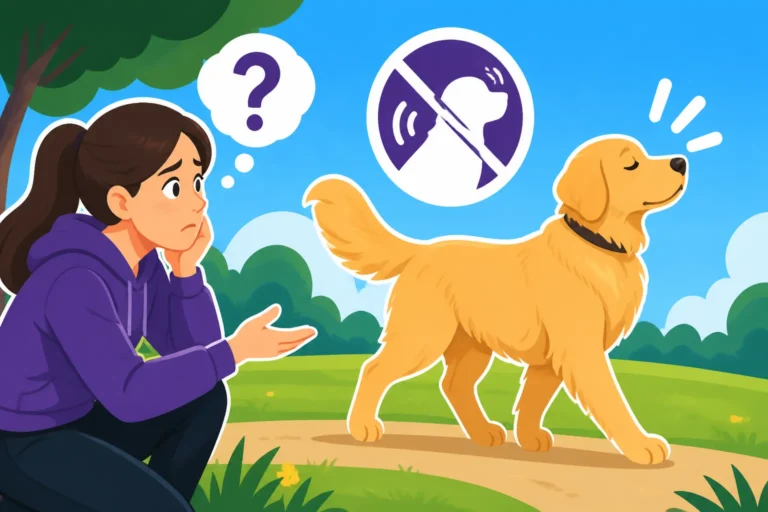
When your beloved Golden starts to bark, lunge, or growl at other dogs while on leash, it’s easy to jump to the conclusion that you have an aggressive dog. However, with Golden Retrievers, this is rarely the full picture. Their inherently gentle and friendly nature makes true, unprovoked aggression uncommon. What you're likely seeing is something called leash reactivity.
Reactivity Versus Aggression: A Key Difference
It's crucial to understand that leash reactivity is distinct from true aggression, though it can certainly look and sound scary. True aggression usually stems from a desire to inflict harm, often with a history of biting or attacking. Reactive dogs, on the other hand, are often displaying an intense emotional response, usually rooted in fear, frustration, or over-excitement, magnified by the restriction of the leash. Imagine being in a situation where you feel threatened, excited, or desperate to greet someone, but you're physically restrained and can't act on those impulses. That's a bit like what your Golden is experiencing.
For a Golden Retriever, a breed renowned for its soft mouth and desire to please, leash reactivity often manifests as:
- Loud barking: This can be frantic, insistent, or even a deep, warning bark.
- Lunging: A sudden, forceful pull on the leash towards the other dog, often accompanied by a stiff body and raised hackles.
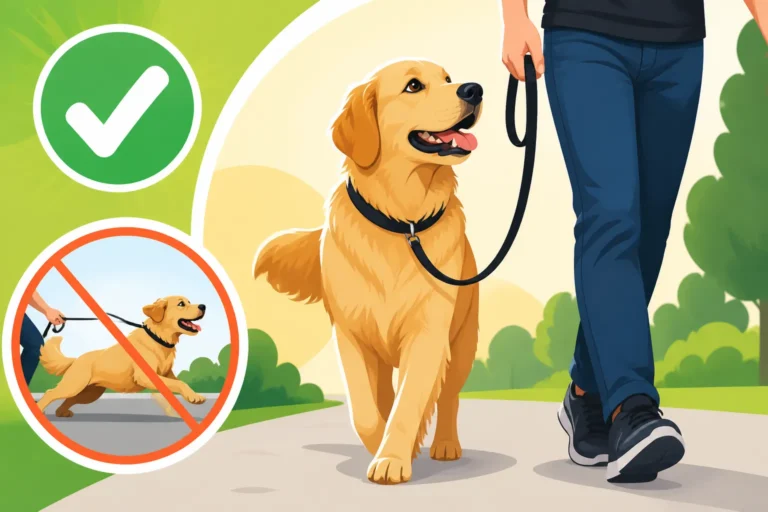
- Pulling intensely: Dragging you forward or sideways, seemingly oblivious to your attempts to stop them. Stopping a Golden Retriever From Pulling on Leash
- Growling: A low, rumbling sound that can signify discomfort, warning, or deep frustration.
- Whining: Especially in Goldens, sometimes a high-pitched whine can precede or accompany the reactive display, indicating immense frustration at not being able to greet or play.
These behaviors are almost always an attempt to create distance, communicate their discomfort, or express an overwhelming desire to interact that gets stifled by the leash. It’s a powerful, often involuntary, outburst that signals "I can't cope right now" rather than "I want to harm that dog."
Common Triggers and Why Goldens React
Understanding the "why" behind your Golden's reactions is the first step toward helping them. It’s rarely a single cause but often a combination of factors.
One of the most common triggers is proximity. If another dog gets too close, too fast, or appears suddenly, your Golden might feel overwhelmed. Think about walking down a narrow street and suddenly having someone get right in your face. It's startling, even if they mean no harm. For a dog, especially one who feels vulnerable on leash, this can be a strong trigger.
Frustration is another huge factor, particularly for a breed as social and playful as the Golden Retriever. They often desperately want to greet and play with other dogs. The leash, however, prevents this natural interaction. This constant denial can lead to what's known as "frustration-aggression" (though it's still reactivity). Your Golden isn't trying to be mean; they're just completely fed up that they can't get to their potential playmate or even just sniff a passing friend. This pent-up energy and desire explode into barking and lunging.
Fear or insecurity can also play a significant role. Perhaps your Golden had a negative experience with another dog as a puppy, or they weren't properly socialized during their critical developmental window. Socializing a Golden Retriever Puppy Maybe they're in pain from an undiagnosed condition, making them more sensitive and less tolerant of perceived threats. Even something as subtle as a stiff or awkward interaction with another dog can leave a lasting impression. If they feel unsure, barking and lunging can be their way of saying, "Stay away! I don't know you, and I don't feel safe."
Finally, a lack of appropriate early socialization or positive exposure can contribute. While Golden Retrievers generally have wonderful temperaments, a puppy who doesn't learn how to appropriately greet and interact with a variety of dogs and people in a controlled, positive manner can develop anxieties later on. Even well-socialized Goldens can become reactive if their experiences on leash become consistently frustrating or frightening.
Practical Strategies for Managing Leash Reactivity
Addressing leash reactivity requires a two-pronged approach: effective management to prevent rehearsals of the unwanted behavior and consistent training to change your Golden’s emotional response. It takes patience, consistency, and a deep understanding of your dog's needs.
Management First: Avoiding and Creating Space
Before you even begin formal training, the absolute most important thing you can do is manage your Golden's environment to prevent reactive outbursts. Every time your Golden barks and lunges, they are essentially practicing and reinforcing that behavior. Your goal in the initial stages is to stop that practice.
This means becoming a master of avoidance and creating space. This might involve:
- Changing your walk routes: Stick to less busy streets, parks during off-peak hours, or quiet trails where you're less likely to encounter other dogs. If you live in a city, this might mean walking at dawn or late at night temporarily.
- Scanning your environment constantly: Be proactive. If you see another dog approaching in the distance, assess the situation. Is there enough space to create a wide berth? Can you cross the street?
- Making a swift U-turn: If you're on a path and another dog suddenly appears, don't hesitate to turn around and walk in the opposite direction, even if it feels awkward. Your dog's comfort and training are more important than what a stranger might think.
- Stepping behind cars or bushes: Use environmental barriers to block your Golden's view of an approaching dog, giving you precious seconds to redirect or move away.
Being an advocate for your dog means understanding their limits and actively working to keep them below their "threshold"—the point at which they react. It might feel like you're avoiding the problem, but you're actually preventing your dog from practicing the very behavior you want to change. This also helps reduce their overall stress levels, making them more receptive to training later on.
Using appropriate gear can also make a world of difference in management. A front-clip harness, like those widely available on Amazon, can give you much better control over your Golden’s pulling without causing discomfort in their throat. Front-Clip Versus Back-Clip Harness for a Golden Some owners find a head halter (like a Halti or Gentle Leader) incredibly effective, as it allows you to gently steer your dog's head away from triggers and gain more leverage.
Training Techniques to Change Your Golden's Response
Once you’ve got management down, you can start actively working to change your Golden’s emotional response to other dogs through training. The most effective methods are based on desensitization and counter-conditioning (DS/CC). This simply means gradually exposing your dog to the trigger (other dogs) at a distance where they can remain calm, and then pairing that exposure with something highly positive (like delicious treats).
Here’s how to apply DS/CC:
- Find the Threshold: This is critical. You need to identify the distance at which your Golden notices another dog but does not react. They might look at the dog, but they shouldn't be barking, lunging, or displaying any signs of stress. This might be 50 feet, 100 feet, or even across a football field initially.
- Pair and Reward Calm: Once you find that threshold distance, position yourself so your Golden can see another dog. The moment they notice the dog, and before they have a chance to react, immediately start feeding them high-value, pea-sized treats (e.g., cooked chicken, cheese, hot dogs). Keep feeding until the other dog is out of sight or you've moved past them. The goal is for your Golden to start associating the sight of another dog with something wonderful happening—the treats!
- The "Look At That" (LAT) Game: This is a fantastic, structured DS/CC technique.
- Find your threshold distance.
- When your Golden sees another dog (and is below threshold), say "Look At That!" and immediately feed them a treat.
- Repeat this. The goal is for your Golden to eventually see another dog, look at the dog, then turn their head to look at you in anticipation of the treat. When they do that, you've successfully changed their association!
- Only move closer once your Golden is consistently looking at you after seeing another dog. This process can take weeks or months.
Emergency Retreat (U-Turn): In moments when you're caught off guard or your Golden is about to go over threshold, having a reliable "U-turn" or "Let's Go!" cue can be a lifesaver. Practice this in low-distraction environments first. Say your cue brightly, immediately turn 180 degrees, and briskly walk away, rewarding your Golden enthusiastically for following you. This teaches them that disengaging from a trigger is rewarding.
Remember, consistency is key. Short, frequent training sessions (5-10 minutes) are much more effective than long, infrequent ones. And always end on a positive note! Training a Golden Retriever From Puppy to Adult
Building Foundational Skills and Impulse Control
While direct reactivity training is important, strengthening your Golden's basic obedience and impulse control can indirectly help manage their reactions. A dog who can focus on you, even amidst distractions, is better equipped to handle unexpected encounters.
Some key foundational skills to work on include:
- "Watch Me" or "Focus": This teaches your Golden to make eye contact with you on cue, shifting their attention away from potential triggers. Practice this indoors, then gradually introduce it to increasingly distracting environments.
- "Leave It": This command is invaluable. It teaches your dog to ignore tempting items, including other dogs, by looking at you instead. Start with low-value items, then slowly increase the challenge.
- Reliable Recall: Even if you don't plan on letting your Golden off-leash in public, a strong "come when called" can be incredibly useful for quickly moving them away from a situation. Building Reliable Recall in a Golden Retriever
- Impulse Control Games: Games like "wait" at the door, "stay" before eating, or capturing calm behaviors can strengthen your Golden's ability to control their impulses rather than reacting instantly.
- Loose Leash Walking: Training your Golden to walk politely by your side, even without other dogs present, sets a good foundation. If they’re already pulling every which way, adding another dog to the mix will only exacerbate the issue. Loose Leash Walking With a Golden Retriever
Many online resources, like those offered by BAXTER & Bella, provide comprehensive programs that cover these foundational skills and can be a fantastic way to get consistent, structured training guidance from home. Building these skills empowers your Golden to make better choices and strengthens their bond with you, which is the ultimate tool against reactivity.
| Aspect | Management Strategy | Training Strategy |
|---|---|---|
| Goal | Prevent reactive outbursts; reduce stress | Change emotional response to other dogs; build coping skills |
| Immediate Action | Avoid triggers; create distance; use barriers | Reward calm observation of distant dogs; teach alternative behaviors |
| Key Mindset | Be proactive; be your dog's advocate | Be patient; celebrate small wins; consistency is crucial |
| Tools | Front-clip harness, head halter, long leash (for distance practice) | High-value treats, clicker, treat pouch, safe training environment |
| Initial Steps | Identify routes with fewer dogs; walk at off-peak times | Find threshold distance; use "Look At That" game or similar counter-conditioning methods |
| Benefit | Reduces rehearsal of unwanted behavior; builds confidence in handler | Creates positive associations; teaches dog to offer desired behaviors |
Essential Tools and Support for Reactive Goldens
Navigating leash reactivity can feel overwhelming, but you don't have to do it alone. There are specific tools and professional resources that can significantly ease the journey for both you and your Golden.
Gear That Can Make a Difference
Having the right equipment won't "fix" reactivity, but it can make managing and training much safer and more effective.
- Appropriate Leashes: A standard 6-foot leash is often ideal for daily walks. It gives your Golden some freedom without allowing them to get too far ahead. Avoid retractable leashes; they offer no control and can teach your dog to pull constantly, which is counterproductive for reactivity training. For controlled, distant practice in a safe, open area, a longer line (15-30 feet) can allow your Golden to feel more freedom while you maintain a connection, helping to desensitize them to other dogs from afar without the pressure of a tight leash.
- Harnesses for Control: As mentioned, a front-clip harness is a game-changer for many reactive dog owners. Brands like Easy Walk or Freedom No-Pull (both readily available on Amazon) attach the leash at your dog's chest. When your Golden pulls, it gently redirects their body back towards you, making pulling less effective and giving you more control without putting pressure on their sensitive throat. This is a much kinder and more effective alternative to choke chains or prong collars, which can increase fear and reactivity in Goldens.
- High-Value Treats: For counter-conditioning to work, your treats need to be irresistible. Forget the dry kibble. Think small pieces of cooked chicken, cheese, hot dogs, or liverwurst. These are the "jackpots" that will truly capture your Golden's attention and change their emotional association with other dogs. Always carry a plentiful supply in a treat pouch (also easily found on Amazon) for quick and easy access.
When to Seek Professional Help
There are times when managing reactivity on your own becomes too difficult, or you might hit a plateau in your progress. This is absolutely normal, and it's a sign that it's time to bring in professional support.
- When reactions are intense, frequent, or escalating: If your Golden's outbursts are becoming more severe, happening more often, or if you feel unsafe during walks, a professional can provide immediate strategies and a safety plan.
- When you feel overwhelmed or stuck: Leash reactivity can be emotionally draining. A trainer or behaviorist can offer encouragement, refine your techniques, and help you see progress you might be missing.
- Rule out underlying issues: Before starting any behavior modification, it's always a good idea to have your Golden thoroughly examined by a veterinarian. Pain (e.g., hip or elbow issues that are common in Goldens, or a hidden injury) can significantly contribute to reactivity, making a dog more irritable or fearful. Signs a Golden Retriever Is in Pain Addressing physical discomfort can sometimes dramatically reduce reactive behaviors.
- Choosing the Right Professional: Look for a Certified Professional Dog Trainer (CPDT-KA) or a Certified Dog Behavior Consultant (CDBC). These individuals use positive reinforcement and science-based methods. Be wary of trainers who recommend punitive tools (like shock collars or prong collars) or methods that involve intimidating your dog. These can severely damage your relationship with your Golden and often exacerbate reactivity, turning fear into aggression. A good professional will empower you with tools and understanding, not just force your dog into submission. They might even offer virtual consultations or online courses, which can be incredibly helpful for busy schedules or if you don't have local experts. Choosing a Trainer for a Golden Retriever
Remember, working through leash reactivity is a journey, not a destination. There will be good days and bad days. But with patience, consistency, the right tools, and potentially professional guidance, you can help your Golden Retriever feel more secure and enjoy their walks again.
Disclaimer
This article is for general informational purposes only and does not constitute professional advice. Laws, prices and regulations vary by location and change over time. Consult a qualified professional for guidance on your specific situation.