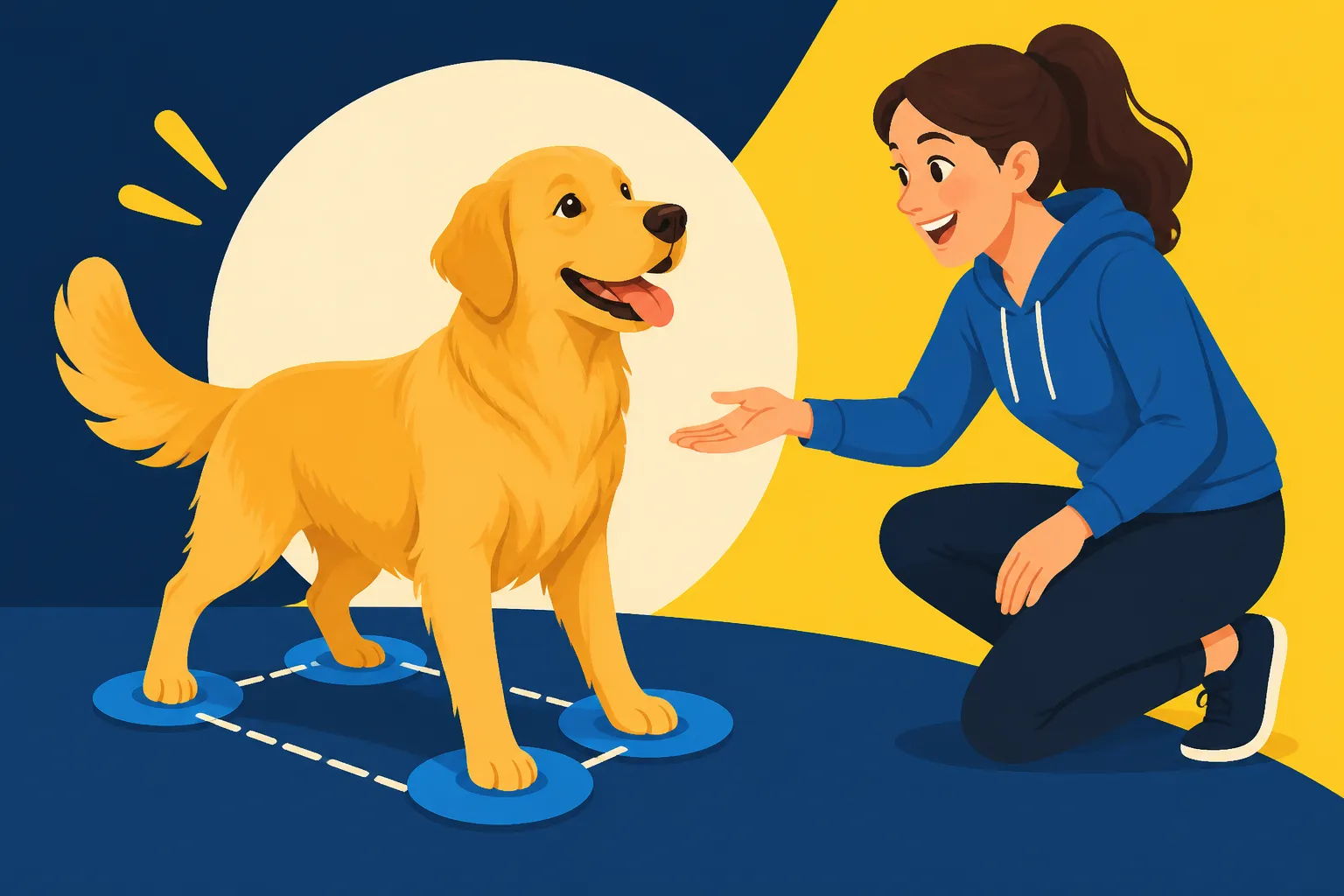
Teaching a Golden Retriever Four on the Floor
It's a familiar scene: you walk through the door, or a guest arrives, and your beloved Golden Retriever launches themselves into a joyous, full-body greeting, front paws flailing, tail wagging furiously. While their enthusiasm is endearing, that jumping can quickly become a problem, knocking over children or staining clothes. This guide will walk you through effective, positive reinforcement methods to teach your Golden Retriever the polite "four on the floor" greeting, ensuring everyone can enjoy their wonderful company without the airborne acrobatics.
Understanding Why Your Golden Retriever Jumps
Before we can even begin to tackle the jumping, it's so important to understand why your Golden Retriever is doing it in the first place. It’s rarely out of malice or disobedience; more often, it's rooted in their very nature and how they perceive the world around them. Understanding this can help you approach the training with patience and empathy.
The Root of the "Golden Greeting"
Golden Retrievers are incredibly social and affectionate dogs. They live for human interaction, and a big part of their charm is that boundless enthusiasm. When you or a guest walks through the door, your Golden is simply overwhelmed with joy and excitement. They want to be close to your face, to connect, and to express their happiness. For a dog, jumping up is a very natural way to seek attention and get closer to your eye level, especially when you consider how much taller we are than them!
Think about it from their perspective: when they jump, they often get a reaction. Even if that reaction is pushing them away, telling them "no," or making eye contact, it's still attention. And for a Golden who craves your affection, any attention can be seen as a reward. They might have learned, inadvertently, that jumping leads to interaction, even if it's negative interaction. This makes the habit surprisingly resilient, especially if they’ve been practicing it for years. Their incredible drive to please, combined with their exuberant energy, means they often don't think through the physics of a 60-pound dog launching itself at someone. They just want to say hello!
When Jumping Becomes a Habit
What starts as an excited puppy greeting can quickly solidify into a deeply ingrained habit if not addressed consistently. Imagine a young Golden Retriever puppy, all adorable and fuzzy, jumping up on you. Most people instinctively bend down, pet them, or pick them up. This, right there, is positive reinforcement. The puppy learns: "Jumping equals cuddles and attention!" As they grow, that tiny, cute jump becomes a powerful, potentially problematic leap.
The habit is reinforced because, unfortunately, people aren't always consistent. One day, a visitor might laugh and pet the jumping dog, inadvertently rewarding the behavior. The next day, someone else might get upset and push the dog away. This inconsistency can be confusing for your Golden. They might think, "Well, it worked last time, maybe it will work again!" Each successful jump, even if rare, can strengthen the habit. It takes a conscious effort from everyone in the household, and even visitors, to ensure the dog always experiences the same clear message: four paws on the floor get the reward, jumping does not. This is particularly true during high-excitement moments, like coming home after a long day or when new people arrive, as these are the times when the "Golden greeting" is most likely to occur.
Laying the Foundation: Essential Training Principles
Successful training, especially when it comes to stopping an ingrained behavior like jumping, relies on a few fundamental principles. You can't just tell a Golden Retriever "no" and expect them to understand what to do instead. You need to teach them an alternative, and reinforce that alternative consistently.
Consistency is Key
I cannot stress this enough: consistency is absolutely paramount when training a Golden Retriever, or any dog for that matter. If one family member allows jumping and another doesn't, your Golden will become confused and frustrated. They won't understand the rules, and the jumping behavior will persist. It's vital that everyone who interacts with your Golden — every single person, from children to spouses to visiting relatives — is on the same page.
Before you even start, have a family meeting. Discuss what "four on the floor" means and agree on the exact method you will all use to respond to jumping. This might mean having visitors briefly ignore your dog upon entry, or everyone consistently turning their backs if jumping occurs. If you're using an online training program like those offered by BAXTER & Bella, make sure everyone reviews the relevant modules so that the entire household is applying the same techniques. Goldens are smart, and they are masters at figuring out who they can get away with what, so a united front is your best defense against unwanted behaviors. Inconsistency is the number one reason why training efforts fail.
Positive Reinforcement and Rewards
Golden Retrievers thrive on positive reinforcement. They want to please you, and they respond incredibly well to praise, treats, and affection. The goal isn't to punish your dog for jumping, but rather to teach them that not jumping (i.e., keeping all four paws on the floor) is what earns them the good stuff.
When your Golden approaches you or a guest and stays on all fours, even for a split second, that’s your moment to reward them! Immediately offer a high-value treat, calm praise ("Good 'four on the floor'!"), and gentle petting. The timing is crucial: the reward must happen within 1-3 seconds of the desired behavior so your dog clearly associates their calm posture with the positive outcome. If they jump, the reward disappears. Turn your back, cross your arms, and completely disengage. As soon as they calm down and all four paws are on the ground, then you can re-engage and reward. This isn't about ignoring your dog; it's about ignoring the unwanted behavior while actively seeking and rewarding the desired behavior. You might find a good treat pouch from Amazon handy for quick access to rewards during training sessions, especially when practicing greetings.
Step-by-Step: Teaching "Four on the Floor"
Now that we understand the 'why' and the foundational principles, let's get into the practical steps of teaching your Golden Retriever to keep all four paws on the floor during greetings. This method focuses on clear communication and rewarding the right behavior.
The Initial Approach: Managing Excitement
The very first step is to manage the environment to prevent jumping before it even starts. It's much easier to teach a new behavior when your dog isn't already over-the-top excited. Start by practicing in a calm environment, perhaps with just one family member initially.
When someone (let's say, your spouse) approaches your Golden, or you come home yourself, anticipate the jumping. Before your Golden has a chance to launch, give them a clear command like "Sit" or "Down." If they obey, immediately reward them with a high-value treat and calm praise. The key is to catch them before they jump. If they start to bounce or get revved up, take a step back, wait for them to settle, then try again. You're effectively saying, "If you want my attention, this is how you get it."
Another effective technique is the "turn and ignore." As soon as your Golden's paws leave the ground, immediately turn your back, cross your arms, and make no eye contact or verbal communication. Become a "tree." Wait until all four paws are firmly on the ground again, then turn back around. If they jump again, repeat the process. The instant their paws are on the floor, reward them. It can feel counter-intuitive to ignore your loving Golden, but it’s powerful. They quickly learn that jumping makes you disappear, while polite greetings make you present and rewarding. Teaching a Golden Retriever to Sit and Stay is an excellent foundation for this, as a solid "sit" command can be your go-to for polite greetings.
Practice with Controlled Greetings
Once your Golden is starting to understand the concept with family members in a low-distraction setting, it’s time to slowly introduce controlled greetings with others. This is where consistency from everyone truly shines.
Start with a friend or a calm relative who is willing to follow your instructions precisely. Explain the "four on the floor" rule and the "turn and ignore" method. Have your helper approach your Golden. As soon as your Golden shows any sign of keeping their paws down (even if they're just wiggling excitedly on the ground), have your helper give a treat and calm praise. If your Golden jumps, the helper must immediately turn their back and ignore them until all four paws are down. Repeat this process for short sessions. You might want to keep your dog on a leash at first, even if it's just a light house leash, to give you a bit more control if they get too boisterous. This also allows you to gently guide them into a sit if needed. Over time, your Golden will begin to associate polite greetings with positive outcomes from everyone they meet. Remember, it's a gradual process, and each successful "four on the floor" greeting builds a stronger positive association.
| Jumping Scenario | Immediate Response | Desired Behavior for Reward | Reward Used (Example) |
|---|---|---|---|
| Owner walks in | Turn back, ignore if jumping | All four paws on the floor | Treat + "Good!" + gentle pet |
| Guest at door | Ask guest to ignore/turn back | Sit or stand politely | Treat from guest + praise |
| Excited approach (e.g., park) | Step back, ask for "Sit" command | Calm sit or stand | Favorite toy or high-value treat |
| Puppy Nipping/Jumping | Redirect to a chew toy or ignore | Engaging with appropriate toy | Playtime with toy + praise |
Generalizing the Behavior
The biggest challenge with any dog training is often generalizing the behavior, meaning your Golden needs to understand that "four on the floor" applies everywhere and with everyone, not just specific people in specific places.
Once your Golden is doing well with family and a few trusted friends, gradually introduce new people and environments. Start with calm individuals in your home, then move to slightly more stimulating environments like a quiet park, practicing with people who are willing to cooperate. Keep initial interactions short and sweet. The more successful, calm greetings your Golden experiences, the stronger the new habit will become. For particularly exuberant Goldens, having a solid "place" command can also be incredibly useful. You can direct them to their bed or a mat when guests arrive, rewarding them for staying there calmly until they are invited to greet politely.
You can also use tools to help. A baby gate across the entryway when guests arrive can create a soft barrier, allowing your Golden to see and hear people without being able to jump on them immediately. You can then reward calm behavior through the gate. Then, when they are calm, allow them through for a controlled, leashed greeting, reinforcing the "four on the floor." The BAXTER & Bella online puppy school or other similar programs often have excellent resources on proofing and generalizing behaviors in various settings, which can be invaluable. Socializing a Golden Retriever Puppy often includes teaching polite greetings, so it's a good supplementary read.
Troubleshooting Common Jumping Scenarios
Even with the best training, Golden Retrievers can be super creative at finding new ways to express their excitement, and certain situations can be particularly challenging. Let's look at a few common scenarios and how to navigate them.
Dealing with Doorbell Excitement
Ah, the doorbell! It's practically a siren for many Golden Retrievers, signaling the arrival of exciting new people. The sudden sound often triggers an immediate burst of energy and frantic jumping.
To tackle this, you'll need to desensitize your Golden to the doorbell sound itself. Start by having a helper ring the doorbell once while your Golden is calm and not near the door. The moment they hear it, immediately reward them with a treat and praise for staying calm. Do not let them rush to the door. Repeat this multiple times, gradually increasing the distractions or getting closer to the door as your Golden remains calm. The idea is to change their association with the doorbell from "exciting arrival" to "calm behavior gets a reward."
Once they're calm with the sound, you can add a "place" command. Have them go to their bed or mat before the doorbell rings, then reward them when the doorbell sounds and they stay put. When the actual guest arrives, keep your Golden on their "place" command, rewarding them periodically for staying there. Once the guest is settled, and your Golden is calm, then release them for a controlled, "four on the floor" greeting. It takes practice, but it's very effective. If your Golden tends to get mouthy when excited, reading Stopping a Golden Retriever Puppy From Biting might offer some good tips on redirecting that energy during high-arousal moments.
Jumping on Specific People
Sometimes, your Golden Retriever might be perfectly well-behaved with certain family members but turns into a bouncy kangaroo for others – usually the ones who give them the most enthusiastic (and perhaps inconsistent) attention. This often happens with children or less dog-savvy guests.
The solution here still comes back to consistency and managing interactions. For children, it's crucial to teach them how to interact with the dog to reinforce "four on the floor." Teach kids to only pet the dog when all paws are down, and to immediately turn away if the dog jumps. Supervise all interactions closely. For guests who are struggling, don't be afraid to politely instruct them. You might say, "Please just ignore Goldie until she settles down. She's learning to greet with 'four on the floor'!" You can even keep your Golden on a leash when those specific people visit, allowing you to control the interaction and reward polite behavior directly. Sometimes, a long line, easily found on Amazon, can give you that extra bit of control without feeling like your dog is completely restricted, allowing them to drag it around the house for easier intervention when a specific person arrives.
Managing Puppy Nipping and Jumping
Golden Retriever puppies are notorious for their mouthiness and boundless energy, which often manifests as a combined attack of jumping and nipping. While it's cute when they're tiny, it quickly becomes problematic as they grow.
The principles remain the same: ignore the unwanted behavior, redirect, and reward the desired behavior. When your puppy jumps and nips, immediately disengage. Stand up, turn your back, or even briefly leave the room. The moment they settle their paws and mouth, re-engage calmly. Also, always have appropriate chew toys available. When they start to get mouthy or jumpy, redirect their attention to a suitable toy. Praise them enthusiastically when they chew on their toy instead of you. This teaches them appropriate outlets for their energy and mouthiness. Puppies also need a lot of physical and mental exercise to burn off steam; a tired puppy is less likely to jump and nip. Ensure they're getting plenty of appropriate playtime and mental enrichment activities. Golden Retriever Chewing Through Adolescence provides more detail on managing these behaviors as your puppy grows.
Teaching your Golden Retriever "four on the floor" is a journey that requires patience, consistency, and a whole lot of love. But with clear communication and positive reinforcement, you can transform those exuberant greetings into polite, calm interactions that everyone can enjoy.
Disclaimer
This article is for general informational purposes only and does not constitute professional advice. Laws, prices and regulations vary by location and change over time. Consult a qualified professional for guidance on your specific situation.