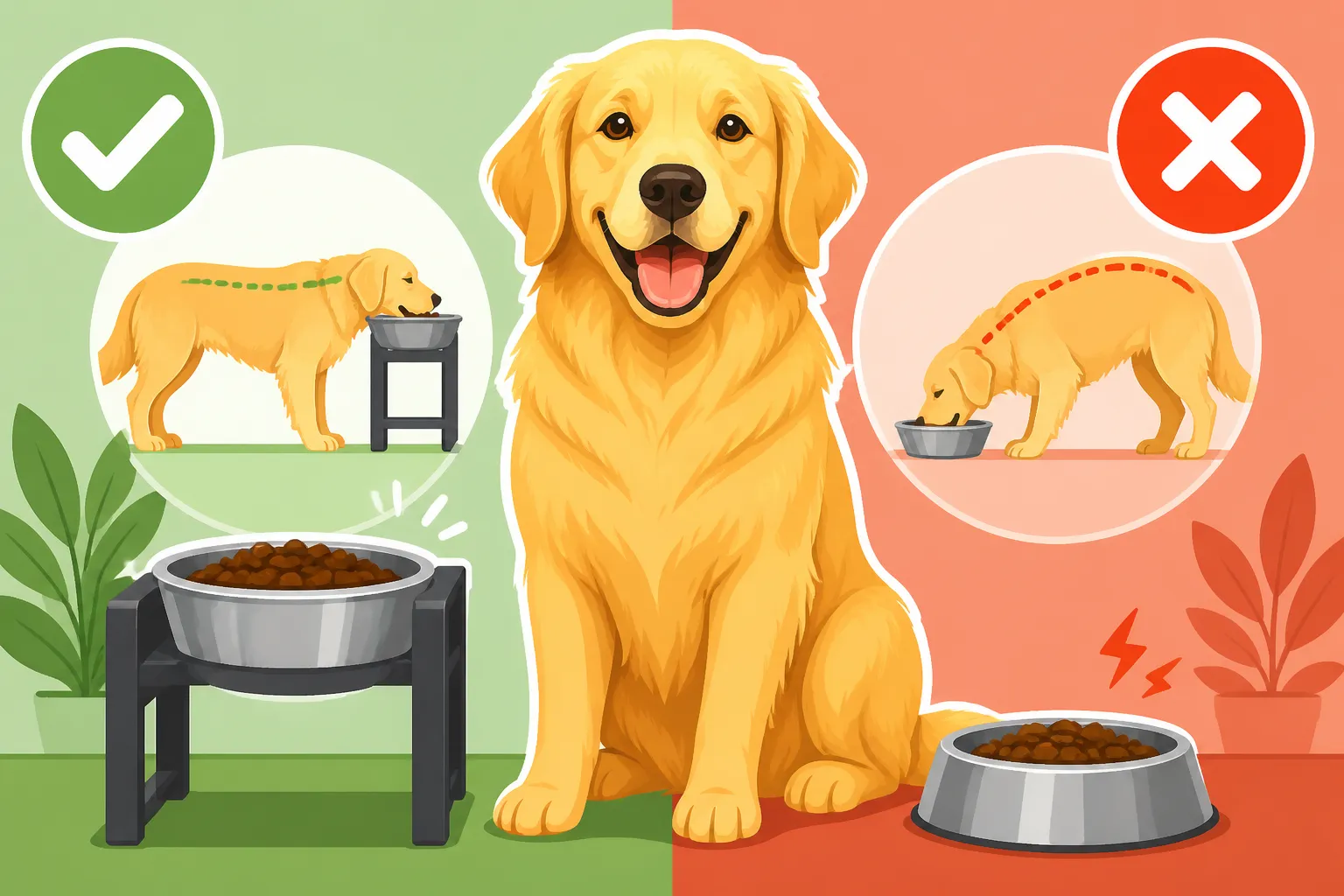
Whether Elevated Bowls Suit a Golden Retriever
As a Golden Retriever owner, you've probably heard all sorts of advice about feeding, and the topic of elevated bowls seems to come up in every discussion forum and at every dog park. It's truly confusing when you hear some people swear by them for their older dogs, while others warn of dire health consequences. This guide aims to clear up the confusion surrounding elevated bowls for Golden Retrievers, helping you make an informed decision that prioritizes your beloved companion's health and comfort.
The Big Debate: Elevated Bowls and Bloat Risk in Golden Retrievers
The primary concern that gives many Golden Retriever owners pause about elevated bowls is the potential link to Gastric Dilatation-Volvulus, more commonly known as bloat. It's a terrifying condition, and anything that might increase its risk understandably creates anxiety for us dog parents. We just want to do what's best for our furry family members, and the conflicting information out there can feel overwhelming.
Understanding Gastric Dilatation-Volvulus GDV
Let's not sugarcoat it: bloat is an absolute emergency. It's not just an upset stomach; it's a life-threatening condition where the dog's stomach fills with gas and can then twist upon itself, cutting off blood supply. This twisting, or volvulus, traps the gas, prevents food and water from passing, and can quickly lead to shock and death. Golden Retrievers, like many other large, deep-chested breeds, are unfortunately predisposed to bloat. Their chest conformation creates more space for the stomach to distend and potentially flip, making them a higher-risk breed. Recognizing the signs of bloat—like a distended abdomen, unproductive retching, pacing, drooling, and obvious discomfort—is absolutely critical, as time is of the essence for survival. Bloat in Golden Retrievers and the Signs Owners Miss highlights how easily these early indicators can be missed.
The Research That Raised Concerns
The main reason elevated bowls became a contentious topic stems from a significant study conducted by Purdue University in the late 1990s and early 2000s. This research, which looked at a large number of dogs, found a statistical association between using elevated feeding bowls and an increased risk of GDV in large and giant breeds. The hypothesis was that dogs eating from elevated bowls might ingest more air, or that the elevated position somehow facilitated the stomach twisting. For Golden Retrievers, who already face a Bloat Risk in a Deep-Chested Golden, these findings naturally caused a great deal of alarm.
It's important to understand that while statistical associations are valuable, they don't always prove direct causation in every single instance. The study observed a correlation, suggesting that elevated bowls were one factor among many that could contribute to bloat. This nuance often gets lost in the general advice, leading to a blanket recommendation against elevated bowls for all large breeds, even when other circumstances might be at play. The research certainly gave us valuable data, but it also opened up a complex discussion rather than providing a simple "yes" or "no" answer for every dog.
Why the Link Isn't Always Clear-Cut
While the Purdue study's findings are certainly compelling and should be taken seriously, the reality of bloat is multi-factorial. It's rarely just one thing that causes it. Other significant risk factors include genetics, temperament (anxious dogs might be more prone), eating speed, exercising too close to meals, consuming large meals, and even certain types of food. For example, a Golden Retriever who gulps down a massive meal in five seconds, then immediately goes tearing around the yard, might be at a higher risk for bloat regardless of bowl height.
It's a bit like asking if running causes knee problems; for some, it might contribute, but for others with strong genetics and proper form, it won't be an issue. Similarly, some Goldens may use an elevated bowl for years without incident, while others might experience bloat despite never having used one. This makes the decision even harder for owners, as there isn't a universally applicable rule. Instead, it requires a thoughtful consideration of your individual dog's health, habits, and risk profile.
Potential Benefits of Elevated Bowls (Despite the Risks)
Given the serious concerns about bloat, why would any Golden Retriever owner consider an elevated bowl? The truth is, for some dogs, particularly those with specific health challenges, a slightly raised feeding position can offer significant comfort and practical benefits. It's about balancing potential risks with undeniable quality of life improvements in certain scenarios, always under veterinary guidance.
For Dogs with Orthopedic Issues
As Golden Retrievers age, or even if they're predisposed due to genetics, they can develop orthopedic conditions like hip and elbow dysplasia or arthritis. Golden Retriever Hip and Elbow Dysplasia Explained is a common challenge many Goldens face, and the stiffness and pain associated with these conditions can make simple actions, like bending down to eat or drink from a floor-level bowl, quite uncomfortable or even painful. Imagine having aching joints and having to stoop low several times a day – it's not pleasant.
An elevated bowl can allow a Golden to maintain a more natural, upright posture while eating, reducing the strain on their neck, back, hips, and elbows. This isn't about preventing bloat; it's about making meal times a less painful and more comfortable experience. For a dog struggling with mobility, this small change can significantly improve their daily quality of life, allowing them to eat and drink with less effort and discomfort.
For Older Golden Retrievers
Caring for a Senior Golden Retriever comes with its own set of considerations, and mobility is often at the top of the list. Older Goldens, even without a formal diagnosis of severe joint disease, might simply be stiffer, slower, and less agile than they once were. Getting down to floor level and then standing back up can become a noticeable struggle. A senior Golden might hesitate before approaching their food bowl, or even show reluctance to finish a meal, not because they're not hungry, but because the physical act of eating from the floor is becoming too taxing.
For these wise old souls, a slightly raised bowl can provide much-needed relief. It can make eating and drinking easier, promoting better hydration and nutrition because they don't have to work as hard for it. This small adjustment can help them maintain dignity and comfort during meal times, ensuring they continue to enjoy their food without unnecessary strain. It's one of the Mobility Aids for an Aging Golden Retriever that can make a real difference, alongside things like orthopedic beds and ramps.
For Swallowing Difficulties
While less common, some Golden Retrievers might experience conditions that affect their ability to swallow efficiently, such as megaesophagus (an enlargement of the esophagus) or other esophageal motility disorders. In such cases, eating from a raised position, often prescribed by a veterinarian in a very specific upright posture, can sometimes help gravity assist the food's passage into the stomach, reducing regurgitation or aspiration risks.
It's crucial to understand that this is a very specific medical need and not a general recommendation for all dogs. If your Golden has been diagnosed with a swallowing issue, your vet will provide precise instructions on feeding position and bowl height. This isn't a decision to be made lightly or without professional medical guidance, as the wrong approach could exacerbate the problem.
Weighing the Pros and Cons for Your Golden
The decision about elevated bowls isn't a simple one, and it certainly isn't universal. What works for one Golden Retriever might not be suitable for another. It's about carefully considering your individual dog's health profile, habits, and needs, and then making an educated choice that puts their well-being first. This requires a bit of detective work and, most importantly, a conversation with your veterinarian.
Individual Dog Assessment is Key
Before you make any changes to your Golden's feeding setup, it's absolutely vital to have a chat with your vet. They know your dog's medical history, genetic predispositions, and current health status best. Factors like your dog's age, whether they have a history of orthopedic issues, how quickly they eat, and if there's any family history of bloat (which is highly relevant to Golden Retriever Lifespan and What Shortened It considerations) all play a role in this decision.
For a young, healthy Golden Retriever who eats slowly and has no joint problems, the potential risks associated with elevated bowls might outweigh any perceived benefits. However, for an older Golden with Golden Retriever Arthritis and Joint Decline who struggles to bend, the comfort benefits might be considerable, and your vet might suggest ways to mitigate the bloat risk if you opt for a slightly raised bowl. It's about a personalized approach, not a one-size-fits-all solution.
Alternative Solutions for Faster Eaters or Joint Issues
If you're worried about bloat because your Golden inhales their food, but also want to ease joint strain, there are other excellent solutions to consider. For fast eaters, Slow Feeder Bowls for a Fast-Eating Golden are a fantastic invention. These bowls have ridges or obstacles that force your dog to eat around them, significantly slowing down their mealtime and reducing air intake. You can find a wide variety of effective slow feeder bowls on sites like Chewy or Amazon, making it easy to experiment with different designs.
For joint comfort, you don't necessarily need a dramatically elevated stand. Sometimes, simply placing the bowl on a low platform or a couple of sturdy books can raise it just enough to reduce neck strain without elevating it to a height that might be concerning for bloat. Another strategy is to feed smaller, more frequent meals throughout the day, which can reduce the total volume in the stomach at any one time, potentially lessening bloat risk and making each eating session less demanding on joints. Feeding an Adult Golden Retriever Twice a Day is a common recommendation, but for some dogs, three or four smaller meals might be even better.
Managing Bloat Risk Proactively
Regardless of your bowl choice, understanding and proactively managing bloat risk is paramount for any Golden Retriever owner. This includes:
- Slowing Down Eating: As mentioned, slow feeder bowls are excellent. Puzzle toys or spreading food on a lick mat can also extend mealtime.
- Avoiding Exercise Around Meals: Don't let your Golden engage in vigorous play or exercise for at least an hour before or after eating.
- Smaller, More Frequent Meals: Instead of one large meal, break their daily food allowance into two or three smaller portions.
- Limiting Water Intake During and Immediately After Meals: Offer smaller amounts of water frequently throughout the day rather than allowing them to gulp large quantities right after eating.
- Monitoring for Signs: Be vigilant for Bloat Symptoms Every Golden Retriever Owner Should Know. Early detection is key.
- Considering a Gastropexy: For Goldens with a strong family history of bloat or those undergoing another abdominal surgery (like spay/neuter), your vet might discuss Gastropexy Surgery for Golden Retrievers. This procedure tacks the stomach to the abdominal wall, preventing it from twisting, though it doesn't prevent the stomach from dilating with gas.
Practical Considerations for Feeding Setups
Once you've made an informed decision, with your vet's input, about whether any elevation is right for your Golden, it's time to consider the practical aspects of your feeding setup. Choosing the right equipment and ensuring it's used safely and effectively is just as important as the initial decision.
Material and Stability of Bowls
When selecting any feeding bowl, material and stability are crucial. Stainless steel bowls are often recommended by vets because they are durable, easy to clean, and resistant to bacterial growth. Ceramic bowls can also be a good option if they are heavy and have a chip-resistant glaze, though they can break if dropped. Plastic bowls are generally discouraged as they can scratch easily, harbor bacteria, and some dogs may develop contact allergies to the plastic.
If you opt for an elevated feeder, ensure the stand is exceptionally sturdy and doesn't wobble or tip easily. A wobbly stand can be frustrating for your dog and might even deter them from eating. Look for stands with non-slip feet or a heavy base. You can find a wide selection of durable, stable options from reputable pet supply retailers like Chewy and Amazon, with many customer reviews to help you gauge stability.
Finding the Right Height (If You Choose to Use One)
If you decide that a slightly raised bowl is beneficial for your Golden, determining the correct height is important. The general guideline is that the bowl should be positioned so your dog can eat comfortably without having to stoop excessively or strain their neck downwards, but also without having to reach upwards. Their back should remain relatively straight, and their head should be level or only slightly bowed.
A good way to estimate this is to measure your Golden Retriever from the floor to their lower chest. The top of the bowl should ideally be about that height. However, this is just a starting point. Observe your dog as they eat: do they seem comfortable? Is their posture relaxed? Are they still gulping air? Adjust as needed, always aiming for comfort without significant upward reaching. Remember, the goal is often just a slight lift, not a pedestal-like elevation.
Where to Find Appropriate Bowls
The market for pet feeding supplies is vast, which is both a blessing and a curse. You have endless choices, but it can be hard to sift through them. For standard, floor-level bowls, stainless steel is king. For slow feeders, brands like Outward Hound, often available on Amazon or Chewy, offer excellent, durable designs that truly work to slow down meal consumption.
If you're looking for an elevated feeder, consider those that offer adjustable heights. This flexibility is great, especially if you have a growing puppy (though Why Fast Growth Damages a Golden Retriever's Joints means you should be cautious with any elevated feeding during puppyhood unless medically necessary and vet-approved) or if you want to experiment to find the perfect ergonomic level for your adult Golden. Some pet food companies, like Ollie, known for their fresh dog food delivery, also offer high-quality, sturdy feeding bowls and accessories that complement a healthy diet, often designed with dog ergonomics in mind, though you'll still need to assess the height for your specific dog. Always read reviews and compare products to ensure you're getting a safe, durable, and effective feeding solution for your beloved Golden.
Disclaimer
This article is for general informational purposes only and does not constitute professional advice. Laws, prices and regulations vary by location and change over time. Consult a qualified professional for guidance on your specific situation.