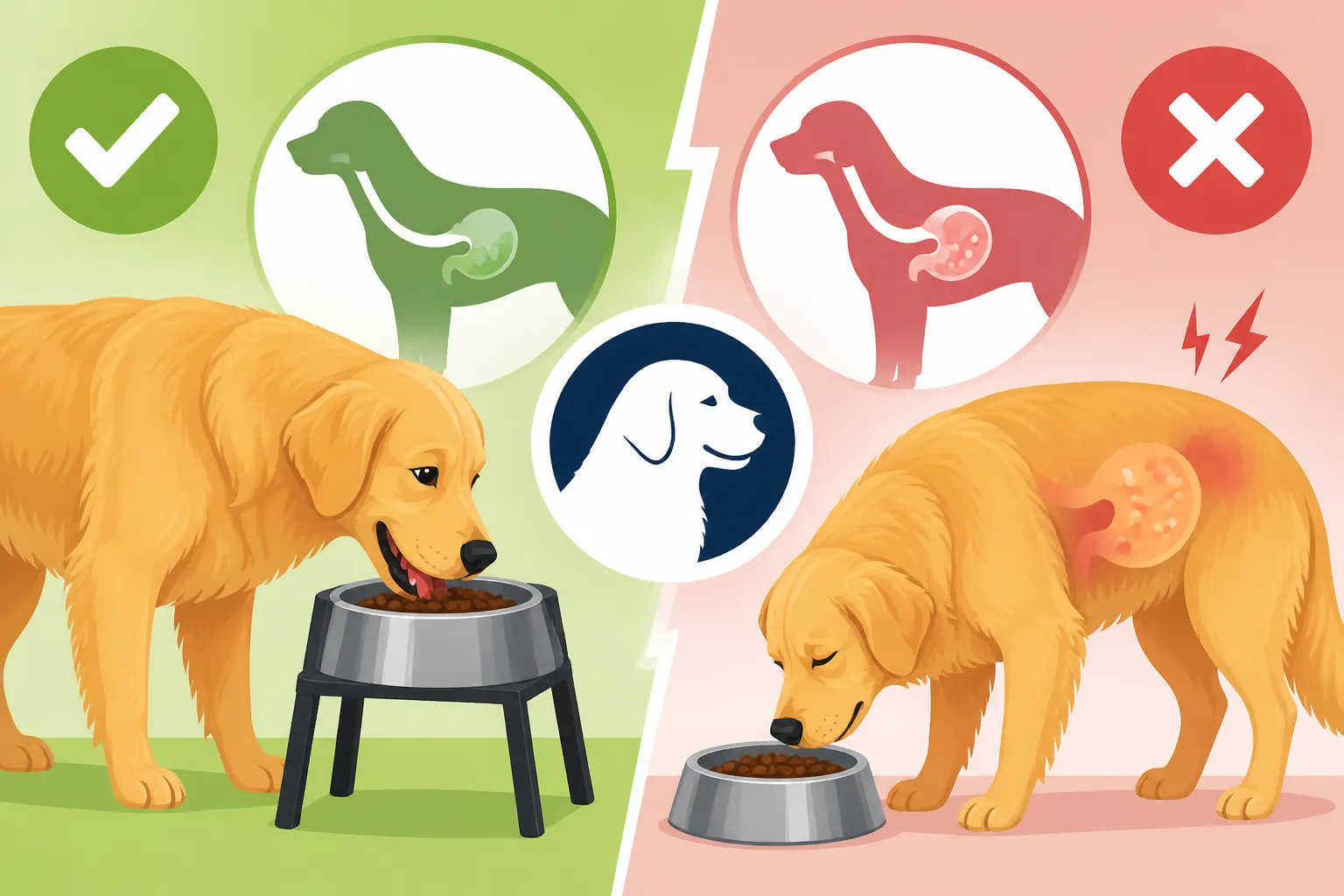
Whether Raised Bowls Cause Bloat in Goldens
It’s a terrifying moment for any Golden Retriever owner: the sudden onset of bloat, a life-threatening condition that can turn deadly in a matter of hours. Amidst the fear and confusion, many of us have heard conflicting advice about how to prevent it, with raised feeding bowls often topping the list. This guide will cut through the noise, explaining exactly what current veterinary science says about elevated food bowls and their actual impact on bloat risk for our beloved Goldens.
Unpacking Gastric Dilatation-Volvulus (Bloat) in Golden Retrievers
Bloat, scientifically known as Gastric Dilatation-Volvulus (GDV), isn't just an upset tummy; it's a critical medical emergency. It occurs when a dog's stomach fills with gas, food, or fluid (dilatation) and then twists (volvulus), trapping everything inside and cutting off blood flow to vital organs. This can lead to shock, organ damage, and even death if not treated immediately. For deep-chested breeds like Golden Retrievers, the risk is tragically higher.
Why Golden Retrievers Are Susceptible to Bloat
Golden Retrievers, with their deep, narrow chests, are unfortunately predisposed to GDV. This unique body shape allows their stomach more room to swing and twist, increasing the likelihood of volvulus once it becomes distended. It’s not just about their shape, though. Other factors play a significant role, including genetics, eating habits, and even temperament.
Owners of Golden Retrievers often feel a crushing responsibility to protect their dogs from this silent killer, and the fear of bloat can loom large. We want to do everything right, and that often leads us down paths of advice that might not be as scientifically sound as we hope. Understanding the true risk factors is the first step toward effective prevention. If you're wondering about the specific predispositions, you might find our article on Bloat Risk in a Deep-Chested Golden particularly informative.
Recognizing the Urgent Signs of Bloat
Time is absolutely critical when it comes to bloat. Knowing the signs can literally save your Golden's life. Owners typically notice a sudden onset of symptoms that worsen rapidly. Your Golden might try to vomit but bring nothing up, a classic sign known as a non-productive retch. You might also observe pacing, restlessness, whining, or looking anxiously at their abdomen. As the condition progresses, their belly might appear distended or swollen, hard to the touch, and they may drool excessively, pant, or collapse.
Many owners initially dismiss these early signs, thinking it's just an upset stomach, but the urgency cannot be overstated. If you suspect bloat, you need to get your Golden to an emergency veterinary clinic immediately. Every minute counts. The difference between life and death can be as short as an hour or two. Our comprehensive guide on What to Do When a Golden Retriever Bloats offers crucial first steps.
The Long-Standing Debate on Elevated Feeding Bowls
For years, many well-meaning dog owners and even some veterinarians advocated for raised feeding bowls, believing they would prevent bloat. The logic seemed sound enough: if a dog eats from a raised bowl, they wouldn't have to bend their neck down, supposedly reducing the amount of air swallowed during meals and easing digestion. It was a piece of advice passed down through generations of dog ownership, especially for larger, deep-chested breeds like Golden Retrievers.
The Theory Behind Elevated Bowls
The original theory suggested that when dogs eat from the floor, they gulp air along with their food, which contributes to gas buildup in the stomach. A raised bowl, it was thought, would allow them to eat in a more "natural" and upright posture, minimizing air intake and therefore reducing the risk of the stomach becoming distended. This seemed intuitive, and for a long time, it was a widely accepted preventative measure. You could walk into almost any pet supply store and find a variety of elevated feeding stations specifically marketed for large breeds to prevent bloat. Many of us bought into it, thinking we were doing the best for our dogs.
However, anecdotal evidence and popular belief often diverge from scientific findings, and this is one of those crucial areas. While the intention behind using raised bowls was admirable, the actual science began to tell a different story, causing a significant shift in veterinary recommendations.
When the Science Contradicted Conventional Wisdom
The turning point for the raised bowl debate came with large-scale studies, most notably research conducted by Purdue University in the late 1990s. This groundbreaking study, which looked at over 1,900 dogs across multiple breeds, including Golden Retrievers, found something unexpected and quite frankly, alarming: using raised bowls actually increased the risk of bloat, particularly in large and giant breeds.
The study, which examined various risk factors, concluded that feeding from an elevated bowl was associated with a higher risk of GDV. While the exact physiological mechanism for this increased risk isn't fully understood, researchers hypothesized that elevated bowls might encourage faster eating, or perhaps alter the mechanics of swallowing in a way that allows more air into the stomach, rather than less. This was a massive blow to conventional wisdom and left many owners feeling confused and frustrated, realizing that a practice they thought was protective might actually be harmful.
Current Veterinary Consensus on Elevated Bowls and Bloat Risk
Given the findings from extensive research, the veterinary community has largely shifted its stance on elevated feeding bowls as a bloat prevention strategy. The consensus now points away from their use, especially for breeds prone to GDV like Golden Retrievers. It's a tough pill to swallow for owners who’ve invested in these bowls with the best intentions, but understanding the updated science is paramount for our dogs' health.
What Research Actually Shows
The aforementioned Purdue study, published in the Journal of the American Veterinary Medical Association, specifically indicated that for large and giant breeds, consuming food from elevated bowls was associated with a higher risk of bloat. This was not a minor finding; it was statistically significant. The study proposed several possible reasons, including that elevated bowls might make it easier for dogs to gulp down larger quantities of food and air more quickly, or that the angle of their esophagus might be less efficient for preventing air intake when eating from a raised position.
It’s crucial to understand that this isn’t about blaming owners; it’s about refining our understanding of a complex condition based on robust scientific inquiry. The goal is always to apply the most accurate information to keep our Goldens safe. For many of us who have used raised bowls for years, this information can be jarring, but it highlights the importance of staying informed about evolving veterinary science.
Official Veterinary Recommendations
Based on these and subsequent studies, most veterinary organizations and experts no longer recommend elevated feeding bowls for bloat prevention. In fact, many advise against them for high-risk breeds like Golden Retrievers. Instead, the focus has shifted to other, more evidence-based preventative measures. While raised bowls might offer comfort for dogs with certain orthopedic conditions, like severe arthritis or neck issues where bending is painful, their use should be discussed with a veterinarian, weighing the benefits for mobility against the potential increased risk of bloat.
For healthy Golden Retrievers, the current recommendation is to feed from ground level. This simple change, while seemingly minor, aligns with the best available scientific data regarding GDV prevention. It's another reminder that sometimes the simplest approach is the safest.
Practical Feeding Strategies to Reduce Bloat Risk
While the elevated bowl debate might have been confusing, there are concrete, evidence-based steps you can take to significantly reduce your Golden Retriever's risk of bloat. These strategies focus on how, what, and when your Golden eats, addressing factors that veterinary research has identified as truly impactful.
Slowing Down Eating Speed
One of the strongest correlations with bloat risk is how quickly a dog consumes their food. Fast eaters tend to gulp more air, which can contribute to gastric distention. This is where practical, easy-to-implement solutions truly shine.
- Slow Feeder Bowls: These bowls have internal obstacles or ridges that force your Golden to eat around them, significantly slowing down their mealtime. Brands like Outward Hound offer excellent slow feeder options that are widely available.
- Puzzle Feeders: Beyond just slowing down, puzzle feeders engage your dog's brain, making mealtime a mental exercise. This can be as simple as a KONG Wobbler or more complex interactive toys that dispense kibble.
- Spreading Food Out: If you don't have a slow feeder, you can spread your Golden's meal across a large, flat baking sheet or even a clean floor mat. This increases the surface area they need to cover to get their food, naturally slowing them down.
- Multiple Small Meals: Instead of one or two large meals, consider breaking your Golden's daily food allowance into three or four smaller meals throughout the day. This reduces the sheer volume of food and gas entering the stomach at any one time. Our article on Feeding an Adult Golden Retriever Twice a Day can offer more insights into meal timing.
Managing Activity Around Meal Times
Another critical factor in bloat prevention is limiting vigorous activity immediately before and after meals. A full stomach bouncing around during intense exercise is thought to increase the likelihood of twisting.
- Pre-Meal Rest: Encourage your Golden to have a calm period for at least an hour before eating. Avoid strenuous play, long walks, or high-energy training sessions right before their meal.
- Post-Meal Quiet Time: This is arguably even more important. After eating, your Golden should have at least an hour, but ideally two, of calm, low-activity time. This means no running, jumping, or intense play. A leisurely potty break on a leash is fine, but intense fetching or dog park romps should be strictly off-limits. This downtime allows the food to settle and begin digesting without mechanical stress on the stomach.
Dietary Considerations and Quality Food
While specific food ingredients haven't been definitively linked to bloat, general good nutrition and appropriate food size can play a role.
- Large Breed Formulas: For puppies, feeding a high-quality large breed puppy food is crucial. These formulas are designed to support slower growth, which is vital for proper joint and bone development and can indirectly influence overall health and bloat risk. You can find more information in our guide on Golden Retriever Puppy Feeding Amounts and Schedule.
- Kibble Size: Some theories suggest that smaller kibble might encourage faster eating or allow more air to be swallowed. While not as strongly supported as other factors, choosing a kibble size appropriate for a large breed might be beneficial.
- Avoid Fermentable Ingredients (Use Caution): Some believe that diets high in fermentable ingredients (like certain types of soy, legumes, or excessive amounts of certain carbohydrates) might produce more gas, potentially contributing to bloat. However, this area requires more research, and it's best to discuss any specific dietary concerns with your veterinarian. A balanced, high-quality dog food should always be your priority.
Here's a quick summary of bloat prevention strategies:
| Strategy | Description | Impact on Bloat Risk |
|---|---|---|
| Ground-level Feeding | Using bowls placed directly on the floor. | Decreased |
| Slow Feeder Bowls | Bowls with obstacles to slow eating. | Decreased |
| Multiple Small Meals | Dividing daily food into 2-3 smaller portions. | Decreased |
| Rest Before/After Meals | Limiting strenuous activity 1-2 hours around feeding times. | Decreased |
| High-Quality Diet | Feeding appropriate large-breed formulas, avoiding excessive fermentables. | Indirectly Decreased |
| Gastropexy Surgery | Surgical tacking of the stomach to the abdominal wall (preventative). | Significantly Decreased |
Considering Prophylactic Gastropexy
For Golden Retriever owners, especially those with a family history of bloat or an extremely anxious dog, prophylactic gastropexy is a significant preventative option. This surgical procedure permanently attaches the stomach to the abdominal wall, preventing it from twisting. While it doesn't prevent the stomach from dilating with gas, it effectively stops the life-threatening volvulus.
Many veterinarians offer this procedure, often performed minimally invasively during spay or neuter surgery when the Golden Retriever is young. It's a serious decision that involves surgery, but for many, the peace of mind it offers is invaluable given the severity of bloat. Discuss this option thoroughly with your veterinarian, especially if you are considering Spaying and Neutering Timing for Goldens or if you're concerned about Gastropexy Surgery for Golden Retrievers. Understanding the full scope of your options is part of being a responsible Golden owner.
Ultimately, while the intention behind raised bowls was good, the science has evolved. By focusing on proven strategies like slowing down eating, managing activity, and considering preventative surgery, we can do our best to protect our cherished Golden Retrievers from this devastating condition. And remember, the cost of an emergency bloat surgery can be astronomical, which is why many proactive owners choose pet insurance from providers like Healthy Paws to help manage unexpected veterinary bills.
The Broader Picture of Golden Retriever Health
Beyond bloat, Golden Retrievers are unfortunately prone to a range of other health concerns that owners need to be aware of throughout their lives. Being informed and proactive about your Golden's overall health is the best way to ensure they live a full, happy life.
Common Health Concerns in the Breed
Golden Retrievers are a fantastic breed, but like all purebreds, they come with certain genetic predispositions. Cancer, for example, is tragically common in Goldens. Conditions like Cancer in Golden Retrievers and Why the Breed Is Hit Hardest are a constant worry for many owners. Beyond cancer, they are also prone to orthopedic issues such as Golden Retriever Hip and Elbow Dysplasia Explained, which can severely impact their mobility and quality of life as they age.
Eye conditions, heart issues like Subaortic Stenosis, and even certain allergies are also unfortunately prevalent. It truly highlights why regular vet check-ups, even twice a year for older dogs, are so critical. Early detection and intervention can make a world of difference for many of these conditions.
The Role of Regular Veterinary Care
Routine veterinary visits aren't just for vaccinations anymore. For a Golden Retriever, they are essential for monitoring overall health, catching subtle signs of illness, and discussing preventative strategies. Your vet can advise on everything from appropriate diet and exercise to screening tests for common breed-specific diseases.
For instance, your vet can help you monitor your Golden Retriever's weight, a crucial factor in managing joint health and overall longevity. Our article on Golden Retriever Weight and Joint Damage emphasizes how extra pounds can exacerbate orthopedic issues. Regular exams also allow for discussions about emerging health concerns, appropriate vaccination schedules, and the best ways to keep your Golden thriving. Investing in good veterinary care, and considering options like pet insurance from companies such as Healthy Paws to cover unforeseen expenses, is a cornerstone of responsible Golden Retriever ownership.
Embracing an Informed and Proactive Approach
Being a Golden Retriever owner means being prepared for a lifetime of love, laughter, and sometimes, challenging health decisions. The more informed you are, the better equipped you'll be to advocate for your dog's well-being. Don't be afraid to ask your vet questions, seek second opinions, and stay up-to-date on the latest veterinary research.
The journey with a Golden Retriever is incredibly rewarding, and by taking a proactive stance on their health—understanding conditions like bloat, managing risk factors, and working closely with your vet—you can help ensure your furry family member enjoys as many healthy years by your side as possible. Every choice we make, from their food bowl to their exercise routine, contributes to their overall health and well-being.
Disclaimer
Please remember that this article provides general information and is not a substitute for professional veterinary advice. Always consult with a qualified veterinarian for any health concerns or before making any decisions about your Golden Retriever's care, diet, or treatment plans.