Why Golden Retrievers Read Human Emotion Well
It’s a truly remarkable and sometimes almost magical feeling when your Golden Retriever seems to just know exactly what you’re feeling. Whether you're bubbling with joy after a big win or quietly struggling through a tough day, your Golden often responds with uncanny accuracy, offering a wag, a gentle nudge, or a comforting lean right when you need it most. This incredible ability to read human emotion isn't just charming; it's a deep-seated characteristic that makes them such beloved companions, and in this guide, we're going to explore the fascinating reasons behind this intuitive understanding.
The Deep Roots of Golden Retriever Empathy
When you talk about Golden Retrievers and their unique connection to humans, you're really delving into centuries of intentional breeding and a natural predisposition for partnership. These aren't just pretty dogs; they were crafted to be sensitive, cooperative, and deeply attuned to their human handlers.
A History Forged in Partnership
The Golden Retriever’s journey began in the Scottish Highlands, not just as a hunting dog, but as a partner to hunters. Lord Tweedmouth, the breed's founder, sought a dog with a "soft mouth" that could retrieve game without damaging it, but equally important was a dog that could work closely with humans, responding to subtle commands and moods in challenging conditions. This isn't just about following directions; it's about anticipation and understanding. Imagine a hunter needing their dog to find a downed bird in thick cover. That dog needed to be observant, cooperative, and able to discern its handler's intent not just from a whistle, but from the emotional urgency in their voice or the set of their shoulders.
This history means that generations of Goldens were bred for traits like eagerness to please, strong bonding capabilities, and an inherent desire to be near and interact with people. They weren't meant to be independent workers far from their human, but rather an extension of their handler, constantly checking in and seeking connection. This foundational aspect is a huge part of why they’ve evolved to be such good emotional barometers. You can learn more about their original purpose in What Golden Retrievers Were Bred to Do.
The Drive to Connect and Please
If you’ve ever owned a Golden, you know they live to make you happy. This strong "eagerness to please" is more than just a cute quirk; it's a fundamental part of their genetic makeup. A Golden Retriever often seems to perceive your emotional state because their reward system is deeply tied to your contentment. If you're happy, they've done something right. If you're sad or stressed, they instinctively seek to alleviate it, knowing that your positive emotional response is their greatest reward.
This means they are constantly observing, learning what human cues correlate with certain outcomes. A furrowed brow might mean "no," while a smile and excited tone mean "yes!" They internalize these associations not just for commands, but for overall well-being. This intense focus on human reaction helps them build a comprehensive "emotional dictionary" over time. They are, at their core, people-oriented dogs, thriving on interaction and connection, which naturally leads to a heightened awareness of human sentiment. It's truly a testament to Golden Retriever Temperament and Personality.
How Golden Retrievers Unpack Our Emotions
It's not mind-reading, of course, but it’s a sophisticated blend of sensory input and learned association. Golden Retrievers are masters at picking up on a myriad of subtle cues that we often don't even realize we're giving off.
The Nuances of Body Language and Facial Cues
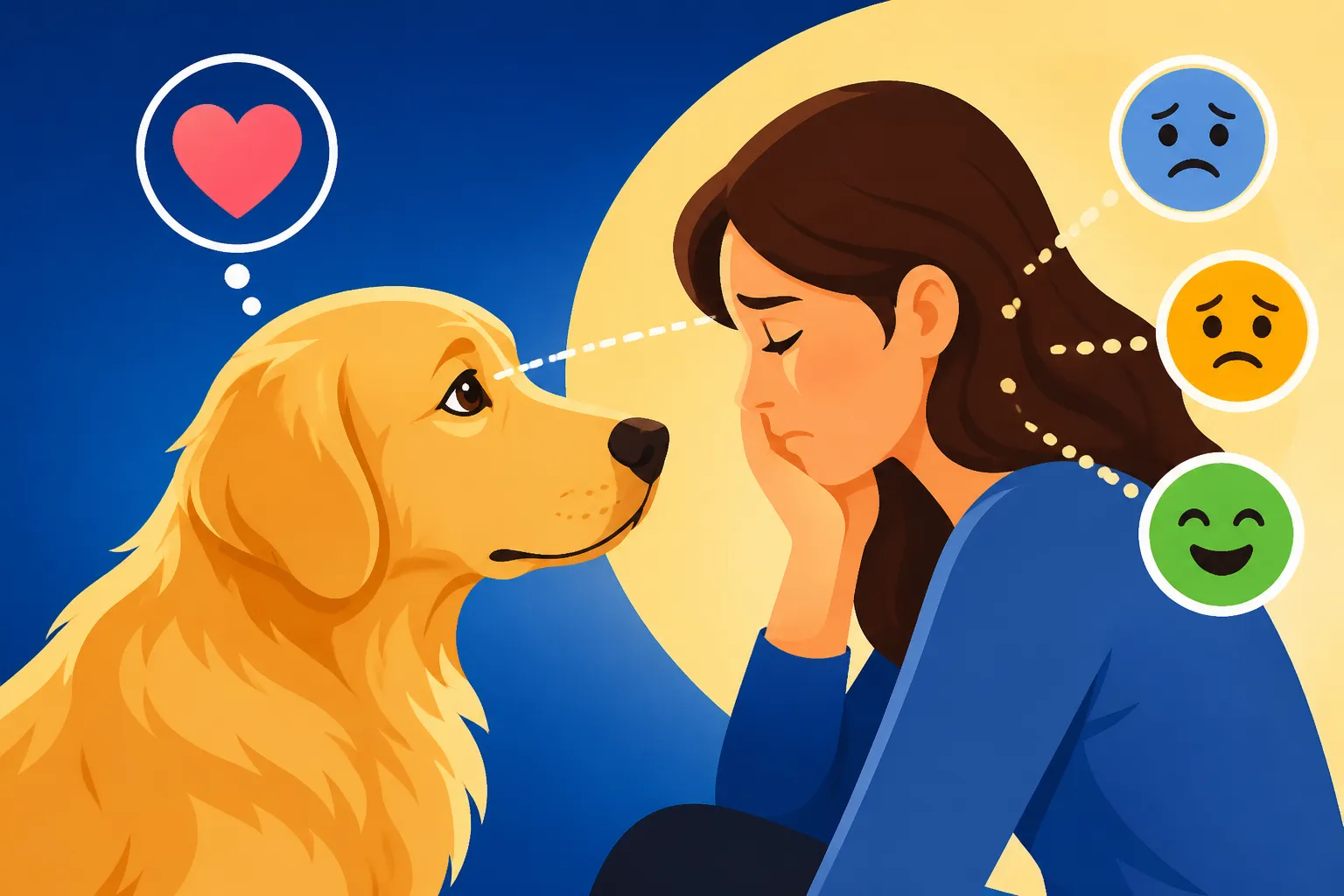
Humans communicate a tremendous amount through non-verbal signals, and Goldens are experts at interpreting these. Think about how you might unconsciously slump your shoulders when you're sad, pace when you're anxious, or beam brightly when you're truly joyful. Your Golden is taking all of this in. They notice:
- Posture and Gait: A brisk, upright walk versus a slow, dragging shuffle tells them a lot.
- Facial Expressions: While dogs don't understand complex human emotions in the same way we do, they learn to associate certain expressions (like a frown or a wide smile) with positive or negative interactions and subsequent moods. They pay attention to eye contact, the tension around your mouth, and even the wrinkles in your forehead.
- Gestures: A sigh, a hand running through hair, or hands clasped tightly can all be clues to your internal state.
These visual cues, when consistently linked to your emotional state, become powerful indicators for your dog. They don't necessarily understand why you're sad, but they learn that certain postures and facial expressions mean you're in a "down" state, often accompanied by a quiet voice and less interaction. In contrast, a relaxed posture and open smile usually precede playful engagement.
Vocal Tones and Speech Patterns
Our voices carry a wealth of emotional information. It's not just the words we use, but how we say them. A Golden Retriever is exquisitely sensitive to:
- Pitch: A higher, lighter pitch often signals excitement or happiness, while a lower, monotonic voice might indicate sadness or calm.
- Volume: Raised voices, even if not directed at them, can signal tension or anger in the environment. Soft whispers might mean calm, or sometimes, a secret shared between human and dog.
- Rhythm and Cadence: Rapid, clipped speech can suggest anxiety or urgency, whereas slow, drawn-out words might convey weariness or comfort.
Even when you're just talking on the phone, your Golden is likely listening to your end of the conversation, processing the emotional content in your voice. They learn that a "happy voice" often means good things, like treats or walks, while a "stressed voice" might mean you need quiet comfort. This auditory processing is a key component of their emotional intelligence. You might notice this especially when you're trying to teach them a new trick; their ability to differentiate your enthusiastic "good dog!" from a frustrated sigh is paramount to effective Training a Golden Retriever From Puppy to Adult.
The Secret World of Scent and Pheromones
This might be the most fascinating and least understood aspect of a Golden's emotional radar. Dogs live in a world dominated by scent, and humans, even if we don't realize it, release different chemical compounds (pheromones, hormones, and other volatile organic compounds) depending on our emotional state. When you're stressed, your body releases cortisol, which can subtly alter your scent. When you're excited, adrenaline might do the same.
While we can't consciously detect these changes, your Golden Retriever's incredible nose can. Their olfactory system is thousands of times more sensitive than ours, allowing them to literally "smell" your emotions. A slight change in your body odor could signal anxiety, fear, happiness, or even illness. They don't necessarily understand the why behind the smell, but they learn to associate specific scents with certain moods and the subsequent actions or inactions from their human. This deep sensory input gives them an unparalleled, almost hidden layer of emotional understanding.
The Power of Observation and Learning
While instinct and genetics lay the groundwork, a Golden Retriever's ability to read human emotion is significantly honed through constant observation and learning from their daily interactions with you. They are intelligent, observant creatures.
Associative Learning and Consistent Patterns
Dogs are masters of associative learning. They continually connect specific human behaviors and emotional displays with subsequent events or outcomes. For example:
- Scenario 1: Every time you're feeling down and sigh heavily, you sit on the couch and quietly stroke your dog. Your Golden learns that a sigh means "come provide comfort, and I'll get pets."
- Scenario 2: When you're stressed and talking quickly on the phone, you tend to ignore your dog. Your Golden learns that this vocal tone means "stay calm and don't demand attention."
Over time, these countless tiny observations build into a robust understanding of your emotional landscape. They don't just react to a single cue, but rather synthesize multiple inputs – your posture, your voice, your scent – to form a comprehensive picture. This is why Golden Retriever Intelligence Rankings often place them so high; they're not just smart, they're smart about us. A good way to see their learning in action is through mental exercises, and sometimes, a little treat from Chewy can help reinforce those positive associations!
The Role of Socialization and Experience
A well-socialized Golden Retriever, especially one exposed to a variety of people and situations from a young age, often develops even stronger emotional intelligence. Golden Retriever Puppy Socialization Windows are critical for this. Exposure teaches them to differentiate between various human expressions, tones, and interactions. A puppy who meets many calm, friendly people will learn to trust and observe rather than react out of fear.
An adult Golden who has lived with a family for years has a deep history of interactions to draw upon. They’ve seen you through countless moods, celebrations, and challenges. This lived experience allows them to fine-tune their interpretations, making them exceptionally accurate in predicting your needs and emotions. They've learned to distinguish between a "play bark" and a "lonely whine" from their human, mirroring their own understanding of communication. This cumulative experience is what allows them to seem so "tuned in" to your particular personality.
Why This Emotional Acuity Matters for Owners
Having a dog that understands your emotions is more than just a sweet sentiment; it profoundly impacts the human-animal bond and has practical implications for daily life.
Enhanced Companionship and Support
The most obvious benefit is the incredible companionship. On days when you feel utterly alone, that gentle nudge or comforting presence from your Golden can be profoundly healing. They offer unconditional support, seemingly without judgment, just pure presence. This deep connection can alleviate loneliness, reduce stress, and even help manage anxiety or depression. Many owners report that their Golden Retrievers are their best confidants, sitting quietly beside them through tears or celebrating with them through laughter. They are truly family members who contribute significantly to our emotional well-being. This is why so many people talk about How Affectionate Golden Retrievers Are.
| Human Emotion | Observable Human Cues | Golden Retriever Interpretation | Typical Golden Response |
|---|---|---|---|
| Sadness | Slumped shoulders, quiet voice, tears, less eye contact, slow movements | "My human is low energy, possibly in distress." | Leans, nudges, lies nearby, brings toy, quiet gaze |
| Happiness | Smiling, upbeat voice, quick movements, energetic | "My human is high energy, positive interaction likely." | Wagging tail, jumps playfully, brings toy, seeks attention |
| Anxiety/Stress | Pacing, furrowed brow, nervous gestures, tense muscles, altered scent | "My human is restless, perhaps agitated." | Stays close, offers comfort, sometimes mirrors restlessness (pacing, sighing) |
| Anger | Loud voice, sharp movements, tense body, direct stare | "My human is agitated, potential for conflict/displeasure." | Retreats slightly, lowers head, watches cautiously, may try to de-escalate with calm body language |
| Fear | Wide eyes, trembling, quick breathing, withdrawn posture, altered scent | "My human feels threatened or unsafe." | Protects, barks at perceived threat, seeks to reassure, stays very close |
Aiding in Training and Communication
Their ability to read subtle cues also makes Goldens incredibly trainable. They are quick to pick up on your approval or disapproval, even before you vocalize it fully. This means they often anticipate what you want, making the learning process smoother and faster. When you're training a complex command, your focus, tone, and body language all tell your Golden if they're on the right track. This keen observation is why they often excel in activities like obedience, agility, and even as Golden Retrievers as Service and Therapy Dogs. For instance, a trainer might use small, almost imperceptible shifts in posture to guide a Golden through a routine, knowing the dog is always watching. Ensuring you have a steady supply of engaging treats for positive reinforcement, perhaps from Chewy, can significantly enhance these training sessions.
Preventing Unwanted Behaviors and Mirroring Stress
On the flip side, a Golden's emotional sensitivity can sometimes mean they mirror our stress. If you're constantly anxious or tense, your dog might start to exhibit signs of anxiety themselves, such as excessive licking, pacing, or even mild destructive behaviors. They are so connected to us that our emotional states can directly influence theirs. Recognizing this allows us to be more mindful of our own emotional health for the sake of our dogs.
Understanding that your Golden reads your emotions also helps you prevent unwanted behaviors. For example, if you know they pick up on your anxiety about leaving them alone, you can work on building their confidence and alone-time tolerance more effectively. Knowing they might be mimicking your stress can prompt you to provide more Mental Enrichment for a Bored Golden Retriever or engage in calming activities together, helping both of you relax. This deep understanding underscores the importance of a calm, consistent environment for your beloved companion.
Disclaimer
This article is for general informational purposes only and does not constitute professional advice. Laws, prices and regulations vary by location and change over time. Consult a qualified professional for guidance on your specific situation.