Signs You Are Overfeeding a Golden Retriever Puppy
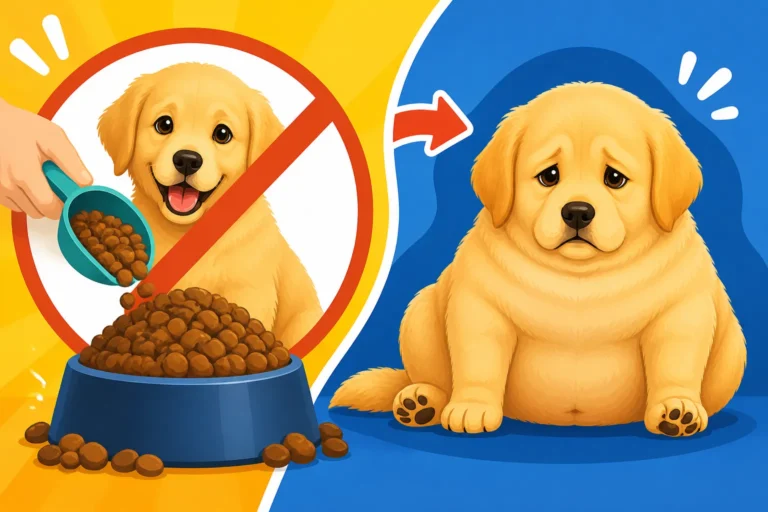
It’s a natural worry for any Golden Retriever puppy owner: "Am I feeding my precious furball enough?" We all want our pups to grow big and strong, full of that signature Golden energy. But, as an experienced Golden parent, I've seen firsthand how easy it is to fall into the trap of overfeeding, often with the best intentions. What many don't realize is that giving your Golden Retriever puppy too much food can actually pave the way for some serious health issues down the road, rather than ensuring a robust future. This guide is here to help you recognize the subtle and obvious signs that your Golden puppy might be getting more calories than they need, and how to get them back on a healthy track.
Why Overfeeding a Golden Retriever Puppy is Such a Big Deal
When you look at those adorable, clumsy Golden Retriever puppies, all you want to do is shower them with love – and often, that translates into extra food or treats. But while a little chubbiness might seem cute on a human baby, it’s far from harmless for a growing Golden. Their large-breed genetics make them uniquely susceptible to problems linked to rapid growth.
The Silent Threat of Accelerated Growth
Golden Retrievers are a large breed, and their bodies are designed to grow at a steady, controlled pace. When a Golden Retriever puppy is overfed, especially with food that’s not formulated for large breeds, they often grow too quickly. This isn't just about gaining weight; it's about the very structure of their skeletal system. Their bones, particularly the growth plates (soft areas at the ends of long bones that are still developing), are under immense pressure.
Imagine building a house too fast, without letting the concrete cure properly. The foundation becomes weak, and cracks start to appear. It's similar for a growing puppy. Rapid growth due to overfeeding can put undue stress on these developing joints and bones. This makes them far more vulnerable to orthopedic diseases that Golden Retrievers are already genetically prone to, such as hip and elbow dysplasia. These conditions, which can lead to lifelong pain and mobility issues, are often exacerbated by a puppy growing too fast and carrying too much weight. It’s a silent, insidious threat because the damage might not be obvious until much later, when your dog is already suffering. We delve deeper into this specific risk in Why Fast Growth Damages a Golden Retriever's Joints and Golden Retriever Hip and Elbow Dysplasia Explained.
Long-Term Health Repercussions
The impact of overfeeding a Golden Retriever puppy extends far beyond just their developing skeleton. Setting the stage for obesity in puppyhood makes it incredibly challenging to maintain a healthy weight as an adult. An overweight adult Golden Retriever is at a significantly higher risk for a whole host of health problems. We're talking about conditions like diabetes, certain types of cancer, heart disease, and even respiratory issues. Their joints, already predisposed to issues, suffer even more under the constant strain of extra pounds.
It's not just about avoiding future illness; it's about ensuring your Golden lives a long, comfortable, and active life. A puppy who develops healthy eating habits and maintains an ideal body condition from a young age is set up for success. Conversely, a pup who is consistently overfed might not only face a reduced lifespan but also a diminished quality of life, struggling with pain and mobility long before their golden years. This is why paying close attention to their weight and growth now can make all the difference. How Extra Weight Shortens a Golden Retriever's Life discusses these long-term concerns in detail.
Key Signs Your Golden Retriever Puppy Might Be Overfed
Spotting an overfed puppy isn't always as simple as seeing a rolly-polly belly. Sometimes the signs are subtle, especially with a breed as fluffy as a Golden Retriever. You need to develop a keen eye and a hands-on approach to accurately assess your puppy's body condition.
Visual Cues and Body Condition Scoring
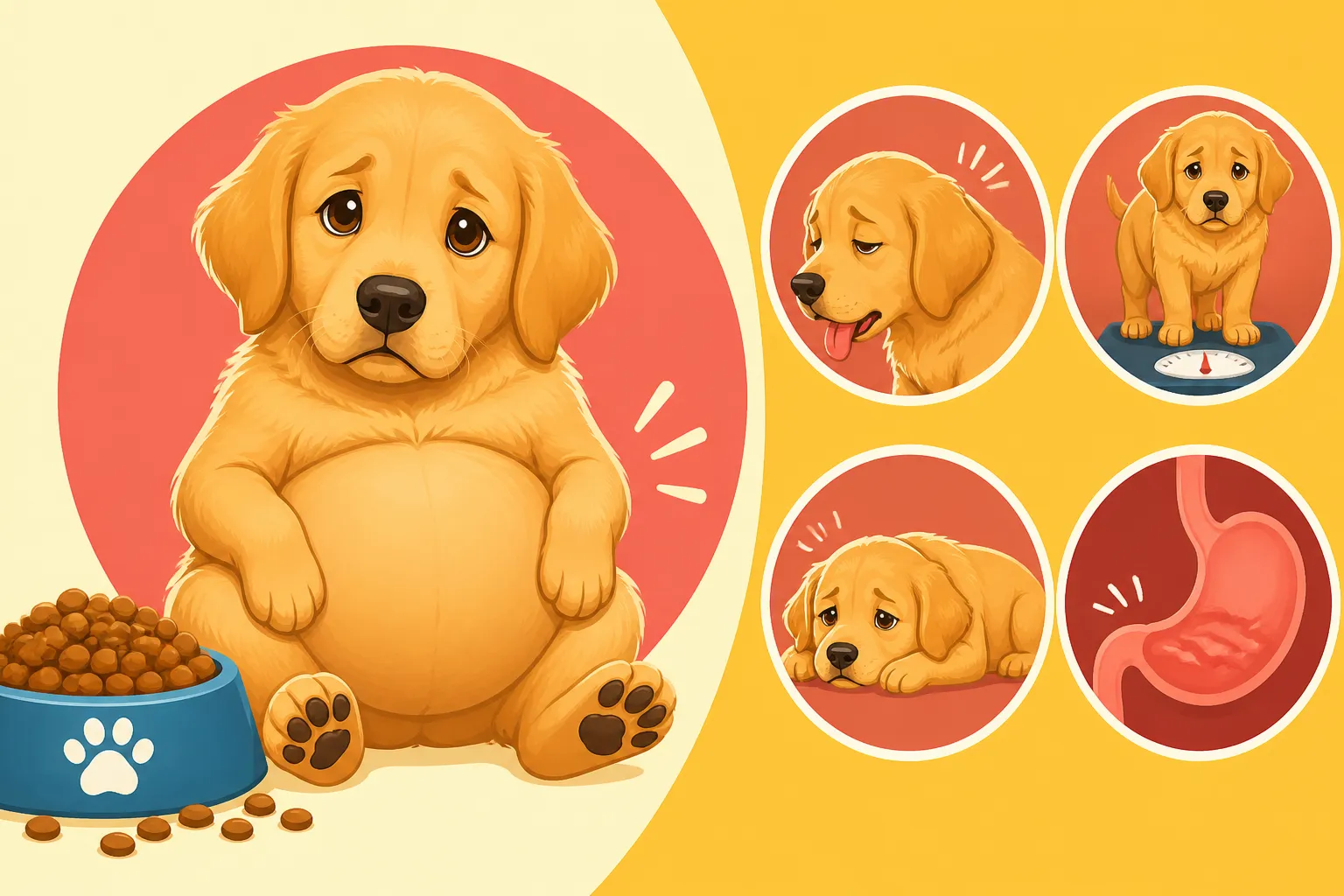
The most immediate indicators of overfeeding often come from your puppy's physical appearance. While puppies do have a naturally softer, rounder look than adult dogs, there's a definite line between healthy puppy fat and excessive weight gain.
First, let's talk about the ribs. You should be able to easily feel your Golden Retriever puppy's ribs when you run your hands along their sides with gentle pressure, almost like feeling the knuckles of your hand. You shouldn't be able to see their ribs, but they shouldn't be buried under a thick layer of fat either. If you have to press hard to feel them, or if you can't feel them at all, that's a red flag.
Next, consider their waistline and the "tummy tuck." When viewed from above, your puppy should have a discernible waist, narrowing slightly behind the ribs before flaring out slightly at the hips. From the side, their abdomen should tuck up slightly from their rib cage to their hind legs, not hang low or be perfectly straight across like a torpedo. If your puppy looks more like a little barrel, with no visible waist or tummy tuck, it's a strong sign of too much weight.
To get a more objective assessment, veterinarians use something called a Body Condition Score (BCS). This is usually a 5-point scale, where 1 is severely underweight and 5 is severely obese. The ideal score for a Golden Retriever puppy is generally a 3. Here’s a simplified breakdown:
| Score | Description | What to Look/Feel For |
|---|---|---|
| 1 | Severely Underweight | Ribs, spine, pelvic bones easily visible from a distance. No body fat. |
| 2 | Underweight | Ribs easily visible. Waist easily noted. Minimal fat. |
| 3 | Ideal Weight | Ribs easily felt, not seen. Noticeable waist. Slight tummy tuck. |
| 4 | Overweight | Ribs difficult to feel. Barely discernible waist. No tummy tuck. |
| 5 | Obese | Ribs not palpable. No waist. Obvious fat deposits. |
If your Golden puppy is edging into a 4 or 5 on this scale, it’s a clear sign of overfeeding. Remember, Golden Retriever puppies are often fluffy, so you need to use your hands to feel past that beautiful coat to get an accurate assessment. Checking their Golden Retriever Body Condition Scoring regularly can help you stay on top of their weight.
Behavioral and Digestive Indicators
Beyond the physical signs, your puppy's behavior and digestive health can also give clues that they might be getting too much food.
One obvious indicator is if your puppy is gaining weight much faster than expected on a standard growth chart, or if they are significantly heavier than their siblings or peers of the same age and lineage. While every puppy is an individual, there are general ranges for healthy growth. Your vet tracks this, but you can also monitor at home.
You might also notice a subtle shift in their energy levels. While puppies sleep a lot, an overfed puppy might seem more lethargic than usual, less inclined to play, or tire out very quickly. This isn't just a "lazy" puppy; it could be the extra weight making movement harder and less appealing. Of course, a puppy could be lethargic for other health reasons, so always consult your vet if this is a new or persistent symptom.
Digestive upset can also be a sign. Overfeeding can overwhelm a puppy's digestive system, leading to issues like frequent, loose stools, or excessive gas. If your puppy consistently has soft poops or seems unusually gassy, and you're not dealing with a new food transition or illness, it could be that they're simply getting too much food for their system to process efficiently.
Paradoxically, some overfed puppies might even seem constantly hungry. This can happen if they are eating a high-calorie, low-nutrient food, or if they're simply eating so fast that their body doesn't register fullness until it's too late. They might beg incessantly, steal food, or seem desperate for treats, even if they've just finished a meal. This often points to a need to reassess both the quantity and quality of their diet.
What to Do If You Suspect Overfeeding
Discovering your Golden Retriever puppy might be overfed isn't a reason to panic, but it is a call to action. The good news is that with some careful adjustments, you can steer your pup back to a healthy growth trajectory and set them up for a much healthier future.
Reviewing Your Feeding Routine and Food Choice
The first step is to become a detective with your puppy's diet. Start by being incredibly precise about how much you're feeding. Don't eyeball it! Invest in a proper measuring cup or, even better, a kitchen scale to weigh out their kibble. It's astonishing how much difference a slightly "generous" scoop can make over the course of a day or week. Even a small increase in volume can mean a significant calorie surplus, especially for a puppy.
Next, critically evaluate the food itself. Is it specifically formulated for large breed puppies? This is absolutely crucial for Golden Retrievers. Large Breed Puppy Food and Why Goldens Need It explains why these foods are designed with a careful balance of calcium, phosphorus, and lower fat/calorie content to support slower, healthier growth. Read the labels carefully. You want a quality protein source as the first ingredient, and appropriate levels of fat and carbohydrates. If you're unsure about what to look for, checking out resources like Chewy for different large breed puppy food options or reading a guide like Reading a Dog Food Label for a Golden Retriever can be incredibly helpful.
And then there are treats and table scraps – the silent calorie culprits! Many owners forget to factor these into their puppy's daily intake. Those small training treats, dental chews, or tiny bites of human food add up quickly. If you're actively training your puppy, which is common and encouraged, those treats can easily contribute hundreds of extra calories a day. Consider using small pieces of their regular kibble for training rewards, or choose very low-calorie, healthy options like tiny bits of carrot or green bean. Even healthy fresh food options like those offered by services such as Ollie should be portioned carefully and considered part of their total daily intake.
Finally, think about how your puppy eats. If they inhale their food in seconds, a slow feeder bowl might be a good idea. While not directly reducing calories, it can help them feel fuller, slow digestion, and reduce the risk of bloat later in life. You can find many options on platforms like Amazon.
Consulting Your Veterinarian and Adjusting Plan
While self-assessment is a great starting point, the most important step is always to consult your veterinarian. They have the expertise to accurately assess your puppy's body condition, track their growth against breed-specific charts, and rule out any underlying health issues. Your vet can give you an objective, personalized opinion and help you create a tailored feeding plan.
They might provide a specific Golden Retriever Feeding Chart by Weight based on your puppy's individual needs, activity level, and current condition. This chart will usually recommend a starting daily caloric intake and suggest how to gradually adjust it. Remember, any dietary changes should be made slowly to avoid upsetting your puppy's stomach. For example, if you're switching to a new food or reducing the amount, do it over 5-7 days, gradually increasing the new amount while decreasing the old.
Your vet might also advise on increasing your puppy's appropriate exercise. While you should never force a young Golden Retriever puppy into strenuous exercise that could harm their developing joints – Exercise Limits for a Golden Retriever Puppy explains this thoroughly – ensuring they get enough age-appropriate play and walks is vital. Daily walks, supervised playtime in a securely fenced yard, and mental enrichment activities are all crucial for burning calories and building muscle without stressing their growth plates.
Preventing Overfeeding From the Start
The best defense against overfeeding is a good offense. Establishing healthy habits from day one can save you a lot of worry and your Golden Retriever puppy a lifetime of potential health problems. It's all about being proactive, consistent, and well-informed.
Sticking to Reputable Feeding Guidelines
When you bring home a new Golden Retriever puppy, the sheer joy can sometimes make you overlook the fine print on their food bag. But those feeding guidelines are your first, best line of defense against overfeeding. However, it’s important to remember they are guidelines, often designed for average activity levels and may lean on the generous side. Always start with the recommended amount for your puppy's age and weight, and then adjust based on their individual body condition.
Consistency is key. Feed your puppy at set times each day, typically three times a day for younger puppies, as outlined in Feeding a Golden Retriever Puppy Three Meals a Day. This helps regulate their metabolism and creates a predictable routine. Free-feeding (leaving food out all day) makes it very difficult to monitor intake and is almost a sure path to overfeeding for a food-motivated breed like a Golden Retriever.
Beyond the bag, your veterinarian is your most reliable resource. Regular vet check-ups, starting with The First Vet Visit for a Golden Retriever Puppy, are essential for monitoring your puppy's growth and weight. Your vet will track their progress on a growth chart and can alert you to any concerns early on. Don't hesitate to ask them if your puppy's current weight and growth rate are ideal for a Golden Retriever. They can offer invaluable advice tailored to your specific puppy.
Mindful Treat Giving and Enrichment
Treats are a wonderful way to bond with your Golden Retriever puppy and are indispensable for training. However, they are also one of the easiest ways to accidentally overfeed. The trick is to be mindful of the calories in those delicious little morsels.
Instead of large, calorie-dense treats, opt for small, pea-sized training treats. Better yet, use a portion of your puppy's daily kibble ration for training sessions. This way, you're not adding extra calories, just redirecting them. When selecting store-bought treats, look for low-calorie options and always check the nutritional information. Remember to subtract the caloric value of treats from their main meal to avoid a calorie surplus.
Beyond food, enrichment plays a huge role in satisfying your Golden's innate desire to work and "forage" without adding extra calories. Golden Retrievers are intelligent and need mental stimulation. Puzzle feeders, for example, make your puppy work for their food, slowing down mealtime and providing mental exercise. This can help them feel more satisfied with their meal, even if it's a perfectly portioned amount. You can find a fantastic selection of puzzle toys for all levels on Amazon.
Interactive toys, supervised chew sessions with appropriate chew toys, and engaging training games (that don't always involve food rewards) are all excellent ways to tire out your Golden puppy and keep them happy without relying on endless snacks. A Golden Retriever's happiness isn't measured in how full their belly is, but in how engaged and loved they feel.
Disclaimer
This article is for general informational purposes only and does not constitute professional advice. Laws, prices and regulations vary by location and change over time. Consult a qualified professional for guidance on your specific situation.