Whether Golden Retrievers Can Eat Chicken Bones
Oh, the age-old question that pops up in kitchens everywhere, especially after a delicious Sunday roast chicken! You're cleaning up, your sweet Golden Retriever is looking up at you with those big, hopeful eyes, and a pile of chicken bones sits there. It feels natural, right? Dogs in the wild eat bones, so why not our beloved Goldens? But I'm here to tell you that what feels natural can sometimes be incredibly dangerous. This guide is going to cut through the confusion and explain exactly why those chicken bones, whether cooked or raw, can pose serious risks to your Golden Retriever's health, and what safe alternatives you can offer instead.
The Unvarnished Truth About Chicken Bones and Your Golden Retriever
It’s a common misconception that all bones are good for dogs. While a dog's natural instinct might be to chew, not all bones are created equal, and some can lead to catastrophic consequences. For Golden Retriever owners, who often have dogs with a tendency to gobble first and chew later, understanding the specific dangers is paramount.
Why Cooked Chicken Bones Are a Major No-Go
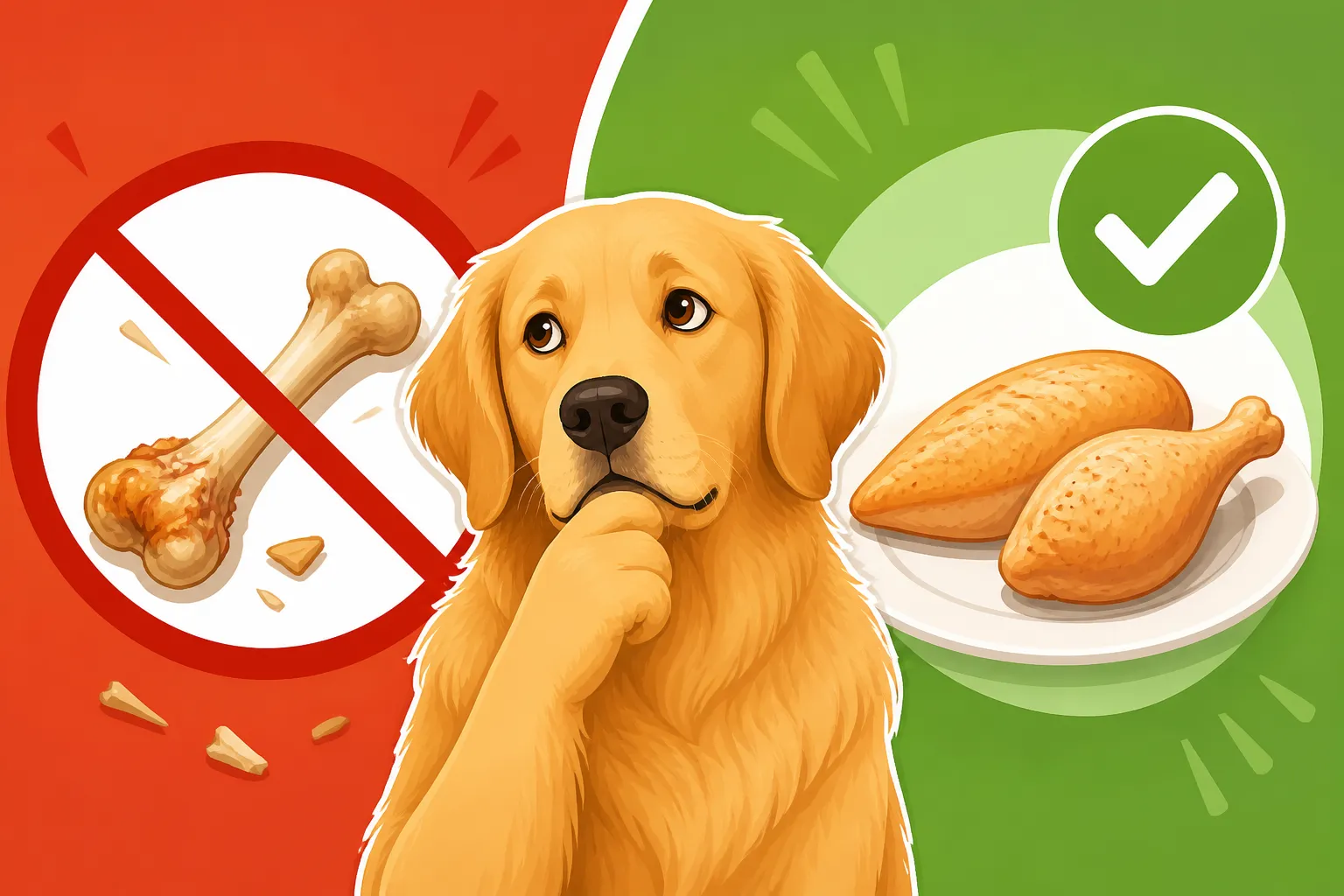
Let's get straight to it: cooked chicken bones are an absolute menace to your Golden Retriever. I know it’s tempting to toss a leftover bone to your furry friend, especially when they're begging so politely. But please, resist that urge! The cooking process fundamentally alters the structure of the bone, making it extremely brittle and prone to splintering into sharp, needle-like fragments.
Imagine these sharp fragments traveling through your Golden's delicate digestive system. They can get lodged in the throat, creating a severe choking hazard. If swallowed, they can easily puncture the esophagus, stomach lining, or intestines. These internal injuries are not just painful; they can lead to life-threatening infections like peritonitis, which is a medical emergency requiring immediate and often complex surgery. Think about the agony your dog would be in, and the stress and cost of an emergency vet visit – it’s just not worth the risk. A bone fragment might also create a complete blockage, preventing food and water from passing through, which can quickly become fatal if not addressed. This isn't just a "might happen" scenario; it's a frequent occurrence vets see in emergency rooms.
The Nuance of Raw Chicken Bones
Now, what about raw chicken bones? This is where the conversation gets a little more complex, especially with the rise of raw feeding diets. Proponents of raw diets often argue that raw bones are softer, more pliable, and therefore less likely to splinter than their cooked counterparts. And they are, to an extent, correct. Raw bones tend to be more digestible and less prone to breaking into sharp shards, making them less dangerous in terms of splintering compared to cooked bones.
However, "less dangerous" does not equate to "safe." Raw chicken bones still present significant risks. For one, they are still bones, and a determined Golden Retriever can still break off pieces large enough to become a choking hazard, regardless of whether they are cooked or raw. Their strong jaws are designed for crushing, and while a large raw femur might be okay for supervised chewing, a smaller chicken bone can still be swallowed whole or in pieces that are too big.
Beyond the physical risks, raw bones introduce another major concern: bacterial contamination. Raw poultry, whether for human or canine consumption, can carry harmful bacteria like Salmonella and E. coli. While many dogs can process these bacteria without showing symptoms, they can still shed the bacteria in their feces, posing a risk to other pets and human family members, particularly young children, the elderly, or those with compromised immune systems. If you're handling raw bones, strict hygiene is absolutely crucial. So, while the splintering risk might be lower with raw bones, it's far from a completely safe option, especially when considering the potential for choking and bacterial illness.
Immediate Dangers and Long-Term Consequences
Understanding the immediate dangers and potential long-term fallouts from feeding chicken bones is crucial for any Golden Retriever owner. These beloved dogs are eager eaters, and their enthusiasm can unfortunately put them at higher risk for bone-related incidents.
Choking Hazards and Oral Injuries
Golden Retrievers are renowned for their incredible enthusiasm, especially when it comes to food. They often swallow first and ask questions later, which makes them particularly vulnerable to choking on bones. A piece of chicken bone, even a seemingly small one, can easily get lodged in their throat or windpipe. When this happens, it's a terrifying emergency. Your dog might gag, cough, paw at their mouth, or struggle to breathe. In severe cases, they can obstruct their airway completely, leading to suffocation. The speed with which this can escalate means that quick action and a trip to an emergency vet are often the only hope.
Beyond outright choking, bones can cause severe oral injuries. I've seen Goldens come in with pieces of bone wedged painfully between their teeth, sometimes requiring sedation to remove. Others might suffer lacerations to their gums, tongue, or the soft tissues of their mouth as they try to chew and manipulate the hard, jagged pieces. These injuries are not only incredibly painful but can also become infected, adding another layer of misery and expense to the situation. It’s important to know the signs a Golden Retriever is in pain.
Internal Trauma: Splinters, Punctures, and Blockages
If your Golden manages to swallow bone fragments, the danger is far from over. The digestive tract is a long and winding road, and at every turn, those sharp, brittle pieces of bone pose a serious threat.
Imagine walking on glass shards; that's essentially what could be happening inside your dog. Bone fragments can scratch or cut the delicate lining of the esophagus as they go down. Once in the stomach, stomach acids can soften them somewhat, but often not enough. If they make it to the intestines, the risk intensifies. A sharp splinter can puncture the intestinal wall, spilling bacteria and digestive contents into the abdominal cavity. This leads to a severe condition called peritonitis, an inflammation of the abdominal lining that is excruciatingly painful and often fatal without immediate, aggressive surgery.
Even if there's no puncture, bone fragments can clump together, especially if your Golden has eaten several, forming a dense mass that creates a blockage. This obstruction prevents food and water from moving through the digestive system, leading to severe vomiting, lethargy, loss of appetite, and intense abdominal pain. A blockage is also a critical emergency, usually requiring surgery to remove the offending mass. The recovery can be lengthy and challenging, and the Golden Retriever Emergency Vet Bills associated with such procedures can be staggering. Vigilance for symptoms like persistent vomiting, straining to defecate, dark or bloody stools, or a painful, bloated abdomen is key.
Bacterial Risks and Contamination
When we talk about raw chicken bones, the risk of bacterial contamination from pathogens like Salmonella and E. coli cannot be overstated. While dogs' digestive systems are often more acidic and robust than humans', making them somewhat more resistant to certain bacteria, they are by no means immune. A Golden Retriever can still get sick from these bacteria, leading to symptoms like diarrhea, vomiting, fever, and lethargy.
More concerning, perhaps, is the zoonotic risk – the transfer of disease from animals to humans. Even if your Golden doesn't show signs of illness, they can shed these bacteria in their feces, on their fur, or from their mouths. This means that merely petting your dog, letting them lick your face, or not properly cleaning up after them in the yard can transfer harmful bacteria to you or other vulnerable family members. This risk is especially pertinent for households with young children, elderly individuals, or anyone with a weakened immune system. When contemplating a fresh or raw diet, it's essential to consider all aspects of hygiene and food safety for your entire household.
Safe Alternatives and What to Do in an Emergency
So, if chicken bones are off the table, what can you give your eager-to-chew Golden Retriever? And what do you do if, despite your best efforts, they manage to get their paws on a forbidden bone?
Healthy Chews and Treats Your Golden Will Love
The good news is there are plenty of safe and satisfying chew options for your Golden Retriever that won't put their health at risk. The key is to provide chews that are appropriate for their size, chewing style, and that won't splinter or be swallowed whole.
For everyday enjoyment and dental health, look for high-quality, digestible dental chews. Brands like Greenies offer different sizes to ensure they are appropriate for a larger mouth like a Golden's. Bully sticks, made from digestible beef muscle, are also a popular choice, though always supervise to ensure they don't break off large chunks. Stuffed Kong toys are fantastic; you can fill them with peanut butter (xylitol-free!), yogurt, or even their regular kibble mixed with a bit of water and freeze it for a long-lasting challenge. Online retailers like Chewy and Amazon offer a vast selection of these types of safe chews and toys, making it easy to find something your Golden will adore.
When it comes to "bones" for chewing, stick to large, raw recreational bones, like beef femurs or knuckle bones, never cooked. These are primarily for chewing pleasure and mental enrichment, not for consumption. Always supervise your Golden intently when they have one, as even raw bones can chip teeth or, if a piece breaks off, become a choking hazard. Once the meat is gone and the bone starts to look too small or worn down, it's time to take it away. Remember, the goal with these is gnawing, not eating the entire bone. If you're looking for more ideas, check out Chew Toys That Survive a Golden Retriever and how to manage Golden Retriever Chewing Through Adolescence. For nutritional needs, always rely on a Choosing Dog Food for a Golden Retriever that's complete and balanced, rather than bones.
Responding to a Bone-Related Emergency
Despite our best efforts, accidents can happen. If you suspect your Golden Retriever has eaten a chicken bone, or any potentially dangerous object, stay calm and act quickly.
- Assess for Choking: If your dog is actively choking (gagging, struggling to breathe, pawing at their mouth), try to safely assess their mouth for the obstruction. If you can see it and remove it with your fingers without pushing it further down, do so carefully. However, do not blindly reach into their mouth, as this can worsen the situation or result in a bite. Familiarize yourself with doggy Heimlich maneuvers, but only attempt if absolutely necessary and you know how.
- Contact Your Vet Immediately: Even if your dog isn't actively choking, call your veterinarian or an emergency vet clinic right away. Describe what happened, including the type and size of the bone, and your dog's current symptoms. They will advise you on the next steps. Do not try to induce vomiting at home without direct instruction from a vet, as sharp bone fragments can cause more damage coming back up.
- Monitor Your Dog: While waiting for vet instructions or en route to the clinic, closely monitor your Golden for any changes in behavior: persistent coughing, gagging, vomiting, lethargy, loss of appetite, abdominal pain, or changes in their stool.
- Veterinary Intervention: At the clinic, the vet will likely perform a physical exam and may recommend X-rays to locate the bone. Depending on its location and shape, they might try to remove it endoscopically (with a scope down the throat) or, in more severe cases, surgically. Time is of the essence in these situations, so don't delay. Having a Building a First Aid Kit for a Golden Retriever and knowing basic first aid can be helpful for many situations, but bone ingestion typically requires professional help.
Nutritional Considerations and Misconceptions
There's a persistent myth that dogs need bones for their nutrition. While it's true that bones contain minerals, modern dog food formulations make supplemental bones unnecessary and risky.
Do Bones Offer Essential Nutrients?
Yes, bones do contain calcium, phosphorus, and other trace minerals. In the wild, canids would consume the entire prey, bones included, as a source of these nutrients. However, our domesticated Golden Retrievers are typically fed commercial dog foods that are formulated to be "complete and balanced." This means they already contain all the necessary vitamins, minerals (including appropriate Calcium and Phosphorus in a Golden Puppy's Food), and nutrients your dog needs for optimal health, often in far more digestible and safer forms than whole bones.
Relying on bones for nutrition in a domestic setting is not only fraught with danger but also unnecessary. Feeding too many bones can actually throw off the delicate balance of calcium and phosphorus in your dog's diet, potentially leading to other health issues down the line, especially in growing puppies. For example, Golden Retriever Puppy Feeding Amounts and Schedule are carefully calculated to support healthy growth. Your best bet for meeting your Golden's nutritional needs safely is a high-quality commercial dog food, like those available from reputable brands on Chewy or Ollie, tailored to their life stage and activity level.
The Difference Between Recreational and Dietary Bones
It's helpful to distinguish between "recreational bones" and "dietary bones." Recreational bones are large, raw bones (like beef marrow bones or knuckle bones) that are given purely for the purpose of chewing and dental hygiene. They provide mental stimulation and help scrape plaque off teeth. The intention is not for the dog to consume them entirely, but rather to gnaw on them under strict supervision, and they should be removed once they become too small or if the dog attempts to eat large pieces.
Dietary bones, on the other hand, are typically part of a specific raw food diet where the entire bone (often softer, smaller bones like chicken wings or necks) is meant to be consumed. However, even within raw feeding communities, there's careful consideration about bone size, type, and preparation (often ground) to minimize risks. For the average Golden Retriever owner not strictly adhering to a professionally guided raw diet, providing whole chicken bones as part of a meal or as a treat is generally discouraged due to the high risks involved.
Ultimately, while the instinct to provide something "natural" for your Golden is understandable, the dangers associated with feeding chicken bones far outweigh any perceived benefits. Stick to safe, vet-approved chews and treats, and always ensure your dog's primary nutrition comes from a balanced and reputable dog food. Your Golden's health and well-being are worth the extra caution! Keeping an eye on their Golden Retriever Body Condition Scoring and knowing what a Golden Retriever vet costs each year will help you keep them healthy overall.
Disclaimer
This article is for general informational purposes only and does not constitute professional advice. Laws, prices and regulations vary by location and change over time. Consult a qualified professional for guidance on your specific situation.