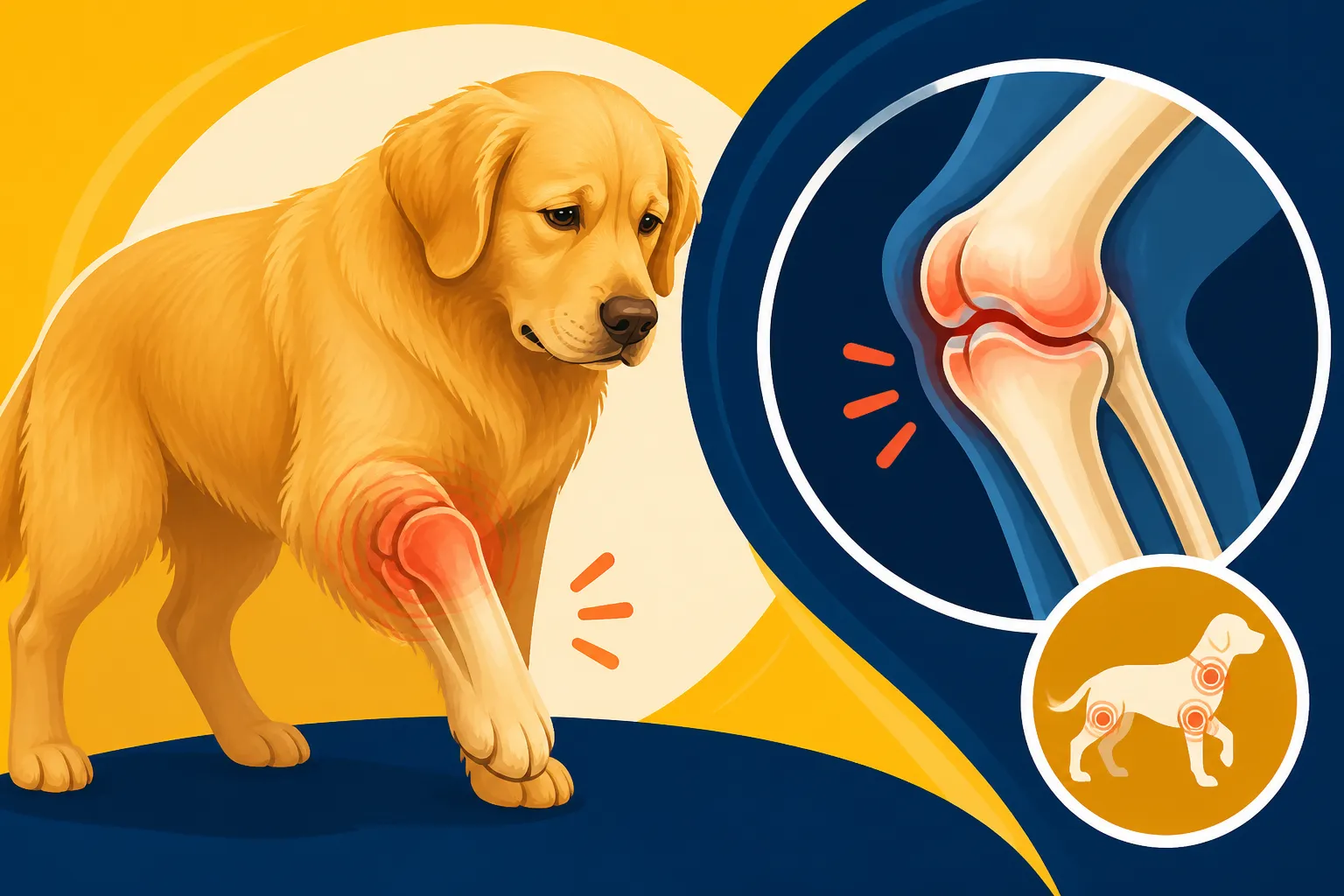
Golden Retriever Arthritis and Joint Decline
It's incredibly heartbreaking to watch our lively, bouncy Golden Retrievers start to slow down. One day they're leaping for a ball, the next they're hesitant to jump on the couch, or struggle a bit after a nap. This shift often points to arthritis and joint decline, a reality many Golden owners face. This guide is here to walk you through understanding why this happens, recognizing the subtle signs, and implementing strategies to keep your beloved companion comfortable and happy for as long as possible.
Understanding Golden Retriever Arthritis
Arthritis, or osteoarthritis, is a progressive and often painful condition that affects millions of dogs, and unfortunately, Golden Retrievers are particularly prone to it due to their genetics, size, and active nature. It’s not just a "senior dog" problem; the groundwork can be laid much earlier in life.
What Exactly is Arthritis in Goldens?
At its core, arthritis is the degeneration of the cartilage that cushions the joints. Imagine the cartilage as a smooth, slippery shock absorber between bones. Over time, due to wear and tear, injury, or underlying genetic conditions, this cartilage starts to break down. When it erodes, bones begin to rub directly against each other, which is incredibly painful. The body tries to compensate by growing new bone, leading to the formation of bone spurs (osteophytes) around the joint. These spurs further restrict movement and cause inflammation, creating a vicious cycle of pain and deterioration.
For Golden Retrievers, this process is often exacerbated by conditions they are genetically predisposed to, like Golden Retriever Hip and Elbow Dysplasia Explained. Dysplasia means the joint didn't form correctly in the first place, leading to abnormal wear and tear from a young age. Even if a Golden doesn't have severe dysplasia, years of active play, running, and jumping can take a toll on perfectly formed joints, especially as they age. The constant inflammation within the joint also releases chemicals that further degrade the cartilage, making it a relentless condition unless actively managed.
Common Joints Affected in Golden Retrievers
While arthritis can theoretically affect any joint, certain areas are far more commonly afflicted in large breeds like Golden Retrievers. The hips, elbows, stifles (knees), and spine are the primary culprits where owners notice symptoms.
The hip joints, being large ball-and-socket joints, are incredibly vulnerable, especially in Goldens with hip dysplasia. The abnormal fit of the ball (femoral head) into the socket (acetabulum) causes uneven friction and wear, rapidly accelerating cartilage damage. Similarly, the elbow joints, complex hinge joints, are prone to elbow dysplasia, a common developmental orthopedic disease in Goldens that can involve several specific abnormalities, all leading to early onset arthritis. It's not uncommon for a Golden to develop severe arthritis in their elbows even before they reach middle age if they have underlying elbow dysplasia.
The stifle joints (knees) can also develop arthritis, sometimes secondary to an old injury like a torn cranial cruciate ligament (CCL), or from ongoing strain. The spine, too, can be affected by degenerative disc disease or spondylosis, where bone spurs form along the vertebrae, leading to stiffness and pain. The sheer size and weight of a Golden Retriever place significant stress on these major weight-bearing joints throughout their lives, making them particularly susceptible to the cumulative effects of everyday activity and age.
Early Signs of Joint Decline Owners Miss
One of the toughest parts of managing arthritis in Golden Retrievers is that they are incredibly stoic animals. They often try to hide their pain, a remnant of their wild ancestors who wouldn't show weakness. This means that by the time obvious limping or yelping occurs, the arthritis might be quite advanced. Learning to recognize the subtle, early signs can make a huge difference in their long-term comfort and mobility.
Subtle Behavioral Changes
It's easy to dismiss a slight slowdown as "just getting older," but often, these are the first whispers of joint pain. Your Golden might be less enthusiastic about their morning walk, or they might not greet you at the door with the same exuberant jump they once did. They might start hesitating before jumping into the car or onto the bed – even if they used to do it with ease. Observe them carefully during play. Are they cutting their play sessions short? Are they slower to retrieve a ball, or not running as fast as their younger selves? They might still try to participate because they love being with you, but their movements might be more deliberate or cautious.
Another common sign is a change in their "get up and go." They might struggle to stand up after a long nap, taking an extra moment or two to stretch out their stiff limbs before moving. Sometimes, dogs in pain can become a bit more irritable, especially if they're touched in a sensitive area or if another dog or child bumps into them unintentionally. They might sleep in different positions, or seem restless at night, struggling to find a comfortable spot. Pay attention to any decrease in their overall activity level or changes in their willingness to engage in favorite activities. These are often the Quiet Signs a Golden Retriever Is Hurting.
Physical Manifestations and Gait Changes
Beyond behavioral shifts, physical changes and alterations in how your Golden moves can be crucial indicators. Stiffness is a hallmark of arthritis, particularly after periods of rest or in the morning. Your dog might seem a little "rickety" for the first few minutes after getting up, gradually loosening up as they move around. You might notice a subtle limp, or a slight favoring of one leg over another, which can be inconsistent, appearing some days and not others.
Watch how they run or walk. Do they appear to be "bunny hopping" with their back legs, moving them together rather than independently? This is a classic sign of hip discomfort, where they're trying to minimize painful hip extension. Read more about The Bunny Hopping Gait in Golden Retrievers. You might also notice that their gait seems shorter, or they're taking smaller steps. Over time, as they favor certain limbs and reduce the use of painful joints, you might start to see muscle atrophy – a thinning of the muscle mass – in the affected leg or hindquarters. Sometimes, chronic licking or chewing at a particular joint can also indicate discomfort, though this can also be allergy-related. Feeling for warmth or swelling around a joint can also be a red flag, though this is often only present in acute flare-ups.
Diagnosis and Assessment of Arthritis
If you're noticing any of these subtle or overt signs, it's time to visit your veterinarian. An early and accurate diagnosis is key to starting effective management and slowing the progression of arthritis. Don't wait until your Golden is clearly in agony; prompt action can preserve their quality of life.
The Veterinary Exam and Palpation
Your vet visit will typically begin with a thorough physical examination. They'll observe your Golden's gait as they walk around the exam room, looking for any lameness, stiffness, or asymmetry in their movement. They'll also gently palpate (feel) your dog's joints, moving them through their range of motion. During this part of the exam, your vet is feeling for several things: crepitus (a grinding or crackling sensation indicating bone-on-bone friction), swelling, heat, and any signs of pain or discomfort when the joint is flexed or extended. They'll also check for any muscle wasting around the hips or shoulders.
It's really important to provide your vet with a detailed history of your observations. Keep a journal of when you first noticed changes, what activities trigger pain, and how your Golden's behavior has shifted. This anecdotal evidence, combined with the physical exam, gives your vet crucial clues about which joints might be most affected and how severe the problem is. They might also ask you to describe how your dog gets up, lies down, or navigates stairs, as these functional observations are very telling.
Imaging and Diagnostic Tools
While a physical exam can strongly suggest arthritis, imaging is essential for confirmation and to assess the severity and extent of the joint changes. X-rays are the most common diagnostic tool used. A series of radiographs of the hips, elbows, or spine can reveal characteristic signs of osteoarthritis, such as:
- Bone spurs (osteophytes): New bone growth around the edges of the joint.
- Joint space narrowing: Indicating cartilage loss.
- Sclerosis: Increased density of the bone directly under the cartilage.
- Cystic lesions: Small fluid-filled sacs within the bone.
For hip and elbow dysplasia, specific views are taken, often with your dog sedated for proper positioning, to get accurate evaluations like those performed for OFA or PennHIP certifications. While these certifications are typically done at a younger age, the same imaging techniques are used to diagnose arthritis in older dogs. In some complex cases, or if surgery is being considered, your vet might recommend more advanced imaging techniques like an MRI (Magnetic Resonance Imaging) or CT (Computed Tomography) scan. These can provide a more detailed view of soft tissues, nerves, and subtle bone changes that plain X-rays might miss. Less commonly, joint fluid analysis might be performed to rule out other conditions like infectious arthritis, but for typical osteoarthritis, imaging is usually sufficient.
Managing Golden Retriever Arthritis Medically
Once arthritis is diagnosed, the goal shifts to managing the pain, reducing inflammation, and slowing the progression of the disease. A multi-modal approach, combining various treatments, is usually the most effective strategy.
Pain Relief and Anti-Inflammatory Medications
The cornerstone of medical management for canine arthritis often involves pain relief and anti-inflammatory medications. Non-Steroidal Anti-Inflammatory Drugs (NSAIDs) are frequently prescribed to reduce both pain and inflammation. Common NSAIDs used in dogs include carprofen (Rimadyl), meloxicam (Metacam), and grapiprant (Galliprant). These medications can significantly improve a dog's comfort and mobility, allowing them to engage in more activity. However, they do carry potential side effects, particularly affecting the liver, kidneys, and gastrointestinal tract. Your vet will typically recommend baseline blood work before starting NSAIDs and periodic monitoring afterwards to ensure your Golden is tolerating the medication well.
For more severe pain, or when NSAIDs alone aren't enough, your vet might add other medications. Gabapentin is often used to address neuropathic pain (nerve pain) which can be a component of chronic arthritis. Amantadine is another medication that can be prescribed to modulate chronic pain, often used in conjunction with NSAIDs. It's crucial to never give your dog human pain medications like ibuprofen or acetaminophen, as these are highly toxic to dogs. Managing chronic pain can lead to ongoing prescription costs, and this is where having pet insurance like Healthy Paws can be a lifesaver, helping to cover a significant portion of these expenses, allowing you to choose the best treatment options without financial strain. For more detailed information, check out Pain Medication a Vet Prescribes for Goldens.
Disease-Modifying Osteoarthritis Drugs DMOADs
Beyond symptomatic pain relief, there are medications designed to slow the actual progression of osteoarthritis by protecting cartilage and improving joint fluid. These are known as Disease-Modifying Osteoarthritis Drugs (DMOADs). One of the most common DMOADs is polysulfated glycosaminoglycan (PSGAG), often administered as a series of injections (brand names include Adequan Canine). PSGAGs work by stimulating cartilage repair, inhibiting enzymes that degrade cartilage, and improving the viscosity of joint fluid, which acts as a lubricant. These injections are typically given once or twice a week for several weeks, then transition to a maintenance schedule based on your dog's response.
A newer and very exciting development in canine arthritis management is the use of monoclonal antibody therapy. Librela (bedinvetmab) is an injectable medication that targets Nerve Growth Factor (NGF), a key player in pain signaling. By neutralizing NGF, Librela effectively reduces the pain associated with osteoarthritis. It's given as a monthly injection and has shown remarkable results in improving mobility and quality of life for many arthritic dogs, often with fewer systemic side effects than daily oral medications. Discussing these options with your vet can help determine if they are suitable for your Golden's specific condition, potentially offering a new lease on comfort.
Holistic and Supportive Therapies
Medication is a vital piece of the puzzle, but it's far from the only solution for managing arthritis. A truly comprehensive approach incorporates holistic and supportive therapies that focus on overall wellness, strengthening the body, and providing comfort. These strategies can work synergistically with medications to enhance your Golden's quality of life.
Nutritional Support and Weight Management
One of the most impactful things you can do for an arthritic Golden Retriever is to manage their weight. Every extra pound places additional stress on already compromised joints, accelerating wear and tear and increasing pain. Keeping your Golden at a lean, healthy weight is paramount. It’s not just about looking slim; it's about reducing the mechanical load on their hips, elbows, and knees, and it can significantly How Extra Pounds Damage a Golden Retriever's Hips. Many vets will tell you that weight loss alone can achieve more pain relief than some medications. If your Golden is overweight, work with your vet to create a safe and effective weight loss plan. This often involves reducing caloric intake, switching to a high-quality, lower-calorie food, and carefully increasing controlled exercise.
Beyond just weight, certain nutritional components can support joint health. Many commercial dog foods are now formulated with joint support ingredients, like higher levels of omega-3 fatty acids and sometimes glucosamine and chondroitin. Your vet might recommend a prescription diet specifically designed for joint health, which often contains therapeutic levels of these ingredients. While these diets can be more expensive, the benefits to your Golden's mobility can be substantial. Again, pet insurance, such as Healthy Paws, can sometimes assist with the costs of prescription diets if they are medically necessary and part of a covered condition. Maintaining an ideal weight is also critical to preventing other health issues. Learn more about Golden Retriever Weight and Joint Damage.
Physical Rehabilitation and Exercise
Just like in humans, physical therapy can do wonders for dogs with arthritis. A certified canine rehabilitation therapist can develop a tailored program for your Golden that focuses on pain management, improving range of motion, strengthening supporting muscles, and improving balance and coordination. This might include a variety of modalities:
- Hydrotherapy: Swimming or underwater treadmill sessions provide low-impact exercise, building muscle without stressing joints. The buoyancy of the water takes pressure off the limbs, making movement easier and less painful.
- Therapeutic exercises: Specific exercises designed to target weak muscle groups, improve flexibility, and enhance proprioception (the sense of body position).
- Laser therapy: Low-level laser therapy (LLLT) can reduce pain and inflammation and promote tissue healing.
- Acupuncture: This ancient technique involves inserting thin needles into specific points on the body to stimulate natural pain relief and reduce inflammation.
- Massage: Gentle massage can improve circulation, reduce muscle tension, and provide comfort.
The key to exercise for an arthritic Golden is consistency and avoiding overexertion. Short, frequent, low-impact walks are far better than one long, strenuous outing that leaves them stiff and sore the next day. The goal is to keep them moving within their comfort limits to maintain muscle mass and joint flexibility. For a deeper dive into tailored rehabilitation, refer to Physical Therapy for a Golden Retriever With Bad Hips.
Supplements for Joint Health
Many owners turn to supplements to support their Golden Retriever's joint health, and rightfully so, as many have scientific backing. It's important to discuss any supplements with your vet to ensure they are appropriate and won't interact with other medications.
- Glucosamine and Chondroitin: These are perhaps the most popular joint supplements. Glucosamine is a building block of cartilage, while chondroitin helps to block enzymes that break down cartilage and supports its elasticity. While not a cure, they can help slow cartilage degradation and improve comfort for some dogs. Not all supplements are created equal, so choose reputable brands.
- Omega-3 Fatty Acids (Fish Oil): These essential fatty acids, particularly EPA and DHA, have potent anti-inflammatory properties. They can help reduce the inflammation in arthritic joints, leading to decreased pain and improved mobility. Look for high-quality fish oil supplements specifically formulated for dogs.
- MSM (Methylsulfonylmethane): An organic sulfur compound believed to have anti-inflammatory and pain-relieving effects.
- Green-Lipped Mussel: A superfood from New Zealand, rich in omega-3s, glycosaminoglycans, and other joint-supporting nutrients.
- Turmeric/Curcumin: Known for its strong anti-inflammatory and antioxidant properties, though absorption can be an issue, so look for formulations with improved bioavailability (e.g., combined with piperine).
Here's a quick overview of common joint supplements:
| Supplement Type | Primary Benefit | Notes |
|---|---|---|
| Glucosamine & Chondroitin | Cartilage support, inhibits breakdown | Best in combination, look for human-grade quality |
| Omega-3 Fatty Acids (Fish Oil) | Anti-inflammatory, reduces joint pain | EPA/DHA crucial, check for purity and concentration |
| MSM (Methylsulfonylmethane) | Anti-inflammatory, pain relief | Often combined with glucosamine, good for muscle soreness |
| Green-Lipped Mussel | Broad-spectrum joint support (omega-3s, GAGs) | Natural source, often highly palatable |
| Turmeric (Curcumin) | Potent anti-inflammatory, antioxidant | Requires piperine or other enhancers for optimal absorption |
Always follow your vet's guidance on Glucosamine Doses for a Golden Retriever and other supplements, as dosing can vary widely by product and your dog's specific needs.
Home Modifications and Long-Term Care
Living with an arthritic Golden Retriever means adjusting your home environment and committing to proactive, long-term care. Small changes can make a huge difference in their daily comfort and prevent further injury, while consistent vet care ensures their evolving needs are met.
Creating an Arthritis-Friendly Environment
Think about your home from your Golden's perspective. Slippery floors, like hardwood or tile, can be a major challenge for dogs with compromised joints, making them feel insecure and increasing their risk of slipping and injuring themselves. Placing rugs, yoga mats, or runners in high-traffic areas can provide much-needed traction. Ramps or pet stairs can be invaluable for helping your Golden access favorite spots, like the couch, bed, or car, without having to jump. This not only eases their pain but also prevents further strain on their joints. Consider a ramp if you have a high vehicle or if your dog loves to join you on elevated surfaces. Look into Mobility Aids for an Aging Golden Retriever.
A comfortable, supportive bed is also essential. Invest in an orthopedic dog bed that provides ample cushioning and support for their joints, especially pressure points. These beds are typically made with memory foam or dense, supportive foam that won't flatten out. They come in various sizes and thicknesses, so choose one appropriate for your Golden's size. When it comes to food and water, elevated bowls can sometimes be helpful for larger dogs with neck or back arthritis, as they don't have to bend down as far. However, it's important to use elevated bowls with caution for deep-chested breeds like Golden Retrievers, as there's a historical (though debated) link to bloat. You can explore more on this topic in Whether Raised Bowls Cause Bloat in Goldens. The goal is to make their daily life as easy and pain-free as possible.
Regular Monitoring and Proactive Management
Arthritis is a progressive condition, meaning it will likely worsen over time, even with the best management. This makes regular veterinary check-ups absolutely crucial. Instead of just annual visits, your arthritic Golden may benefit from twice-yearly vet appointments. These frequent visits allow your vet to monitor the progression of the arthritis, assess the effectiveness of current treatments, and make necessary adjustments to their medication or therapy plan. They can catch new issues early and help you stay ahead of the pain. Remember that Why Goldens Need Vet Visits Twice a Year for all kinds of age-related conditions.
You are your Golden's best advocate. Keep a close eye on their behavior, mobility, and overall comfort levels. Note any new signs of pain or stiffness, changes in appetite or sleep, or decreased interest in activities. Share all observations with your vet. Proactive management also involves adapting your lifestyle. This might mean shorter, more frequent walks, exploring new low-impact activities like scent work, or adjusting your daily routine to accommodate their changing needs. The goal is to maintain their quality of life for as long as possible, ensuring they remain comfortable and engaged. Pet insurance plans, such as those from Healthy Paws, can be invaluable here, helping to cover the ongoing costs of these frequent vet visits, diagnostic tests, medications, and rehabilitation therapies, easing the financial burden and allowing you to prioritize your Golden's health. For comprehensive advice on navigating the later years, refer to Caring for a Senior Golden Retriever.
Disclaimer
This article is intended for informational purposes only and does not constitute medical advice. Always consult with a qualified veterinarian for any health concerns or before making any decisions about your Golden Retriever's medical care or treatment plan.