How Extra Pounds Damage a Golden Retriever’s Hips
It’s a heart-wrenching reality for many Golden Retriever owners: your beautiful, food-loving companion slowly starts to pack on a few extra pounds. Those adorable puppy eyes pleading for just one more treat, the joy they show around mealtime – it’s incredibly hard to say no. But those extra pounds, while seemingly innocent, are silently working against your Golden's long-term health, especially when it comes to their hips. This guide will walk you through exactly how excess weight burdens a Golden Retriever's hips, accelerating joint problems, and what practical steps you can take to keep them moving comfortably for years to come.
The Weight-Bearing Burden on Golden Retriever Hips
Imagine carrying a backpack filled with bricks every single day, all day long. That's essentially what an overweight Golden Retriever experiences. Their skeletal structure, particularly their hips, isn't designed to handle a continuous, unnecessary load. It's a silent stressor that builds up over time, and unfortunately, Goldens are already predisposed to joint issues, making this burden even more critical.
How Excess Weight Increases Joint Stress
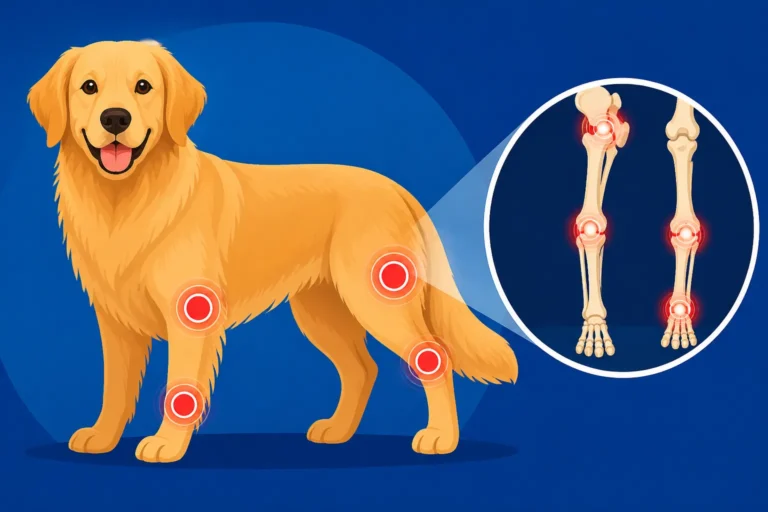
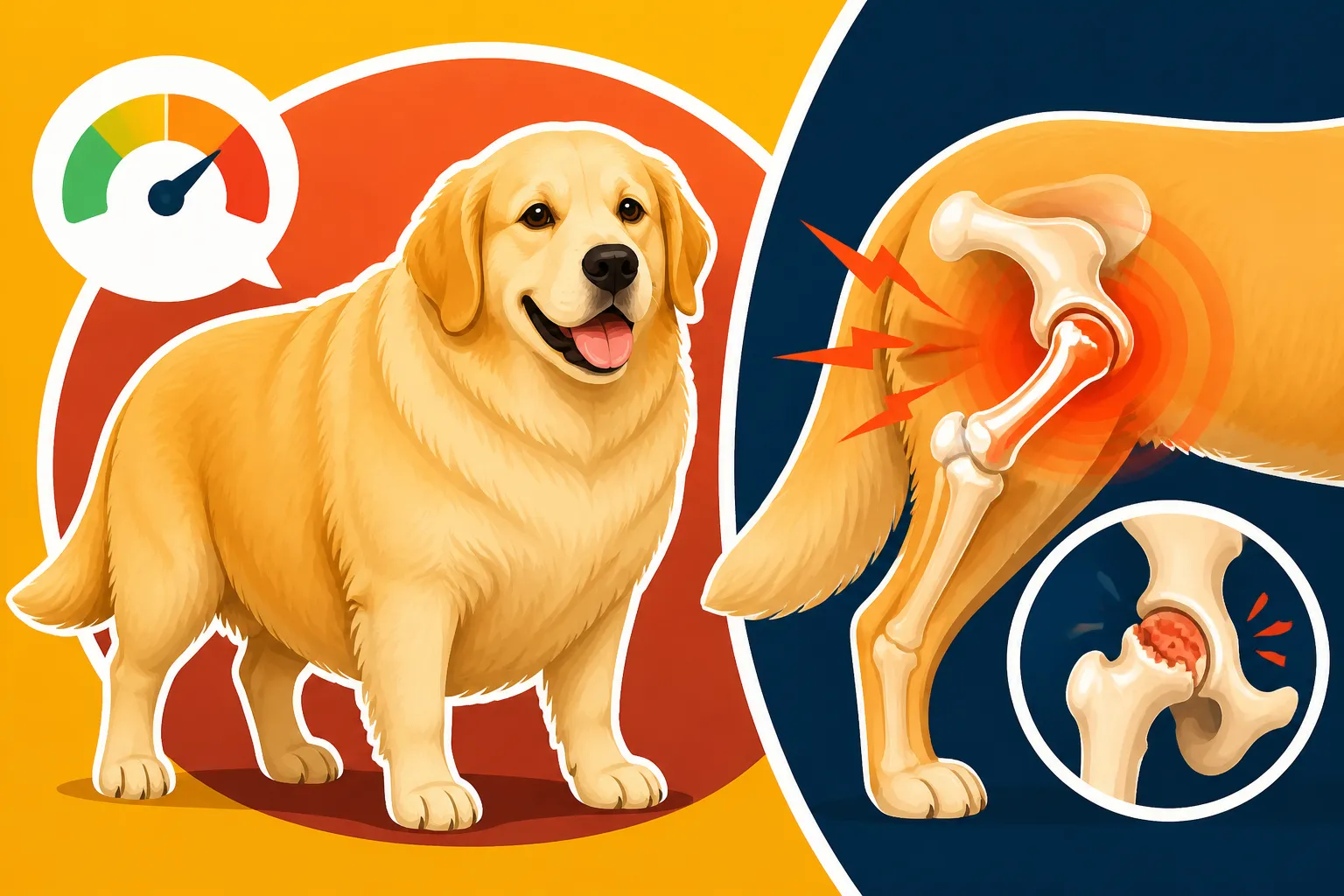
Every single step your Golden takes, every jump, every run, and even just standing, puts pressure on their joints. When they carry excess weight, that pressure intensifies dramatically. It's not a one-to-one ratio; a mere extra five pounds on a Golden Retriever can translate to a force equivalent to many times that amount impacting their joints during activity. Think of it like a shock absorber in a car that’s constantly overloaded – it wears out much, much faster. The smooth cartilage that cushions the bones in the hip joint begins to thin and degrade under this constant, elevated stress. Ligaments and tendons, which are crucial for joint stability, are stretched and strained, losing their integrity over time.
This isn't just about big, dramatic movements, either. Even simple actions like rising from a lying position, climbing stairs, or shifting weight while standing become more strenuous. The body is always working harder to support itself, leading to persistent, low-level strain that chips away at joint health.
Accelerating the Onset and Severity of Dysplasia
Golden Retrievers are notoriously prone to hip and elbow dysplasia, hereditary conditions where the joints don't develop correctly, leading to looseness and eventual arthritis. While genetics play a huge role, environmental factors like rapid growth during puppyhood and, critically, excess weight, are major contributors to how severely and how early these conditions manifest.
If your Golden has a genetic predisposition to hip dysplasia, even a small amount of extra weight acts like fuel on a fire. It doesn't cause the dysplasia, but it significantly accelerates its progression and worsens its severity. The malformed joint, already struggling to function smoothly, is now forced to contend with an unnatural amount of stress. This leads to increased friction, inflammation, and further breakdown of the joint components. Owners often report seeing signs much earlier in their overweight Goldens, or witnessing a faster decline in mobility as their dog ages. It's a cruel feedback loop: extra weight causes more pain, which leads to less activity, which leads to more weight gain, and so on. Understanding the nuances of Golden Retriever Hip Dysplasia Symptoms by Age can help you recognize these early signs.
Understanding Golden Retriever Joint Anatomy and Common Issues
To truly grasp why weight is such a villain for Golden Retriever hips, it helps to understand a bit about what’s going on inside those beautiful bodies. The hip joint is a marvel of engineering, a ball-and-socket design that allows for incredible range of motion. But like any complex system, it has its vulnerabilities.
A Closer Look at Hip Dysplasia in Goldens
Hip dysplasia in a Golden Retriever essentially means the "ball" (the head of the femur) doesn't fit snugly or securely into the "socket" (the acetabulum of the pelvis). Instead, it's loose, or "lax," causing grinding and instability. Over time, this abnormal movement wears away the cartilage and causes the body to try and stabilize the joint by laying down new bone, leading to painful degenerative joint disease, or osteoarthritis.
When an overweight Golden experiences this, the increased force magnifies the instability. Imagine a loose nut and bolt; if you push down hard on them, the grinding and wear accelerates. Similarly, the heavier your Golden, the more impactful each instance of the femoral head grinding against the acetabulum becomes. This doesn't just cause pain; it actively deforms the joint further, exacerbating the malformation and hastening the onset of crippling arthritis. You might start noticing subtle changes, like your Golden being reluctant to jump into the car or a slight shift in their gait, sometimes described as a "bunny hopping gait" when they run.
The Role of Cartilage and Inflammation
Cartilage is the unsung hero of our joints. This smooth, elastic tissue covers the ends of bones, allowing them to glide effortlessly against each other, absorbing shock, and reducing friction. In a healthy joint, it's like a perfectly oiled machine. However, under the constant, excessive pressure from extra weight, this delicate cartilage begins to suffer. It compresses, thins, and eventually erodes.
When cartilage is damaged, the underlying bone becomes exposed, leading to direct bone-on-bone friction – a incredibly painful experience. This damage also triggers an inflammatory response in the joint. Inflammation is the body's natural healing process, but when it becomes chronic, as it often does with persistent joint stress, it actually contributes to further cartilage breakdown. Inflammatory chemicals released in the joint environment actively degrade the remaining cartilage and synovial fluid (the joint's natural lubricant), creating a vicious cycle of pain, stiffness, and further deterioration. This chronic inflammation is a major component of Golden Retriever Arthritis and Joint Decline, making weight management crucial for preventing or slowing its progression.
Practical Steps to Protect Your Golden's Hips
The good news is that you have significant power to mitigate the impact of weight on your Golden's hips. It starts with a proactive approach to their diet, exercise, and overall wellness.
Achieving and Maintaining an Ideal Body Condition
This is arguably the most critical step. Identifying if your Golden is overweight is the first challenge, as many owners, myself included, can be prone to "fat blindness" when it comes to our beloved companions.
How to Assess Your Golden's Weight:
A healthy Golden Retriever should have a distinct waist visible when viewed from above, and their abdomen should tuck up when viewed from the side. You should be able to easily feel their ribs without pressing hard, like feeling the back of your hand, but you shouldn't see them prominently. If you have to push to feel the ribs, or if there's no discernible waist, your Golden is likely carrying too much weight. This is often referred to as Golden Retriever Body Condition Scoring, a skill every owner should learn.
Calorie Control and Portioning:
The vast majority of overweight Goldens are simply eating too much for their activity level. It’s vital to feed them precisely measured portions according to a veterinary-approved plan, rather than free-feeding or guessing. Look at the feeding guidelines on your dog food bag, but remember these are just starting points, and often recommend more food than an average, moderately active dog needs. Your vet can provide specific calorie recommendations tailored to your Golden's age, activity level, and target weight. Often, this means a gradual reduction in current intake. Also, don't forget those treats! They add up quickly. Consider swapping high-calorie treats for healthy, low-calorie options like baby carrots, apple slices (without seeds), or green beans. It's truly amazing how quickly those ounces can become pounds. Understanding How Much an Adult Golden Retriever Eats Daily can help you plan appropriately.
Tailored Exercise for Joint Health
Exercise is crucial, but for a Golden Retriever at risk of or already suffering from hip issues, the type of exercise matters immensely. High-impact activities that involve sudden stops, starts, and jumps can exacerbate joint damage.
Low-Impact, Consistent Activity:
Focus on consistent, moderate, low-impact exercise. Daily walks on soft surfaces like grass or dirt trails are excellent. Keep walks to a comfortable pace and duration for your dog, rather than pushing them too hard. Short, frequent walks throughout the day can be better than one long, strenuous one. Even active play in the yard with a soft toy can be beneficial, as long as it doesn't involve excessive jumping or twisting.
The Magic of Swimming:
If your Golden loves water, swimming is truly a joint-saving exercise. It allows them to use all their muscles and get a fantastic cardiovascular workout without any impact on their joints. The buoyancy of the water supports their weight, taking the pressure off their hips. Whether it's a carefully chosen lake, a dog-friendly pool, or a supervised session in a shallow stream, Swimming as Exercise for a Golden Retriever is an ideal activity, especially for Goldens with existing joint concerns or those prone to weight gain. Just ensure safety precautions are in place, like a life vest, especially in open water.
Supporting Joint Health Through Nutrition and Supplements
While managing weight and appropriate exercise are foundational, certain nutritional strategies and supplements can also play a supportive role in protecting your Golden's hips.
Targeted Supplements:
Many Golden Retriever owners find success with joint supplements. The most common and well-researched include:
- Glucosamine and Chondroitin: These are natural components of healthy cartilage. Supplementing with them can help support cartilage health, improve elasticity, and potentially slow down its degradation. Glucosamine Doses for a Golden Retriever should always be discussed with your veterinarian to ensure proper concentration and avoid potential interactions.
- Omega-3 Fatty Acids (Fish Oil): These powerful anti-inflammatory agents can help reduce the joint inflammation that contributes to pain and cartilage breakdown. They can also improve coat health and cognitive function, making them a multi-benefit supplement. When considering fish oil, look for high-quality, third-party tested products. You can learn more about the benefits in articles like Fish Oil for a Golden Retriever's Coat.
- MSM (Methylsulfonylmethane): Another compound thought to have anti-inflammatory and pain-relieving properties, often included in joint supplement formulas.
It's crucial to consult your veterinarian before starting any new supplements, as they can recommend appropriate dosages and formulations specific to your Golden's needs and current health status.
Veterinary Joint Support Diets:
Some dog food brands, like Hill's Prescription Diet, Royal Canin, and Purina Pro Plan Veterinary Diets, offer specific formulations designed to support joint health. These diets often contain higher levels of glucosamine, chondroitin, omega-3 fatty acids, and sometimes specific antioxidants, all aimed at reducing inflammation and nourishing cartilage. While they might be a higher investment upfront, the long-term benefits for your Golden’s mobility can be invaluable. Discuss with your vet if a prescription joint diet might be beneficial for your dog.
When to Seek Veterinary Intervention
Despite your best efforts, sometimes joint problems can still arise or progress. Knowing when to get professional help is essential for your Golden's comfort and quality of life.
Recognizing Warning Signs and Symptoms
Golden Retrievers are notoriously stoic, often hiding their pain until it becomes severe. This makes it challenging but incredibly important for owners to be vigilant about subtle changes in behavior or movement. Don't wait for obvious limping.
Subtle Indicators of Pain:
Keep an eye out for any of these quiet signs:
- Reluctance to move: Hesitation to jump, climb stairs, or get up after resting.
- Slowing down on walks: Falling behind, wanting to cut walks short.
- Changes in gait: A stiff appearance, "bunny hopping," or favouring one leg.
- Difficulty with grooming: Struggling to reach certain areas, less self-grooming.
- Behavioral changes: Increased irritability, less enthusiasm for play, restlessness at night, or licking at their joints.
- Muscle atrophy: Noticeable thinning of muscle mass in the hindquarters.
If you observe any of these, don't dismiss them. Even minor changes warrant a vet visit. The article Signs a Golden Retriever Is in Pain offers more detailed insights into what to look for.
Diagnostic Tools and Treatment Options
When you bring your Golden to the vet with concerns about their hips, they'll typically start with a thorough physical examination, checking range of motion, listening for crepitus (grinding sounds) in the joints, and assessing for pain.
Diagnostic Imaging:
The primary diagnostic tool for hip issues is radiography (X-rays). Your vet will take specific views of your Golden's hips to assess the joint structure, identify signs of dysplasia, and evaluate the extent of any arthritic changes. In some cases, more advanced imaging like CT scans might be recommended.
Treatment Pathways:
Treatment plans are always individualized based on the severity of the condition, your Golden's age, and overall health. They can range from conservative management to surgical intervention.
- Pain Management and Anti-inflammatories: Non-steroidal anti-inflammatory drugs (NSAIDs) are commonly prescribed to reduce pain and inflammation. Other pain medications might also be used in conjunction.
- Physical Therapy: Tailored exercises, hydrotherapy (under supervision), and therapeutic massage can significantly improve mobility, strengthen supporting muscles, and reduce pain. Physical Therapy for a Golden Retriever With Bad Hips is a fantastic option to consider.
- Injections: Some vets may recommend joint injections, such as polysulfated glycosaminoglycans or platelet-rich plasma, to promote healing and reduce inflammation.
- Surgery: For severe cases of hip dysplasia, surgical options like a Femoral Head Ostectomy (FHO) or Total Hip Replacement (THR) may be considered. These are significant procedures, but they can dramatically improve a dog's quality of life. The costs associated with such interventions can be substantial, and understanding Golden Retriever Hip Surgery Costs and Options is crucial for planning. This is where having pet insurance, such as Healthy Paws, can be a lifesaver, helping to cover a significant portion of the unexpected veterinary bills associated with chronic conditions or emergency surgeries. Healthy Paws offers comprehensive coverage that can help ease the financial burden of managing hip dysplasia and related conditions.
Maintaining a healthy weight for your Golden Retriever is one of the most loving and impactful things you can do to protect their hips and ensure they enjoy a long, active, and comfortable life by your side. It requires discipline, but their joyful leaps and pain-free wags are worth every effort.
| Impact Area | Ideal Weight Golden Retriever | Overweight Golden Retriever |
|---|---|---|
| Joint Stress | Optimal, minimal | High, chronic, excessive |
| Cartilage Wear | Slow, natural degradation | Accelerated, rapid breakdown |
| Inflammation | Minimal, healthy response | Chronic, widespread, damaging |
| Dysplasia Onset | Delayed, less severe expression | Accelerated, more severe symptoms |
| Arthritis Risk | Lower, later onset | Significantly higher, earlier onset |
| Mobility | Free, comfortable, agile | Stiff, painful, reduced range |
| Pain Level | Generally pain-free | Frequent, persistent pain |
| Treatment Needs | Primarily preventative | Often requires ongoing medication, therapy |
Disclaimer
Please remember that this article is intended for informational purposes only and is not a substitute for professional veterinary advice. Always consult with a qualified veterinarian regarding any health concerns or before making any decisions about your Golden Retriever's care, diet, or treatment plan.