Golden Retriever Obedience Titles and Sports
If you've ever lived with a Golden Retriever, you know they're not just beautiful, loving companions; they're also bundles of energy and sharp minds that need a job to do. Without proper outlets, that intelligence and athleticism can quickly turn into boredom, excessive barking, or even destructive chewing. Thankfully, the world of dog obedience and sports offers a fantastic way to bond with your Golden, channel their natural talents, and keep them happy, healthy, and engaged. This guide will walk you through the various avenues available, from traditional obedience to exciting dog sports, helping you find the perfect fit for you and your beloved Golden.
Understanding the Golden Retriever's Drive for Obedience and Activity
Golden Retrievers are practically custom-made for dog sports and advanced obedience work. It’s not just their physical prowess, though they certainly have that in spades; it's their intrinsic nature that truly sets them up for success in these areas. Understanding this foundational drive is key to unlocking their full potential and finding activities they’ll genuinely love.
The Golden Retriever Temperament Advantage
Let's be honest, Goldens are pretty special when it comes to their personality. They’re renowned for their eagerness to please, their friendly disposition, and their remarkable intelligence. These aren't just cute traits; they're fundamental qualities that make them exceptional candidates for training and competitive activities. A Golden wants to work with you, not just for you. This partnership mindset is invaluable when you're trying to teach complex sequences in agility or precise movements in obedience. They thrive on positive interaction and praise, which aligns perfectly with modern, reward-based training methods used in most dog sports today. Their inherent optimism means they often bounce back quickly from mistakes, ready to try again.
Think about it: many breeds might perform a task, but a Golden often seems to genuinely enjoy the process, offering up a wagging tail and bright eyes as they figure things out. This is a huge advantage when the training gets tough or the demands increase in complexity. You’re not fighting against their nature; you’re harnessing it. This deep-seated desire to connect and collaborate makes the training journey not just productive, but incredibly rewarding for both dog and handler. If you've ever seen a Golden with that signature "soft mouth" gently carrying a retrieved item, you know they're built for purpose, and that purpose often involves working closely with their human. They are, after all, retrievers at heart. Golden Retriever Temperament and What to Expect covers more about their wonderful personality.
Innate Desire to Please and Work Ethic
The phrase "eager to please" isn't just a cliché when it comes to Golden Retrievers; it's a cornerstone of their being. This strong desire to make their human happy translates directly into a fantastic work ethic. They pay attention, they try hard, and they genuinely seem to enjoy the challenge of learning new tasks. For competitive obedience or sports, this is gold. You'll find them looking to you for direction, their eyes locked on your movements, waiting for the next cue.
This innate drive isn't just about performing tricks; it’s about a deep engagement in problem-solving and collaboration. When you're trying to perfect a retrieve over a high jump or navigate a complex agility course, that focus and willingness to work through challenges are what make the difference. This breed was originally developed to retrieve game for hunters, which required intelligence, endurance, and a calm, biddable nature under pressure. Modern Goldens retain these traits, making them naturally inclined towards activities that mimic that partnership and mental stimulation. They don't just go through the motions; they invest themselves in the task at hand.
Channeling Energy into Productive Outlets
A Golden Retriever has energy. A lot of it. And if that energy isn't channeled constructively, it will find its own outlets, which often aren't ideal for your furniture or your sanity. This is where obedience titles and dog sports truly shine. They offer a physical and mental workout that satisfies a Golden's inherent needs. Imagine a Golden who’s spent an hour mastering a new obedience sequence or flying over agility jumps; they come home tired, content, and ready for a good nap, not to chew the leg off your dining table.
Without these outlets, you might see behaviors like excessive digging, relentless counter surfing, or incessant barking. It’s not because they're "bad" dogs; it's because they're bored and understimulated. Engaging in structured activities like rally or scent work not only burns off physical steam but also provides vital mental enrichment. Mental Enrichment for a Bored Golden Retriever goes into more detail on this topic. The focus required for these sports forces them to think, problem-solve, and maintain concentration, which is just as tiring and satisfying as a long run. By giving them a "job," even if it's just a fun hobby, you're tapping into their core instinct as working dogs and ensuring a happier, healthier life for everyone in the household.
Exploring AKC Obedience Trials for Golden Retrievers
When most people think of dog training, they often picture basic commands like "sit" and "stay." While these are crucial building blocks, AKC obedience trials take these concepts to a whole new level, demanding precision, consistency, and a strong partnership between dog and handler. Golden Retrievers, with their intelligence and eagerness, often excel in this challenging sport.
Novice Obedience: Getting Started
Novice obedience is the entry point into competitive obedience, and it's where many Golden Retriever teams begin their journey. The goal here is to demonstrate that your dog can perform a set of basic exercises reliably and happily on leash, and one off-leash exercise (the recall). It's all about control and attention in a distracting environment. Exercises include "Heel on Leash" (walking nicely by your side), "Stand for Examination" (holding a stay while a judge pretends to examine them), "Heel Free" (off-leash heeling, but usually with limited distractions compared to higher levels), "Recall" (coming to you when called from a distance), and "Long Sit" and "Long Down" (holding a sit or down position for a set period with you across the ring).
Many Goldens take to Novice like ducks to water because it plays directly into their desire to work closely with their handler. The challenge often lies not in teaching the initial command, but in perfecting the precision and consistency under trial conditions, with other dogs and people around. This stage really builds that fundamental communication and trust. You might start with online courses, like those offered by BAXTER & Bella, to lay a solid foundation before joining a local club. The title earned at this level is Companion Dog, or CD, which requires three qualifying scores under different judges. It’s a huge accomplishment and a testament to the strong bond you've built with your Golden. Teaching a Golden Retriever to Come When Called and Loose Leash Walking With a Golden Retriever are crucial skills here.
Open and Utility: The Higher Stakes
Once you've conquered Novice, the Open and Utility classes introduce significantly more complex and demanding exercises, pushing both dog and handler to new heights. Open obedience requires your Golden to perform most exercises off-leash, including retrieves over jumps, broad jumps, and more challenging out-of-sight stays. The "Retrieve on the Flat" and "Retrieve Over High Jump" exercises really tap into the Golden's natural retrieving instincts, but with the added layer of precise execution and a clean delivery. "Drop on Recall" means your dog must stop and lie down mid-run when called, a critical safety command and a difficult one to perfect. The title earned here is Companion Dog Excellent, or CDX.
Utility is often considered the pinnacle of obedience, where dogs must perform exercises based on scent discrimination, hand signals, and advanced retrieves. Exercises like "Signal Exercise" (performing commands using only hand signals), "Scent Discrimination" (finding a scented article from a pile of identical ones), and "Directed Retrieve" (sending your dog to retrieve a glove from a specific direction) are incredibly challenging. They require immense concentration, subtle communication, and a deep understanding between you and your Golden. Achieving the Utility Dog (UD) or even Utility Dog Excellent (UDX) title is a true mark of an extraordinary working relationship and a highly trained Golden Retriever. These levels demand an unwavering commitment to training and an intimate knowledge of your dog's capabilities.
Achieving Obedience Titles: CD, CDX, UD, UDX
The journey through obedience trials is marked by accumulating titles, each representing a significant milestone in your Golden Retriever's training progression. To earn any AKC obedience title, your dog must receive three "qualifying scores" (Q-scores) of 170 points or more out of a possible 200, under at least two different judges, in a particular class.
Here’s a breakdown of the standard titles:
| Title Abbreviation | Class | Key Skills Required |
|---|---|---|
| CD | Novice | On-leash heeling, stand for exam, off-leash recall, long sit, long down. |
| CDX | Open | Off-leash heeling, retrieve on flat, retrieve over high jump, broad jump, drop on recall, out-of-sight long sit/down. |
| UD | Utility | Signal exercise, scent discrimination, directed retrieve, directed jumping. |
| UDX | Utility Dog Excellent | Earns both an Open B and Utility B qualifying score at the same trial 10 times. |
| OTCH | Obedience Trial Champion | Most prestigious title, requires earning a specified number of "first place" wins in Open B and Utility B, plus 100 points. |
These titles aren't just fancy letters to put after your Golden's name; they represent hundreds of hours of dedicated training, overcoming challenges, and deepening the bond you share. Each Q-score is a moment of triumph, a confirmation that all your hard work is paying off. Moving from CD to UD often takes years of consistent effort, demonstrating the highest levels of teamwork and canine intelligence. And for those truly dedicated, the Obedience Trial Champion (OTCH) title is the ultimate achievement, proving your Golden is among the elite in the sport.
Beyond Basic Obedience: Advanced Dog Sports for Goldens
While traditional obedience trials focus on precision and control, the world of dog sports offers a broader spectrum of activities that can tap into different aspects of your Golden Retriever's intelligence, athleticism, and natural instincts. These sports provide incredible mental and physical stimulation and are a fantastic way to bond with your dog in a dynamic, fun environment.
Agility: Speed, Precision, and Partnership
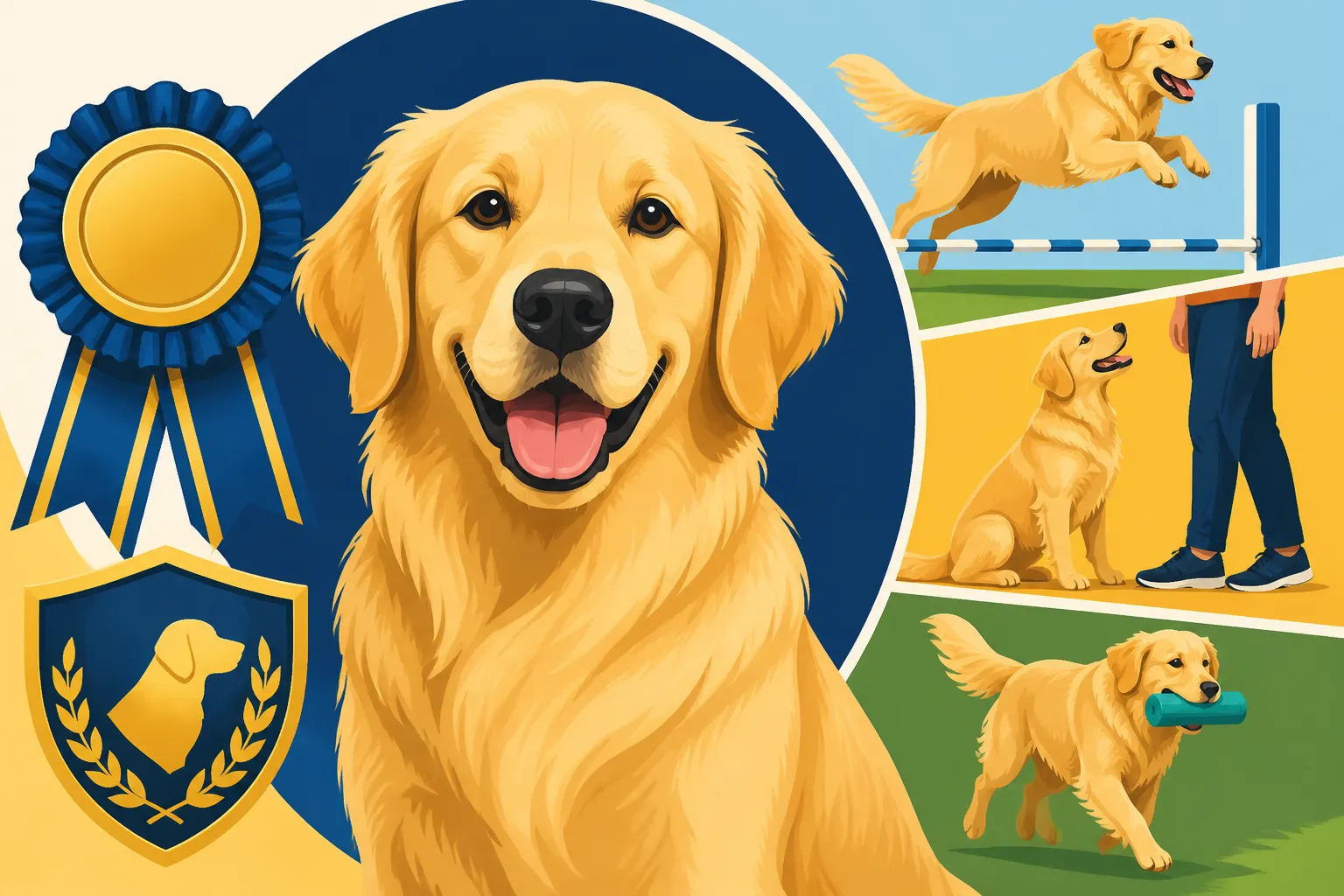
Agility is arguably one of the most exciting and visually impressive dog sports, and Golden Retrievers absolutely shine in it. Imagine your Golden flying over jumps, weaving through poles, speeding through tunnels, and balancing on a seesaw, all guided by your voice and body language. It's a true test of speed, precision, and the seamless partnership between dog and handler. The courses are ever-changing, requiring split-second decisions and excellent communication.
What makes Goldens so good at agility? Their combination of athleticism, intelligence, and eagerness to please is a winning formula. They have the power to clear jumps, the stamina for complex courses, and the mental capacity to learn intricate sequences. While some breeds might be faster, Goldens often compensate with their biddability and consistency. Starting agility usually involves foundational classes where puppies and young dogs learn how to safely navigate obstacles, build confidence, and understand basic directional cues. As they progress, the challenges become more intense, demanding faster speeds and more nuanced handling. It's a fantastic way to build confidence in a shy Golden or give a high-energy dog a truly satisfying workout. You can find excellent instructional books or videos on Amazon to get a head start on basic obstacle familiarity. Exercise a Golden Retriever Needs Each Day is a crucial consideration for agility.
Rally Obedience: Teamwork with a Twist
Rally obedience, often simply called "Rally," is a fantastic bridge between traditional obedience and more dynamic dog sports. It’s less about rigid precision and more about continuous communication and teamwork as you navigate a course of numbered stations. Each station has a sign that tells you to perform a specific exercise, like "Sit-Stay-Leave Dog," "Spiral Right-Handler Inside," or "Send Over Jump." You can talk to and encourage your dog throughout the course, making it a much more conversational and engaging experience than traditional obedience.
Golden Retrievers excel in Rally because it emphasizes the joyful partnership aspect of training. Their natural enthusiasm and desire to please are perfectly suited to the continuous praise and encouragement allowed in the ring. It's a great starting point for teams new to competition or for those who find the strictness of regular obedience a bit intimidating. Rally builds excellent focus and attention, and it's a wonderful way to reinforce basic and intermediate commands in a fun, dynamic setting. The levels progress from Novice (all on-leash) to Advanced, Excellent, and Master (all off-leash), with increasing difficulty and more complex exercises.
Tracking and Scent Work: Tapping into Natural Instincts
Golden Retrievers have an incredible sense of smell and a natural instinct to follow scents, stemming from their retrieving heritage. Tracking and scent work sports are perfect avenues to tap into these powerful abilities, providing immense mental stimulation that can be just as tiring as physical exercise. In tracking, your Golden follows a human scent trail, often across varied terrain, finding articles dropped along the way. Scent work, a newer and increasingly popular sport, involves searching for specific target odors (like birch, anise, or clove) hidden in containers, interiors, exteriors, or vehicles, much like detection dogs.
These sports are incredibly rewarding because they allow your Golden to use their nose, an instinctual behavior they often love. It's truly amazing to watch a Golden follow an invisible trail with such focus and determination. For Goldens who might not be as enthusiastic about high-impact sports due to age or physical condition, scent work offers a low-impact, high-reward activity. It builds confidence, sharpens their problem-solving skills, and deepens your understanding of their amazing olfactory capabilities. It's a quiet sport, often enjoyed by handlers who appreciate the intricate work of their dog’s nose. You can buy starter kits for scent work from retailers like Amazon to begin exploring your Golden's innate talent.
Field Events: Honoring the Golden Retriever's Heritage
To truly understand a Golden Retriever, you have to appreciate their original purpose: to retrieve game for hunters. Field events, such as hunt tests and field trials, are competitions designed to showcase and preserve these ancestral retrieving instincts, providing an incredible outlet for their natural talents and boundless enthusiasm for work.
Hunt Tests: Simulating Real-World Retrieving
Hunt tests are perhaps the most accessible and popular way for Golden Retriever owners to engage with their dog's retrieving heritage. These events are designed to simulate actual hunting scenarios, but without the competitive aspect of trying to beat other dogs. Instead, dogs compete against a standard, aiming to demonstrate their natural abilities and training in retrieving feathered game (often pheasants or ducks) from various land and water scenarios. The focus is on teamwork, marking fallen birds, following directions, and delivering the bird gently to hand.
There are different levels in hunt tests: Junior Hunter (JH), Senior Hunter (SH), and Master Hunter (MH). A Golden at the Junior Hunter level might retrieve two marked birds on land and two on water. As they progress to Senior and Master, the tests become increasingly complex, involving multiple marked retrieves, blind retrieves (where the dog doesn't see the bird fall and must be directed to it), and even "diversion birds" designed to test their steadiness. Goldens excel here because of their innate desire to retrieve, their soft mouths, their love for water, and their biddability. It’s a joy to watch a Golden plunge into icy water to retrieve a bumper or bird, then bring it back with a proud wag of their tail. Fetch Games That Tire a Golden Retriever and Teaching a Golden Retriever to Swim are fundamental skills that contribute to success in hunt tests.
Field Trials: The Pinnacle of Retriever Performance
While hunt tests focus on demonstrating a standard of retrieving ability, field trials are intense, head-to-head competitions where Golden Retrievers are judged on their natural abilities and trained skills against other top-tier retrievers. These events are the ultimate test of a retriever's prowess, demanding extreme marking ability, incredible courage, tireless desire, and unparalleled trainability. Dogs compete in "stakes" (classes) such as Derby, Qualifying, and All-Age.
Field trial tests are designed to be extremely challenging, often involving "triple marks" (three birds falling in different locations that the dog must remember and retrieve in a specific order), "quad marks," and very long, complex "blind retrieves" that require perfect handling and absolute trust between dog and handler. The terrain is often rugged, and the distances are significant. Field trial Goldens are truly athletes, showcasing the highest level of their breed's inherent capabilities. This is where you see the "field line" Goldens truly shine, often leaner and more athletic than their show-bred counterparts, bred specifically for their intense drive and retrieving prowess. Winning an event is a significant achievement, and earning the title of Field Champion (FC) or National Field Champion (NFC) is incredibly prestigious, reserved for only the most exceptional Goldens and handlers.
The Soft Mouth and Water Work Advantage
Two defining characteristics that make Golden Retrievers exceptional in field events are their "soft mouth" and their natural affinity for water. The soft mouth refers to their ability to carry game gently without damaging it, a trait that was carefully bred into them by Lord Tweedmouth, the founder of the breed. This is absolutely critical in hunt tests and field trials, where a damaged bird would lead to disqualification or deductions. You'll observe this gentleness even in everyday life, as they often carry toys or even your slippers around without ever damaging them.
Their love for water is equally important. Goldens were developed in Scotland, a land of lochs and rivers, and their thick, water-repellent double coat and strong swimming ability make them perfectly suited for retrieving from cold water. Many Goldens will leap into any body of water at the first opportunity. This natural instinct and physical adaptation give them a distinct advantage in water retrieves, which are a common and challenging element of all hunt tests and field trials. Watching a Golden gracefully cut through the water, powered by their strong tail and webbed feet, is a beautiful sight and a testament to their heritage. This combination of a gentle grip and water enthusiasm is why they remain one of the most popular breeds for these demanding sports.
Preparing Your Golden Retriever for Competition
Embarking on the journey of competitive dog sports or advanced obedience requires more than just a talented Golden Retriever; it demands a dedicated commitment to consistent training, physical conditioning, and mental preparation. It’s a partnership where both halves need to be ready.
Building a Strong Foundation Through Training
You can't build a skyscraper on a shaky foundation, and the same goes for a competitive Golden Retriever. Before you even think about jumping hurdles or retrieving blind birds, you need to ensure your Golden has a rock-solid understanding of basic obedience. This means a reliable "sit," "stay," "come," and "down," all performed happily and consistently, even with distractions. Many successful competitors start with puppy classes and move through basic obedience, reinforcing these commands daily. Remember, consistency is key. Even 10-15 minutes of focused training each day can yield tremendous results over time.
Beyond basic commands, focus on building attention and engagement. Your Golden needs to choose to work with you over all the exciting smells, sights, and sounds of a trial environment. Play games that encourage focus, reward eye contact, and build their drive for toys or treats. This early groundwork pays dividends later, making more complex training much smoother. Consider looking into online programs like those from BAXTER & Bella that provide structured curricula for foundational training, or join a local club. Golden Retriever Training Sessions That Are Too Long offers insight into effective training duration.
Physical Conditioning and Health Considerations
Competitive dog sports can be physically demanding, and it's your responsibility to ensure your Golden Retriever is in peak physical condition to participate safely and effectively. This means a proper diet, appropriate exercise, and regular veterinary check-ups. Maintaining a healthy weight is paramount, as extra pounds put unnecessary strain on their joints, which are already prone to issues like hip and elbow dysplasia. Golden Retriever Weight and Joint Damage is a very relevant read here.
In addition to daily walks and play, consider incorporating specific exercises to build strength, stamina, and flexibility. Swimming is excellent for joint-friendly conditioning. Short bursts of fetching can build speed and retrieve drive. Always warm up your Golden before intense activity and cool them down afterward to prevent injury. Crucially, ensure your Golden has all necessary health clearances for their breed, especially for hips, elbows, eyes, and heart. A responsible breeder will provide these for the parents, and you should continue monitoring your dog’s health with your vet. Any signs of lameness, discomfort, or unusual fatigue should warrant a vet visit before continuing with strenuous training. Golden Retriever Hip and Elbow Dysplasia Explained highlights common concerns.
Mental Preparation and Focus for the Ring
Training for competition isn't just about physical exercises; it's also about preparing your Golden Retriever mentally for the unique pressures of a trial environment. This means exposing them gradually to different sights, sounds, and people they might encounter at a show. Practice in various locations – parks, empty parking lots, quiet community centers – to generalize their understanding that commands apply everywhere, not just in your backyard.
Building focus is crucial. Use high-value rewards (tasty treats or their favorite toy) to keep their attention on you, especially when distractions are present. Practice short, engaging sessions to maintain their enthusiasm and prevent burnout. Some Goldens can become overwhelmed by the hustle and bustle of a trial, so gradual desensitization is key. Socializing your puppy well from a young age can make a huge difference in their confidence in novel situations. Golden Retriever Puppy Socialization Windows explains the importance of early exposure. Ultimately, you want your Golden to feel confident and excited when they enter the ring, viewing it as a fun opportunity to work with their favorite person – you!
Finding the Right Support and Resources
Diving into the world of dog sports and advanced obedience might seem daunting at first, but you don't have to go it alone. There's a thriving community of enthusiasts, experienced trainers, and invaluable resources available to guide you and your Golden Retriever every step of the way.
Local Obedience Clubs and Training Groups
One of the best places to start your competitive journey is with a local dog training club or obedience group. These organizations often offer classes specifically geared towards competition, from beginner Novice obedience to advanced agility or rally. More importantly, they provide a built-in community of like-minded individuals who share your passion for working with their dogs. You'll find mentors, get tips, and your Golden will have opportunities to train around other dogs in a controlled, stimulating environment.
These clubs are usually run by volunteers and experienced instructors who are often competitors themselves. They understand the nuances of trial rules and how to prepare a dog for performance. Attending classes not only provides structured training but also exposes your Golden to the kind of distractions they'll encounter in a real trial, which is invaluable. Most clubs offer different levels of membership, some allowing you to audit classes before committing or providing access to equipment. Don't be shy about reaching out; the dog sport community is generally incredibly welcoming and eager to help new teams get started.
Choosing a Qualified Trainer or Mentor
While self-study with books or online courses is a great way to start, at some point, you'll likely benefit immensely from the guidance of a qualified trainer or mentor. A good trainer can observe your Golden, identify areas for improvement, and help you troubleshoot challenges. Look for trainers who use positive reinforcement methods, as Goldens respond best to reward-based training that builds confidence and a desire to work. Ask about their own competitive experience, their philosophy, and whether they have experience with Golden Retrievers in particular.
A mentor can be an invaluable asset, someone who has navigated the competitive landscape themselves and can offer practical advice, emotional support, and insights into trial strategies. They can help you understand the unspoken rules of the ring, how to read judges, and how to manage pre-trial nerves (both yours and your dog's!). Whether you choose group classes, private lessons, or find a dedicated mentor, investing in expert guidance can significantly accelerate your progress and help you and your Golden achieve your competitive goals safely and enjoyably. Choosing a Positive Reinforcement Trainer for a Golden is a great article to consult.
Essential Gear and Online Learning Tools
Before you dive headfirst into competition, there's some essential gear you'll want to gather. For obedience, a sturdy 6-foot leash and a comfortable flat buckle or martingale collar are standard. As you advance, you might need a longer leash for recall practice or specific jumps for agility. For scent work, specialized scent kits and appropriate hides are necessary. For field events, retrieve bumpers (sometimes called dummies), a launcher, and a training vest can be helpful.
Beyond physical gear, the digital age offers a wealth of online learning tools. YouTube is full of channels dedicated to dog training, offering free tutorials on specific exercises. Websites like Clean Run or Dogwise offer extensive libraries of books and DVDs covering every dog sport imaginable. Many competitive trainers now offer online courses or virtual coaching, which can be a fantastic option if you don't have local resources. You can find almost anything you need on Amazon, from training treats and clickers to specialized equipment for rally or agility. Leveraging these resources can help you continuously learn and refine your skills, keeping both you and your Golden engaged and progressing.
Disclaimer
This article is for general informational purposes only and does not constitute professional advice. Laws, prices and regulations vary by location and change over time. Consult a qualified professional for guidance on your specific situation.