Choosing a Trainer for a Golden Retriever
Bringing a Golden Retriever into your home is an incredible joy, but let's be honest, those adorable puppy antics quickly turn into bigger, more challenging behaviors as they grow. Owners often feel overwhelmed trying to navigate everything from relentless puppy nipping to leash pulling that feels like an Olympic sport, or persistent jumping on guests. This comprehensive guide will walk you through the process of choosing the right trainer for your beloved Golden Retriever, helping you understand different approaches, what qualifications matter, and how to find a partner who aligns with your goals and your dog's sensitive nature.
Why Even "Good" Goldens Need Professional Training
It’s easy to fall into the trap of thinking a Golden Retriever, with their sweet smiles and eager-to-please reputation, will just naturally be a perfect, well-behaved dog. After all, they’re known for their intelligence and gentle dispositions! However, while these traits certainly give them a head start, they don't erase the need for consistent, informed guidance. Ignoring common behavioral challenges or attempting to "figure it out" alone can often lead to more deeply ingrained problems, leaving both you and your furry friend frustrated.
Dispelling the Myth of the "Naturally Perfect" Golden
Ah, the Golden Retriever. Everyone tells you they're such good dogs, so smart, so easy to train! And yes, they absolutely are wonderful companions, but the idea that they arrive pre-programmed with perfect manners is a myth that can set new owners up for disappointment. Goldens are still dogs, with natural instincts and behaviors that need shaping and direction. A puppy doesn't inherently know that jumping on Grandma is rude, or that your favorite leather shoes aren't chew toys. They operate on instinct and learn through consequence and repetition. Expecting them to be "perfect" without proper training is like expecting a child to learn calculus without ever stepping foot in a classroom. It’s unfair to them and ultimately, it’s going to cause friction in your home.
This myth can be particularly disheartening for owners who find themselves struggling. They might think, "My Golden is supposed to be easy, why isn't my dog getting it?" This leads to guilt and frustration when the reality is, every dog, even a Golden, needs a patient, knowledgeable teacher to guide them. Professional training provides that structure and expertise, allowing your Golden's natural good qualities to shine through a foundation of appropriate behavior.
Addressing Common Golden Retriever Challenges Proactively
While Goldens are generally biddable, they do have some common breed-specific quirks and challenges that can really test an owner's patience. Think about that powerful retrieve drive – wonderful for games of fetch, but not so great when they decide to grab every sock, remote, or forbidden item they can get their mouths on. Puppy nipping and biting, while normal for puppies, can be particularly intense with a Golden, whose mouths are their primary way of interacting with the world. Without proper bite inhibition training, those puppy nips can turn into painful adult nips, and nobody wants that. Why Golden Retriever Puppies Are So Mouthy
Then there's the famous Golden enthusiasm! They love people, which means they often jump up to greet them. While adorable from a tiny puppy, a full-grown Golden Retriever jumping on an elderly relative or a small child can be dangerous. Pulling on the leash, too, is a classic Golden move. Their strong desire to explore and greet every person and dog means many owners struggle with walks. Addressing these behaviors early with professional guidance prevents them from becoming entrenched habits that are much harder to break later. A good trainer can offer practical solutions and help you implement strategies for Loose Leash Walking With a Golden Retriever or teach your Golden to redirect that mouthing instinct onto appropriate toys.
Building a Stronger Bond Through Structured Learning
Ultimately, professional training isn't just about teaching your dog commands; it's about establishing clear communication and mutual understanding, which profoundly strengthens your bond. When you both understand the "rules" and expectations, your relationship becomes one of trust and respect, not confusion and frustration. Imagine a world where your Golden comes reliably when called, walks politely by your side, and calmly greets guests. This isn't just about obedience; it's about being able to safely enjoy more activities together, from hikes in the park to visits with friends and family.
A well-trained Golden is a happier Golden because they understand what's expected of them and receive consistent positive feedback. This reduces their stress and anxiety, knowing they can rely on you for clear direction. You, in turn, feel more confident and connected to your dog, experiencing the joy of a truly harmonious relationship. The shared experience of learning and achieving goals together creates an incredibly powerful bond that transcends simple commands, enriching both your lives immensely. Training a Golden Retriever From Puppy to Adult can set this foundation for a lifetime of companionship.
Understanding Different Training Philosophies
Navigating the world of dog training can feel like stepping into a philosophical debate. There are many approaches, and not all are created equal, especially when it comes to a sensitive, people-oriented breed like the Golden Retriever. Understanding the core principles of different training philosophies is crucial for choosing a trainer whose methods align with your values and will yield the best results for your furry family member.
Positive Reinforcement: The Gold Standard for Goldens
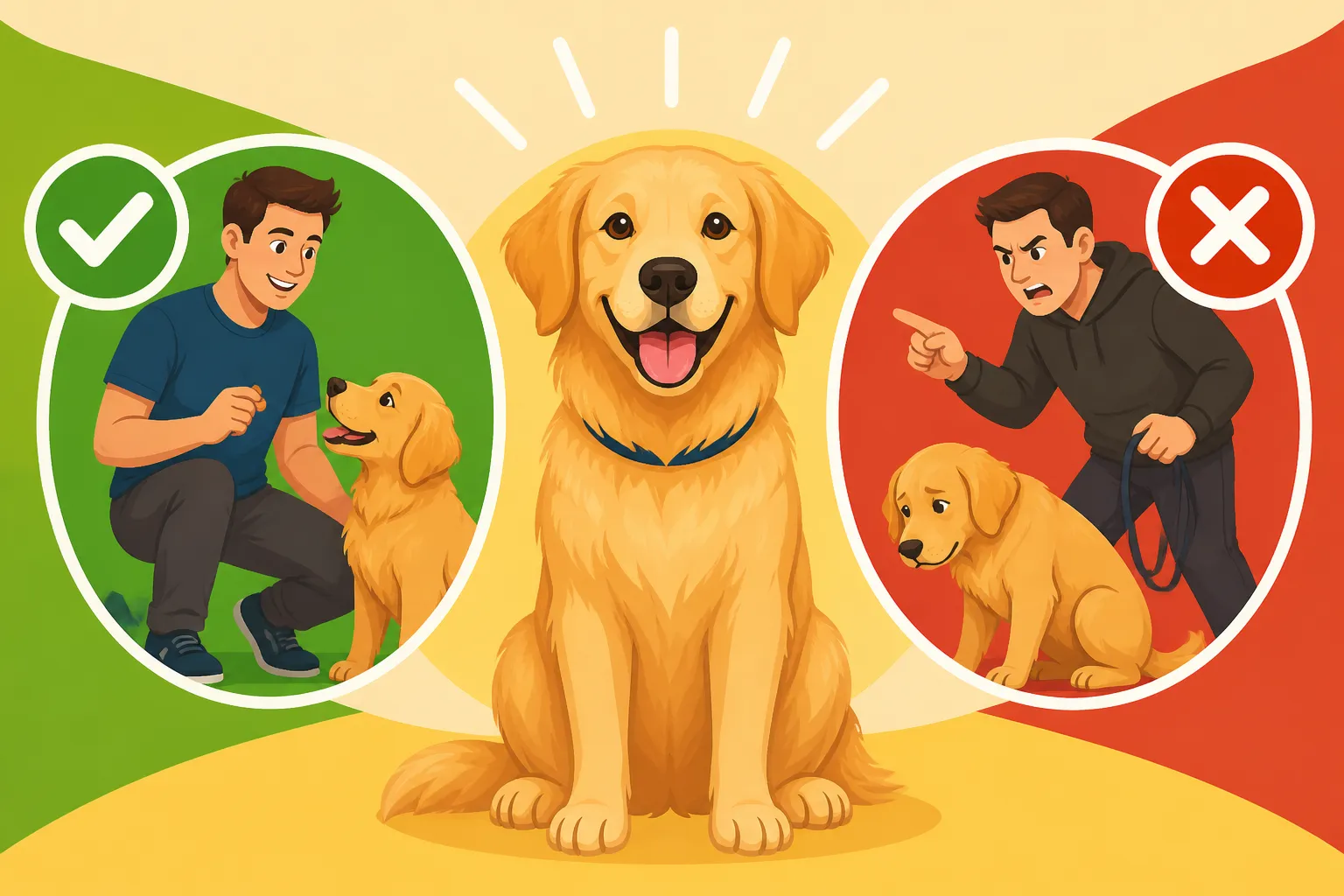
Positive reinforcement is widely considered the most effective and humane approach for training Golden Retrievers. This method focuses on rewarding desired behaviors, making it more likely that your dog will repeat them. Rewards can be anything your dog values: treats, praise, toys, a quick game of fetch, or even just a happy tone of voice. The key is to deliver the reward immediately after the desired behavior occurs, so your Golden clearly understands what they did right. For example, if you ask your Golden to "sit" and they do, you immediately say "yes!" or click a clicker, and then offer a tasty treat. This makes the "sit" command a positive experience, increasing the likelihood they’ll offer it again.
Golden Retrievers, with their innate desire to please and their love for food and attention, thrive in a positive reinforcement environment. They learn quickly and eagerly when they know good things happen when they perform the correct action. This approach builds confidence, fosters a strong bond based on trust rather than fear, and encourages your Golden to actively participate in the learning process. You'll find many excellent resources that teach this method, including online programs like those from BAXTER & Bella, which emphasize positive, reward-based learning from the comfort of your home. Using treats and praise effectively is a cornerstone of success, and knowing Best Treats for Training a Golden Retriever can make a huge difference in motivation.
Aversion-Based Training and Why It's Often Detrimental
On the other end of the spectrum is aversion-based training, sometimes referred to as "traditional" or "corrections-based" training. This philosophy relies on using physical or psychological discomfort to stop unwanted behaviors. Tools often associated with this approach include choke chains, prong collars, and electronic collars (e-collars or shock collars), which are used to deliver a painful or startling stimulus. The idea is to create a negative association with the undesirable action, thereby deterring the dog from repeating it. For instance, if a dog pulls on the leash, a harsh jerk on a choke or prong collar might be used.
While these methods can suppress behavior in the short term, they come with significant drawbacks, especially for Goldens. Golden Retrievers are known for their sensitive nature. Using pain or intimidation can easily lead to fear, anxiety, and a breakdown of trust between you and your dog. Instead of understanding what to do, your Golden might simply learn to fear the training situation, the tools, or even you. This can result in a fearful dog, a dog that shuts down, or even one that develops reactive behaviors out of anxiety. It doesn't teach them alternative, desired behaviors, only what not to do, often in a distressing way. When dealing with a Fearful Behavior in a Golden Retriever, aversion methods can exacerbate the problem rather than solve it.
Balanced Training: A Closer Look
Balanced training attempts to blend elements of both positive reinforcement and corrections. Proponents argue that it uses rewards for good behavior and appropriate aversive corrections for unwanted behavior, creating a "balanced" approach. In theory, this sounds appealing – using the best of both worlds. However, the efficacy and ethics of balanced training heavily depend on the skill, judgment, and philosophy of the individual trainer.
A truly skilled and ethical balanced trainer might prioritize positive reinforcement, using corrections sparingly, minimally, and as a last resort, always aiming to communicate clearly with the dog. The danger lies with trainers who lean too heavily on corrections, using harsh methods that are indistinguishable from purely aversion-based training. It's crucial for owners to understand what "correction" means to a particular trainer. Is it a gentle verbal "no," or is it a physical leash pop with a prong collar? For a Golden Retriever, whose temperament is so geared towards cooperation and joyful interaction, even mild aversives can be counterproductive if not handled with extreme care and precise timing. When you're interviewing trainers, always ask for specific examples of how they address undesirable behaviors, rather than just accepting the "balanced" label at face value.
Types of Trainers and Certifications to Look For
So, you've decided a professional trainer is the way to go. Great! But then you start looking, and suddenly you're faced with a bewildering array of titles, acronyms, and claims. It can feel like the wild west of dog training, with no clear roadmap. Knowing what types of trainers exist and what certifications genuinely indicate expertise can save you a lot of time and potential heartache.
The Importance of Professional Certifications
Unlike many other professions, dog training isn't universally regulated. Anyone can print business cards and call themselves a "dog trainer," regardless of their education or experience. This is why professional certifications are so incredibly important. They demonstrate that a trainer has met specific educational and experiential standards, passed examinations, and often commits to ongoing education and a code of ethics.
Look for certifications from reputable, independent organizations. Some of the most recognized include:
- CPDT-KA (Certified Professional Dog Trainer – Knowledge Assessed): This certification, offered by the Certification Council for Professional Dog Trainers (CCPDT), indicates a trainer has passed an exam demonstrating knowledge of animal learning, training techniques, and canine behavior. It's a solid baseline.
- KPA-CTP (Karen Pryor Academy Certified Training Partner): Trainers with this credential have completed an intensive program focused exclusively on positive reinforcement (clicker training) methods.
- PMCT (Pat Miller Certified Trainer): Trainers certified through Pat Miller's Peaceable Paws program are also grounded in positive reinforcement and force-free methods.
These certifications, among others, signal a commitment to humane, science-based training practices. They tell you that the trainer has invested in their education and is held to a professional standard, which is invaluable when entrusting someone with your Golden Retriever's behavioral development. Always verify these credentials on the issuing organization's website.
Group Classes vs. Private Sessions vs. Board & Train
The format of training also varies, and each has its own advantages depending on your Golden's needs, your schedule, and your budget.
- Group Classes: These are fantastic for socialization and teaching basic obedience in a controlled, distracting environment. Think about a puppy class where your Golden can interact with other puppies and people, learning to focus on you amidst distractions. They're typically more affordable than private sessions and are a great way to meet other dog owners. They also provide structure and consistency. Group classes are excellent for building a foundation of commands like sit, stay, and come. However, they might not be ideal for specific, complex behavioral issues like severe reactivity or Golden Retriever Separation Anxiety Signs. Golden Retriever Training Class Costs can vary widely, so shop around.
- Private Sessions: One-on-one training allows for highly customized plans tailored to your Golden's specific challenges and your family's lifestyle. If your Golden is struggling with something like resource guarding, specific reactivity to certain triggers, or you just prefer personalized attention, private sessions are often the most effective. The trainer can observe your dog in your home environment and address behaviors where they naturally occur. This can be more expensive per hour but might resolve issues faster. Private Training Rates for a Golden Retriever can be a significant investment, but often yield quick, targeted results.
- Board & Train Programs: In these programs, your Golden stays with the trainer for a period (typically weeks), receiving intensive training. This can be appealing for owners with very challenging behaviors or who feel overwhelmed. However, exercise extreme caution with board and train. While some reputable facilities exist, many use aversion-based methods to achieve quick results, which can be detrimental to a Golden's temperament and may not generalize once the dog returns home. It's crucial to thoroughly vet any board and train facility, visit in person, ask about their exact methods, and ensure you'll receive detailed follow-up training to maintain consistency. They are also often the most expensive option. Board and Train Programs for Golden Retrievers should only be considered after exhaustive research.
Online Programs and Resources
In our increasingly digital world, online training programs and resources have become a popular and accessible option. These can range from free YouTube videos to structured, subscription-based courses that offer live coaching and community support.
Online programs can be incredibly beneficial for busy owners, those in rural areas without access to local trainers, or as a supplementary resource to in-person training. Many focus on positive reinforcement techniques and allow you to work at your own pace from home. For example, BAXTER & Bella offers comprehensive online puppy and dog training programs, complete with step-by-step guides and live Q&A sessions, which can be a fantastic foundation or a way to refresh skills. You can also find a vast array of books, e-books, and instructional videos on platforms like Amazon that cover every aspect of Golden Retriever training.
However, a significant limitation of online training is the lack of real-time, in-person feedback. A trainer can't physically observe your dog's subtle body language, correct your technique on the fly, or fully assess complex behavioral issues. For basic obedience and enrichment, they're great. For serious behavioral problems, they are best used as a supplement or a starting point before consulting a professional in person. Always ensure the online resources you choose are based on humane, positive reinforcement principles.
Key Questions to Ask Potential Trainers
Once you’ve done your initial research and identified a few potential trainers, the next crucial step is to interview them. This isn't just about checking their availability or rates; it's about delving into their philosophy, experience, and what you can expect from their services. A good trainer will welcome your questions and be transparent about their methods. Don't be shy – this is about finding the best fit for your Golden.
Delving into Their Methods and Experience
This is arguably the most important area to explore. You want to understand how they train and why.
- "What training methods do you primarily use?" Listen for keywords like "positive reinforcement," "force-free," "rewards-based," or "clicker training." If they mention "corrections," ask for specific examples of what that entails. A red flag would be a trainer who is vague or dismissive about their methods, or who immediately jumps to discussing punishment tools.
- "How do you handle undesirable behaviors like jumping, barking, or pulling?" Again, look for answers that focus on redirecting, managing the environment, and teaching alternative behaviors rather than simply stopping the unwanted action with force. For instance, if your Golden is Why a Golden Retriever Jumps on Visitors, a good trainer will suggest teaching an incompatible behavior like "sit" for greetings, rather than kneeing your dog in the chest or using a prong collar.
- "What is your experience working with Golden Retrievers specifically?" While all dogs share some learning principles, Goldens have distinct temperaments. A trainer with specific experience with the breed will understand their sensitivity, intelligence, and common breed traits, allowing for more tailored and effective approaches.
- "Can you provide references from past clients?" A reputable trainer will be happy to connect you with clients who can speak to their experience and results. This is a great way to get an unbiased perspective.
- "What are your professional certifications, and with which organizations?" As discussed earlier, certifications are key. Ask for specifics and be prepared to verify them.
Understanding Their Support and Follow-Up
Training is rarely a one-and-done event. Behavior is dynamic, and you'll likely have questions or need ongoing support as you implement new strategies at home.
- "Do you offer ongoing support after our sessions are complete?" Some trainers include follow-up phone calls or emails for a certain period, while others might charge for additional consultations. Understanding this upfront will manage your expectations and help you budget.
- "What's your policy if my dog isn't progressing as expected?" A good trainer will be adaptable. They should offer to re-evaluate the training plan, suggest different approaches, or recommend specialists if the issue is beyond their scope. Beware of trainers who guarantee results, as every dog is an individual and progress can vary.
- "How much involvement is required from me, the owner?" Effective dog training is really about training the owner. You'll be the one living with and consistently reinforcing behaviors. A good trainer will emphasize your active role and provide clear instructions for at-home practice. They should also provide homework between sessions. Be prepared to dedicate time to practice, because Golden Retriever Training Sessions That Are Too Long for one sitting at home are less effective than frequent, short, positive reinforcement sessions.
Logistical and Practical Considerations
Beyond philosophy, there are practical aspects that need to be addressed to ensure the training program fits into your life.
- "What is your fee structure, and what does it include?" Get a clear breakdown of costs per session, package deals, or hourly rates. Ask about any additional fees for travel or materials.
- "What is the typical class size for group sessions?" For group classes, smaller sizes generally mean more individual attention for you and your Golden.
- "Where do you conduct your training sessions?" Is it at their facility, your home, a park, or a combination? Location might influence convenience and cost.
- "What is your availability and scheduling process?" Ensure their schedule aligns with yours, especially if you have a busy household.
- "What is your cancellation policy?" Life happens, so know what to expect if you need to reschedule a session.
By asking these detailed questions, you'll gain a comprehensive understanding of a trainer's approach and whether they're the right match for your Golden Retriever and your family.
| Training Type | Best For | Pros | Cons | Considerations |
|---|---|---|---|---|
| Group Classes | Basic obedience, socialization | Affordable, social environment, structured progression | Less individualized, may not suit reactive/fearful dogs, fixed schedule | Good for puppies and well-adjusted adult Goldens. Look for small class sizes. |
| Private Sessions | Specific behavioral issues, individualized plans | Highly customized, focused attention, flexible schedule | More expensive per hour, requires owner consistency between sessions | Ideal for fear, reactivity, or specific household challenges. Great for Building Alone-Time Tolerance in a Golden Puppy. |
| Board & Train | Intensive training, very challenging behaviors | Quick progress (in theory), professional handles work | Very expensive, potential for aversion methods, skills may not transfer home, lack of owner involvement | Extreme caution required. Thoroughly vet trainers, observe methods, ensure owner education is a strong component. |
| Online Programs | Foundational skills, enrichment, owner education | Flexible, affordable, self-paced, accessible | No real-time feedback, not suitable for severe issues, requires high owner motivation | Excellent supplement, good for learning theory. BAXTER & Bella is a good example of this approach. |
Evaluating a Trainer's Effectiveness and Fit
Once you’ve narrowed down your choices and perhaps even had an initial consultation, it's time to evaluate whether the trainer is truly a good fit for your Golden Retriever and your family. This goes beyond just their credentials; it involves observing their interactions, trusting your instincts, and being aware of any potential red flags.
Observing a Training Session
Most reputable trainers will allow you to observe a session (either with your dog or another client's dog, if appropriate and with permission) before committing to a full program. This is an invaluable opportunity to see their methods in action and how they interact with both dogs and people.
When observing, pay close attention to the following:
- The Dogs' Reactions: Do the dogs seem happy, engaged, and willing to participate? Or do they appear stressed, fearful, or shut down? A positive reinforcement trainer will usually have dogs eagerly performing behaviors, with wagging tails and bright eyes. Signs a Golden Retriever Is Fearful Not Stubborn are important to recognize, and a good trainer should avoid causing them.
- Trainer's Demeanor: Is the trainer patient, calm, and encouraging? Do they use clear, consistent cues and timing? Are they respectful towards the dog, even when the dog makes a mistake? Avoid trainers who use harsh tones, physical intimidation, or quick temper.
- Owner Engagement: Is the trainer effectively teaching the owner as much as the dog? A good trainer empowers owners with knowledge and skills. Do the owners seem comfortable, confident, and understanding of the instructions?
- Safety and Environment: Is the training environment clean, safe, and appropriate for the dogs present? Are there protocols in place for managing dog interactions?
Your observation should leave you feeling confident and comfortable with the trainer's approach. If something feels off, trust that feeling.
Trust Your Gut and Your Dog's Reaction
As a Golden Retriever owner, you know your dog better than anyone. They're often highly attuned to human emotions and environments. When you bring your Golden to meet a potential trainer, pay very close attention to their body language.
- Is your Golden relaxed and curious? Do they approach the trainer willingly, sniffing them, or offering a soft nudge?
- Do they seem fearful, tense, or try to hide behind you? Are their ears pinned back, tail tucked, or are they lip-licking excessively?
- How do they react during the session? Are they engaged, or do they seem hesitant or unwilling to participate?
If your Golden shows signs of fear or distress around a trainer, that's a huge red flag. A good trainer understands canine body language and will work to build rapport with your dog using gentle, positive methods. They should never force interaction or ignore signs of discomfort. Your intuition as an owner is also critical. If something just doesn't feel right to you, even if you can't articulate why, it's perfectly okay to politely decline and seek another option. This person will be working closely with your cherished companion, so trust and comfort are paramount.
Red Flags to Watch Out For
While seeking a qualified trainer, there are several warning signs that should prompt you to walk away immediately.
- Guaranteed Results: No ethical trainer can guarantee results because every dog is an individual with unique learning abilities, histories, and temperaments, and owner consistency plays a massive role. Behavior is complex. Claims of "fixing" any dog in a short, guaranteed timeframe are unrealistic and often imply the use of harsh, suppressive methods.
- Shaming or Blaming Owners: A professional trainer educates and supports. They do not shame you for past mistakes or blame you if your dog isn't progressing quickly. They should be empathetic and understanding, recognizing that you're seeking help.
- Reliance on Force, Pain, or Intimidation: Any trainer who immediately suggests tools like shock collars, prong collars, or choke chains as a primary method for your Golden, or talks about "dominance," "alpha rolling," or physically punishing your dog, is not the right choice. This includes trainers who talk about showing your dog "who's boss." What Not to Do When a Golden Puppy Bites applies not just to you, but to any trainer you consider. For Goldens, these methods can cause profound psychological damage.
- Lack of Transparency: If a trainer is vague about their methods, won't allow you to observe a session, or can't provide verifiable credentials, these are major warning signs.
- Dismissal of Veterinary Advice: A good trainer will work in conjunction with your veterinarian, especially if there's a possibility that a behavior has an underlying medical cause. They should never tell you to disregard your vet's advice.
By being observant and asking the right questions, you can avoid potentially harmful situations and find a trainer who will truly help your Golden Retriever flourish.
When to Seek a Specialist (Beyond Basic Obedience)
Sometimes, the challenges you face with your Golden Retriever extend beyond typical training issues. While a general obedience trainer can help with manners, commands, and minor behavioral adjustments, certain complex or severe behaviors warrant the expertise of a specialized professional: a veterinary behaviorist or a certified applied animal behaviorist. Knowing the difference and when to escalate is key to getting your Golden the right help.
Recognizing When It's More Than Just Obedience
There's a significant difference between a Golden Retriever who pulls on the leash or jumps on guests and one who exhibits genuine fear, aggression, or debilitating anxiety. If you're dealing with any of the following, it's a strong indicator that you need a behavior specialist:
- Aggression: This includes snapping, growling, biting, or lunging at people or other animals, whether it's fear-based, territorial, possessive, or inter-dog aggression. This is not a "training" issue that can be solved with simple commands.
- Severe Anxiety or Phobias: Extreme fear of thunderstorms, fireworks (Golden Retriever Fireworks Anxiety), separation anxiety so severe that your dog causes self-harm or property destruction, or generalized anxiety that impacts their daily life. While trainers can help manage milder Golden Retriever Separation Anxiety Signs, severe cases often require a deeper, medical approach.
- Compulsive Behaviors: Repetitive, seemingly purposeless behaviors like tail-chasing, flank-sucking, excessive licking, or shadow-chasing that disrupt their normal functioning.
- House Soiling (After Medical Clearance): If your Golden is consistently eliminating in the house despite being house-trained, and your vet has ruled out medical causes, it might be a behavioral problem requiring specialist intervention.
- Extreme Fearfulness: A Golden who is constantly terrified of new people, places, or objects, to the point of being unable to function or enjoy life.
These types of issues are often rooted in complex emotional or neurological factors and require more than just teaching a "sit" or a "stay."
Differentiating Between a Trainer and a Behaviorist
Understanding the distinct roles and qualifications of trainers versus behaviorists is critical:
- Dog Trainer: Focuses on teaching skills, manners, and modifying behaviors through practical application of learning principles (e.g., teaching "sit," "stay," loose-leash walking). Their expertise is primarily in animal learning and behavior modification techniques. They typically don't have medical degrees.
- Veterinary Behaviorist (DACVB): This is a licensed veterinarian who has gone on to complete extensive residency training in animal behavior and has passed a rigorous board certification exam through the American College of Veterinary Behaviorists (ACVB). They are specialists who can diagnose and treat behavioral disorders from both a medical and behavioral perspective, including prescribing medication when appropriate. Think of them as psychiatrists for dogs.
- Certified Applied Animal Behaviorist (CAAB or ACAAB): These individuals typically hold a Master's or PhD in animal behavior or a related field (like psychology or biology) and have extensive practical experience. They are certified by the Animal Behavior Society and are experts in behavior modification. While they cannot prescribe medication, they work closely with your veterinarian if medication is needed.
For most common Golden Retriever training challenges, a good certified positive reinforcement trainer is perfectly sufficient. But for deeply ingrained, complex, or dangerous behaviors, a behaviorist provides a level of expertise that a general trainer typically cannot.
The Collaboration Approach
When dealing with complex behavioral issues, the most effective approach often involves a collaborative team: your primary veterinarian, a veterinary behaviorist or CAAB, and potentially a skilled positive reinforcement trainer.
- Your Vet: Always the first stop to rule out any underlying medical conditions that could be contributing to behavioral changes. A sudden change in behavior often has a physical cause.
- Behaviorist: The behaviorist will conduct a thorough assessment, diagnose the issue, and develop a comprehensive treatment plan that may include medication, specific behavior modification exercises, and environmental management strategies.
- Trainer: A knowledgeable positive reinforcement trainer can then work under the guidance of the behaviorist to implement the behavior modification exercises safely and effectively. They become your hands-on coach, helping you execute the plan day-to-day.
This multi-faceted approach ensures that all aspects of your Golden's well-being are addressed, providing the best chance for improvement and helping your wonderful companion live a more comfortable and confident life. Don't hesitate to seek this higher level of expertise if your Golden's challenges feel overwhelming or dangerous. Second Opinions on a Golden Retriever Diagnosis are always a good idea when dealing with serious health or behavioral concerns.
Disclaimer
This article is for general informational purposes only and does not constitute professional advice. Laws, prices and regulations vary by location and change over time. Consult a qualified professional for guidance on your specific situation.