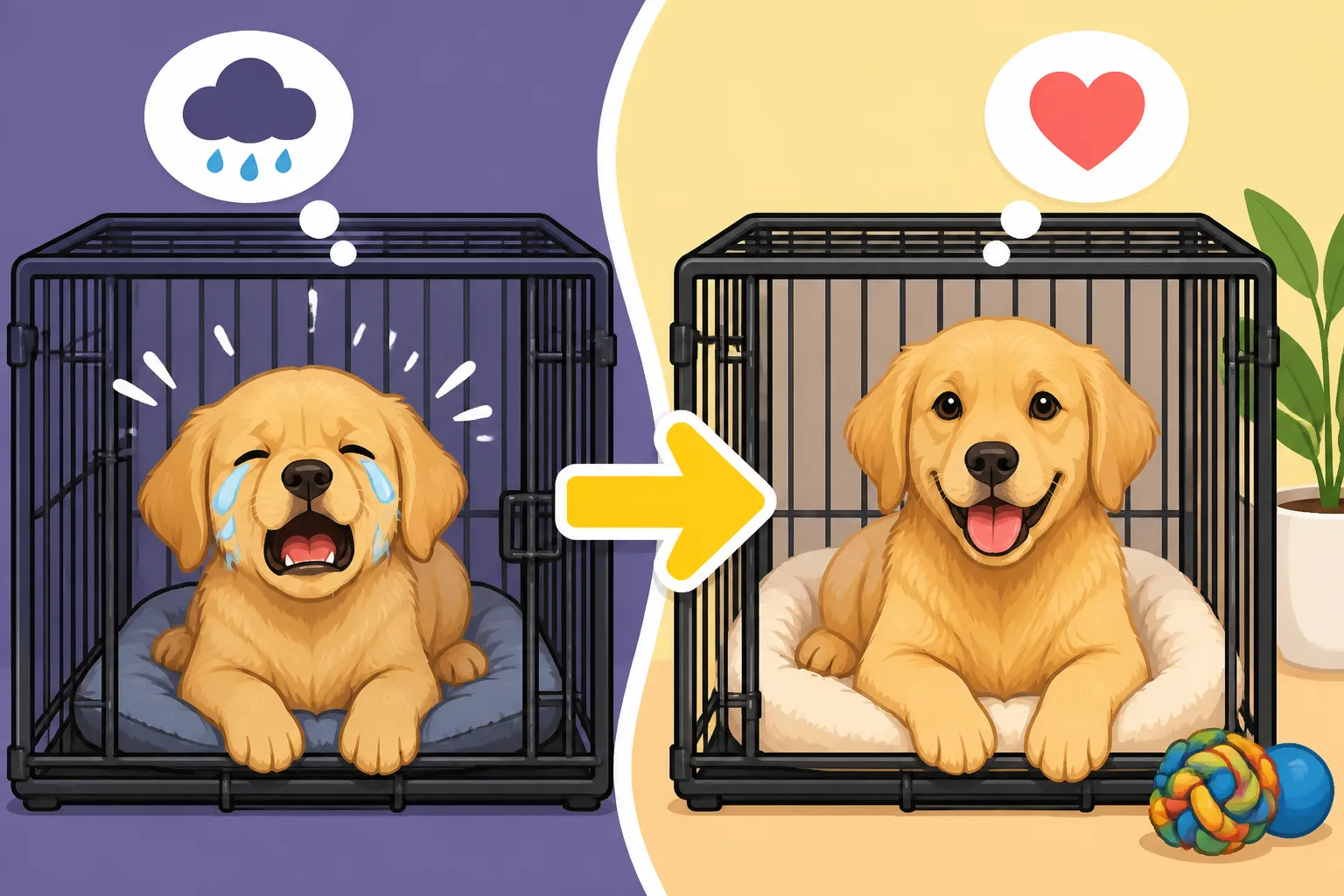
Crate Training a Golden Retriever Who Cries
Oh, that sound! The mournful whimpers, the plaintive barks, the full-blown puppy opera coming from your Golden Retriever's crate in the dead of night. It’s enough to make any new puppy parent question everything, isn't it? You got the crate, you set it up, you followed the advice, and still, your sweet Golden is crying their little heart out. This guide is here to walk you through understanding why your Golden might be crying in their crate and, more importantly, what you can actually do about it, offering real-world strategies to help both of you get some peace.
Understanding Why Your Golden Retriever Cries in the Crate
It’s easy to feel frustrated when your Golden Retriever puppy is crying in their crate, especially when you’re exhausted and just want a moment of quiet. But before you can address the crying, it’s crucial to understand why it’s happening. Puppies, and even adult dogs, don’t cry just to be manipulative. There's always a reason, and often, it's rooted in their natural instincts or an unmet need. Ignoring the underlying cause can make the problem worse, so let’s delve into the common reasons behind those sad puppy sounds.
Instinctual Fears and Separation Anxiety
One of the most profound reasons a Golden Retriever puppy might cry in their crate stems from ancient instincts. In the wild, a lone puppy is a vulnerable puppy. Being separated from their littermates and mother, especially at night, triggers an innate fear of abandonment. They feel isolated and unsafe, and their crying is a desperate call for their pack to return. It’s not about defiance; it’s about survival, hardwired into their DNA. This is particularly true in the first few nights and weeks your Golden Retriever puppy is home.
Furthermore, some Golden Retrievers are simply more prone to anxiety when left alone, even for short periods. This can escalate into true separation anxiety, where the dog experiences extreme distress, panic, and destructive behaviors. While it’s less common for true clinical separation anxiety to manifest solely as crying in a crate, it’s a spectrum. A dog might be experiencing mild separation distress that expresses itself through vocalizations. Understanding the difference between general puppy discomfort and signs of genuine distress is key to a compassionate and effective response. Resources like Separation Anxiety Versus Boredom in a Golden Retriever can offer further insights into this complex issue.
Unmet Needs or Discomfort
Sometimes, the reason for crying is much simpler and more immediately solvable: your Golden Retriever has an unmet need. Just like human babies, puppies have basic physiological requirements that need to be addressed. They might need to go to the bathroom, especially if they haven't been out recently or their schedule is off. A full bladder or bowel is incredibly uncomfortable and can’t be ignored. This is a very common cause of nighttime crying.
Beyond elimination, consider other comfort factors. Is the crate too hot or too cold? Is the bedding comfortable, or is it bunched up, making it difficult to lie down? Is your Golden thirsty? Has your puppy gone through their Golden Retriever Teething Timeline and is experiencing discomfort from new teeth coming in? Even hunger can be a factor, especially if their last meal was many hours ago. It's important to rule out these basic needs before assuming the crying is purely behavioral. A quick check of their environment and a review of their schedule can often pinpoint and resolve these issues swiftly.
Establishing a Positive Crate Experience
The foundation of successful crate training, especially for a Golden Retriever who cries, is building positive associations. The crate should never feel like a punishment or a place of isolation, but rather a safe, cozy den where good things happen. This takes patience, consistency, and a mindful approach. Your goal is to transform the crate from a scary box into your Golden’s favorite retreat.
Making the Crate a Happy Place
Think of the crate as your Golden Retriever’s personal bedroom or clubhouse. It needs to be inviting. Start by choosing the right size crate; it should be large enough for your Golden to stand up, turn around, and lie down comfortably, but not so large that they can designate a potty corner. Many fantastic options are available on Amazon, from wire crates to soft-sided carriers. Line it with soft, comfortable bedding – a cozy blanket, an old t-shirt with your scent, or an orthopedic bed designed for their comfort. Place a safe chew toy or a puzzle toy stuffed with a high-value treat inside. The idea is that entering the crate means good things are about to happen.
Never force your Golden into the crate. Instead, entice them with treats and praise. Toss a treat just inside the door, then deeper inside. As they go in to retrieve it, offer soft praise. Let them come out freely. Repeat this several times a day in short, happy sessions. This isn’t about closing the door yet; it’s about creating a positive feeling around the crate itself. Over time, your Golden will associate the crate with comfort, delicious treats, and a safe space, rather than a place of fear or confinement. For more general guidance on setting up a new puppy, consider checking out Golden Retriever Puppy First Night Home.
Gradual Introduction and Short Sessions
Patience is your biggest ally when introducing your Golden Retriever to their crate. Trying to rush the process will almost always lead to resistance and crying. Begin with very short durations, even just a few seconds, with the door open. Once your Golden is comfortable going in and out, start closing the door for a few seconds while they are happily munching on a treat inside. Gradually increase the time the door is closed, always staying nearby and offering quiet reassurance.
The key is to extend the time only when your Golden is calm and quiet. If they start to whine or fuss, you’ve gone too far too fast. Revert to a shorter, more successful duration. Practice these short sessions multiple times throughout the day, not just when you need them to be crated. This prevents the crate from becoming associated solely with your departure. Many online training programs, such as those offered by BAXTER & Bella, emphasize these gradual, positive reinforcement methods, providing structured steps to follow. Eventually, you can start leaving the room for a few moments, then a few minutes, slowly building their tolerance for alone time in the crate. This methodical approach is vital for Building Alone-Time Tolerance in a Golden Puppy.
Feeding and Treats in the Crate
One of the most effective ways to build a strong positive association with the crate is by feeding your Golden Retriever their meals inside it. This takes advantage of their natural desire for food and creates a consistent, positive routine. Start by placing their food bowl just inside the crate door while they eat. Once they are comfortable with this, move the bowl further back. Gradually, close the door for the duration of their meal, opening it only after they’ve finished eating.
Beyond meals, high-value, long-lasting treats or chews are your best friends. Think of items like Kongs stuffed with peanut butter or cream cheese (frozen for extra longevity), safe bully sticks, or dental chews. These occupy your Golden Retriever, provide mental stimulation, and keep them positively engaged in the crate. Only offer these special treats when they are in the crate, making it a truly exclusive and desirable experience. This strategy helps turn the crate into a rewarding space, distracting them from any urge to cry and helping them understand that good things happen here.
Strategies for a Crying Golden Retriever
Even with the best preparation, your Golden Retriever might still cry in their crate. This is normal! The trick is knowing how to respond effectively, distinguishing between different types of cries, and not inadvertently reinforcing unwanted behavior. It's a delicate balance of empathy and firm, consistent boundaries.
Distinguishing Needs from Whining
When your Golden Retriever starts crying in their crate, your first step should always be to evaluate the reason. Is it a distress cry, a potty cry, or an "I want out" cry? Potty cries often have a more urgent, insistent tone, sometimes escalating to barking. If it's nighttime and your puppy hasn’t been out in a few hours, it’s highly probable they need to go. You’ll want to review your Overnight Potty Breaks for a Golden Puppy schedule. A distressed cry, perhaps from fear or injury, might sound more panicked or painful.
On the other hand, attention-seeking whines or barks are usually less urgent. They might start softly and increase in volume if ignored, often accompanied by pawing at the door or restless movements. The trick is to develop a keen ear for these nuances. If you’ve just taken them out, they’ve eaten, they have water, and they’ve had sufficient exercise, then the crying is likely for attention or mild discomfort, not an emergency. It's vital to develop this discerning ear to avoid reinforcing attention-seeking behavior.
| Cry Type | Common Sound | Likely Reason | Initial Response | Risk of Reinforcement |
|---|---|---|---|---|
| Urgent Potty Call | Sharp, insistent barks, possibly escalating | Full bladder/bowel, discomfort | Immediate, quiet trip outside, no play/praise until done | Low |
| Fear/Panic | High-pitched yelps, frantic howling, shaking | Sudden noise, feeling trapped, severe anxiety | Approach calmly, reassure briefly, assess environment, consider vet if ongoing | Moderate |
| Attention-Seeking | Whimpers, low barks, gradually louder, pauses | Wants out, wants company, bored, wants a toy | Ignore until quiet, then reward. Or redirect with a puzzle toy | High |
| Boredom/Frustration | Muffled grumbles, occasional huffs, restless | Under-exercised, lacking mental stimulation | Provide puzzle toy, ensure adequate prior exercise, gentle ignoring | Moderate |
The "Ignore and Reward" Approach
Once you’ve ruled out genuine needs (potty, injury, severe distress), the most effective strategy for an attention-seeking cry is the "ignore and reward" method. This means absolutely no attention when your Golden Retriever is crying. No looking at them, no talking, no going to the crate. Even a stern "No!" is a form of attention. The moment they stop crying, even for a second, open the crate door, offer soft praise, and perhaps a small, high-value treat. The timing here is critical: you are rewarding the silence, not the crying.
This teaches your Golden that crying doesn’t get them what they want, but quiet behavior does. It requires incredible willpower on your part, especially in the middle of the night. If you give in even once after a prolonged crying session, you’ve inadvertently taught your Golden that if they just cry longer, you’ll eventually cave. Consistency is paramount. Gradually, your Golden Retriever will learn that being quiet is the fastest way to get your attention and be released. Golden Retriever Puppy Sleep and Night Crying is a good resource to review for more nuanced advice on overnight behavior.
Overnight Crate Training Challenges
Nighttime crate training presents unique challenges, primarily because you’re likely exhausted and sleep-deprived. The principles of positive association and ignoring attention-seeking cries still apply, but with a few modifications. For young puppies, frequent potty breaks are non-negotiable. Set an alarm to take your Golden out every 2-3 hours initially, even if they aren't crying. This proactive approach helps prevent accidents and reinforces that the crate isn't a place where they have to hold it forever. As they grow, you can gradually extend these times. How Long a Golden Retriever Stays in a Crate provides a good guide for increasing crate duration.
When you do take them out for a potty break, keep it strictly business: no playing, minimal talking, and immediately back into the crate once they’ve done their business. This reinforces that nighttime excursions are for potty only, not for fun or extended cuddle sessions. To help with the feeling of loneliness, you can place the crate next to your bed initially, offering reassurance with your presence. A blanket over the crate can also create a cozy, den-like atmosphere that promotes calm. Some owners find a white noise machine or a ticking clock helpful to mimic a heartbeat, creating a soothing environment. The ultimate goal is Teaching a Golden Retriever to Sleep Through the Night in their crate, and these steps contribute significantly to that success.
Common Crate Training Mistakes to Avoid
Crate training can be incredibly effective when done correctly, but it's also ripe for common pitfalls that can undermine your efforts and even create a negative association with the crate for your Golden Retriever. Being aware of these mistakes can save you a lot of frustration and ensure a smoother process for both you and your furry friend.
Using the Crate as Punishment
This is perhaps the most damaging mistake you can make. The crate should never be used as a place of punishment. If your Golden Retriever has an accident, chews something inappropriate, or misbehaves, putting them in the crate as a consequence will teach them to associate the crate with negative experiences. Instead of viewing it as a safe haven, they will see it as a place of confinement and punishment, making them resistant and fearful. This completely defeats the purpose of crate training, which is to create a positive, secure space.
If you need to give your Golden a "time out" for misbehavior, lead them calmly to a designated confinement area like a playpen or a separate, dog-proofed room for a few minutes. Save the crate exclusively for positive experiences: meals, chew toys, quiet time, and sleep. Consistently associating the crate with good things will build trust and make your Golden Retriever willingly enter and relax in it. Remember, Training a Golden Retriever From Puppy to Adult is a journey built on positive reinforcement, and the crate is a powerful tool within that framework if used correctly.
Rushing the Process
Another common mistake is expecting too much, too soon. Crate training is not a race; it’s a marathon that requires patience and a phased approach. Trying to put a puppy who has never been in a crate alone for eight hours overnight on the first night is a recipe for disaster and will almost certainly result in prolonged crying and potentially a lifelong aversion to the crate. As we discussed earlier, start with seconds, then minutes, then short periods while you are still home, gradually building up the duration.
Pushing your Golden Retriever past their comfort level too quickly can create fear and anxiety that are difficult to undo. If they show signs of distress—panting, drooling, frantic barking, attempting to break out—you’ve likely progressed too fast. Take a step back to an easier stage where they were comfortable and build up again more slowly. Every Golden Retriever is an individual, and some will adapt to crate training faster than others. Don't compare your Golden to another; focus on their individual progress and comfort. Resources like Crate Training a Golden Retriever Puppy offer detailed, step-by-step guidance to ensure you move at the right pace.
Ignoring Underlying Issues
Sometimes, crying in the crate isn't just a behavioral issue; it can be a symptom of a deeper problem. If your Golden Retriever suddenly starts crying in their crate after being perfectly fine with it, or if the crying is persistent and inconsolable despite consistent training efforts, it's wise to consider underlying health concerns. They might be experiencing pain, a urinary tract infection, an upset stomach, or another medical issue that makes being confined uncomfortable or distressing.
A visit to your veterinarian is a crucial step if you suspect there’s a medical reason for the change in behavior. Describing the nature of the crying, when it occurs, and any other symptoms you’ve noticed can help your vet diagnose the issue. Additionally, ensure your Golden is getting enough physical exercise and mental stimulation outside the crate. A bored or under-exercised Golden Retriever will have excess energy and be less likely to settle. Providing sufficient Mental Enrichment for a Bored Golden Retriever can often resolve restlessness that leads to crying in the crate. Addressing these underlying factors ensures that you’re not just treating the symptom but solving the root cause, leading to a happier, quieter Golden.
Disclaimer
This article is for general informational purposes only and does not constitute professional advice. Laws, prices and regulations vary by location and change over time. Consult a qualified professional for guidance on your specific situation.