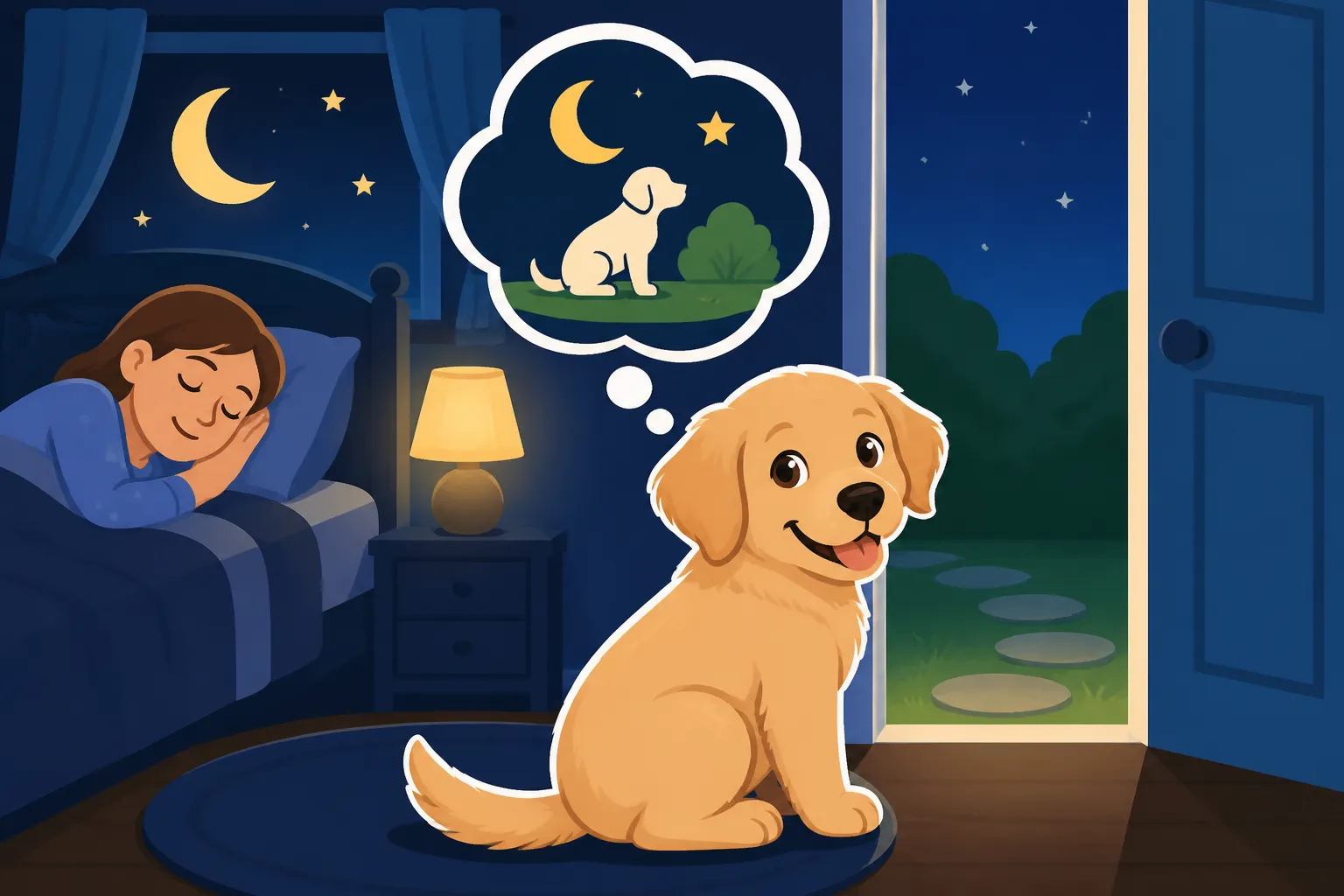
Overnight Potty Breaks for a Golden Puppy
Bringing home a Golden Retriever puppy is one of the most exciting times, but it often comes with a dose of sleep deprivation. Those adorable bundles of fluff have tiny bladders, and figuring out the rhythm of overnight potty breaks can feel like a daunting challenge, leaving you wondering if you'll ever get a full night's sleep again. This comprehensive guide will walk you through everything you need to know about managing those crucial nighttime excursions, ensuring both you and your new furry family member get the rest you need while mastering potty training.
The Reality of Puppy Bladders: Why Overnight Potty Breaks Are Non-Negotiable
Let's face it, nobody enjoys being woken up in the middle of the night, especially not by a whiny puppy needing to go outside. But the truth is, a young Golden Retriever puppy isn't trying to be difficult; their tiny bodies simply aren't equipped for long stretches without a potty break. Understanding this fundamental biological reality is the first step in successful overnight potty training.
Understanding Your Golden Retriever Puppy's Bladder Capacity
Think of it this way: a newborn human baby can't hold its bladder for more than an hour or two, right? A puppy is no different in its early stages. For Golden Retriever puppies, a general rule of thumb many trainers use is that they can hold their bladder for approximately their age in months, plus one hour. So, a two-month-old puppy might only be able to comfortably hold it for around three hours. This isn't a hard and fast rule, as every puppy is an individual, but it gives you a realistic expectation.
When you first bring your Golden home, especially if they're around 8-10 weeks old, expecting them to sleep through the entire night without needing to relieve themselves is just asking for accidents. Their bladder muscles are still developing, and their internal signals aren't as refined as an adult dog's. They literally might not even realize they have to go until it's an emergency. This means that if you're sleeping soundly, your puppy might be quietly reaching their physical limit, and by the time they start whining or stirring, they might already be in distress or even having an accident. It's a critical period, and setting them up for success from day one prevents a lot of headaches later on. For more detailed insights into how long your little one can hold it, check out our article on How Long a Golden Retriever Puppy Holds It.
The Importance of Preventing Accidents
Every single accident your Golden Retriever puppy has indoors is a step backward in their potty training journey. Puppies naturally want to keep their sleeping area clean – it's an instinct inherited from their wild ancestors who wouldn't want to attract predators to their den. When a puppy has an accident inside their crate or sleeping area, it teaches them that it's okay to soil their space, which can unfortunately undo that natural clean den instinct.
Beyond setting back training, accidents can also lead to frustration for both you and your puppy. You get annoyed, and your puppy picks up on that energy, potentially becoming anxious or confused about where they should be going. Consistency is truly key here. By proactively taking your puppy out for overnight potty breaks, you're not just preventing messes; you're actively reinforcing the correct behavior and strengthening their understanding of where and when to relieve themselves. This builds confidence in your puppy and makes the entire process smoother and faster in the long run.
Setting Up for Overnight Success: Crate Training and Routine
Successfully navigating overnight potty breaks with a Golden Retriever puppy isn't just about reacting when they whine; it's largely about proactive planning and establishing a clear, consistent routine. A well-executed crate training strategy combined with a predictable evening schedule can make all the difference for a peaceful night.
Crate Training as Your Best Friend for Potty Training
I can't stress this enough: a crate is not a punishment; it's a safe, den-like space that leverages your puppy's natural instinct to keep their sleeping area clean. For overnight potty training, the crate becomes your most powerful tool. When sized correctly, it gives your puppy just enough room to stand up, turn around, and lie down comfortably, but not enough space to wander off to a corner and relieve themselves without stepping in it. This encourages them to "hold it" just a little longer and signal you when they need to go out.
A Golden Retriever puppy should start with a crate that is appropriately sized for them as a puppy, often with a divider panel that can be moved as they grow. If the crate is too large, they might use one end as a bed and the other as a bathroom, defeating the whole purpose. As they grow, you gradually expand their space. This isn't about being cruel; it's about making them feel secure and teaching them bladder control. We have a detailed guide on Crate Training a Golden Retriever Puppy that walks you through the entire process, and another specific one on Crate Size and Potty Training a Golden Retriever to ensure you pick the perfect fit. Many owners find great crates on Amazon, often with adjustable dividers already included.
Establishing a Consistent Evening Routine
Puppies thrive on routine, and establishing a consistent evening schedule signals to your Golden that bedtime is approaching and it's time to "empty the tank." This routine should begin an hour or two before you plan to put them to bed.
Here's what a typical evening routine might look like:
- Active Play/Training: About 2 hours before bed, engage in some active play or a short training session. This helps burn off any excess energy and gets their bowels moving.
- Dinner & Water: Feed your puppy their last meal a few hours before bedtime. This gives them ample time to digest and have a subsequent potty break. While you shouldn't restrict water entirely, especially in warm weather, you can certainly pick up the water bowl about 60-90 minutes before their final potty break. This helps ensure they've emptied their bladder as much as possible before settling down for the night. You can always offer a small sip right before that final trip outside. For guidance on feeding, read How Much to Feed a Golden Retriever Puppy.
- Final Potty Break: This is absolutely critical. Take your puppy out right before you put them in their crate for the night, literally the last thing you do. Wait for them to both pee and poop if possible. Praise them lavishly when they go.
A consistent routine helps regulate their digestive system and sets their internal clock, making it easier for them to anticipate when they need to go and reducing the chances of nighttime surprises. For more comprehensive scheduling advice, refer to our article on Potty Training Schedule for a Golden Puppy.
Navigating the Night: When and How to Take Your Puppy Out
So, you've got your crate set up, and your evening routine is solid. Now comes the actual act of getting through the night. This phase requires a bit of detective work and a strong commitment to keeping things strictly "business."
Recognizing the Signs Your Puppy Needs to Go
This is where you become a light sleeper. While some puppies might let out a full-blown bark, most Golden Retriever puppies will start with more subtle cues that escalate if ignored. Listen for:
- Whining or whimpering: This is often the first sign. It might be soft at first, then get louder.
- Restlessness: Pacing in the crate, shifting positions frequently, pawing at the crate door.
- Nose to the ground: Sniffing intently, especially in one spot, can indicate they're looking for a place to go.
- Quiet stirring: Sometimes, a puppy might just wake up and start moving around without making much noise. If you have an ear for it, you might hear subtle movements.
It's important to distinguish between "I need to pee" cries and "I'm lonely/bored" cries. Potty cries often have a sense of urgency, and they tend to stop once they're taken out. Loneliness cries might be more persistent, even after a potty break, or happen at times when they physically shouldn't need to go. If you respond to every little peep with a trip outside, you risk inadvertently teaching them that crying gets them out of the crate for attention. However, when in doubt, it’s always better to assume it’s a potty need, especially in the early weeks. Addressing puppy night crying is further explored in Golden Retriever Puppy Sleep and Night Crying.
The "No Fun Zone" Approach to Overnight Potty Breaks
When your puppy signals they need to go, you need to act quickly, but you also need to make it as boring as possible. This is the "no fun zone" approach:
- Minimal Interaction: Don't talk to them in a baby voice, don't pet them excessively, and absolutely no play. This isn't cuddle time; it's business.
- Leash Them: Even if you have a fenced yard, put a leash on your puppy. This keeps them focused and prevents them from getting distracted by interesting smells or sights, encouraging them to get down to business.
- Minimal Light: Keep lights dim or off. Use a small flashlight if necessary to see where they're going. The goal is to keep their brains in "sleep mode" as much as possible.
- Go Directly to the Potty Spot: Don't let them sniff around the yard. Take them directly to their designated potty area.
- Quiet Praise for Success: As soon as they relieve themselves, offer calm, quiet praise ("Good potty!"). A small, high-value treat can be given right there if they're particularly successful, but again, keep it low-key. For ideas on suitable rewards, consider Best Treats for Training a Golden Retriever.
- Straight Back to the Crate: As soon as they're done, immediately bring them back inside and put them back in their crate. Don't linger. The message should be clear: "We came out for potty, now it's back to sleep."
By making overnight trips efficient and devoid of excitement, you reinforce that the only reason they're out of the crate at night is to go potty, not for playtime or attention. This helps prevent them from learning to whine just to get out and socialize.
Scheduling Initial Overnight Potty Breaks
For the first few nights, especially with a very young Golden Retriever puppy (8-10 weeks), you might need to set an alarm for yourself. This isn't forever, but it helps establish the routine and prevent accidents before your puppy even has a chance to signal.
Here's a sample progression, which you'll adjust based on your puppy's age and individual bladder control:
| Puppy Age (Weeks) | Initial Overnight Potty Schedule |
|---|---|
| 8-10 | Last trip ~11 PM, then 2 AM, 5 AM, then morning release |
| 10-12 | Last trip ~11 PM, then 3 AM, then morning release |
| 12-16 | Last trip ~11 PM, then 4-5 AM, then morning release |
| 16+ | Gradually extending to full night's sleep |
Disclaimer: This is a general guideline. Your puppy's individual needs may vary. Always prioritize preventing accidents over sticking strictly to a schedule.
If your puppy is quiet until your alarm goes off, take them out immediately. If they start whining 20 minutes before your alarm, you know they need to go then, not when the alarm says. Pay attention to their signals. As they get older and have fewer accidents, you can gradually push the time between breaks. For instance, if they consistently sleep through their 2 AM alarm, try moving it to 2:30 AM for a few nights, then 3 AM, and so on. Patience is key. Remember, the goal is to get your Golden Retriever to naturally sleep through the night, which usually happens between 4-6 months, but again, every puppy is different. The article Teaching a Golden Retriever to Sleep Through the Night offers more ideas for achieving this.
Common Challenges and Troubleshooting Overnight Potty Breaks
Even with the best intentions and a solid plan, you might hit a few bumps in the road during overnight potty training. It's totally normal for new Golden Retriever owners to feel frustrated when things don't go perfectly, but understanding these challenges and how to address them can save you a lot of stress.
Puppy Crying That Isn't About Potty Needs
This is perhaps one of the trickiest parts of overnight puppy care. Your Golden Retriever puppy cries, you rush them outside, they don't go, and then they cry again when you put them back in the crate. Sound familiar? This often means the crying isn't about their bladder, but about something else entirely.
- Loneliness or Fear: Your puppy has just left their littermates and their familiar environment. The crate can feel isolating at first.
- Boredom: While you want minimal interaction, a puppy might cry simply because they're bored and want attention or play.
- Too Much Energy: If they haven't had enough physical and mental stimulation during the day, they might be restless at night.
If you've just taken them out, they've gone potty, and they're still crying, resist the urge to immediately let them out again for attention. Instead, try these strategies:
- Cover the Crate: A dark blanket over the crate can make it feel more den-like and less exposed, promoting calm.
- White Noise: A fan or white noise machine can drown out household sounds that might startle them and create a soothing environment.
- Safe Chew Toy: A safe, durable chew toy (like a KONG stuffed with frozen peanut butter or plain yogurt) can provide a distraction and comfort, but only if they are not prone to destroying toys at night.
- Proximity: For the first few nights, having the crate in your bedroom can be very comforting for the puppy. They can hear and smell you, which often reduces anxiety. This can also help you hear their actual potty signals more easily. Gradually, you can move the crate to its permanent location.
- Ignore Attention Crying: This is tough, but essential. If you're certain they don't need to potty and they're just crying for attention, you might need to ignore it for short periods. This teaches them that crying doesn't always lead to being let out. Be prepared for it to get worse before it gets better, as they try harder to get your attention, but consistency here is vital. Building up their alone-time tolerance is key, a topic explored in Building Alone-Time Tolerance in a Golden Puppy.
Dealing with Accidents Even With a Schedule
You're doing everything right, following the schedule, and still waking up to a wet crate. It's disheartening, but it happens. When accidents occur, it's time to troubleshoot:
- Crate Sizing: Double-check that the crate isn't too large. As mentioned, if there's enough room for a "bathroom area," they'll use it. Re-evaluate your divider panel.
- Last Potty Break Effectiveness: Did your puppy really empty their bladder on that last trip out? Sometimes they just do a quick sprinkle and hold the rest. Make sure they take their time and fully relieve themselves. Waiting an extra five minutes can make a big difference.
- Cleaning: Are you cleaning accidents thoroughly enough? If the scent of urine remains, even imperceptibly to you, your puppy will be drawn to that spot to go again. Use an enzymatic cleaner, not just a standard household cleaner. These cleaners break down the enzymes in urine, eliminating the odor completely. Many effective options are available on Amazon.
- Health Issues: If accidents are frequent and unexpected despite a consistent routine, it's worth a vet visit to rule out any underlying health issues like a urinary tract infection.
- Observation: Every Golden Retriever puppy is unique. While general schedules are helpful, you need to pay close attention to your puppy's specific signals and rhythm. Keep a potty log for a few days to identify patterns – when they typically go, how long after eating/drinking, etc.
Remember, never punish your puppy for an accident. If you find a mess after the fact, simply clean it up without scolding. They won't connect your anger to something they did hours ago, and it can just make them fearful of you. If you catch them in the act, a quick, firm "No!" (without yelling) and immediately taking them outside can help them connect the dots.
Graduating From Overnight Potty Breaks
The day will come when your Golden Retriever puppy can truly sleep through the night! It's a gradual process, but you'll notice signs that they're ready to extend their holding time:
- Sleeping Through Alarms: They start ignoring your scheduled alarms and remain asleep until you wake them.
- No Crying/Whining: They wake up calmly and only start to stir closer to morning.
- Dry Crate: Consistently dry crate for several nights in a row, even when you push the time a bit.
When you see these signs, start slowly extending the time between breaks. If you've been taking them out at 3 AM, try 3:30 AM for a few nights. Then 4 AM. If they have an accident, you've pushed it too far, so revert to the previous successful schedule for a few more nights before trying again. This process takes patience, often several weeks or even months, but the reward of a full night's sleep is well worth it. Don't rush it; let your puppy's developing bladder and confidence dictate the pace.
Essential Gear for Smooth Overnight Potty Training
Having the right tools on hand can significantly ease the burden of overnight potty training and make the entire experience smoother for both you and your Golden Retriever puppy. It's not just about the training itself, but also about the environment and resources you provide.
The Right Crate Makes All the Difference
As we've discussed, the crate is paramount. For a Golden Retriever puppy, you'll want a large-breed wire crate, often around 42-48 inches, that comes with a divider panel. This allows you to adjust the internal space as your puppy grows, ensuring it's always just big enough for them to comfortably stand, turn around, and lie down. Without a divider, a small puppy in a large crate might use one end as a potty area, which defeats the purpose of crate training for housebreaking.
Many fantastic, durable crates are available on platforms like Amazon. Look for ones with two doors (one on the side, one on the end) for versatility in placement. A comfortable, easy-to-clean bed that fits the crate is also important. Avoid plush, easily shredded beds in the very early stages, as puppies love to chew! A simple, thin crate pad or an old towel can work wonders until you're sure your puppy isn't going to turn it into confetti. When budgeting for your new companion, remember these items are part of the Golden Retriever Puppy Starter Kit Costs.
Cleaning Supplies and Their Importance
Accidents will happen. It's part of puppyhood. What's crucial is how you clean them up. Standard household cleaners might make a stain disappear to your eyes, but they don't eliminate the enzymes in urine that leave behind a scent detectable by your puppy. If that scent remains, your Golden Retriever puppy will be drawn back to that spot to relieve themselves again and again.
Invest in a high-quality enzymatic cleaner specifically designed for pet urine. These cleaners work by breaking down the odor-causing molecules, truly eliminating the scent rather than just masking it. This is a non-negotiable item for any puppy owner. Keep it handy, along with paper towels and maybe even a small blacklight, which can reveal hidden urine spots that need extra cleaning.
Tools for Comfort and Routine
Beyond the crate and cleaners, a few other items can make your overnight routine easier:
- Puppy-Safe Bedding: A simple, washable fleece blanket or a durable crate mat can offer comfort without being too enticing to chew. Look for options that are easy to throw in the washing machine, because, let's be realistic, spills and accidents are part of the learning curve.
- A Reliable Watch/Alarm: Especially in the early days, you'll be setting alarms to ensure you're waking up for those scheduled potty breaks. A quiet alarm that doesn't startle your puppy (or your partner!) is ideal.
- Small Treats: Keep a small bag or treat pouch with high-value treats near the door for quick, quiet rewards right after a successful potty trip. This reinforces the positive behavior without turning it into a big party.
- Training Resources: Sometimes, you just need a bit of extra guidance. Companies like BAXTER & Bella offer online puppy training programs and resources that can provide support for all aspects of puppy rearing, including potty training and managing nighttime routines. Their structured approach can be incredibly helpful for new owners feeling overwhelmed.
- Minimal Lighting: A small, dim nightlight or a flashlight can be helpful for navigating your yard at night without fully waking yourself or your puppy with bright lights.
Having these tools ready before your Golden Retriever puppy arrives or on hand for those first few nights will make a world of difference in establishing successful overnight potty habits and ensuring a little more peace and quiet for everyone involved.
Disclaimer
This article is for general informational purposes only and does not constitute professional advice. Laws, prices and regulations vary by location and change over time. Consult a qualified professional for guidance on your specific situation.