Building Reliable Recall in a Golden Retriever
It’s a scenario many Golden Retriever owners know all too well: you’re at the park, enjoying a beautiful day, when suddenly a squirrel darts across your Golden’s path, or another dog bounds into view. You call their name, you shout "Come!", but your beloved companion, usually so attentive, suddenly has selective hearing, leaving you to chase after them with a mix of frustration and genuine panic. This guide is here to help you build that rock-solid, reliable recall every Golden owner dreams of, transforming those anxious moments into confident, joyful freedom.
Understanding Why Recall is So Challenging (and Crucial) for Goldens
Golden Retrievers are, by nature, eager to please and intelligent, which often leads owners to believe recall should be effortless. And while they certainly have the capacity for it, their breed characteristics also present unique challenges. It’s important to understand these factors to set realistic expectations and create an effective training plan.
The Golden Retriever's Natural Distractions
Let's be honest, Golden Retrievers are delightful, but they can also be total goofballs when something exciting catches their eye (or nose!). Their strong retrieving instinct, combined with an inherent friendliness towards just about every living creature, makes distractions a huge hurdle for a reliable "come" command. A Golden's nose is a powerful tool, drawing them to fascinating scents on the ground, leading them on grand adventures you might not even notice until they're halfway across the field. Then there’s their absolute love of water – a muddy puddle or a stream can become an irresistible swimming pool in their eyes, making any human command secondary.
Beyond these innate drives, other dogs, friendly strangers, and even the rustling of leaves in the wind can become monumental distractions. A Golden sees another dog and immediately thinks "new friend!" or "playmate!" Their desire to greet and interact is often stronger than their desire to return to you, especially if you haven't built a robust recall history. This is why you might find your otherwise obedient companion suddenly develop "selective hearing" when off-leash in a busy environment. Understanding these powerful natural instincts is the first step in tackling recall. Many owners wonder Why a Golden Retriever Ignores You Outdoors, and often, it boils down to these powerful natural drives competing with your voice.
The Importance of a Rock-Solid Recall
While it might feel like a never-ending battle, a truly reliable recall isn't just a nice-to-have; it's absolutely crucial for your Golden's safety and your peace of mind. Imagine this: you're walking near a road, and your Golden slips their leash or spots something tempting on the other side. A strong recall could literally be the difference between a close call and a devastating accident. It’s about protecting them from cars, dangerous animals, or getting lost in an unfamiliar area.
Beyond safety, a reliable recall grants your Golden so much more freedom. It means you can confidently take them to dog parks, safely explore hiking trails, or enjoy off-leash walks in designated areas without constant anxiety. This freedom isn't just for them; it's for you too. Knowing your dog will come back when called allows you to relax and truly enjoy your time together, fostering a deeper bond built on trust and communication. Without it, you might feel restricted to only on-leash activities, which, for an active and social breed like a Golden Retriever, can sometimes lead to an unfulfilled dog. For a breed that thrives on activity and exploration, being able to safely grant them off-leash time is invaluable. It’s a significant milestone that often indicates When a Golden Retriever Can Go Off Leash.
Laying the Foundation: Recall Training Indoors and in Low-Distraction Areas
Building recall is like building a house – you need a strong foundation before you can add the fancy roof. For Golden Retrievers, this means starting in an environment where they are most likely to succeed: indoors, with minimal distractions. This isn't just about teaching the word "come"; it's about associating that word with overwhelmingly positive experiences.
Making "Come" the Best Thing Ever
The absolute key to recall is to make coming to you the most exciting, rewarding thing in your Golden's entire world. Forget boring kibble; this is where you pull out the big guns. Think tiny pieces of cooked chicken, cheese, hot dogs, or whatever your Golden absolutely goes wild for. These high-value treats are critical in the early stages.
Start in a quiet room, perhaps your living room, with no other people or pets around. Get down on their level, say your chosen recall word (it could be "come," "here," or even something quirky like "banana!" – consistency is key, not the word itself) in a super happy, excited voice, and immediately offer that amazing treat when they reach you. Make it a celebration! Pet them, praise them lavishly, and give them the treat. Repeat this many, many times, keeping sessions short and fun. You want them to think, "Oh wow, when Mom/Dad says that word, magical things happen right at their feet!" Don't make them work for it in the beginning; just make it incredibly rewarding to simply arrive. Finding the Best Treats for Training a Golden Retriever can make all the difference in these foundational steps.
The Recall "Game" and Management Tools
Once your Golden understands that coming to you is fantastic, you can turn it into a game. A great way to do this is with "hide-and-seek" indoors. Have someone hold your Golden while you hide in another room. Call your recall word, and when they find you, throw a party! Treat, praise, play. This builds excitement around the command itself.
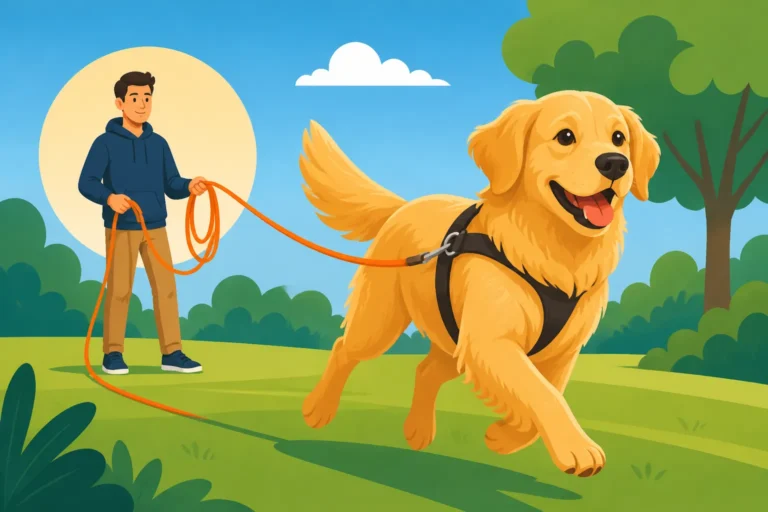
Another crucial tool, even indoors initially, is a long line. This is simply a very long leash (15-30 feet) that allows you to give your Golden the feeling of freedom while still maintaining control. Attach it to a harness, not their collar, for safety. Start using it in your living room or a fenced yard. Call your Golden. If they hesitate, gently reel them in with the long line while still using your happy, excited voice, and still reward them handsomely when they reach you. The long line ensures they can't practice ignoring you. It's about preventing failure in the early stages.
Some owners find structure really helps. Training programs, like those offered by BAXTER & Bella, can provide a step-by-step guide to building skills like recall, breaking it down into manageable lessons. They often emphasize positive reinforcement, which is exactly what Goldens thrive on. Remember, the goal is to make recall an automatic, joyful response, not a chore.
Here’s a basic breakdown of how you might think about progressing:
| Stage of Training | Environment / Distraction Level | Reward Value | Purpose |
|---|---|---|---|
| Foundation | Quiet indoors, no distractions | Very High | Build positive association with "come" |
| Introduction | Fenced yard, minimal distractions | High | Practice with slight distance, gentle calls |
| Controlled | Fenced yard, family member/calm dog | High to Medium | Introduce mild, predictable distractions |
| Proofing | Quiet park on long line, varied locations | Medium to High | Generalize behavior in new, slightly busier settings |
| Real-World | Busy park on long line, off-leash areas | Medium to High | Ensure reliability in high-distraction environments |
Gradually Increasing Difficulty and Proofing Recall
Once your Golden is consistently coming to you indoors and in your quiet backyard, it's time to slowly dial up the difficulty. This is where many owners get stuck, rushing too quickly into high-distraction environments before the foundation is truly solid. Patience is your best friend here.
Introducing Controlled Distractions
The next step involves gradually introducing controlled distractions. Start in your fenced yard with a trusted family member. Have them walk by, or even gently toss a low-value toy a short distance, while you practice your recall. The key is to keep the distraction manageable so your Golden still has a high chance of success. If they fail, the distraction was too high, and you need to go back a step.
This is also where the long line becomes your absolute hero. Take your Golden, on a long line, to a quiet park or an open field with minimal people or dogs. Let them explore, sniff, and enjoy a bit of freedom. Then, at random intervals, call your recall word. If they respond, fantastic! Treat and praise. If they hesitate, give a gentle tug on the long line while still calling them enthusiastically. This ensures they still come to you and get that reward, reinforcing the behavior without allowing them to practice ignoring you. You can find excellent long lines on Amazon, in various lengths and materials, which are invaluable for these training stages. Long Line Training for a Golden Retriever is an essential skill to master for safe progression.
Practicing in Public and Real-World Scenarios
Once your Golden is reliable on the long line in moderately distracting environments, you can start incorporating more real-world scenarios, but always, always with safety in mind. Begin by practicing recall during your regular leashed walks in quiet neighborhoods. Call them randomly, even when they're right next to you, and reward them for looking at you or coming closer. These are often called "check-in" recalls and help keep them engaged.
As you progress to busier parks or open areas, do not remove the long line until you are absolutely, 100% confident in their recall. Even then, test it in progressively more challenging environments. Never use your recall command to end something fun or to administer punishment. If you need to trim their nails or leave the park, simply go get them without using your recall word. You want "come" to always mean something wonderful is about to happen. Practice recall near bodies of water, ensuring that their love for a splash doesn doesn't override their training. This type of generalization is crucial, as you’ll eventually need to be Proofing a Golden Retriever's Recall Near Water. Similarly, practicing around other dogs, initially from a distance and gradually closer, is vital because Golden Retriever Recall Around Other Dogs can be one of the toughest challenges.
Common Recall Mistakes and Troubleshooting for Goldens
Even with the best intentions, it's easy to fall into common recall traps that can inadvertently undermine your training efforts. Understanding these pitfalls and knowing how to troubleshoot them will save you a lot of headaches and keep your Golden on track.
Avoid These Recall Killers
One of the biggest "recall killers" is repeating the command multiple times. If your Golden ignores "Come," and you say "Come! Come! Come!" louder and louder, you're teaching them that the first three "comes" are optional. Say it once. If they don't respond, gently guide them (with the long line, for instance) or go get them. Then, analyze why they didn't come and make the next attempt easier.
Another critical mistake is punishing your Golden for a slow or delayed recall. Even if they took their sweet time getting to you, if they eventually arrive, reward them! If you scold them, they'll associate coming back to you with punishment, making them even less likely to respond next time. Always make their return a positive experience.
Chasing your Golden is also a no-go. When you chase them, they think it's a game, and Goldens absolutely love games! This inadvertently teaches them that running away from you is fun. Instead, if they run off, try running away from them in an excited manner, or dropping to the ground. This often sparks their curiosity and encourages them to come to you.
Finally, not using high enough value rewards is a common oversight. If you're using plain kibble in a distracting park, you're competing with the enticing smell of squirrel, other dogs, and interesting new people. Kibble just can't win that battle. Save the high-value treats exclusively for recall in challenging environments to maximize its power.
When to Seek Professional Help
There are times when, despite your best efforts, you might feel stuck or overwhelmed. This is perfectly normal, and it’s a sign that professional help could be incredibly beneficial. A qualified positive reinforcement trainer can assess your Golden's specific challenges, identify any gaps in your training, and provide tailored strategies. They can offer new techniques, help you troubleshoot persistent issues, and even work with you in different environments to proof your recall.
If you have an adopted adult Golden Retriever, especially one with an unknown history, recall can be even more challenging. They might not have had consistent training in the past, or they might have developed habits of ignoring commands. A professional trainer can be a lifeline in these situations, helping you build trust and teach new behaviors. It’s also wise to consider a professional if your Golden exhibits significant anxiety or fear in new environments, as these underlying issues can make recall nearly impossible. Don't hesitate to reach out to a local certified professional. Finding a good positive reinforcement trainer is crucial, as Choosing a Positive Reinforcement Trainer for a Golden will impact your success. If you're working with a dog whose history you don't fully know, such as with Training an Adopted Adult Golden Retriever, a trainer's expertise can be invaluable.
Remember, recall training is an ongoing journey, not a destination. Even after your Golden has a reliable "come," continue to practice it regularly, keeping it fun and rewarding. The confidence and safety it brings to both you and your beloved Golden Retriever are truly priceless. And don't forget that mental stimulation is just as important as physical exercise in preventing boredom and promoting a well-behaved dog; sometimes a bored Golden is a disobedient Golden, so providing Mental Enrichment for a Bored Golden Retriever can help. Starting recall early with a puppy is always a good idea too, as When to Start Training a Golden Retriever Puppy often sets the stage for future success.
Disclaimer
This article is for general informational purposes only and does not constitute professional advice. Laws, prices and regulations vary by location and change over time. Consult a qualified professional for guidance on your specific situation.