Why a Golden Retriever Jumps on Visitors
It's a familiar scene: you walk through your front door, or a friend steps inside, and your beloved Golden Retriever launches themselves into the air, front paws outstretched, eager to greet. While it might seem like a sweet, enthusiastic welcome, this jumping behavior can be overwhelming for guests, dangerous for children or the elderly, and frankly, a bit annoying. This guide will dive deep into why your Golden Retriever might be treating your visitors like a trampoline and, more importantly, how to gently and effectively teach them better manners.
Why Your Golden Retriever Jumps on People
Understanding the root cause of your Golden's jumping is the first step toward addressing it. It's rarely out of malice or aggression; almost always, it stems from a place of pure, unadulterated Golden joy and a bit of learned behavior.
Excitement and Greeting Behavior
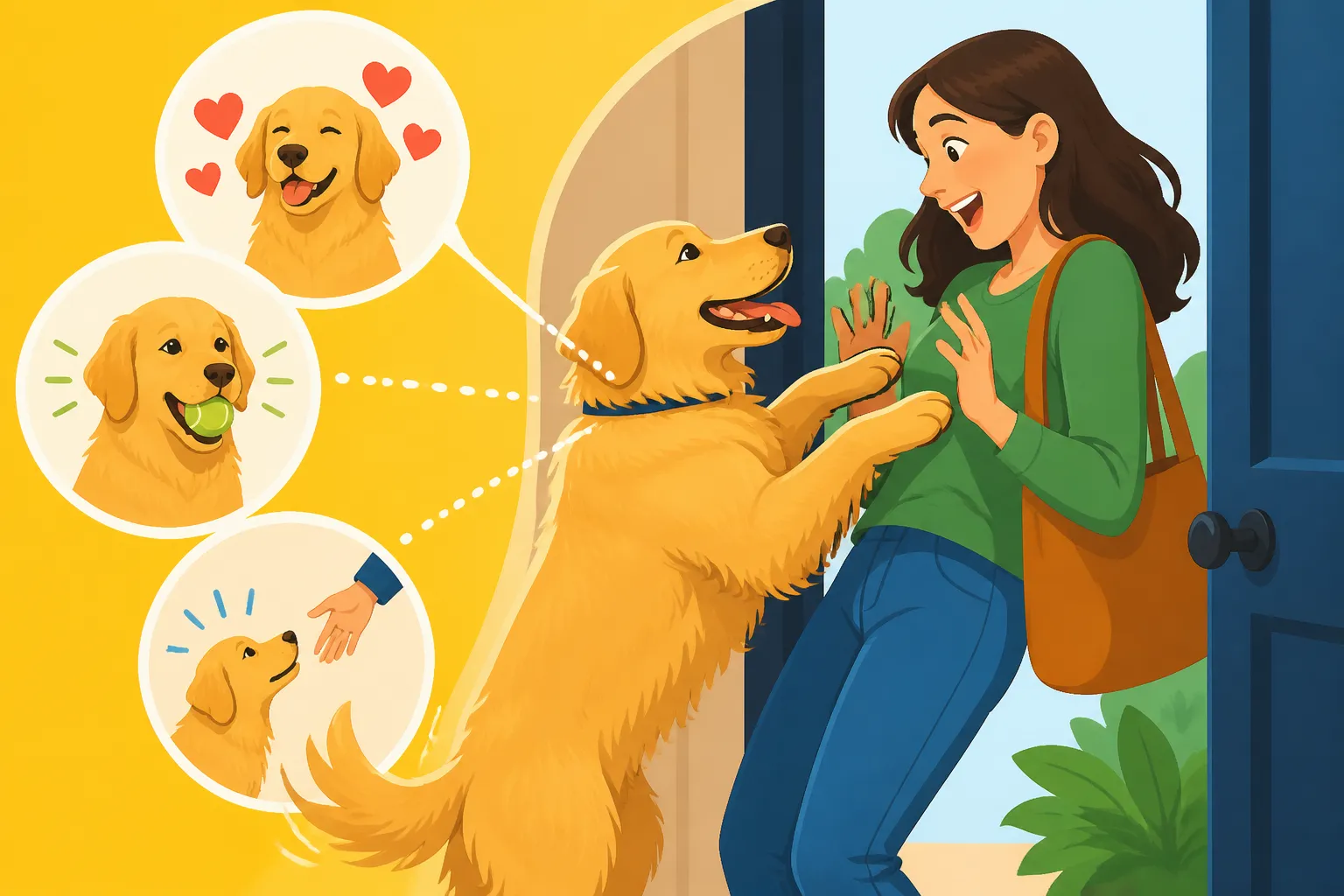
Golden Retrievers are renowned for their friendly and enthusiastic nature. When a new person, or even a familiar face, enters their space, it triggers an explosion of happiness. To a dog, jumping up can be their way of getting closer to eye level, sniffing a new scent, or simply expressing their immense pleasure. They want to be part of the action, right there in your face, sharing their excitement.
Think about it from their perspective: you come home, they're overjoyed, and what's the first thing they want to do? Get to you. If their initial attempts to greet at ground level go unnoticed or unrewarded, they might escalate their efforts. A jump gets a reaction – even if it's a startled "down!" or a gentle push away. To a Golden, any attention can be good attention, reinforcing the idea that jumping is an effective way to get noticed. It's not unlike a toddler tugging on your shirt; they just want your focus. This inherent exuberance is part of The Golden Retriever Breed Explained.
Seeking Attention
Dogs are incredibly smart and quick to learn what behaviors get them what they want. If your Golden Retriever jumps on you or a visitor and receives any form of attention – a pat, a verbal correction (even a negative one), or even just eye contact – they've just been rewarded. They've successfully achieved their goal: to get noticed. This is particularly true for Goldens, who thrive on human interaction and approval. They are social creatures who just want to be involved.
Consider a scenario where a guest walks in, and your Golden bounds up, paws on their chest. The guest might instinctively say, "Oh, hello there, down, boy!" and gently push them. To the Golden, that interaction, that touch, that sound, is a success. They wanted to engage, and they did. Over time, this creates a strong association: new person = jump = attention. This cycle can be tough to break because it's so ingrained in their desire for connection.
Lack of Clear Boundaries
Often, the jumping behavior isn't solely the dog's "fault" but a result of inconsistent training or unclear boundaries from their human family. If sometimes jumping is tolerated (e.g., when you're wearing old clothes and it's just you), but other times it's reprimanded (e.g., when you're dressed for work, or guests are present), your Golden will struggle to understand the rules. Dogs thrive on consistency. They need clear, black-and-white signals about what is acceptable and what is not.
When a puppy is small, a little jump might be cute and harmless, leading to gentle encouragement or laughter. However, as that puppy grows into a 60-75 pound adult Golden, the behavior becomes less endearing and potentially problematic. Without consistent reinforcement of alternative behaviors from a young age, the jumping habit becomes deeply ingrained. It's a common issue that often starts innocently.
Understanding the Golden Retriever's Nature
Golden Retrievers have specific breed traits that contribute to their tendency to jump. Recognizing these characteristics can help you approach training with more empathy and effectiveness.
Inherent Friendliness and Enthusiasm
Golden Retrievers were bred to be amiable companions, eager to please and interact with people. They possess an almost boundless capacity for friendliness, extending it to nearly everyone they meet. This innate social drive is a wonderful quality, but it can manifest as overly enthusiastic greetings, especially if not channeled correctly. They simply don't have a "stranger danger" setting in the same way some other breeds might.
Their tail wags aren't just for you; they're for the mail carrier, the delivery person, and anyone who dares to make eye contact. This makes them fantastic family pets and therapy dogs, but it also means you have to actively teach them restraint when their instinct is to greet with full-body contact. It's crucial to appreciate their loving nature while guiding them towards more polite expressions of affection. Goldens are known for their Golden Retriever Temperament and Personality.
The "Soft Mouth" and Its Misinterpretation
One of the defining characteristics of a Golden Retriever is their "soft mouth," a trait painstakingly bred into them to allow them to retrieve game birds without damaging them. While this might seem unrelated to jumping, it speaks to their deep desire for gentle interaction and carrying things. Sometimes, a Golden's jump isn't just about getting attention; it's about trying to engage in a physical, yet often soft, way. They might nudge with their nose or try to "mouth" a hand gently.
While a soft mouth is a positive trait, the sheer physicality of a large dog jumping can still be intimidating or accidental. They aren't trying to harm anyone; they are trying to connect using their physical presence. Owners often confuse this desire to interact with a need for rough play, inadvertently encouraging jumping or pawing by engaging in similar behaviors themselves. Teaching them how to safely and politely interact is key, especially if they are playing with children, where Golden Retriever Puppy Nipping at Children might be a concern.
Physicality and Energy Levels
Golden Retrievers are active, athletic dogs that require a good amount of exercise. A bored or under-exercised Golden is more likely to be an over-excited Golden when guests arrive. All that pent-up energy has to go somewhere, and a new person is a perfect outlet for a burst of enthusiasm. If your Golden hasn't had their daily walk or a good play session, they will have more energy to expend on jumping.
Ensuring your Golden gets adequate physical and mental stimulation throughout the day can significantly reduce their inclination to jump. A tired Golden is a good Golden, and a good walk, a game of fetch, or a puzzle feeder can go a long way in calming them before visitors arrive. Understanding their Exercise a Golden Retriever Needs Each Day is vital for managing all sorts of behaviors.
Early Training and Prevention
The best time to prevent jumping is when your Golden is a puppy. Establishing good habits early on will save you a lot of headaches later. But don't worry, even older Goldens can learn new tricks with patience and consistency.
Starting Young with "Four on the Floor"
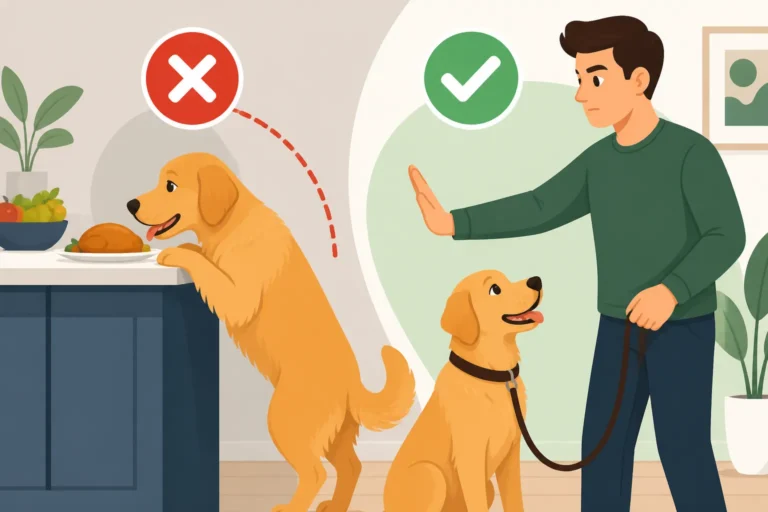
The "four on the floor" rule is simple: all four paws must remain on the ground for your dog to receive attention. Start teaching this the moment your Golden Retriever puppy comes home. When they approach you, if they show any signs of lifting paws, immediately turn your back, step away, or simply ignore them. The moment all four paws are on the ground, even for a split second, immediately praise them quietly and offer a gentle pet or a small treat at their level.
This consistent method teaches them that polite greetings (four on the floor) earn rewards, while jumping gets them absolutely nothing. Practice this with everyone in the household. It’s also a fantastic time to use high-value treats to reinforce calm behavior. You can find excellent training treats on platforms like Amazon that will grab your Golden’s attention.
Crate Training and Controlled Greetings
A well-introduced crate can be an invaluable tool in managing your Golden's excitement around visitors. Instead of letting your Golden free-roam and practice jumping, initially, have them in their Crate Training a Golden Retriever Puppy when guests first arrive. This gives your dog a safe space to observe calmly, and it prevents them from practicing the unwanted behavior. Once your guest is settled, and your Golden is calm in their crate, you can then let them out on a leash for a controlled greeting.
With your Golden on a leash, you have more control to manage their interactions. If they start to jump, you can gently guide them back down with the leash and praise "four on the floor." This controlled environment prevents accidental jumping and allows you to reward calm behavior precisely. Many online resources, like those offered by BAXTER & Bella, emphasize the importance of controlled greetings for managing overly excited dogs.
Socialization and Proper Manners
Early and proper socialization exposes your Golden Retriever puppy to a wide variety of people, sights, and sounds in a positive way. This helps them develop into a well-adjusted adult who is less likely to become over-stimulated or fearful in new situations. Part of this socialization should include teaching polite greeting manners. Take your puppy to safe, dog-friendly places where they can meet calm, appropriate people.
When introducing your puppy to new people, instruct them on how to interact. Ask them to approach calmly, offer a hand for sniffing, and only pet when the puppy has all four paws on the ground. This also involves teaching children how to appropriately interact with a puppy. Emphasize calm interactions over excited ones, and always supervise these meetings. Puppy Classes Worth It for a Golden Retriever can be excellent for this.
Managing Jumping in Adult Goldens
If you have an adult Golden Retriever who already has a jumping habit, it’s not too late! It just requires more patience and consistent effort to retrain ingrained behaviors.
Redirection and Positive Reinforcement
The core principle remains the same: reward the behavior you want, ignore or redirect the behavior you don't. When your adult Golden approaches a guest and starts to jump, immediately turn your back and walk away, or gently block them with your body without speaking. The instant their paws hit the floor, turn back, praise them, and offer a treat or a calm pet. Repeat this as many times as necessary. Your consistency is paramount.
You can also proactively redirect their energy. As a guest approaches, ask your Golden to sit. Reward them for holding the sit. If they jump, the guest should turn away. When they sit again, the guest can try to pet them. This teaches them that a polite "sit" earns attention, while jumping makes the attention disappear. Keep training sessions short, positive, and frequent. This method is effective for teaching Golden Retriever Greeting Manners at the Door.
Using a Leash for Control
For particularly persistent jumpers, keeping your Golden on a leash, even indoors, when guests are present can be a game-changer. This provides a physical barrier and a means of control. As a guest enters, keep your Golden on a short leash beside you. If they attempt to jump, a gentle, firm downward pull on the leash, combined with a "sit" command, can prevent the jump before it happens. Reward the immediate sit with a high-value treat.
This isn't about punishment; it's about clear communication and physical guidance. The leash acts as an extension of your command, helping your Golden understand the boundary. Once they consistently remain calm on the leash during greetings, you can slowly begin to try greetings without the leash, always ready to revert if the jumping resurfaces. This technique is also helpful for Loose Leash Walking With a Golden Retriever.
Teaching Alternative Behaviors
Instead of focusing solely on stopping the jumping, teach your Golden an alternative, incompatible behavior that they can perform instead. A "sit" or "down" command is perfect. Practice these commands frequently in various situations and with increasing distractions. When a guest arrives, immediately ask for a "sit" or "down" before they can even think about jumping.
You can even teach them to fetch a toy or go to their "place" (a specific mat or bed) when someone comes to the door. This gives them a positive outlet for their excitement and a job to do. Reward them heavily for performing these alternative behaviors. The key is to make the desired behavior more rewarding than the jumping. Many online training programs, like those from BAXTER & Bella, offer structured modules on teaching "place" and other obedience commands.
Here’s a quick overview of how to respond to jumping:
| Scenario | Common Owner Response (Ineffective) | Recommended Owner Response (Effective) |
|---|---|---|
| Golden jumps on arriving guest | "Down! No! Get off!" (with eye contact) | Turn back, cross arms, ignore. Reward calm paws. |
| Golden jumps for attention | Push away, say "Stop it!" | Walk away, remove attention. Reward when quiet/calm. |
| Golden jumps on family member | Pet head, hug (when small) | Ignore, or ask for a sit. Reward the sit. |
| Golden jumps when excited | Engage in excited play | Initiate calm play or a walk. Redirect to a toy. |
| Guest encourages jumping | Laughs, pets the jumping dog | Politely ask guest to ignore until paws are down. |
Consistency is Key
No matter what age your Golden Retriever is, consistency from everyone they interact with is the absolute cornerstone of stopping jumping behavior. A single lapse can undermine weeks of progress.
Involving Everyone in the Household
Every single person who lives with your Golden Retriever must be on the same page regarding training. If one family member allows jumping, even occasionally, your Golden will become confused and continue to try the behavior. Hold a family meeting to discuss the rules and ensure everyone understands the chosen method (e.g., "four on the floor" or "sit for greetings").
This includes children, who might find a jumping Golden endearing. Teach them how to properly greet the dog, always rewarding calm behavior. If necessary, supervise all interactions until the behavior is under control. Remember, your Golden is always learning, and every interaction is a teaching opportunity. If your children are very young, you might want to review Teaching Kids How to Handle a Golden Retriever.
Managing Guest Interactions
It’s not just about what you do; it’s also about educating your guests. Before friends or family come over, give them a heads-up. Explain that you're working on training your Golden not to jump and ask for their cooperation. Instruct them to turn their back, avoid eye contact, and not acknowledge your Golden until all four paws are on the floor. Only then should they offer a calm greeting.
You can also use tools to help. Have a chew toy ready for your Golden to focus on, or a long-lasting treat when guests arrive. Consider having your dog on a leash briefly, or even behind a baby gate, during the initial excitement of arrival. This proactive management sets your Golden up for success, rather than failure. Many practical training aids, like puzzle toys or durable chew items, are readily available on Amazon to help manage your dog's energy when guests are over.
Long-Term Solutions and Patience
Breaking a deeply ingrained habit takes time, effort, and a generous dose of patience. There will be setbacks, especially if your Golden is particularly enthusiastic or if guests forget the rules. Don't get discouraged. Celebrate small victories, like a single polite greeting, and continue to reinforce good behavior.
The goal is not to curb your Golden's joy but to channel it into more appropriate and respectful forms of interaction. With consistent effort, clear communication, and positive reinforcement, your Golden Retriever will learn that calm, polite greetings earn them more of the attention and affection they crave. This long-term commitment is part of Training a Golden Retriever From Puppy to Adult and will strengthen your bond.
Disclaimer
This article is for general informational purposes only and does not constitute professional advice. Laws, prices and regulations vary by location and change over time. Consult a qualified professional for guidance on your specific situation.