Field Trials and Hunt Tests for Golden Retrievers
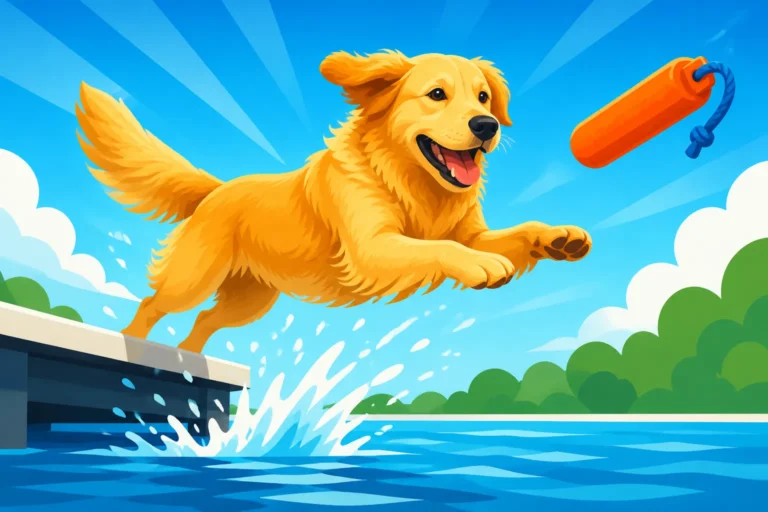
If you've ever watched your Golden Retriever joyfully dive into a pond to retrieve a stick, or meticulously carry a toy from one room to another with the utmost care, you've witnessed their innate purpose in action. For many Golden owners, this powerful retrieving drive can feel a bit aimless in daily life, leading to endless games of fetch that, while fun, don't fully challenge their dog's incredible abilities. This guide will explore how you can tap into and harness these natural talents through the exciting world of field trials and hunt tests, offering a rewarding outlet for both you and your Golden.
Understanding the Golden Retriever's Natural Instincts
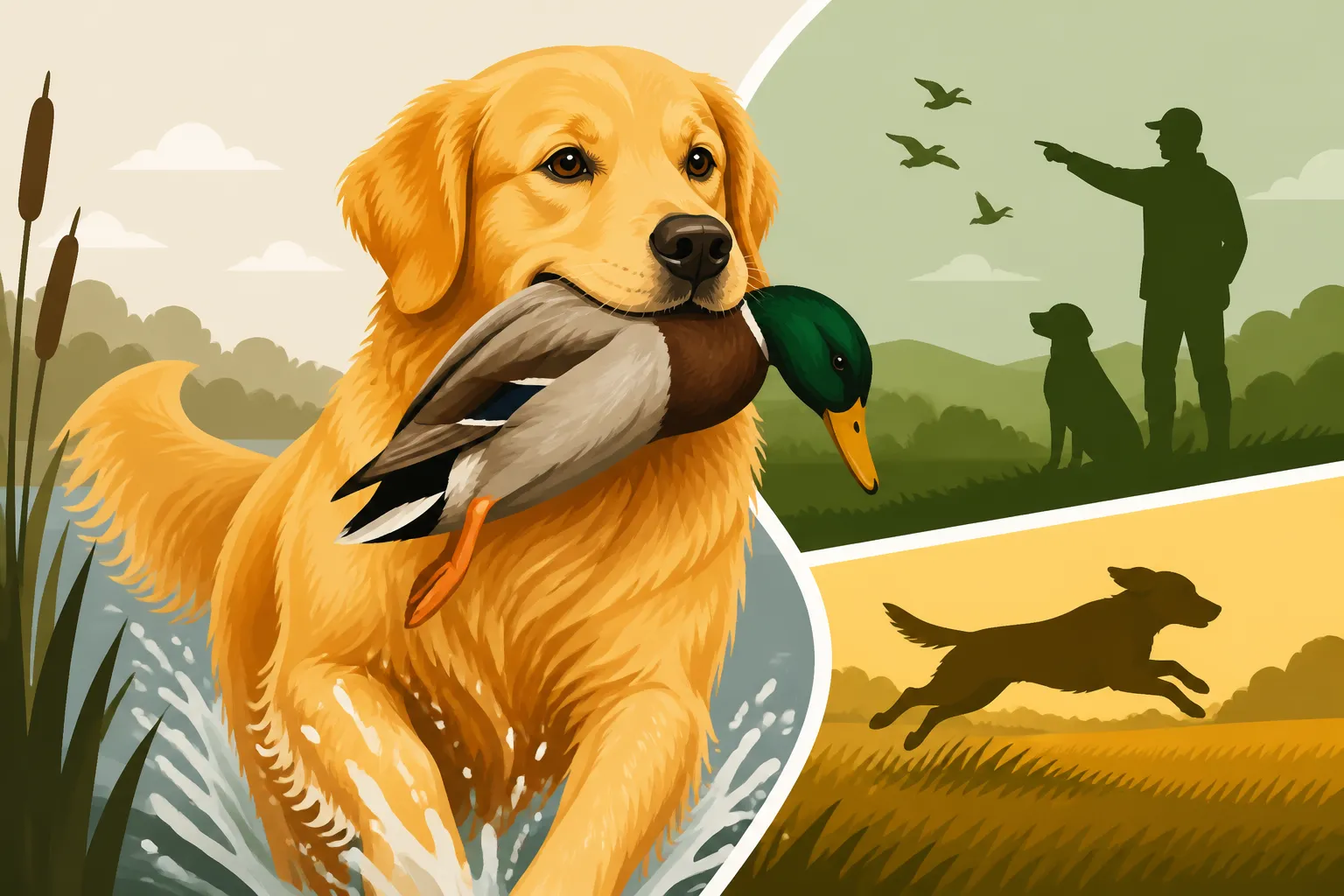
Golden Retrievers weren't just bred to look beautiful; they were developed for a very specific job: retrieving shot waterfowl and upland game for hunters. This means they possess a suite of instincts and physical traits perfectly suited for working in the field, navigating various terrains, and handling game gently. Ignoring these deep-seated drives can lead to a less fulfilled dog, and sometimes, even behavioral issues stemming from boredom or unchanneled energy.
The "Soft Mouth" and Desire to Retrieve
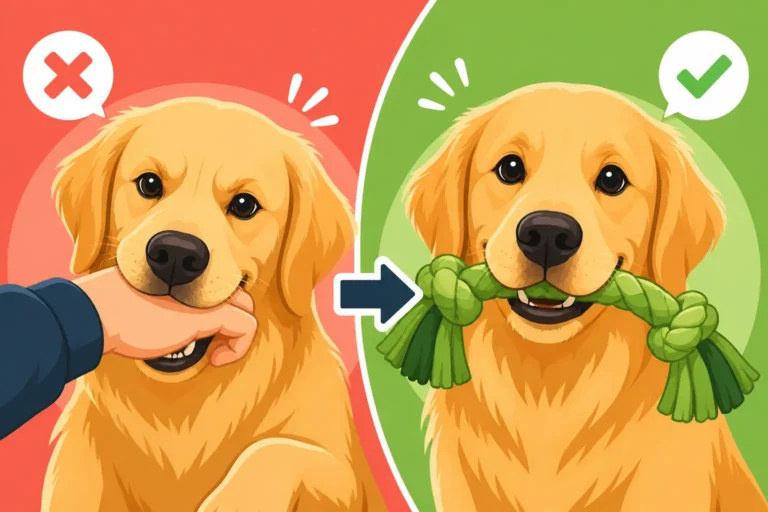
One of the most remarkable and defining characteristics of the Golden Retriever is their "soft mouth." This isn't just a charming anecdote; it's a critical genetic trait. Historically, a Golden was expected to bring a bird back to the hunter without a single tooth mark or crushed feather. Imagine the skill and control required! This translates today into their gentle carrying of toys, slippers, or even your hand. It's not about biting; it's about holding, about possessing and delivering.
This innate desire to retrieve is powerful. It's why they often greet you with a toy, why they'll drop a ball at your feet repeatedly, and why they seem to understand the concept of "bring it back" so instinctively. It's more than just playing fetch; it's a deep satisfaction they get from completing the retrieving sequence. For many Goldens, engaging this instinct is as vital as physical exercise. When you truly lean into The Golden Retriever's Retrieving Heritage, you begin to understand your dog on a whole new level. It explains so much of their personality and behavior.
Drive, Stamina, and Water Affinity
Beyond the soft mouth, Goldens possess an impressive combination of drive, stamina, and an almost irresistible attraction to water. Their double coat, while shedding profusely, is wonderfully water-repellent, insulating them in cold water and allowing them to shake off quickly. They have a powerful swimming stroke, strong lungs, and an athletic build that allows them to cover ground quickly, both on land and in water, often through dense cover.
This combination makes them ideal partners for hunting and field sports. Their drive means they are eager to work, to please, and to persevere through challenging conditions. Their stamina allows them to work for extended periods, making multiple retrieves without tiring. And their love for water is not just for fun; it's a fundamental part of their job description. If your Golden dives headfirst into every puddle or lake they encounter, you're seeing this powerful instinct at play. Whether Golden Retrievers Have Strong Prey Drive is often misunderstood, but in the context of retrieving, it’s about their focus and determination to "find and deliver" rather than aggressive hunting.
What Are Golden Retriever Hunt Tests?
Hunt tests are structured events designed to simulate actual hunting scenarios, assessing a dog's natural abilities and trained skills. They are not competitions against other dogs, but rather against a standard. The goal is for your Golden to demonstrate a certain level of proficiency at various tasks relevant to retrieving game. It's a fantastic way to engage your dog's instincts without the pressure of direct competition, and a wonderful bonding experience.
The Purpose and Progression of Hunt Tests
The primary purpose of hunt tests is to evaluate a retriever's ability to work in a hunting environment. This includes their natural instincts, trainability, and temperament. The tests are broken down into different levels, typically:
- Junior Hunter (JH): This is the entry-level stake, focusing on basic retrieving skills, eagerness, and some steadiness. Dogs perform single marked retrieves on land and water. It's designed to introduce both dog and handler to the sport in a supportive environment.
- Senior Hunter (SH): This intermediate level introduces more complex retrieves. Dogs are expected to perform double marked retrieves (two birds falling, requiring memory to retrieve both), a blind retrieve (retrieving a bird they didn't see fall, relying on handler direction), and honor another dog's retrieve (remaining steady while another dog works). Steadiness, control, and good marking ability are key.
- Master Hunter (MH): This is the most advanced level, requiring consistent, polished performance in highly challenging scenarios. Dogs perform multiple marked retrieves, challenging blind retrieves on land and water, and must honor other dogs with perfect steadiness. The tests simulate real-world hunting conditions, often with distracting elements like gunshots, decoys, and varied terrain.
Each level builds upon the last, progressively challenging your Golden's abilities. Earning a title like JH, SH, or MH shows a commitment to training and a profound understanding of your dog's capabilities. It's a journey, not a sprint, and each step offers immense satisfaction.
Key Elements of a Hunt Test: Marks, Blinds, and Steadiness
To truly understand hunt tests, it's essential to grasp the core components:
- Marks: These are retrieves where your dog sees the "bird" (often a bumper or dead fowl) fall. The dog must mark where it lands, remember the location, and retrieve it upon command. In higher levels, multiple marks are thrown, requiring excellent memory and focus. The dog needs to be able to "mark" the fall in their mind and retrieve them in a specific order, often the most difficult one first.
- Blinds: This is where the handler's communication and the dog's directional control truly shine. A blind retrieve is for a "bird" that the dog did not see fall. The handler must use verbal commands and hand signals to direct the dog to a specific spot where the bird is hidden. This requires immense trust between dog and handler and precise obedience.
- Steadiness: This is arguably one of the most crucial elements in all retriever work. Steadiness means the dog remains calm and still at the line, even with gunshots, falling birds, or other dogs working, until given the command to retrieve. A dog that breaks (runs for the bird before being sent) will fail the test. It's a testament to their impulse control and training. Teaching a Golden Retriever to Come When Called is a fundamental skill, but in hunt tests, it's about staying until called, which is a different, more advanced level of control.
These elements are combined in various setups to mimic realistic hunting situations. A judge evaluates not just the retrieve itself, but the entire process: the dog's demeanor, their response to commands, the enthusiasm of the retrieve, and the gentle delivery of the bird.
Training for Hunt Tests: Where to Start
Getting started with hunt test training for your Golden Retriever can feel overwhelming, but it doesn't have to be. Many Goldens, even those who have only ever played fetch in the backyard, have the foundational instincts waiting to be developed.
1. Basic Obedience is Paramount: Before you even think about birds or bumpers, your Golden needs a solid foundation in basic obedience. A reliable "sit," "stay," "come," and "heel" are non-negotiable. If your dog isn't listening to you in a calm environment, they certainly won't when adrenaline is high and distractions are everywhere. Consider online programs like BAXTER & Bella for building strong obedience foundations right from puppyhood. They emphasize positive reinforcement, which is critical for maintaining your Golden's joyful retrieving spirit. Golden Retriever Training Class Costs can vary, but investing in a good puppy class or foundational obedience course is money well spent.
2. Develop the Retrieve: Start with simple, fun retrieves in a low-distraction environment. Use soft bumpers or Dokken dead fowl trainers (you can find a wide variety on Amazon). Encourage enthusiastic retrieves and always reward a quick return and gentle delivery. Make it a game! Don't push too hard; keep sessions short and positive.
3. Find a Mentor or Club: This is perhaps the most valuable step. Joining a local retriever club or finding an experienced mentor is invaluable. These communities offer hands-on training days, workshops, and trials where you can learn from those who've been there. They can help you understand the nuances of the tests, show you proper handling techniques, and provide invaluable feedback. You can often find regional clubs through the national breed club or kennel club websites. Choosing a Trainer for a Golden Retriever is key, and for specialized sports like hunt tests, you want someone with proven experience in the field.
4. Introduce Distractions Gradually: Once your dog is proficient in basic retrieves, slowly introduce distractions. This could be other dogs, people, sounds (like simulated gunshots), or different terrains. Steadiness under distraction is built incrementally. Don't throw your dog into a full-blown test scenario before they're ready. Mental Enrichment for a Bored Golden Retriever often involves channeling these instincts, and formal training provides an excellent structured outlet.
Delving into Golden Retriever Field Trials
Field trials represent the pinnacle of competitive retriever work. While hunt tests evaluate against a standard, field trials pit dogs against each other in a head-to-head competition, often with incredibly complex and demanding scenarios. This is where the truly elite retrieving dogs and handlers showcase their extraordinary abilities.
The Competitive Nature of Field Trials
Unlike hunt tests, where every dog can earn a qualifying score, field trials are about ranking. Dogs compete in "stakes" (categories) and are judged on their relative performance. The judges are looking for exceptional marking ability, pinpoint accurate blind retrieves, perfect steadiness, and undeniable desire. The pressure is higher, the expectations are greater, and the competition is fierce.
Field trials demand flawless execution. A minor error that might only deduct a few points in a hunt test could easily eliminate a dog from a field trial stake. Handlers and dogs often spend years, if not a lifetime, honing their skills to compete at this level. The dogs often carry the title "FC" (Field Champion) or "AFC" (Amateur Field Champion) before their names, a testament to their supreme ability in the field. This isn't just a hobby for many; it's a way of life that celebrates the Golden Retriever's genetic prowess.
Stakes and Requirements in Field Trials
Field trials have different stakes, similar to hunt test levels, but with a competitive twist. The most common stakes include:
- Derby Stake: For dogs between six months and two years old. This stake focuses on marking ability and natural retrieving desire, encouraging young dogs to learn and compete. The retrieves are generally simpler, but the judges are looking for raw talent and potential.
- Qualifying Stake: Open to any dog that has not yet earned certain titles. It's a stepping stone to the more advanced stakes, requiring solid performance in marks and blinds.
- Open All-Age Stake: This is the highest level of competition, open to all dogs, professional or amateur. Dogs are judged on marks, blinds, and usually a "water blind" and "land blind" series. The scenarios are incredibly intricate, often involving long distances, difficult terrain, and challenging setups that test every facet of a retriever's training and instinct.
- Amateur All-Age Stake: Similar to the Open All-Age, but handlers must be amateurs. This allows dedicated owner-handlers to compete at the highest level without professional intervention.
In all stakes, dogs are expected to be perfectly steady, silent, and deliver the bird quickly and gently to hand. The scenarios can be physically demanding for both dog and handler, often involving traversing significant distances through varied landscapes.
The Intense Training Demanded by Field Trials
The level of training required for field trials is immense. It's a full-time commitment for many, often involving professional trainers and specialized facilities. This isn't just about teaching commands; it's about developing an unbreakable bond, intuition, and precision.
1. Precision and Consistency: Every command, every hand signal, every movement must be precise and consistent. Dogs are trained to respond instantly and flawlessly, even at a distance or in high-pressure situations. This includes "casting" (sending the dog in a specific direction) with extreme accuracy, stopping on a whistle, and taking complex lines through cover.
2. Advanced Marking and Memory: Field trial dogs need exceptional marking ability to track multiple birds falling over long distances, often in difficult cover. They also need incredible memory to retrieve those marks in the correct order, even if they've had to navigate around obstacles or through dense vegetation. Fetch Games That Tire a Golden Retriever are a good start, but field trial marking is a whole different beast.
3. Unwavering Steadiness: As in hunt tests, steadiness is paramount. But in field trials, the distractions are often more intense, and the expectation of perfection is absolute. A dog that moves before commanded is likely eliminated. This takes thousands of repetitions and meticulous conditioning.
4. Physical Conditioning: Field trial Goldens are athletes. They need to be in peak physical condition to perform multiple retrieves over large, varied terrains, often in challenging weather. This means a carefully managed diet, regular strenuous exercise, and attention to joint health.
The journey to competing in field trials is long and arduous, but for those who achieve success, it's an unparalleled demonstration of the Golden Retriever's ultimate capabilities and the deep partnership between dog and handler.
Getting Started: From Couch Potato to Competitor
So, you're intrigued. You see that spark in your Golden's eyes when they chase a ball, and you wonder if they have what it takes. Getting involved in field activities is accessible, even if you never intend to compete at the highest levels. It’s all about providing an enriching experience for your beloved companion.
Assessing Your Golden's Aptitude and Your Commitment
Before diving headfirst, take an honest look at your Golden and yourself.
For Your Golden:
- Does your Golden love to retrieve? Seriously, do they live for it? Do they bring you things constantly?
- Are they generally biddable and eager to please? Goldens are known for this, but individual personalities vary.
- Do they have a natural affinity for water? Most Goldens do, but if yours shies away from even a puddle, it might be a bigger hurdle.
- Can they focus amidst distractions, or are they easily overwhelmed? This is trainable, but their starting point matters.
For Yourself:
- How much time can you realistically commit to training? This isn't just an hour a week; it can be multiple short sessions daily, plus longer weekend sessions.
- Are you patient and consistent? Dog training, especially at higher levels, requires immense patience and unwavering consistency.
- Are you willing to learn from others and be coached? No one enters this world knowing everything. A humble, open mind is crucial.
- What are your goals? Do you want to earn a Junior Hunter title for fun, or are you dreaming of a Master Hunter? Your goals will dictate the intensity of your journey.
It's okay if your Golden isn't a natural superstar right out of the gate, or if you only have time for casual training. The most important thing is to enjoy the journey together. For instance, if your Golden is just developing their "come" command, starting with Building Reliable Recall in a Golden Retriever will be a much more productive first step than worrying about double marks.
Finding the Right Training Resources and Mentors
The retriever community is generally welcoming and passionate. Here's how to find help:
1. Local Retriever Clubs: As mentioned, these are goldmines. They often host training days, seminars, and sanctioned events. You'll meet experienced handlers and trainers who can offer advice, resources, and even share training grounds. The Golden Retriever Club of America (GRCA) website often has regional club listings.
2. Professional Trainers: For more structured guidance, consider a professional trainer specializing in retriever field work. This can be a significant investment, but a good trainer can accelerate your progress and correct issues before they become ingrained. Make sure to observe their methods, ask for references, and ensure their philosophy aligns with positive, clear communication. They should be able to explain their approach to you in a way that makes sense.
3. Online Resources and Books: While hands-on experience is best, books and reputable online training videos can supplement your learning. Search for classics on retriever training and modern positive reinforcement approaches. Just be wary of conflicting advice and always prioritize safety and your dog's well-being.
4. Training Groups: Once you find a club or mentor, you might join a small training group. This provides a supportive environment for practicing with other dogs, which is essential for developing steadiness and working with distractions. It's also a great way to learn by watching others.
Essential Gear for Field and Hunt Test Training
Getting the right gear will make your training much more effective and enjoyable. You don't need to break the bank, but some items are indispensable. Many of these can be easily found on Amazon.
| Item | Description | Purpose |
|---|---|---|
| Training Bumpers | Plastic or canvas dummies, often white or brightly colored for visibility, sometimes weighted or scented. | Primary retrieve object for marks and blinds. Mimics the feel of a bird. |
| Dead Fowl Trainers | Realistic-looking and feeling rubber or canvas birds, weighted for natural fall. | Helps transition from bumpers to actual game, encourages proper gentle hold. |
| Whistle | Pealess whistle (e.g., Acme Thunderer) for consistent commands. | Essential for distance control (stop, come-in, retrieve commands). |
| Long Line/Check Cord | A long, durable rope (15-30 ft) used during early training. | Teaches recall, steadiness, and directional control at a distance. |
| E-Collar (Properly Used) | Electronic collar with vibration/tone/stimulate functions. Requires professional guidance to use safely. | Advanced tool for reliable remote communication and correction in the field. |
| Floating Rope/Line | For water work, a rope that floats to avoid tangles. | Guiding in water, retrieving objects, practicing casts. |
| Bird Bag/Vest | Carries bumpers, dead fowl, treats, and other gear hands-free during training. | Convenience and organization in the field. |
| Blaze Orange Vest/Hat | For handler, especially during actual hunting season or busy training grounds. | Safety, makes you visible to others. |
| Treat Pouch & High-Value Treats | Hands-free pouch for easy access to rewards. | Positive reinforcement for good behavior and successful retrieves. |
Remember, the right gear is an investment in your training journey, but it's only as effective as the consistent effort and patience you put in. Whether you aim for the highest titles or simply want a more engaged and well-exercised Golden, embracing their natural retrieving instincts through structured activities will enrich both your lives immensely. Swimming as Exercise for a Golden Retriever often comes naturally, and incorporating water retrieves into your training sessions will make your dog even happier!
Disclaimer
This article is for general informational purposes only and does not constitute professional advice. Laws, prices and regulations vary by location and change over time. Consult a qualified professional for guidance on your specific situation.