Service Dog Tasks Golden Retrievers Do Well
It's truly incredible how many people recognize Golden Retrievers as intelligent, friendly dogs, but they might not fully grasp the amazing, life-changing work these beautiful animals are capable of. It’s one thing to see a Golden gently carrying a basket, and another entirely to understand the intricate, specialized tasks they perform daily as service dogs. This guide is here to shed light on the specific, often complex, roles where a Golden Retriever truly shines, transforming lives with their dedication and unique skills.
Understanding the Golden Retriever's Aptitude for Service Work
There's a reason Golden Retrievers are so frequently chosen for service work across a spectrum of needs. It’s not just their stunning looks or their generally agreeable nature; it’s a confluence of inherited traits, deep-seated instincts, and an almost unparalleled eagerness to please that makes them standout candidates. When you look at the core requirements for a successful service dog, the Golden Retriever ticks almost every box with remarkable consistency.
Temperament and Trainability
At the heart of a Golden Retriever's suitability for service work is their renowned temperament. They are, almost without exception, cheerful, confident, and deeply empathetic dogs. This isn't just about being a "nice" dog; it’s about a stable, predictable emotional landscape that is crucial for someone relying on them for assistance. A service dog needs to remain calm and focused in a vast array of environments, from bustling airports to quiet medical offices, and a Golden's innate steadiness is a huge asset here.
Their intelligence is another key factor. Golden Retrievers are widely recognized as one of the smartest breeds, ranking consistently high in studies of canine intelligence. This means they pick up new commands and complex sequences of tasks quickly. They genuinely enjoy learning and working alongside their human partners. This eagerness to engage and their high motivation for positive reinforcement make the intensive training required for service work a much smoother, more effective process. They have an almost insatiable desire to please, which means they are constantly looking to their handler for cues and feedback, reinforcing their bond and making them incredibly responsive. You can learn more about what to expect from their personality in our article, Golden Retriever Temperament and What to Expect.
Furthermore, their "soft mouth" retrieving instinct, originally bred for gently carrying game birds without damaging them, translates perfectly into carefully picking up dropped items, fetching specific objects, or even delivering medication. They understand how to interact with delicate items without crushing them, a skill that is invaluable in many service roles.
Physical Characteristics and What They Offer
Beyond their mental and emotional traits, the physical attributes of a Golden Retriever also contribute significantly to their service dog capabilities. They are a medium-to-large breed, typically weighing between 55 and 75 pounds and standing around 21 to 24 inches tall at the shoulder. This size provides a fantastic balance: large enough to offer physical support, but not so large as to be cumbersome in tight spaces.
Their sturdy build means they can, within appropriate limits, provide stability for individuals needing balance assistance or even help with light mobility tasks like opening doors. They have the stamina to work for extended periods, accompanying their handler throughout their day, whether that involves errands, appointments, or travel. Their double coat, while requiring regular grooming, also offers protection in various weather conditions, allowing them to perform their duties comfortably outdoors in different climates.
Specific Service Dog Tasks Golden Retrievers Excel At
Golden Retrievers don't just "do" service work; they excel at a wide variety of specific, life-enhancing tasks. Their versatility makes them suitable for many different types of assistance, often adapting their natural abilities to meet complex human needs.
Mobility Assistance Tasks
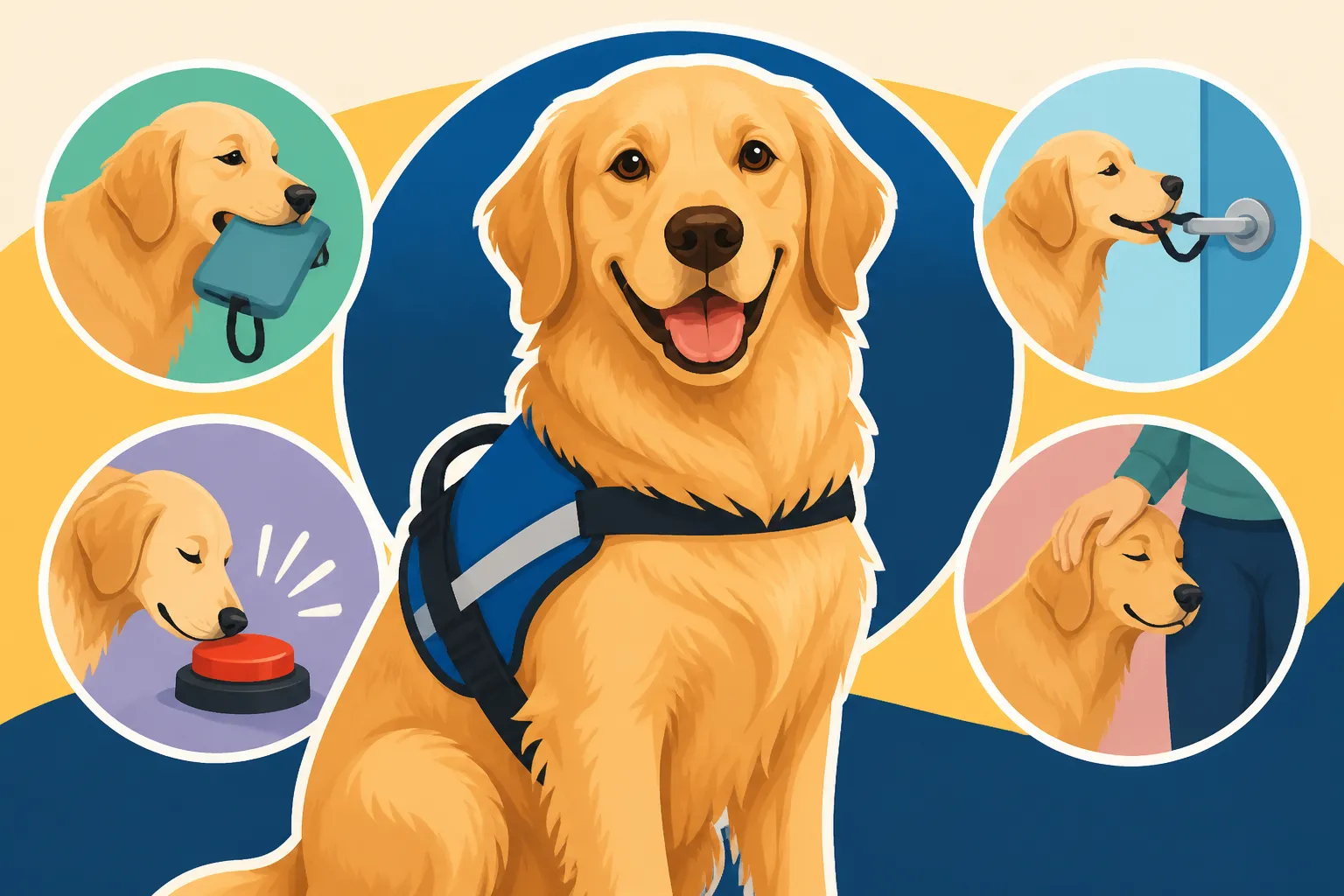
For individuals with mobility challenges, a Golden Retriever can be an absolute game-changer. These tasks are often the most visually recognizable forms of service dog work. Imagine dropping your keys or phone and being unable to bend down to retrieve them. A Golden Retriever, with their natural retrieving instinct and "soft mouth," can swiftly pick up a multitude of items, from credit cards to medical devices, without causing damage.
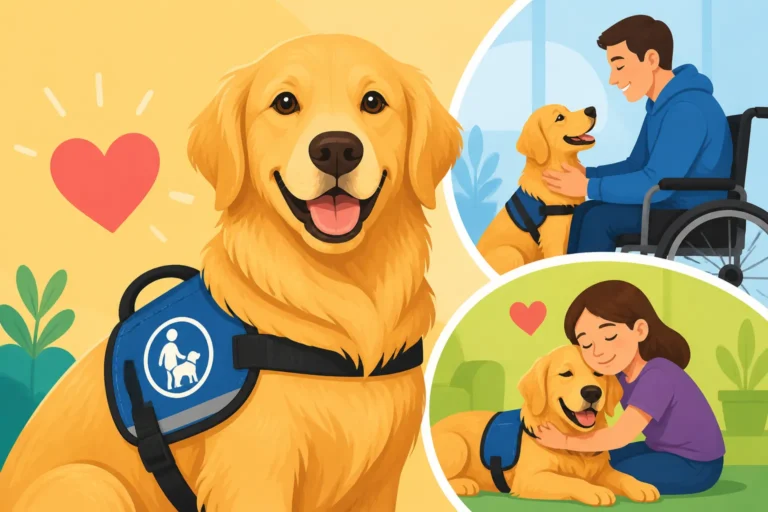
They can be trained to open and close doors, using special pulls or levers, which can restore a significant amount of independence. For those who use wheelchairs, a Golden can be taught to pull lightweight chairs up ramps or help steady them. Crucially, they can also provide stable bracing, allowing a handler to lean on them for support when rising from a seated position or navigating uneven terrain. This bracing needs to be trained carefully to ensure both the dog's safety and the handler's, with the dog learning to "brace" its body firmly without moving. These physical demands underscore the importance of excellent health clearances from a breeder, as discussed in Health Clearances a Golden Retriever Breeder Must Show.
Hearing and Alert Tasks
For people with hearing impairments, a Golden Retriever acts as a pair of furry, four-legged ears, alerting them to crucial sounds they might otherwise miss. These dogs are trained to identify specific sounds and then alert their handler, usually by nudging them and then leading them to the source of the sound.
Think about the sheer relief of having a dog tell you when the doorbell rings, or when a fire alarm blares. They can alert to a crying baby, a boiling kettle, or even the sound of your name being called. The training for these tasks involves pairing the sound with a positive reinforcement, teaching the dog to recognize the specific auditory cues and respond consistently. This isn't just a convenience; it's a vital safety mechanism that allows individuals to respond appropriately to their environment and avoid potential dangers.
Medical Alert and Response Tasks
This category of tasks often involves an incredible level of instinctual and trained behavior, often leveraging a dog's keen sense of smell. Golden Retrievers are particularly adept at medical alert and response work due to their intelligence, focus, and sensitivity.
One prominent example is diabetic alert. Dogs can be trained to detect subtle changes in their handler's blood sugar levels through scent, often before the human even feels symptoms. They might alert their handler by pawing, nudging, or even lying down in a specific way. For someone managing diabetes, this early warning can be life-saving, allowing them to take insulin or consume sugar before an emergency arises.
Similarly, Golden Retrievers can be trained for seizure response. While they can't predict a seizure, they can perform critical tasks during and after one. This might involve barking to alert family members, retrieving emergency medication, pushing an alert button, or even positioning themselves to prevent the handler from hitting their head on the floor during a seizure. They can also offer comfort and support as the individual recovers. Other tasks might include reminding their handler to take medication at specific times or alerting to changes in heart rate or blood pressure.
Psychiatric Service Dog Tasks
Psychiatric service dogs offer vital assistance to individuals living with mental health conditions such as PTSD, severe anxiety, or depression. It’s crucial to understand that these are not emotional support animals; psychiatric service dogs are specifically trained to perform tasks that mitigate a person's disability.
Golden Retrievers excel in these roles due to their calm demeanor and deep capacity for connection. Tasks might include deep pressure therapy (lying across a person's chest or lap to provide grounding comfort during a panic attack), interrupting self-harming behaviors (e.g., nudging a hand, licking a face), or creating a buffer in crowded public spaces by standing in front or behind their handler. They can also be trained to find exits, guide a disoriented handler, or retrieve medication when needed. The dog's presence and trained responses can help their handler navigate challenging situations, manage symptoms, and maintain a greater sense of safety and independence.
| Service Dog Task Category | Example Tasks Performed | Golden Retriever Trait Alignment |
|---|---|---|
| Mobility Assistance | Retrieving dropped items, opening doors, bracing for balance, pulling lightweight wheelchairs | Strong retrieving instinct, "soft mouth," sturdy build, intelligence, eager to please |
| Hearing Assistance | Alerting to doorbells, smoke alarms, alarm clocks, name calls | Attentive nature, high trainability, strong bond with handler |
| Medical Alert/Response | Diabetic alert (scent detection), seizure response (alerting others, getting meds), medication reminders | Keen sense of smell, intelligence, focus, calm under pressure, reliability |
| Psychiatric Support | Deep pressure therapy, interrupting harmful behaviors, crowd buffering, finding exits | Empathetic nature, calm demeanor, strong bond, reliable obedience |
The Path to Becoming a Service Dog: Training and Partnership
It's clear that Golden Retrievers possess many ideal qualities for service work, but becoming a service dog is a rigorous journey. It takes years of dedicated training, unwavering commitment, and a deep partnership between dog and handler.
Early Foundations and Socialization
The journey begins long before a puppy is old enough to start formal task training. The foundations laid in puppyhood are absolutely critical. This includes extensive socialization to ensure the dog is comfortable and confident in a wide array of environments, around all sorts of people, other animals, and unfamiliar sounds and sights. A well-socialized puppy will grow into a resilient adult capable of handling the stresses of public access work without fear or aggression.
Early obedience training, such as learning basic commands like "sit," "stay," and "come," is also essential. These aren't just tricks; they build the communication framework between dog and handler. Puppy classes, like those often recommended by programs like BAXTER & Bella, are invaluable for this stage, providing structured learning and exposure. You might find our article Golden Retriever Puppy Sleep and Night Crying helpful for early care, as a well-rested puppy learns best. The comprehensive guide to Training a Golden Retriever From Puppy to Adult details the full journey. Without a solid foundation of manners and confidence, a dog won't be able to progress to more complex service tasks. Understanding Socializing a Golden Retriever Puppy is non-negotiable for future service dogs.
Advanced Task Training and Public Access
Once a Golden Retriever has a strong foundation of temperament, socialization, and basic obedience, they move on to advanced task training. This is where the specific needs of the handler come into play. Training for medical alerts, mobility assistance, or psychiatric tasks is highly specialized, often requiring hundreds, if not thousands, of hours.
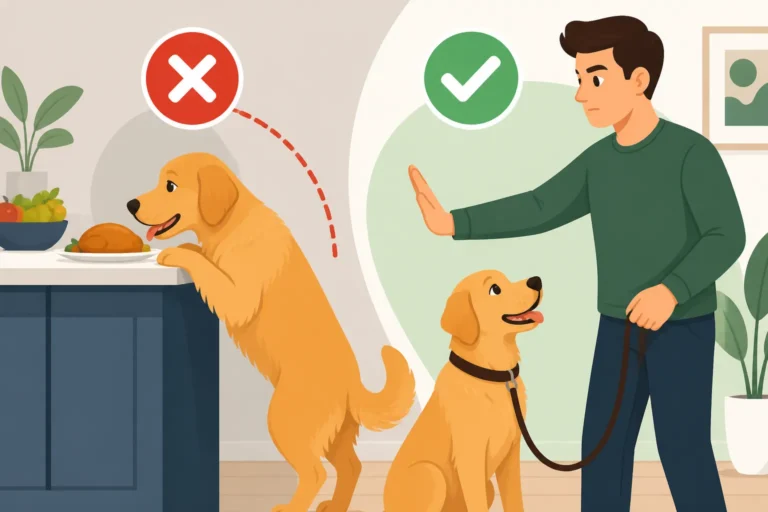
These tasks are broken down into small, achievable steps, with consistent positive reinforcement. The dog learns to perform these actions reliably, even with distractions. Simultaneously, public access training is paramount. A service dog needs to ignore enticing smells, loud noises, and the desire to greet friendly strangers, remaining focused solely on their handler and their tasks. This includes training in stores, restaurants, public transportation, and other places where pets are typically not allowed. You'll often see specialized vests and gear on Amazon that denote a dog is working, which are part of the public access training process, helping people understand not to distract the dog.
The Deep Bond and Ongoing Care
A service dog isn't just a tool; they are a partner. The bond between a service dog and their handler is incredibly deep and essential for successful work. This bond is built on trust, mutual respect, and countless hours spent together. The dog's ability to anticipate their handler's needs and respond proactively is often a testament to this profound connection. For insights into their affectionate nature, check out Whether Golden Retrievers Are Clingy.
Maintaining a service dog's health and well-being is also an ongoing commitment. Regular veterinary check-ups, a high-quality diet, appropriate exercise, and continued mental stimulation are crucial for them to perform their demanding job effectively throughout their working life. A service dog may work for many years, often transitioning to a life of pampered retirement as they age. Our guide on Caring for a Senior Golden Retriever offers valuable insights for maintaining their health as they mature.
Common Misconceptions and Ethical Considerations
While the image of a service dog is often romanticized, there are important distinctions and ethical considerations that every potential service dog owner or enthusiast should understand.
Service Dog vs. Emotional Support Animal
This is one of the most frequently misunderstood areas. The key difference lies in tasks performed and legal recognition. A service dog, by definition, is individually trained to do work or perform tasks for the benefit of an individual with a disability. These tasks must be directly related to the person's disability. This training grants them specific public access rights under laws like the Americans with Disabilities Act (ADA).
An emotional support animal (ESA), on the other hand, provides comfort simply through its presence. While ESAs can be incredibly beneficial for mental well-being, they are not trained to perform specific tasks to mitigate a disability. Therefore, they do not have the same public access rights as service dogs. It's vital not to misrepresent an ESA as a service dog, as it can cause confusion and harm the legitimate access rights of true service dog teams.
Not Every Golden Retriever is Destined for Service Work
While Golden Retrievers are a top choice for service organizations, it's a mistake to assume every Golden Retriever puppy will make a suitable service dog. Even with the best breeding and early socialization, some dogs simply aren't cut out for the intense demands of the job. They might be too easily distracted, too shy, too energetic, or develop health issues that prevent them from working safely.
Service dog programs have rigorous selection processes, and even after extensive training, some dogs "wash out" and are career-changed into loving pet homes. This isn't a failure on the dog's part, but rather a recognition that the demanding nature of service work isn't for every canine. Factors like sound sensitivity, prey drive, or an inability to maintain focus in distracting environments can all lead to a dog being career-changed. We explore this topic further in Washout Rates for Golden Retriever Service Candidates. It emphasizes that selecting a suitable candidate is a precise science, valuing temperament, health, and trainability above all else.
Disclaimer
This article is for general informational purposes only and does not constitute professional advice. Laws, prices and regulations vary by location and change over time. Consult a qualified professional for guidance on your specific situation.