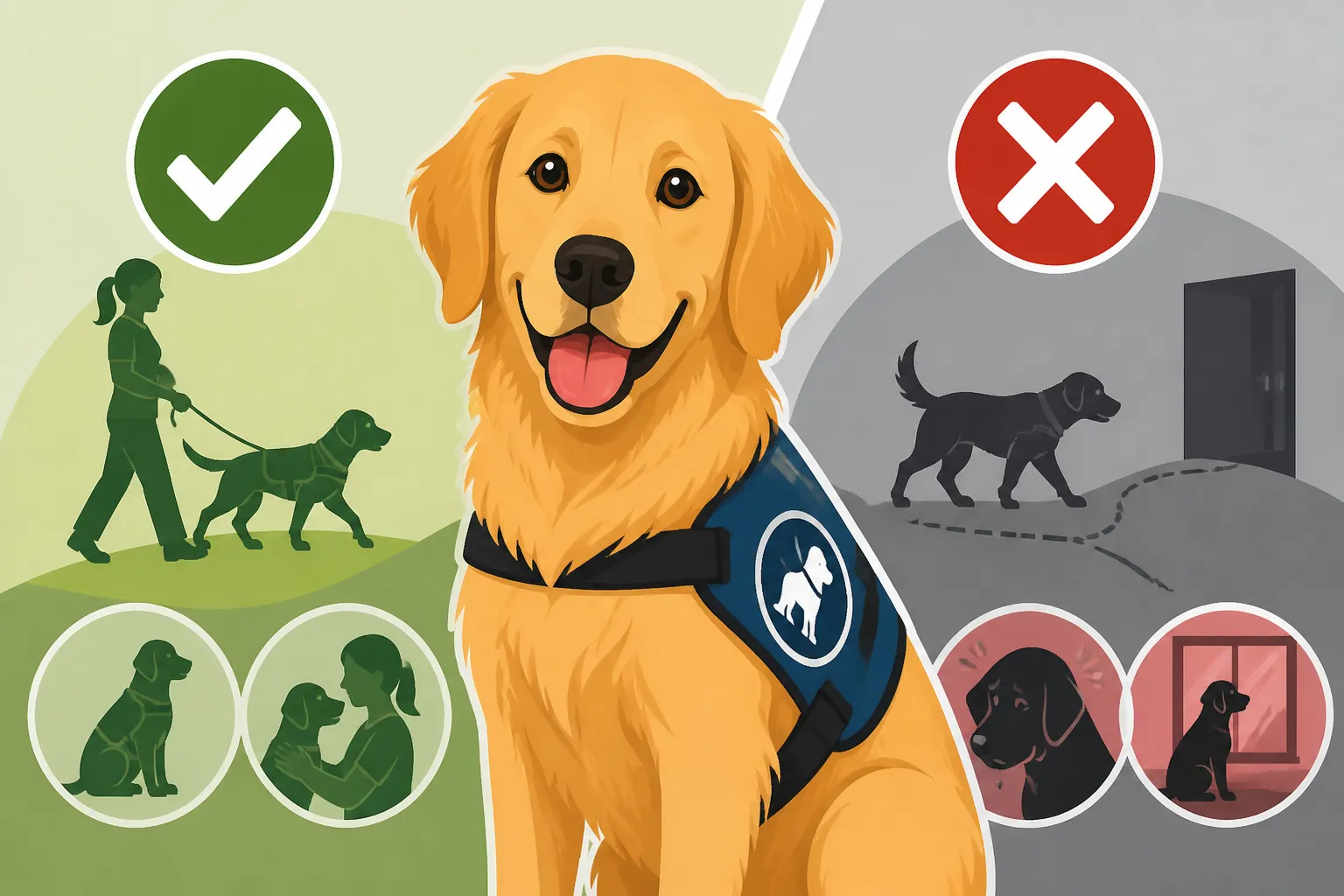
Washout Rates for Golden Retriever Service Candidates
It's incredibly disheartening when you pour your heart, time, and significant resources into a Golden Retriever puppy, dreaming of them becoming your indispensable service dog, only to face the tough reality that it might not work out. This isn't just a lost investment; it's a deeply personal blow to a future you envisioned. This guide will help you understand the common reasons why even wonderful Golden Retrievers might not complete service dog training, offering insight into the "washout" phenomenon and what it truly means.
The Reality of Service Dog Washout: What It Means
Bringing a Golden Retriever into your life with the specific goal of service work is an enormous undertaking. You're not just looking for a beloved pet; you're seeking a highly capable, resilient, and dedicated partner. So, when a dog doesn't make it through the rigorous training, it can feel like a profound failure. But it's crucial to understand that a "washout" isn't a reflection of the dog's inherent worth or your effort as an owner; it's simply a recognition that a particular path isn't the right fit for that individual dog.
Defining "Washout" in the Service Dog World
When we talk about a "washout" in the context of service dog training, we're referring to a dog that, for various reasons, is deemed unsuitable to complete the program and perform the tasks required of a certified service animal. This isn't necessarily about bad behavior or a lack of intelligence. Often, these dogs are still fantastic companions and loving family pets. It simply means they don't meet the incredibly stringent standards for public access, task performance, and unwavering reliability that a service dog must possess. The demands placed on a service dog are immense, from maintaining focus in distracting environments like bustling airports or crowded grocery stores to performing life-saving tasks on command, even under stress. The margin for error is virtually zero. A washout might happen at any stage, from early puppyhood evaluations right up to the final certification tests. It's a spectrum, not an on/off switch.
Why Even Top Breeds Like Goldens Aren't Guaranteed
Golden Retrievers are practically synonymous with service work, and for good reason! Their eager-to-please nature, intelligence, biddability, and friendly disposition make them ideal candidates. Many of the most successful guide dogs, mobility assistance dogs, and medical alert dogs are Goldens. However, even with all these breed-specific advantages, Goldens still have a significant washout rate, just like any other breed selected for service work. It’s a testament to how incredibly demanding the role is, not a flaw in the breed itself. No matter the breed, genetics are only part of the equation. Early experiences, individual personality quirks, and unforeseen health challenges all play a massive role. It's easy to assume that because a Golden is smart and sweet, it's automatically service dog material, but the truth is far more nuanced. Programs often assess hundreds of puppies to get a small fraction that ultimately graduate. You can read more about what makes them such great candidates in The Golden Retriever Breed Explained.
Primary Reasons Golden Retrievers Don't Make the Cut
The journey to becoming a service dog is fraught with potential pitfalls. These dogs are screened extensively, often starting as puppies, for traits that indicate a high likelihood of success. When a Golden Retriever washes out, it’s usually due to a combination of factors, or sometimes a single, insurmountable hurdle.
Health Concerns That End Service Dog Careers
One of the most heartbreaking reasons a Golden Retriever might wash out is due to health issues. These dogs are bred to be healthy, but genetic predispositions still exist. Programs invest tens of thousands of dollars and years into training a dog, so ensuring robust health is paramount. Even minor issues can become major obstacles.
For instance, Golden Retriever Hip and Elbow Dysplasia Explained are common concerns in the breed. While responsible breeders conduct health clearances, a dog might still develop a degree of dysplasia that, while manageable for a pet, would be debilitating for a working dog that needs to be active and mobile for many hours a day. Imagine a mobility assistance dog needing to brace its handler or pick up dropped items for years – even mild discomfort could compromise its ability and willingness to work. Other issues like certain types of cancer, which Goldens are unfortunately prone to, or even persistent allergies that cause chronic skin or ear problems, can also lead to a washout. A dog that is constantly itchy, in pain, or requires frequent vet visits might not be able to focus on its handler or perform its duties reliably. Regular vet check-ups are essential, and a thorough Golden Retriever Senior Blood Panel Covers can catch issues early on in life too.
Temperament and Behavioral Challenges
Beyond physical health, temperament is king for a service dog. A Golden Retriever is known for its friendly, confident, and stable demeanor. However, individual variations can mean a dog simply doesn't have the ironclad nerves required.
- Environmental Sensitivity: Some Goldens, despite being generally confident, might develop an unexpected fear of certain sounds (like thunder or fireworks), slippery floors, or crowded spaces. A service dog must be able to remain calm and focused in any public setting, from bustling city streets to quiet doctor's offices. A dog that displays anxiety, even subtle signs like excessive panting, pacing, or an inability to settle, is a liability in public. This isn't a fault; it's just a mismatch for the job.
- Lack of Focus or Distractibility: While Goldens are intelligent and eager to please, some might be overly stimulated by their environment. A service dog needs to ignore other people, other dogs, tempting dropped food, and exciting smells. If a dog is constantly trying to greet strangers or is easily distracted by a squirrel across the park, it cannot provide reliable service. This often comes down to an individual dog's ability to maintain a calm, attentive state no matter what's happening around them.
- Soft Mouths, Hard Nerves: Golden Retrievers are famous for their "soft mouths," which is wonderful for retrieving delicate items. But they also need "hard nerves." A dog that startles easily, is prone to shyness, or exhibits any form of reactivity (growling, barking, lunging, even if just from fear) is immediately disqualified for public access work, where absolute predictability is non-negotiable. Fearful Behavior in a Golden Retriever can sometimes be managed, but for service work, any such tendency can be a deal-breaker.
Insufficient Aptitude or Training Progress
Sometimes, a Golden Retriever might have perfect health and a wonderful disposition, but simply doesn't "get" the work or doesn't progress at the required pace. Service dog training is incredibly specialized and demands a high level of cognitive ability and problem-solving skills, combined with a willingness to perform repetitive tasks flawlessly.
- Lack of Motivation: While Goldens are typically highly food-motivated and praise-motivated, some might simply not find the work stimulating enough, or their motivation might wane under pressure. A service dog needs to want to work, and to find satisfaction in performing its tasks consistently. If a dog only performs tasks reluctantly or requires excessive prompting, it's not truly independent.
- Difficulty Learning Complex Tasks: Service tasks can be incredibly complex, requiring multiple steps, generalization to new environments, and the ability to differentiate between cues. While Goldens are intelligent, some individuals might struggle with the abstract concepts or the sheer volume of information required. For example, a dog might learn to pick up a specific dropped item at home but struggles to generalize that skill to a crowded store with new types of items. What Working Intelligence Means for a Golden speaks to this inherent capability.
- Inconsistency: A service dog isn't just about performing tasks correctly, but performing them consistently, every single time, without hesitation. If a dog is inconsistent in its performance, even if it knows the task, it cannot be relied upon in a critical situation. This is particularly true for tasks that might be life-saving.
Navigating the Emotional and Practical Aftermath of a Washout
The news that your Golden Retriever won't be a service dog can be absolutely devastating. It's not just the dreams shattered, but the immense financial and emotional investment that suddenly feels unmoored. It's a completely valid reaction to feel grief, frustration, and even anger.
The Financial Investment Lost and Future Planning
Let's be brutally honest: training a service dog is not cheap. From the initial puppy price (often on the higher end for dogs specifically selected for service potential) to specialized food, veterinary care, professional training classes, specialized gear, and potentially thousands of hours of your own time, the costs add up astronomously. When a dog washes out, that financial investment doesn't disappear. It's gone. For those who rely on a service dog for independence, this can mean starting the entire, expensive process over again, or adjusting to life without the support they desperately need.
Many individuals and organizations plan for these possibilities. Some programs have waitlists, and if one dog washes out, another might already be in training. For independent owners, it means re-evaluating your budget for a new candidate, exploring alternative assistance options, or finding a way to continue supporting your now-pet Golden Retriever without the added pressures of service work. Understanding Golden Retriever Puppy Prices and What Drives Them can give you a clearer picture of the initial outlay, and The Real Cost of a Golden Retriever's First Year further highlights ongoing expenses.
Finding a New Path for a Washout Golden Retriever
A service dog washout is not a failed dog. These Goldens are often sweet, well-socialized, and have received extensive training. They simply weren't cut out for the incredibly unique demands of service work. So, what happens to them?
- Pet Home Placement: Most washouts go on to become amazing family pets. They already have excellent manners, are typically house-trained, crate-trained, and have a solid foundation of obedience. Many organizations have a waiting list of approved families eager to adopt these well-started dogs. It's a win-win: the dog gets a loving home, and the family gets a wonderfully trained companion.
- Therapy Dog Work: For some Goldens, the lower-pressure environment of therapy dog work is a perfect fit. They still get to interact with people, offer comfort, and use their gentle demeanor, but without the intense demands of public access and specific task performance. If your dog has a fantastic temperament but maybe lacked the ultimate focus or drive for service work, this can be a rewarding alternative. Training a Golden Retriever for Therapy Visits is a great resource if you're considering this avenue.
- Performance Sports: Other Goldens might excel in dog sports like agility, obedience, rally, or even scent work. Their intelligence and athleticism, combined with their early training, can make them formidable competitors. This provides an outlet for their energy and mental stimulation without the pressure of a public service role.
The key is to view the washout as a redirection, not an ending. These Goldens still have so much to offer, just perhaps not in the capacity originally intended.
Steps to Improve Success Rates for Golden Retriever Service Candidates
While no amount of preparation can guarantee a service dog will make it through training, there are significant steps that can be taken to maximize a Golden Retriever's chances. It's about stacking the deck in their favor from day one.
The Critical Role of Early Socialization and Training
The foundation for a successful service dog is laid during puppyhood. This cannot be overstated. A Golden Retriever puppy needs exposure to a vast array of sights, sounds, smells, people, and environments in a positive and controlled way. This builds confidence and resilience, two non-negotiable traits for a service dog.
- Systematic Exposure: From the moment you bring your Golden Retriever puppy home, a structured socialization plan is vital. This means safe visits to pet-friendly stores, exposure to different floor textures, riding in cars, hearing various noises (sirens, loud trucks, children screaming), and meeting all kinds of people, from adults to children, people with hats, beards, or using mobility aids. BAXTER & Bella, for example, offers online puppy training programs that guide owners through crucial early socialization and obedience, providing structured support to help build that critical foundation. Puppy classes are also invaluable for safe, supervised interactions with other dogs and people. Socializing a Golden Retriever Puppy provides an excellent roadmap.
- Foundation Obedience: Basic obedience is the bedrock of service dog work. "Sit," "stay," "come," and "down" must be rock-solid, even amidst significant distractions. A strong "leave it" command is essential for ignoring dropped food or interesting objects in public. Early, consistent, positive reinforcement training helps build a strong working relationship and clear communication between dog and handler. Tools like long lines (available on Amazon) can be incredibly useful for teaching reliable recall in varied environments. Building Reliable Recall in a Golden Retriever is a must-read for any potential service dog owner.
- Crate Training and Alone Time: A service dog needs to be comfortable being settled and quiet in various situations, including being crated in a new place or waiting calmly while its handler is otherwise occupied. Early, positive crate training helps build this essential skill, reducing the likelihood of Separation Anxiety in Golden Retrievers or general unease in novel environments.
Choosing a Reputable Breeder and Health Screening
The journey of a service dog starts long before puppyhood—it begins with responsible breeding. Choosing a reputable breeder who prioritizes health and temperament in their breeding stock is arguably the most impactful decision you can make.
- Health Clearances: A top-tier breeder will conduct extensive health clearances on both parent dogs for conditions common in Golden Retrievers, such as hip and elbow dysplasia, heart conditions, and eye diseases. These clearances, often from organizations like OFA (Orthopedic Foundation for Animals) or PennHIP, significantly reduce the risk of debilitating genetic health problems surfacing later. Always ask to see proof of these clearances. Health Clearances a Golden Retriever Breeder Must Show details what to look for. While clearances don't guarantee a puppy will be free of all issues, they drastically lower the odds.
- Temperament and Pedigree: Beyond health, a good breeder will be intimately familiar with the temperaments of their breeding dogs and their puppies. They'll be breeding for stable, confident, biddable dogs that have a natural desire to please and a high tolerance for novelty. They'll also be able to speak to the working lines in their pedigree, which often indicates a history of trainability and sound temperament.
- Early Assessments: Many service dog organizations work directly with breeders or conduct their own temperament assessments on puppies from a young age. These assessments look for indicators like confidence, curiosity, resilience to startling sounds, lack of aggression, and a natural retrieve drive. While no assessment is foolproof, these early evaluations help identify puppies with the highest potential for service work. It's about finding that special combination of intelligence, stability, and drive that makes a service dog truly exceptional.
| Reason for Washout | Description | Preventative Measures/Considerations |
|---|---|---|
| Health Issues | Debilitating conditions (e.g., severe hip/elbow dysplasia, chronic allergies, unexpected cancer) that impact a dog's physical ability or well-being, making consistent work impossible. | Choose a breeder with generations of certified health clearances (OFA, PennHIP for hips/elbows, ophthalmologist exams for eyes, cardiologist exams for heart). Maintain regular vet care and address any health concerns proactively. |
| Environmental Sensitivities | Fear or anxiety triggered by loud noises, slippery floors, crowded places, specific objects, or novel environments, preventing calm public access. | Implement extensive, positive, and controlled early socialization. Expose puppies to a wide variety of sights, sounds, textures, and people in a non-threatening way. Consult a professional trainer or behaviorist if fear develops. Exposing a Golden Retriever Puppy to Sounds can be a great starting point. |
| Distractibility/Lack of Focus | Inability to ignore environmental stimuli (other dogs, people, smells, dropped food) and maintain focus on the handler and tasks, compromising reliability in public. | Focus on building strong foundation obedience and a solid "watch me" or "look" command from puppyhood. Practice in progressively more distracting environments. Use high-value rewards for engagement. |
| Temperamental Instability | Shyness, reactivity (barking, growling), aggression, or unpredictable behavior towards strangers, other animals, or unfamiliar situations. | Select a puppy from parents with proven stable temperaments. Continue positive socialization and training to build confidence. Seek professional behaviorist help immediately for any concerning behaviors. |
| Lack of Motivation/Aptitude | Insufficient desire to work, difficulty learning complex multi-step tasks, or inconsistency in task performance, making the dog unreliable for service duties. | Choose a puppy showing keen interest in retrieving and problem-solving. Use positive reinforcement and make training fun and rewarding. Break tasks into small, achievable steps. Work with a qualified service dog trainer to identify and address learning plateaus. Best Treats for Training a Golden Retriever can help keep motivation high. |
| Handler Mismatch | Sometimes, the dog simply isn't the right personality fit for the specific needs or lifestyle of the intended handler, leading to communication breakdowns or stress. | Honest self-assessment of your lifestyle and needs. Open communication with the service dog program or trainer about dog personality and suitability. This is often less about the dog's "fault" and more about finding the perfect partnership. |
Disclaimer
This article is for general informational purposes only and does not constitute professional advice. Laws, prices and regulations vary by location and change over time. Consult a qualified professional for guidance on your specific situation.