Potty Training a Golden Retriever With No Yard
Oh, the joys and struggles of bringing a bouncy Golden Retriever puppy into a home without a sprawling green yard! Many of us dream of a Golden frolicking freely, but the reality for apartment dwellers or those with limited outdoor space is often a whole different ballgame when it comes to potty training. It can feel incredibly daunting, like you're constantly battling against your puppy's natural instincts and the logistics of city living. This guide is here to walk you through exactly how to successfully potty train your beloved Golden, even when a backyard isn't an option, offering real-world strategies to make it work.
Understanding the Unique Challenges of Urban Potty Training
Potty training a Golden Retriever is a commitment no matter your living situation, but when you don't have a private yard, the game changes significantly. It's not just about teaching your pup where to go, but how to navigate an entirely different routine that requires extra planning and patience on your part.
Limited Outdoor Access and Timing
One of the biggest hurdles for Golden Retriever owners in apartments or condos is the sheer logistics of getting outside. Unlike a house with a fenced yard where you can simply open the back door, urban living means a whole process: leashing up, heading down stairs or an elevator, navigating common areas, and then finding an appropriate spot. This isn't just an inconvenience; it can actively hinder your puppy's ability to learn.
Imagine a tiny Golden puppy, whose bladder control is about as reliable as a leaky faucet, suddenly feeling the urge. In a house with a yard, you can whisk them outside in seconds. In an apartment building, those precious seconds turn into minutes as you fumble with the leash, wait for an elevator, or navigate a crowded lobby. This delay often results in an accident right by the door, in the hallway, or even on the elevator. The frustration isn't just yours; your puppy might be trying their absolute best to hold it, but their undeveloped body just can't manage the trip. Missing that small window of opportunity consistently can confuse a puppy, making them believe that inside is the place to go, simply because they couldn't make it to the "right" spot in time. It requires you to be incredibly proactive and anticipatory, learning your puppy's subtle cues and sticking to an almost military-like schedule.
Distractions and Safety Concerns
Once you do make it outside, the urban environment presents another layer of complexity: distractions. For a young Golden Retriever, the world is a kaleidoscope of smells, sounds, and sights. A car whizzing by, a loud siren, another dog barking, a person walking past with a shopping bag – any of these can be enough to completely derail a puppy's focus. They might sniff around for a bit, get distracted by a rogue leaf, and then come back inside, only to have an accident five minutes later because they simply forgot why they were out there. It's an overwhelming sensory experience that can make it tough for them to settle down and do their business. This is also why Socializing a Golden Retriever Puppy is so crucial, but during potty breaks, you often need to minimize these distractions initially.
Beyond distractions, there are safety concerns. Shared public green spaces, sidewalks, and tree strips are frequented by countless other animals, raising the risk of exposure to parasites, viruses, or bacteria. You have to be vigilant about where your Golden sniffs and eliminate, and always, always pick up after them to be a good neighbor. Finding a consistently clean and safe spot can be a daily challenge, especially if you live in a densely populated area. This constant vigilance adds another layer of stress to an already demanding training period.
Essential Tools and Setup for Yard-Free Potty Training
Successfully potty training a Golden Retriever without a yard relies heavily on having the right tools and setting up your home environment for success. It’s about creating clear expectations for your dog and having effective management strategies in place.
Creating an Indoor Potty Zone
Even if your ultimate goal is for your Golden to always go outside, an indoor potty zone can be a lifesaver, especially for young puppies or those living in high-rise buildings. This isn't about teaching them to prefer going inside, but about providing a safe, accessible option when outdoor trips aren't immediately feasible.
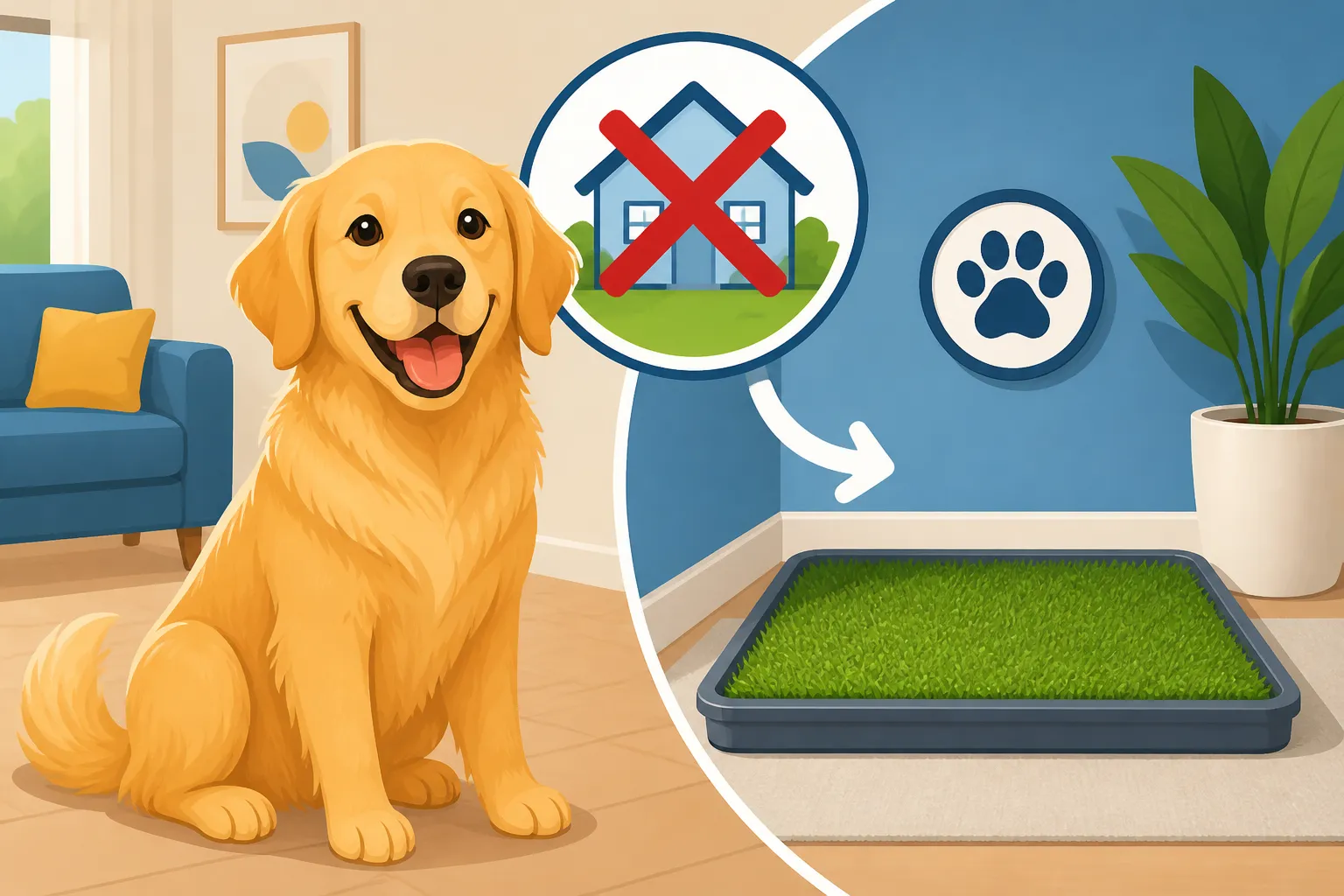
The most common options include puppy pads, which are absorbent sheets that protect your floors. While convenient for quick cleanups, some owners worry they reinforce the idea that peeing indoors is acceptable. The trick is to use them strategically, perhaps in an exercise pen or a designated area that's clearly not part of their main living space. An alternative gaining popularity, especially for larger breeds like Goldens, is an artificial grass patch. These often come with a tray underneath to collect liquid and a removable "grass" top that you can clean. They can feel more natural for a dog and are readily available from retailers like Amazon. Placing this patch on a balcony, patio, or in a utility room can provide a consistent "outdoor-like" space. The key is to keep it clean, as Goldens, like most dogs, prefer to relieve themselves in a clean area. You'll need to decide which option best suits your space and your long-term training goals, but having something designated can reduce accidents and stress, particularly in those early weeks.
Leash and Collar Importance
For Golden Retriever owners without a yard, the leash and collar become more than just walking gear; they're integral potty training tools. From the moment your puppy arrives, they should get used to wearing a lightweight collar. When it's time to go potty, the leash signals that it's "business time."
Even if you're just taking your Golden to an artificial grass patch on your balcony, or down the hall to a designated spot, they should be on a leash. This isn't about restraint in the punitive sense, but about communication and control. The leash helps create a routine and a clear boundary. It prevents your puppy from wandering off to play or get distracted, reinforcing that this trip has a specific purpose. It also keeps them close enough for you to praise them immediately when they go in the right spot. In a bustling urban environment, a leash is also a non-negotiable safety tool, preventing them from running into traffic, encountering aggressive dogs, or investigating dangerous items. Consistency with the leash for every potty break, no matter how quick, will build a strong association that "leash on = potty time."
Cleaning Supplies and Accident Management
Accidents are an inevitable part of potty training, especially with a young Golden Retriever and the challenges of yard-free living. The key isn't to prevent every single accident (though we try!), but to manage them effectively when they happen. This means having the right cleaning supplies on hand.
Standard household cleaners might mask the odor for humans, but a Golden Retriever's incredibly sensitive nose will still pick up the scent of residual urine or feces. This scent acts like a beacon, telling them, "Hey, this is a good spot to go again!" That's why enzyme-based cleaners are your best friend. These cleaners break down the uric acid crystals in urine, completely eliminating the odor so your puppy isn't drawn back to the same spot. Keep a bottle in every area your puppy frequents. When an accident happens, clean it up calmly and thoroughly, saturating the spot with the enzyme cleaner according to the product's directions. The last thing you want to do is make a big fuss; punishing a puppy for an indoor accident will only teach them to hide their accidents from you, making training much harder in the long run. Having a good supply of paper towels and an enzyme cleaner will help you maintain a clean home and prevent setbacks. It's also wise to have a Building a First Aid Kit for a Golden Retriever that includes general cleanup items for any unexpected messes.
Step-by-Step Potty Training Without a Yard
Potty training a Golden Retriever when you don't have a yard boils down to structure, vigilance, and making every outdoor trip count. It requires you to be highly attentive to your puppy's needs and consistent in your routine.
The Golden Retriever Potty Schedule
Consistency is king, queen, and every other royal title when it comes to potty training a Golden Retriever, particularly in an urban environment. You need a schedule, and you need to stick to it religiously. Young Golden puppies have tiny bladders, and they simply cannot hold it for very long.
A general rule of thumb is that a puppy can hold their bladder for approximately one hour per month of age, plus one hour. So, an 8-week-old (2-month-old) puppy might only be able to hold it for 3 hours. This means frequent trips outside are non-negotiable. Your schedule should include potty breaks:
- Immediately upon waking up in the morning.
- Every 30-60 minutes while they are awake and active.
- About 15-20 minutes after eating or drinking.
- After every nap.
- After every play session.
- Before bedtime.
- Once or twice overnight during the first few weeks (as covered in Potty Training Schedule for a Golden Puppy).
For an adult Golden Retriever, the frequency can stretch to 4-6 hours, but even they benefit from a consistent schedule. When you take your Golden out, go to the designated potty spot, say a consistent cue like "Go potty," and wait patiently. Don't play or engage too much until they've done their business. The moment they finish, praise them enthusiastically and offer a high-value treat. This instant reward helps them connect the action (pottying outside) with the positive outcome. Remember, How Long a Golden Retriever Puppy Holds It is often much shorter than you think, especially when they're excited or distracted.
Supervision and Crate Training
These two tools are absolutely invaluable, especially for yard-free potty training. When you can't have eyes on your Golden Retriever puppy every second, you need a safe and controlled environment.
Supervision: Think of it as an "umbilical cord" method. When your puppy is awake and out of their crate, they should either be in your direct line of sight or tethered to you with a leash. This allows you to observe them for any signs they need to go: sniffing around, circling, sudden quietness, or heading towards the door. The moment you see these signs, it's time to immediately interrupt gently and whisk them to their designated potty spot. If you can't supervise actively, they need to be in their crate or a puppy-proofed confined area with an indoor potty option. This prevents accidents from happening unnoticed, which is a major setback in training.
Crate Training: A crate isn't a punishment; it's a safe, den-like space that leverages a Golden Retriever's natural instinct not to soil their sleeping area. Crate Training a Golden Retriever Puppy is a foundational step for any Golden owner, but it's particularly critical for those without a yard. When introduced properly, a crate provides a secure place for your puppy to rest, digest, and learn bladder control. The goal is to gradually increase the time they can comfortably spend in their crate, always ensuring they get a potty break immediately before and after crate time. This teaches them to "hold it" and reinforces that pottying happens outside the crate. You'll want to ensure you have the right size crate for your growing Golden. Remember, while a crate is excellent for management, it's not a place to leave a puppy indefinitely. They still need frequent potty breaks, as even the best-trained Golden can only hold it for so long, especially a puppy. For guidance on getting started, many online resources like BAXTER & Bella offer comprehensive modules on crate training and scheduling. How Long a Golden Retriever Stays in a Crate is important to consider for age-appropriate durations.
Rewarding Success and Handling Accidents
The emotional aspect of potty training is just as important as the physical mechanics. Your Golden Retriever learns best through positive reinforcement, not punishment.
When your Golden goes potty in the correct spot (outside or on their designated indoor patch), make it a huge celebration! Use an excited voice, offer high-value treats immediately as they finish, and give lots of gentle praise. The timing is crucial – the reward must happen within 1-3 seconds of them finishing their business so they clearly associate the reward with the act of going potty in that specific location. Don't wait until you're back inside. This makes going potty outside a highly desirable and rewarding experience for them.
On the flip side, accidents will happen. When they do, resist the urge to scold, yell, or rub their nose in it. This only teaches your Golden to be afraid of you or to hide their accidents, making them less likely to let you know when they need to go. Instead, calmly interrupt them if you catch them in the act (a clap or a sudden "Ah-ah!" often works), immediately pick them up, and carry them to their designated potty spot. If they finish there, praise and reward them. If you discover an accident after the fact, simply clean it up thoroughly with an enzyme cleaner, without any fanfare. The moment has passed, and your Golden won't connect your anger to an event that happened minutes ago. Focus on preventing future accidents by tightening up your supervision and schedule.
| Potty Training Action | What to Do | Why It Works |
|---|---|---|
| Scheduled Potty Breaks | Take out frequently (every 1-3 hours for puppies, after meals/naps/play). | Builds bladder control and creates a predictable routine. |
| Potty Cue | Use a consistent phrase like "Go potty" at the spot. | Associates the phrase with the action, helping cue them. |
| Immediate Reward | High-value treat and praise the moment they finish going. | Positive reinforcement, makes outside potty highly desirable. |
| Supervision | Keep puppy in sight or tethered to you when not crated. | Allows you to catch cues and prevent accidents before they happen. |
| Crate Training | Use a properly-sized crate as a safe den (not punishment). | Leverages natural instinct not to soil den, aids bladder control. |
| Accident Cleanup | Use enzyme cleaner thoroughly; no scolding. | Eliminates odor attractants, prevents fear, avoids teaching hiding. |
| Leash Use | Always leash up for potty trips, even short ones. | Signals "business time," prevents distractions, ensures safety. |
Transitioning and Troubleshooting Common Issues
Even with the best intentions and the most consistent routine, potty training a Golden Retriever in an urban environment can hit some bumps in the road. Knowing how to troubleshoot these common issues can save you a lot of frustration.
Dealing with Distractions on Walks
This is perhaps the most significant challenge for city-dwelling Golden Retriever owners. You get your puppy outside, finally make it to a patch of grass, and instead of doing their business, they're pulling on the leash, trying to greet every person, sniff every lamppost, or chase a pigeon. It's incredibly frustrating when you're on a tight schedule, and your pup seems to forget entirely why they're outside.
The key here is to make the potty trip strictly about pottying, at least initially.
- Find the Quietest Spot: Seek out less busy areas for potty breaks, especially in the early stages. Even if it means walking a block or two further, a quieter environment helps your Golden focus.
- Go Directly to the Spot: Don't allow any sniffing or exploring until they've gone. Lead them directly to their designated spot, say your potty cue, and stand still. Wait patiently, even if it feels like forever.
- The "Potty Cue": Consistently use a verbal cue like "Go potty" or "Do your business" when you are at the spot. Say it calmly but clearly. After they go, then you can reward them and allow for a short, controlled sniff-and-explore walk before heading back inside.
- Manage the Leash: Use a standard leash and collar. While tools like Golden Retriever Pulling and Front-Clip Harnesses are great for teaching loose-leash walking, for potty breaks, you want to keep them close and focused on the task at hand. Avoid retractable leashes, as they give too much freedom and can encourage wandering.
- Be Patient, But Firm: If they spend 5-10 minutes sniffing and don't go, bring them back inside and put them immediately into their crate for 10-15 minutes. Then, take them out again to the potty spot. This teaches them that if they don't go when given the chance, the fun stops, and they'll get another opportunity soon.
The Challenge of Apartment Living
Living in a high-rise or a multi-unit building adds specific logistical challenges to potty training. Elevators, shared hallways, and stairwells become part of your daily routine, and managing a puppy through these spaces requires thought.
- Elevator Etiquette: Be prepared for potential accidents on the elevator. Always have your puppy on a leash. If your puppy has a tendency to relieve themselves there, try carrying a small puppy pad with you to place on the floor if absolutely necessary, or carry your very young puppy in your arms. Reward calm behavior in the elevator.
- Stairwells: While sometimes faster than an elevator, constant stair climbing isn't ideal for a Golden Retriever puppy's developing joints. Limit excessive stair use if possible, especially during their critical growth phases, as this can exacerbate issues like Golden Retriever Hip and Elbow Dysplasia Explained.
- "Potty Outfit" Readiness: Have a designated "potty outfit" – leash, harness, and perhaps a small baggie for treats and waste bags – right by the door. This streamlines the process, making quick dashes outside more efficient.
- Managing Excitement: Many Goldens get over-excited when they know they're going out. Teach them to calmly sit or stand at the door before you open it and again before you exit the building. This can help them focus on the task when they get outside, rather than being overstimulated.
When Potty Training Stalls
It's common for Golden Retrievers to have regressions or plateaus in their potty training, even after they seem to have it down. This can be incredibly disheartening, but it's rarely a sign that you or your dog has failed.
- Rule Out Medical Issues: The very first step when a previously house-trained Golden starts having accidents is a vet visit. A urinary tract infection (UTI), bladder stones, or other medical conditions can suddenly cause a loss of bladder control. Why Goldens Need Vet Visits Twice a Year is important for catching these issues early.
- Adolescent Regression: Golden Retrievers, like human teenagers, go through an adolescent phase (roughly 6-18 months) where they might test boundaries and seem to "forget" their training. This is often referred to as Why a Golden Retriever Regresses at Adolescence. During this time, you might need to revert to a stricter puppy schedule, increase supervision, and reinforce the basics. Don't assume they're being stubborn; they might just need a refresher course with more consistency.
- Change in Routine: Any significant change – a new schedule, a move, a new person or pet in the home – can cause temporary setbacks. Go back to basics, increase supervision, and be extra patient.
- Not Enough Potty Breaks: Re-evaluate your schedule. Are they getting enough opportunities? Are the breaks long enough for them to truly empty their bladder and bowels?
- Environmental Factors: Is their designated outdoor spot clean? Has anything changed there that might make them reluctant to go?
- Golden Retriever Accidents After Being Trained are frustrating, but consistency and patience will help you get back on track.
Long-Term Management and Maintenance
Potty training a Golden Retriever without a yard isn't a "one and done" project; it's an ongoing commitment to a consistent routine and proactive management. Even after your Golden is fully house-trained, maintaining good habits is essential, particularly in an urban setting.
Maintaining a Consistent Routine
Even an adult Golden Retriever thrives on routine, and without the constant easy access of a backyard, that routine becomes even more critical. Your Golden will learn the schedule and anticipate their potty breaks, which aids in their ability to hold it and signal to you when they need to go. This means sticking to similar potty times on weekends as you do on weekdays. Late nights, long sleep-ins, or skipping a mid-day walk can all throw off your dog's internal clock and lead to accidents.
Think about how you communicate the routine to your Golden. Beyond verbal cues, the very act of grabbing the leash at the same time each morning or after dinner reinforces the expectation. If you typically let them out every few hours, try not to suddenly stretch that to an entire workday without an interim walk or a dog walker. Your Golden relies on your predictability. When your schedule changes, even slightly, it can cause confusion and sometimes, a regression in their habits. Just as you schedule your own meals and appointments, schedule your Golden’s potty breaks. It’s a lifelong habit that benefits both of you, promoting good health and preventing frustrating indoor messes.
Regular Vet Check-ups
It's easy to assume any potty training issues are purely behavioral, but health plays a huge role in a Golden Retriever's ability to maintain good bathroom habits. Urinary tract infections (UTIs) are particularly common and can cause frequent urination, straining, or accidents even in a perfectly trained dog. Other medical conditions, such as kidney issues, diabetes, or even arthritis that makes it painful to get up and go outside, can all manifest as accidents.
This is why regular veterinary check-ups are so vital for Goldens, as they are for all dogs. Your vet can perform routine screenings, including urinalysis, to catch potential issues early. For older Golden Retrievers, incontinence can sometimes become an issue, requiring medical management. Never assume an accident is just "bad behavior" without first ruling out a medical cause with your veterinarian. Golden Retriever Hypothyroidism Symptoms Owners Notice and Bloat in Golden Retrievers and the Signs Owners Miss are other important health considerations for the breed that a vet can help monitor during routine visits. proactive medical care ensures that any potty problems aren't rooted in an underlying health concern, allowing you to address behavioral issues more effectively.
Being a Good Urban Neighbor
Living with a Golden Retriever in an apartment or urban environment means being extra mindful of your impact on your community. Being a good neighbor is not just polite; it's often a requirement and fosters a positive perception of dog owners. This primarily comes down to cleaning up after your dog.
Always, and I mean always, carry enough waste bags. Even if your Golden only pees, it’s still important to rinse or otherwise manage the area if it’s on public property and there's a strong odor, especially from male dogs marking. If you're using an artificial grass patch on a balcony or patio, regular and thorough cleaning is imperative to prevent odors from bothering neighbors. Neglecting to pick up after your Golden can lead to fines, complaints, and even resentment from other residents or property managers. This, in turn, can lead to restrictions on dog ownership in your building or community, making life harder for all dog owners. Being responsible means being respectful of shared spaces and ensuring your Golden Retriever is a welcome member of the neighborhood, not a nuisance. It ensures that the positive experience of living with your Golden extends beyond your front door and into your community.
Disclaimer
This article is for general informational purposes only and does not constitute professional advice. Laws, prices and regulations vary by location and change over time. Consult a qualified professional for guidance on your specific situation.